Ask “how many national parks are in Arkansas?” and you’ll get three different answers depending on who you ask. The honest one: there’s exactly one national park with that capital-letter title — Hot Springs. But the National Park Service runs seven units across the state, and the rest of them are arguably more interesting than the bathhouses.
That gap is where most listicles fall apart. Tripadvisor lumps in national forests. Travel blogs count the Buffalo National River as a “park” without explaining that it’s a different designation entirely. So before you plan anything, let’s get the count right, then map a route that actually links these places together.
Table of Contents
- The short answer: parks vs. units
- 1. Hot Springs National Park
- 2. Buffalo National River
- 3. Pea Ridge National Military Park
- 4. Little Rock Central High School NHS
- 5. Fort Smith National Historic Site
- 6. Arkansas Post National Memorial
- 7. President William Jefferson Clinton Birthplace Home
- Comparison table
- The road-trip route
- Passport stamps and practical notes
The short answer: parks vs. units
A “National Park” is one specific designation. Arkansas has one of those: Hot Springs. But the NPS also manages national rivers, military parks, historic sites, and memorials, and Arkansas has six more of those. Add them up and you get seven NPS units, all stampable, all free to enter except where noted.
There are also two National Scenic Trails that clip through Arkansas — the Trail of Tears and the Butterfield Overland routes have affiliated NPS recognition — but they’re corridors, not destinations you “visit” in the usual sense. The seven units below are the ones you drive to, walk into, and collect.
1. Hot Springs National Park
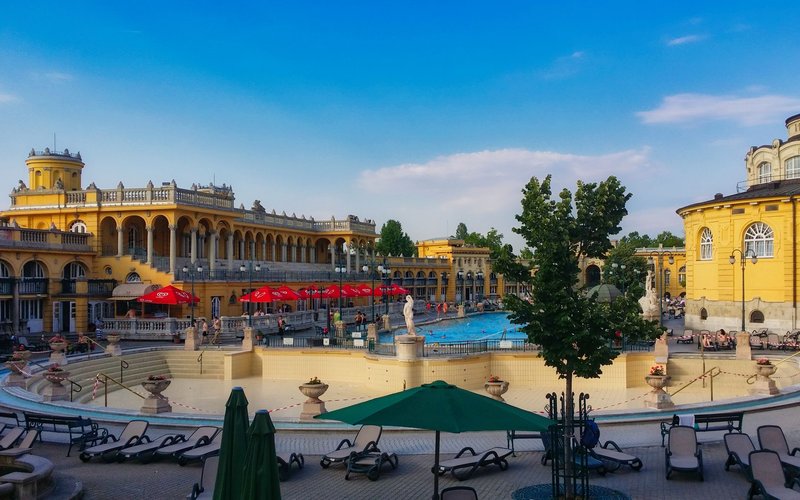
The oddball of the national park system. Hot Springs predates Yellowstone as a federally protected area — it was set aside as a reservation in 1832, forty years before “national park” was even a concept. It’s also the smallest national park by some measures and the only one with a working historic spa district running right through the middle of town.
The signature here isn’t a canyon or a peak. It’s the water: 47 hot springs pumping out roughly 700,000 gallons a day at a steady 143°F, fed by rain that fell on these hills around 4,400 years ago. You can drink it straight from the public fountains along Bathhouse Row — locals show up with five-gallon jugs.
Do this: Take a traditional bath at the Buckstaff (still operating since 1912) or tour the restored Fordyce Bathhouse, now the visitor center. Hike the Hot Springs Mountain Trail for the tower view. Best time: Spring or fall — summer in central Arkansas is brutal. Nearest town: You’re in it. The park and the city of Hot Springs are interlaced.
2. Buffalo National River
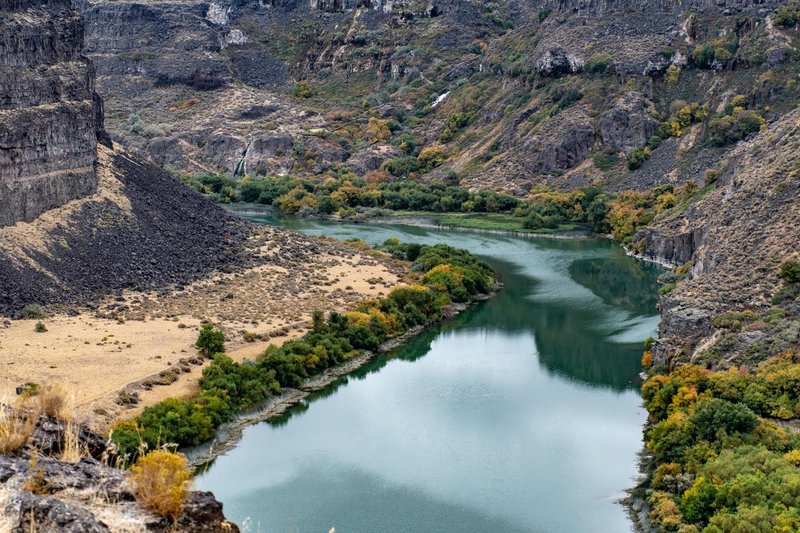
This is the one people mean when they say Arkansas has great outdoors. Established in 1972 as America’s first national river, the Buffalo runs 135 undammed miles through the Ozarks, past limestone bluffs that rise more than 500 feet straight out of the water at Big Bluff — the tallest river bluff between the Rockies and the Appalachians.
Float it. That’s the whole point. The upper river near Ponca runs fast and technical in spring; the lower stretches near Buffalo Point flatten out for families and first-timers. Outfitters in Ponca, Jasper, and Yellville rent canoes and kayaks and shuttle you. In 2019 it became the country’s first International Dark Sky Park along a river system, so the camping at night is something else.
Do this: Float a half-day section, hike to Hemmed-in Hollow Falls (209 feet, tallest in mid-America), and watch for the wild elk herd around Boxley Valley at dawn. Best time: April–June for floating water levels; October for color. Nearest town: Jasper or Ponca for the upper river.
3. Pea Ridge National Military Park
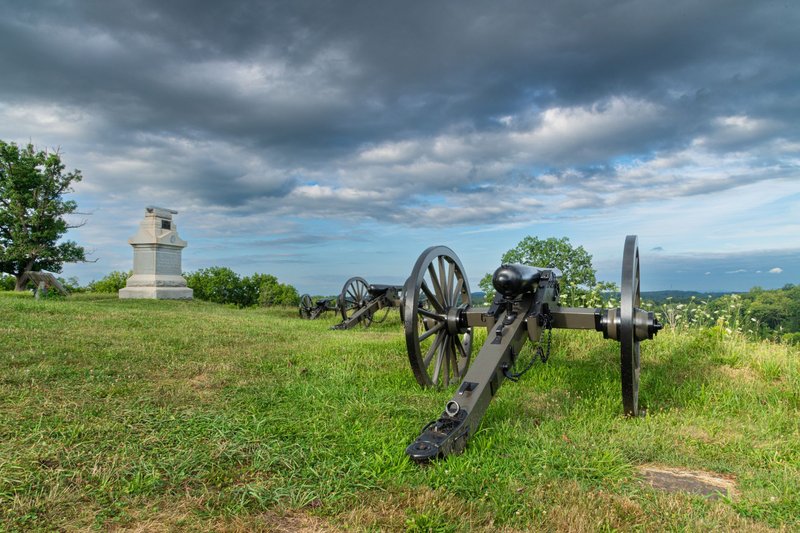
Up in the northwest corner, Pea Ridge preserves the 1862 battlefield where the Union secured Missouri for the rest of the Civil War. It’s one of the most intact Civil War battlefields in the country — 4,300 acres of the original ground, never paved over or developed.
A seven-mile auto tour loops the field with stops at the Elkhorn Tavern (reconstructed on its original foundation) and the spots where the fighting turned. The National Park Service maintains the full battlefield interpretation here, and the visitor center’s 28-minute film does the strategic picture justice. A restored mile of the Trail of Tears also passes through the park — the Cherokee were marched across this exact ground in 1838.
Do this: Drive the tour road, walk the Elkhorn Tavern loop. Best time: Spring or fall. Nearest town: Rogers, about 15 minutes south.
4. Little Rock Central High School National Historic Site
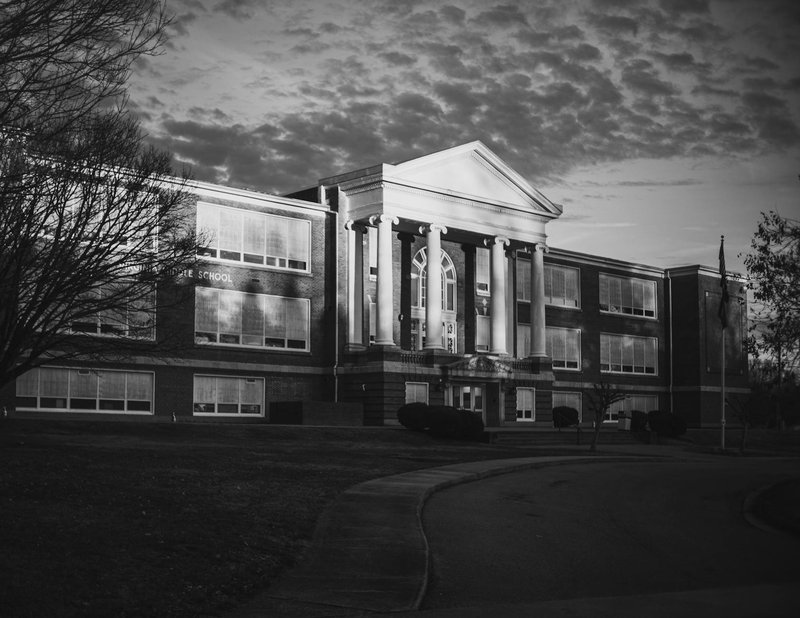
In September 1957, nine Black students walked toward this building under National Guard escort while a mob and the governor tried to stop them. The desegregation of Central High became one of the defining confrontations of the civil rights movement, and the school — still a functioning public high school today — is the only operating school designated a National Historic Site.
The visitor center across the street tells the story of the Little Rock Nine in unflinching detail. You can’t tour inside the school during class hours, but ranger-led walks of the grounds and the restored Magnolia Mobil gas station (where reporters filed their stories) run regularly.
Do this: Watch the orientation film, take the ranger walk, see the commemorative garden. Best time: Year-round; it’s indoor-heavy. Nearest town: It’s in Little Rock proper. Free admission.
5. Fort Smith National Historic Site
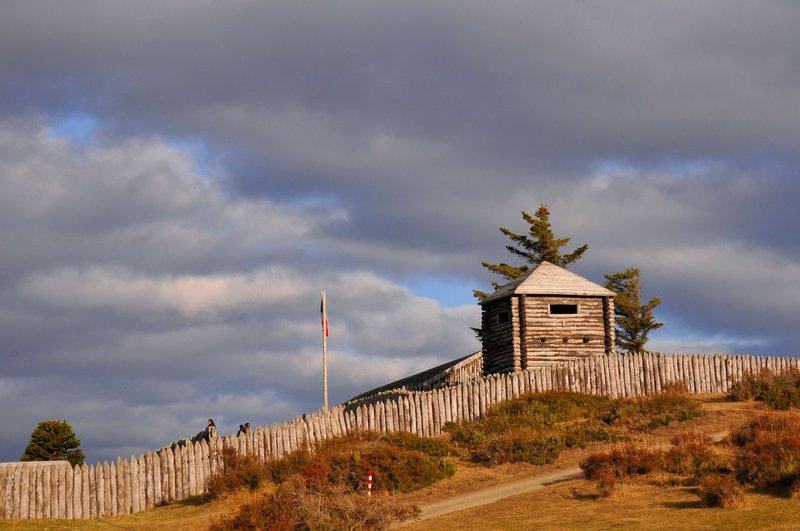
On the Oklahoma border, Fort Smith covers nearly 80 years of frontier history — two military forts, the federal court of “Hanging Judge” Isaac Parker, and a stretch of the Trail of Tears. Parker sentenced 160 people to death over 21 years on the bench, and the reconstructed gallows in the yard is the part visitors remember.
The site sits where the West genuinely began for a lot of 19th-century travelers. The visitor center occupies the old barracks and courthouse, with the restored courtroom and jail (the “Hell on the Border” basement) open to walk through.
Do this: See the courtroom, the gallows, and the Trail of Tears overlook along the river. Best time: Year-round. Nearest town: Fort Smith, on the spot.
6. Arkansas Post National Memorial
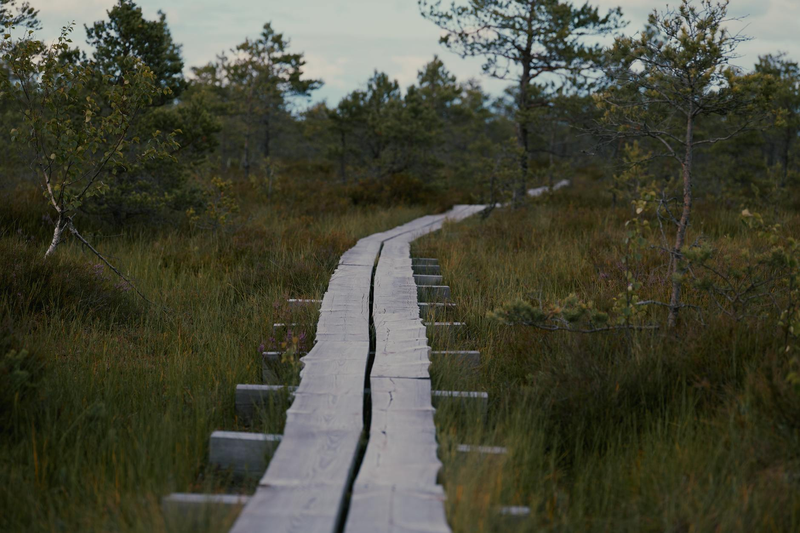
The oldest European settlement in the lower Mississippi Valley sat here — the French established a trading post in 1686, and the site later flew Spanish, French, Confederate, and U.S. flags before the town simply faded away. Today it’s a quiet 757-acre memorial of wetlands and walking trails where the post once stood, near the mouth of the Arkansas River.
It’s the least-visited of the seven, which is exactly its appeal. Bird-watchers and history-minded travelers get the place mostly to themselves. The interpretive trails wind through what’s now prime habitat — herons, alligators in the backwaters, and a lot of silence.
Do this: Walk the memorial trail loop, watch for wildlife in the oxbow lakes. Best time: Fall through spring; summer brings heat and mosquitoes. Nearest town: Gillett, with Dumas the larger hub nearby.
7. President William Jefferson Clinton Birthplace Home
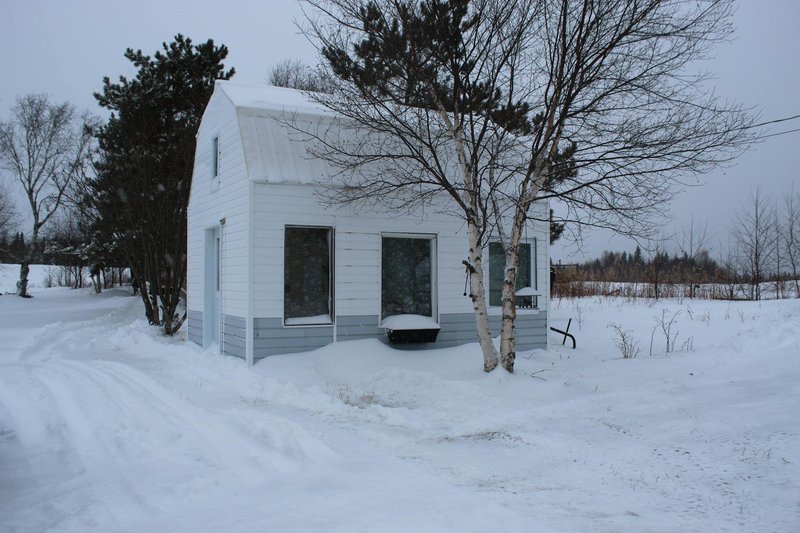
The smallest and newest unit, added in 2010. This is the modest house in Hope where Bill Clinton lived with his grandparents for the first four years of his life. It’s a single-home historic site — a guided walk-through of a 1920s frame house furnished to the period, with stories about the grandparents who raised him while his widowed mother trained as a nurse.
It’s a 30-minute stop, not a half-day, but it completes the set and it’s genuinely well-interpreted. Pair it with a drive past the other Hope landmarks the town has built around its “hometown of a president” identity.
Do this: Take the guided house tour (the only way to see the interior). Best time: Check hours ahead — it runs limited seasonal schedules. Nearest town: Hope, in the southwest corner.
The seven units at a glance
| Unit | Type | Region | Signature draw |
|---|---|---|---|
| Hot Springs | National Park | Central | Historic bathhouses, thermal water |
| Buffalo National River | National River | Northwest (Ozarks) | Floating, 500-ft bluffs |
| Pea Ridge | Military Park | Far northwest | Intact Civil War battlefield |
| Little Rock Central High | Historic Site | Central (Little Rock) | Civil rights landmark |
| Fort Smith | Historic Site | West (OK border) | Frontier court, gallows |
| Arkansas Post | Memorial | Southeast | Colonial site, wetland trails |
| Clinton Birthplace | Historic Site | Southwest | Presidential home tour |
The road-trip route
The seven units form a rough loop, and you can hit all of them in a long weekend if you push, or a relaxed week if you actually want to float the Buffalo. Here’s a sane clockwise route starting from Little Rock:
- Little Rock Central High — start in the capital, half a morning.
- Hot Springs (1 hr southwest) — overnight here; it earns a full day.
- Clinton Birthplace, Hope (1.5 hrs southwest of Hot Springs) — quick stop.
- Fort Smith (2.5 hrs north) — afternoon and evening.
- Pea Ridge (1.5 hrs north) — morning battlefield drive.
- Buffalo National River, Ponca/Jasper (1.5 hrs east) — the centerpiece. Float, camp, give it two days.
- Arkansas Post (the outlier — 2.5 hrs southeast of Little Rock) — best tacked on at the start or end if you’re coming from the Delta side, since it sits opposite the others.
Realistically, Arkansas Post is the one that breaks the loop. If you’re a completionist, run the six-unit Ozark-and-central loop in one trip and pick up Arkansas Post on a separate Delta drive — it pairs better with the Mississippi River route than the mountains.
Passport stamps and practical notes
Every one of the seven units has a free NPS Passport cancellation stamp at its visitor center, so park-chasers can collect all seven on the loop above. Bring your passport book or buy one at the first stop.
A few things worth knowing:
- Fees: All seven are free to enter. Hot Springs charges only for bathhouse services and developed camping; the Buffalo charges for some campgrounds and outfitter rentals. The NPS fee and pass information covers the specifics per site.
- Hours: Visitor centers generally run 9 a.m.–5 p.m., but the smaller units (Clinton Birthplace, Arkansas Post) keep limited or seasonal schedules. Call ahead for those two.
- Heat: Central and southern Arkansas summers are hot and humid. The outdoor units — Buffalo, Pea Ridge, Arkansas Post — are far better in spring and fall.
- Don’t get fooled: Ozark and Ouachita National Forests are gorgeous and worth your time, but they’re run by the Forest Service, not the Park Service. They don’t count toward the seven, and they don’t have NPS stamps.
So: one National Park, seven NPS units, and one road-trip loop that strings together thermal water, the tallest bluffs in mid-America, a civil rights flashpoint, a hanging judge’s courtroom, and a future president’s childhood home. That’s a better week than the “how many parks does Arkansas have” question lets on.