Czech is the official language of exactly one country: the Czech Republic. That’s the short answer, and most lists stop there. But “spoken in” is a wider net than “official in,” and the real map of Czech speakers stretches into Slovakia, across the Atlantic to Texas farmland, and into a few pockets you’d never guess.
Here’s where Czech is actually spoken, how many people speak it, and the historical reasons it landed in each place.
Table of Contents
- The Quick Answer
- Czech Speakers by Country
- Czech Republic: The Home Base
- Slovakia: The Close Cousin
- The United States: Czechs in Texas and the Plains
- Smaller Pockets: Canada, Austria, Germany, and Beyond
- Why the Speaker Numbers Don’t Match
- Czech vs. Slovak: How Close Are They?
- FAQ
The Quick Answer
If you want the bottom line without scrolling:
- Official only in the Czech Republic. Around 10 million native speakers live there, roughly 99% of the country’s population.
- Widely understood in Slovakia. Czech isn’t official, but a large share of Slovaks understand it easily, and an estimated quarter of the population can use it. The two languages are close enough that Czechs and Slovaks usually just speak their own and understand each other fine.
- Minority and diaspora communities keep Czech alive in the United States, Canada, Austria, Germany, Poland, Romania, Ukraine, and Croatia, mostly as a heritage language among descendants of emigrants.
Total native speakers worldwide land around 10.7 million, with a handful of millions more who speak it as a second language or understand it passively.
Czech Speakers by Country
| Country | Approx. Czech speakers | Status |
|---|---|---|
| Czech Republic | ~10.3 million | Official, ~99% of population |
| Slovakia | ~1.3 million understand/use it | No official status; widely intelligible |
| United States | ~50,000–70,000 home speakers | Heritage/diaspora |
| Canada | ~25,000 | Heritage/diaspora |
| Germany | ~20,000 | Diaspora |
| Austria | ~17,000 | Recognized minority in Vienna |
| Poland | ~5,000 | Recognized minority |
| Croatia | ~6,000 | Recognized minority (Daruvar region) |
| Romania | ~2,000 | Recognized minority (Banat) |
| Ukraine | ~1,000 | Small minority |
Numbers vary by source and by what you count as a “speaker” (more on that below). Treat these as ballpark figures, not census-grade precision.
Czech Republic: The Home Base
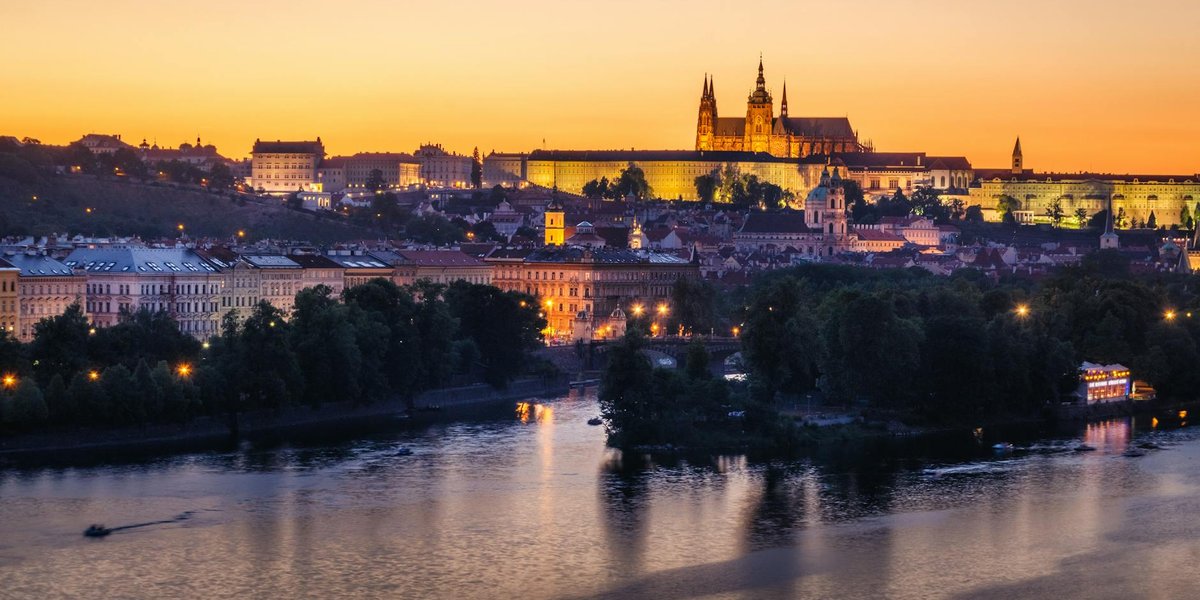
Nearly every Czech speaker on Earth lives here. With about 10.3 million native speakers out of a population of roughly 10.9 million, Czech isn’t just dominant, it’s almost total. The minority languages you’ll hear are Slovak, Polish, German, and Romani, but none come close to challenging Czech as the language of daily life, government, and education.
Czech belongs to the West Slavic branch of the Slavic language family, alongside Slovak and Polish. It’s written in the Latin alphabet with a stack of diacritics, including the háček (the little hook over letters like č, š, and ž) and the ř, a sound so notoriously hard that it’s often cited as one of the trickiest consonants in any European language. Composer Bedřich Smetana’s name contains it, and good luck if you’ve never practiced.
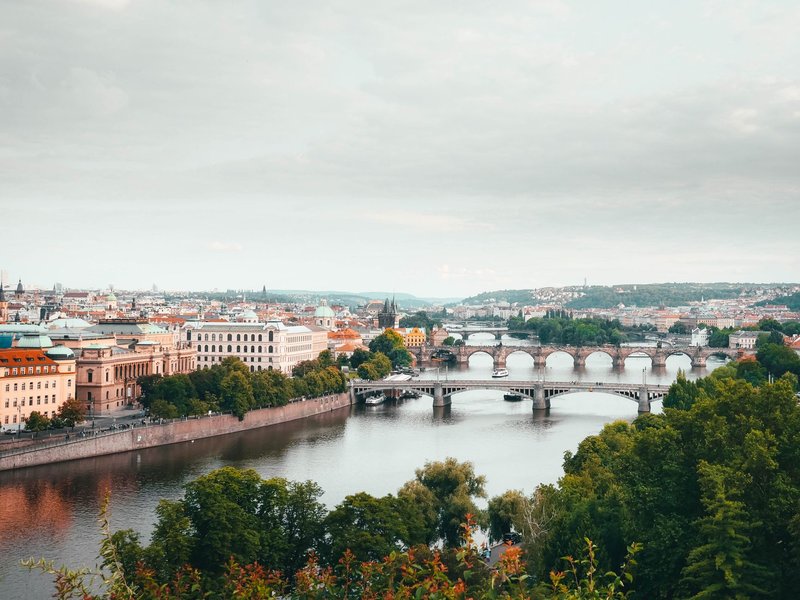
If you’re traveling, you’ll find English widely spoken in Prague’s tourist core, but it thins out fast in smaller towns. A few Czech phrases go a long way.
Slovakia: The Close Cousin
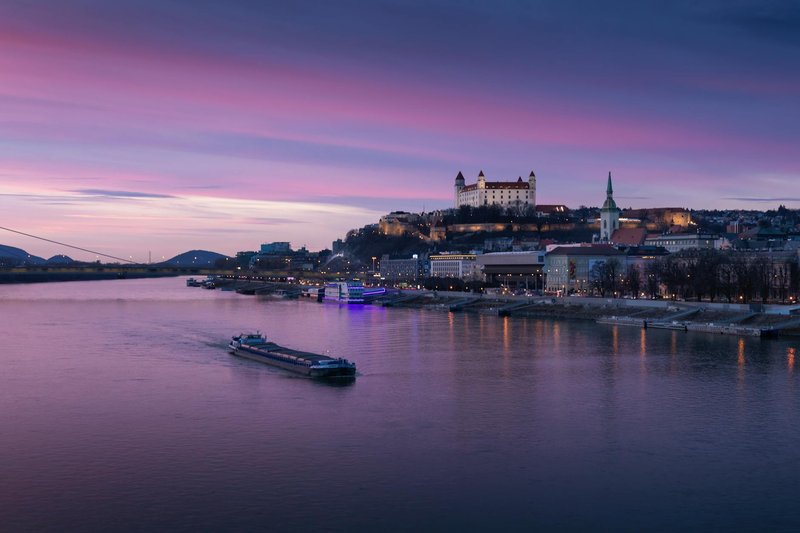
This is where “countries that speak Czech” gets interesting. Czech has no official status in Slovakia, yet it’s understood by a huge share of the population, and a meaningful minority actively uses it.
The reason is history. From 1918 to 1992, Czechs and Slovaks shared a single country: Czechoslovakia. For most of the 20th century, the two populations watched the same TV, served in the same army, and read the same federal documents. Czech and Slovak were both used in public life, and generations grew up fluently switching between them.
When Czechoslovakia split into two countries in the Velvet Divorce of 1993, the languages didn’t suddenly separate. Older Slovaks remain completely comfortable with Czech, and Slovak law even recognizes Czech as fulfilling certain official-language requirements in specific contexts. Younger generations who grew up after the split understand it somewhat less, since they no longer get the constant exposure, but the gap is small.
In practice, a Czech and a Slovak can sit at the same table, each speak their own language, and follow the conversation without trouble.
The United States: Czechs in Texas and the Plains
The largest Czech-speaking diaspora sits in an unexpected place: the American Midwest and rural Texas. This traces back to waves of emigration between roughly 1848 and 1914, when economic pressure and political upheaval in the Austro-Hungarian Empire pushed hundreds of thousands of Czechs to seek farmland in the New World.
They settled in clusters: the Texas counties around Fayette and Lavaca, the plains of Nebraska, and pockets of Wisconsin, Iowa, and Minnesota. Towns like West, Texas (yes, that’s the name) still hold Czech festivals, bake kolaches, and put up bilingual signage. The Library of Congress immigration records document just how concentrated and organized these settlements were.
A distinct dialect even emerged: Texas Czech, a variety shaped by a century of isolation from the homeland and contact with English and German. It’s now endangered, spoken mostly by older residents, but linguists at the University of Texas have worked to record it before it disappears. Census estimates put home speakers of Czech in the US somewhere between 50,000 and 70,000, though the number of people who identify as Czech-American is far higher, well over a million.
Smaller Pockets: Canada, Austria, Germany, and Beyond
Beyond the big two diaspora destinations, Czech survives in scattered communities across Europe and North America:
- Canada picked up Czech immigrants in two main surges: economic emigrants before WWII and political refugees after the 1948 communist takeover and the 1968 Soviet invasion. Toronto remains a hub.
- Austria, especially Vienna, has a recognized Czech minority dating back to the days of the Austro-Hungarian Empire, when Vienna was a magnet for workers from the Czech lands. Czech sits alongside several other indigenous minority languages that are still spoken in Austria today.
- Germany hosts Czech speakers mostly from post-1968 and post-1989 migration, much of it concentrated near the long shared frontier that makes the Czech Republic one of the nine countries that border Germany.
- Croatia, Romania, Ukraine, and Poland each have small, officially recognized Czech minorities, descendants of villagers who settled there generations ago. The Daruvar region of Croatia and the Banat region of Romania still maintain Czech-language schools and cultural associations.
These communities are small, but several enjoy formal minority-language protections, which means the heritage isn’t fading quietly. It’s documented, taught, and defended.
Why the Speaker Numbers Don’t Match
Search around and you’ll see wildly different totals: 8.8 million here, 9.8 million there, 12 million somewhere else. They’re not contradicting each other so much as counting different things.
- ~10.3 million typically refers to native speakers inside the Czech Republic.
- ~10.7 million is a common worldwide native-speaker estimate, adding the diaspora.
- 12+ million figures usually fold in second-language speakers and Slovaks who understand Czech without speaking it natively.
- Lower figures (8–9 million) sometimes reflect older census data or stricter “first language at home” definitions.
So when one site says 9 million and another says 12 million, neither is wrong. They’ve drawn the line in a different place. The honest summary: roughly 10–11 million native speakers, plus a few million more who understand it.
Czech vs. Slovak: How Close Are They?

Close enough to confuse outsiders, distinct enough that nobody inside mixes them up.
Czech and Slovak share most of their grammar and a huge chunk of vocabulary. Mutual intelligibility runs high, estimated well above 90% for everyday speech, which is why Czechs and Slovaks rarely bother switching languages to talk to each other. The differences show up in spelling, certain vowel sounds, and a slice of vocabulary, but they’re the kind of gaps a German and an Austrian might recognize, not a wall.
A reasonable comparison: Czech and Slovak are about as similar as Spanish and Portuguese, or perhaps closer. Speakers of one can read the other’s newspaper with little effort.
Polish, the third West Slavic neighbor, is a different story. It shares the family tree and some recognizable words, but a Czech and a Pole generally can’t hold a smooth conversation each in their own language. The sounds and vocabulary have drifted too far. So if you’ve heard that “all Slavic languages are basically the same,” Czech and Slovak make the case, and Polish quietly debunks it.
FAQ
How many countries have Czech as an official language? Just one: the Czech Republic. Czech is also an officially recognized minority language in a few countries, including Slovakia (in certain contexts), Austria, Croatia, Poland, Romania, and Slovakia, but it’s the sole official language only at home.
How many people speak Czech in total? Roughly 10.7 million native speakers worldwide, with the vast majority in the Czech Republic. Counting second-language speakers and Slovaks who understand it, the figure climbs past 12 million.
Is Czech spoken in Slovakia? Yes, widely understood and used, though it isn’t an official language there. Decades of shared statehood under Czechoslovakia made Czech and Slovak deeply familiar to both populations.
Can Czech speakers understand Polish? Only partially. Czech and Polish are related West Slavic languages with some shared vocabulary, but they aren’t mutually intelligible the way Czech and Slovak are. Expect to catch the gist of a Polish sign, not a full conversation.
Is Czech a hard language to learn? For English speakers, it’s challenging, mostly because of its seven grammatical cases and sounds like the ř that don’t exist in English. But it’s phonetically consistent: once you learn the rules, words are spelled the way they sound.