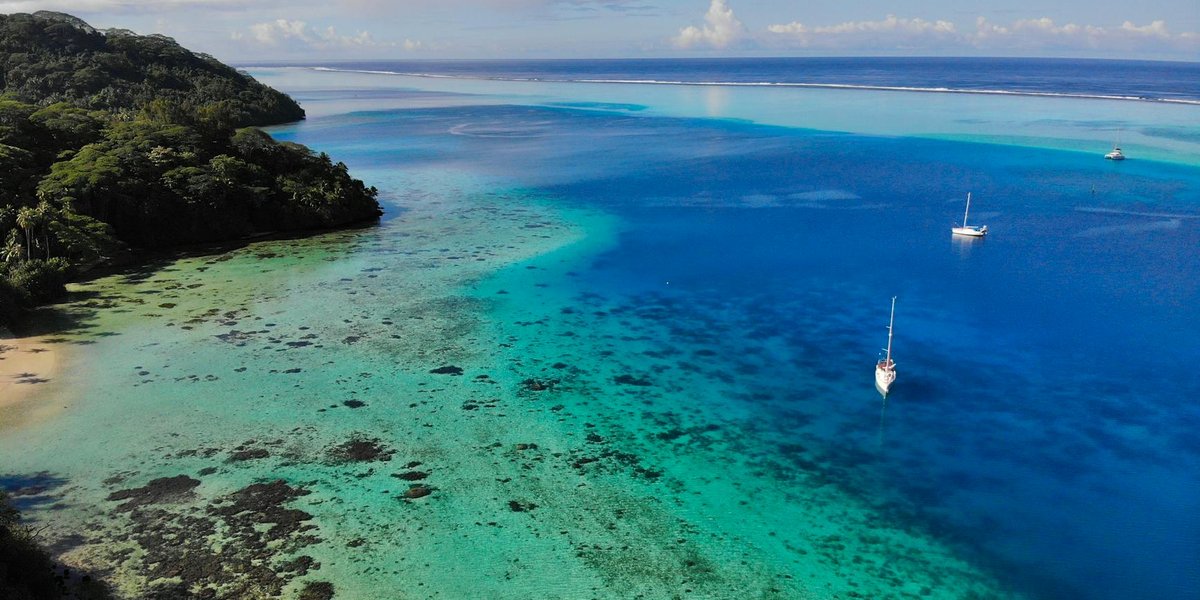
Vanuatu borders no countries. It’s an archipelago of roughly 80 islands floating in the South Pacific, surrounded on every side by open ocean, so it shares no land border with anyone.
That’s the real answer, and it trips up a lot of people, including quiz writers who should know better. But the question almost everyone is actually asking is: what’s near Vanuatu? Which country could you sail to, and how far is it? That’s the useful question, and it has a clean answer.
Contents
- The short version
- The nearest countries to Vanuatu
- Why an island can have no borders
- The weird part: Matthew and Hunter Islands
- Where Vanuatu actually sits
- FAQ
The short version
Vanuatu has zero land borders. Its closest neighbor is New Caledonia (a French territory) to the southwest, followed by the Solomon Islands to the northwest, Fiji to the east, and Australia well off to the west. Nothing is walkable, drivable, or even a short boat ride. The nearest landmass is several hundred kilometers away across open sea.
If you came here for a number to put in a worksheet or settle a bet, that’s it. The rest of this is for the people who want to actually picture where this place is.
The nearest countries to Vanuatu
Here’s how Vanuatu’s neighbors stack up by distance and direction, measured roughly from the capital, Port Vila, on the island of Efate:
| Country / territory | Direction | Approx. distance |
|---|---|---|
| New Caledonia (France) | Southwest | ~540 km (335 mi) |
| Solomon Islands | Northwest | ~620 km (385 mi) |
| Fiji | East | ~1,090 km (680 mi) |
| New Zealand | South | ~1,900 km (1,180 mi) |
| Australia (Brisbane) | West | ~1,950 km (1,210 mi) |
A few things worth knowing about that list. New Caledonia is the closest, and it’s not an independent country — it’s a special-status territory of France, which is exactly why the maritime situation gets complicated later. The Solomon Islands are nearly as close and are the neighbor most people forget, probably because they don’t show up on holiday brochures.
Fiji is the one travelers care about, since it’s the regional hub: most flights into Vanuatu connect through Nadi or Brisbane. And Australia, despite feeling like the obvious “big neighbor,” is actually farther than three other landmasses. The country sits in the South Pacific Ocean, part of the island region of Melanesia, alongside Fiji, the Solomons, Papua New Guinea, and New Caledonia.
Why an island can have no borders
A land border needs two things touching: two countries sharing a line you could, in theory, stand on with one foot in each. Island nations don’t have that. Water does the bordering for them.
Vanuatu is what geographers call an archipelagic state — a country made entirely of islands, with the sea between and around them treated as part of the territory. Plenty of countries are in the same boat, so to speak: Japan, Iceland, the Maldives, the Philippines, New Zealand. None of them border another country by land. The Philippines and Indonesia come close enough to argue over fishing rights, but they still don’t share a border in the dry-land sense.
So when a search result confidently lists “countries bordering Vanuatu,” it’s either wrong or it’s quietly redefining “border” to mean “nearest neighbor.” We’re doing the second thing here, on purpose, because that’s what you wanted.
The weird part: Matthew and Hunter Islands
Here’s the genuinely interesting wrinkle, and the thing almost no reference page bothers to mention.
Far to the southeast of the main Vanuatu archipelago sit two tiny, uninhabited volcanic specks called Matthew Island and Hunter Island. Both Vanuatu and France claim them. France administers them as part of New Caledonia; Vanuatu has claimed them as its own territory since independence in 1980.
These aren’t resort islands. They’re rocky, steep, and one of them is volcanically active — nobody lives there and nobody is fighting over the real estate itself. What they’re fighting over is the water. Under the UN Convention on the Law of the Sea, owning a scrap of land lets you claim an exclusive economic zone — a 200-nautical-mile circle of fishing and seabed rights around it. Two dots of rock translate into a large patch of ocean, and that’s worth arguing about.
The dispute is still technically unresolved. It rarely makes news, but it’s the closest thing Vanuatu has to a “border” controversy, and it’s with France rather than any of its visible neighbors. If you want a piece of trivia that’ll actually surprise someone, this is it.
Where Vanuatu actually sits
Picture the South Pacific. Australia is the big slab on the west. New Zealand sits low and to the south. Vanuatu is the chain of islands northeast of New Caledonia and southeast of the Solomon Islands, running roughly north to south in a slight arc.
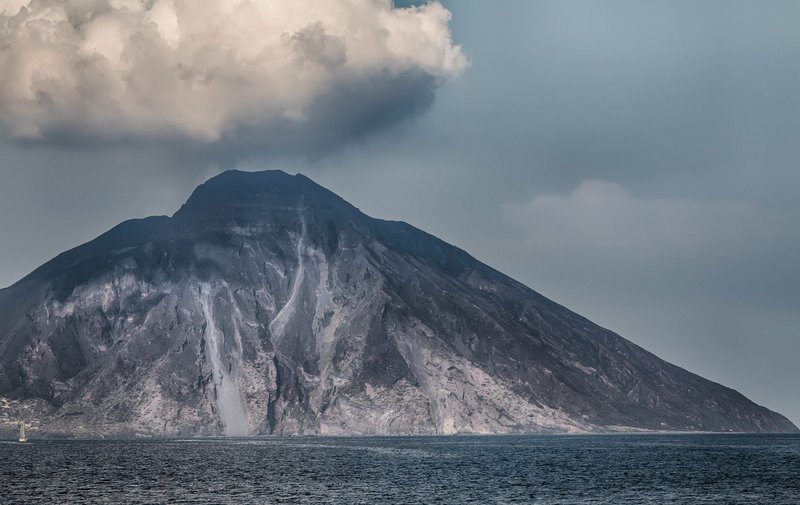
Coordinates put it around 15° to 20° south latitude and 166° to 170° east longitude. It runs on UTC+11, an hour ahead of eastern Australia. The whole country is volcanic in origin — it sits on the Pacific Ring of Fire, which is why some of those islands are still actively smoking.
For a traveler, the practical takeaway is that Vanuatu is remote but not unreachable. You’re not crossing a border to get there; you’re flying in over a lot of empty blue. Most routes come through Brisbane, Sydney, Auckland, Nadi, or Nouméa, and once you land, the only “neighbors” you’ll see are the islands of the archipelago itself.
FAQ
Does Vanuatu have any land borders? No. Vanuatu is an island nation entirely surrounded by ocean and shares no land border with any country.
What is the closest country to Vanuatu? New Caledonia, a French territory, is the closest at about 540 km (335 miles) to the southwest. The nearest fully independent country is the Solomon Islands, roughly 620 km to the northwest.
How far is Vanuatu from Fiji? About 1,090 km (680 miles) to the east. Fiji is a common connecting point for flights into Vanuatu.
How far is Vanuatu from Australia? Roughly 1,950 km (1,210 miles) west of Brisbane, despite Australia feeling like the obvious nearest big neighbor — three other landmasses are actually closer.
What is the disputed territory near Vanuatu? Matthew and Hunter Islands, two uninhabited volcanic islands southeast of the main archipelago, are claimed by both Vanuatu and France (as part of New Caledonia). The dispute is mainly over the surrounding maritime zone, not the land itself.
What region is Vanuatu part of? Melanesia, in the South Pacific Ocean, alongside Fiji, the Solomon Islands, New Caledonia, and Papua New Guinea.