Most ghost town lists for Kansas hand you the same thing: a 200-name alphabetical dump pulled from old post office records, half of them now just a dent in a wheat field with no marker. Useful if you’re doing genealogy. Useless if you’ve got a tank of gas and a Saturday.
This list is the other thing. Fifteen towns where something is still standing, still photographable, or still strange enough to be worth pulling off the highway for. Kansas has hundreds of dead and dying settlements — the state lost more towns than it kept — but these are the ones that reward the detour. For each, you get where it is, what killed it, and what’s actually left to see when you get there.
A quick note on why so many Kansas towns died in the first place, because it shapes what you’ll find. Three things did most of the killing: the railroad (a town platted in 1885 lived or died on whether the line came through, and lines moved), farm mechanization (tractors emptied the labor that small towns existed to house), and the highway (Interstate 70 and the U.S. routes routed traffic around the old county-seat downtowns). Almost every entry below is some version of one of those stories.
Table of Contents
- The verdict: where to go first
- Elk Falls
- Nicodemus
- Brookville
- Treece
- Cadmus
- Le Hunt
- Aliceville
- Galena’s Hell’s Half Acre
- Elgin
- Bartlett
- Geuda Springs
- Cullison
- Lapland
- Coronado
- Volland
- How to visit without getting shot or arrested
The verdict: where to go first
If you only have one day, drive to Elk Falls — it bills itself as the “world’s largest living ghost town,” there’s a waterfall, and people still live there. If you want history that matters, Nicodemus is a National Historic Site and the only surviving Black homesteader town west of the Mississippi. If you want genuinely eerie — a place the federal government literally bought out and demolished — go to Treece, but go with realistic expectations, because there’s almost nothing left on purpose.
Everything else is a degree of in-between: a standing church here, a concrete cement-plant skeleton there, a main street that’s three buildings instead of three blocks.
1. Elk Falls
Elk County, southeast Kansas, on K-99. Population: roughly 100.
Elk Falls calls itself the “World’s Largest Living Ghost Town,” which is the kind of slogan that sounds like marketing until you do the math. The town hit 513 residents in the 1880 census, then bled out — 350 by 1890, 269 by 1927 — after the grist mill closed at the turn of the century and took the town’s reason for existing with it. Today around 100 people hang on.
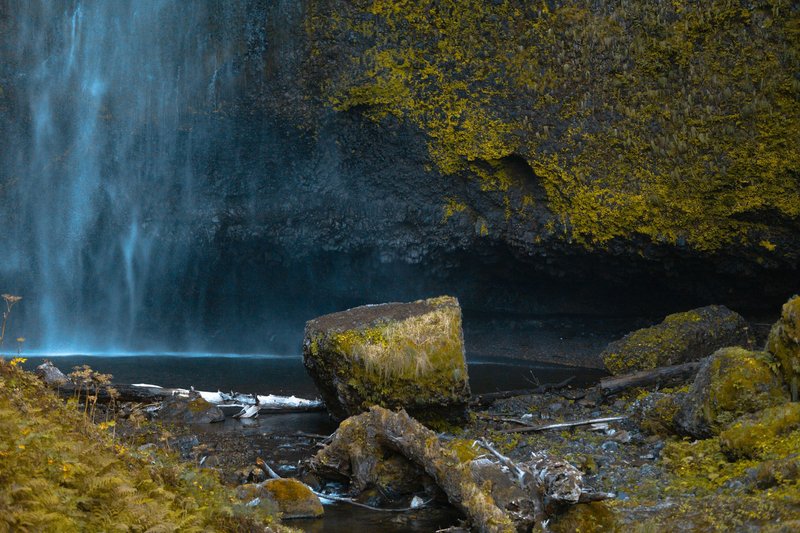
What’s left is more than most. The town’s other unofficial title is “Outhouse Capital of the World,” and during its annual fall outhouse tour the remaining residents decorate privies for visitors, which tells you exactly what kind of place this is — it leans into the joke. The waterfall on Elk River, the iron 1893 truss bridge, and a working pottery studio give you actual things to look at and photograph, not just foundations.
Go in fall. The river runs higher and the town is at its most alive precisely when it’s celebrating being half-dead.
2. Nicodemus
Graham County, northwest Kansas, on U.S. 24. The only entry on this list that’s a unit of the National Park System.
Nicodemus was founded in 1877 by formerly enslaved people leaving the Reconstruction South, the first Black settlement west of the Mississippi River and the longest-lasting Black homesteader colony in America. According to the National Park Service, within two years 500 to 700 people had arrived, mostly from Kentucky, Tennessee, and Mississippi, living first in dugouts cut into the prairie, then sod houses, then frame homes as the colony found its footing.
What killed it was the same thing that killed half this list: the railroad. When the promised rail station failed to materialize in 1887, the town’s growth stalled and never recovered. Congress designated it a National Historic Site in 1996.
Five historic buildings still stand, including the township hall and two churches, and unlike most ghost towns this one has a visitor center and rangers who can tell you the story straight. It’s the rare Kansas ghost town where the history is the attraction and the ruins are secondary.
3. Brookville
Saline County, central Kansas, just off I-70 west of Salina.
Brookville started in 1867 when the Kansas Pacific Railroad reached it, peaked near 800 people in the 1870s, and supported a downtown that’s almost comic in its density for a town that size: four general stores, a jeweler, a millinery, two hotels, a flour mill, two lumberyards. Then in 1889 the railroad moved its roundhouse to Junction City, and Brookville started its long fade. The 2020 census counted 247.
The reason to stop is the Brookville Hotel story. Helen Martin started serving family-style fried chicken dinners there in 1915, and for most of a century people drove in from across the region for them. The restaurant outlasted the town’s economy by decades — Brookville was sometimes a near-ghost and the hotel kept the lights on — until the fourth generation moved the operation to Abilene in 1999 to sit closer to the interstate. The original building still stands in town. It’s a clean illustration of how a single business can be the last thing keeping a place on the map, and what happens when it leaves.
4. Treece
Cherokee County, the far southeast corner, right on the Oklahoma line.
Treece is the bleak one, and it’s bleak by federal decree. It was part of the Tri-State Mining District, and at peak — combined with neighboring Picher across the state line — the area held over 20,000 people and produced billions of dollars of lead and zinc ore for two world wars. Then the mines closed and left behind chat piles: mountains of gray mine tailings laced with heavy metals.
The EPA declared the town uninhabitable. In 2009 Treece got federal approval for a buyout, and by 2012 nearly everyone had taken the money and left; the buildings were sold off, moved, or demolished, and the state officially disincorporated the town. For a while one couple held out in a double-wide, surrounded by an emptied town.
This is the closest Kansas gets to a true abandoned-by-disaster ghost town. Understand before you go that the chat piles are contaminated — this is a Superfund site, not a photo backdrop to scramble around on. Shoot it from the road. Treece also sits squarely among the Oklahoma–Kansas border towns, so it’s easy to fold into a swing through the corner where the two states meet.
5. Cadmus
Linn County, eastern Kansas.
Cadmus is a photographer’s town. The draw is a striking stone Catholic church standing largely alone on the prairie, the kind of structure that looks staged when you frame it against an empty horizon. The surrounding settlement that justified the church is essentially gone. It’s a short, high-reward stop: you’re there for one building and the silence around it.
6. Le Hunt
Montgomery County, southeast Kansas.
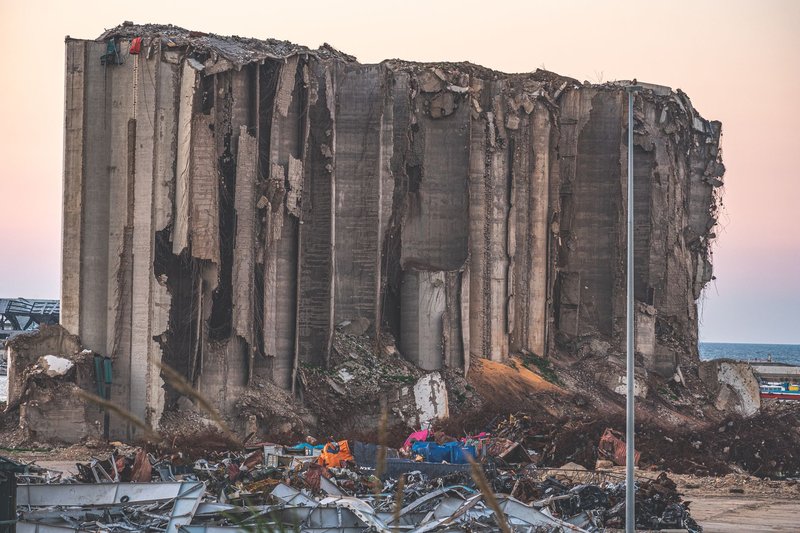
Le Hunt was a company town built around a cement plant in the early 1900s, and when the plant shut down the town went with it. What remains is industrial-eerie: hulking concrete skeletons of the plant slowly being reclaimed by trees and brush, including a famous concrete face workers carved into one of the structures. It’s one of the better Kansas ruins for people who like their decay structural rather than residential.
7. Aliceville
Coffey County, eastern Kansas.
A near-ghost rather than a full one. A handful of residents remain, but the commercial life is gone — closed storefronts, a quiet grid of streets that once expected to fill in and never did. Worth pairing with other eastern-Kansas stops rather than driving out for on its own.
8. Galena’s Hell’s Half Acre
Cherokee County, southeast corner, on old Route 66.
Galena itself isn’t fully a ghost town, but its old mining district — once nicknamed Hell’s Half Acre for its saloons, brawls, and lead-rush lawlessness — is a hollowed-out shell of what was a roaring boomtown. Sitting on Route 66, it pairs naturally with a Treece visit nearby; together they tell the whole arc of the Tri-State mining story, from the boom to the poisoned aftermath. The same lead-and-zinc belt spilled across the line into the Missouri–Oklahoma border towns, so if you’re chasing the full Tri-State district you can keep following it past the state line.
9. Elgin
Chautauqua County, on the Oklahoma border in southern Kansas.
Elgin was once a rowdy cattle-shipping town — at its height it claimed to ship more cattle than almost anywhere in the state, with the saloon count to match. Today it’s a sparse cluster of remaining buildings and foundations. The contrast between the wild-cowtown reputation and the present quiet is the appeal.
10. Bartlett
Labette County, southeast Kansas.
A classic slow-fade prairie town: a small surviving population, a grain elevator, and a downtown that’s mostly empty buildings. Bartlett didn’t die from one dramatic event — it died from the steady arithmetic of farm consolidation, fewer people working more land. It’s representative rather than spectacular, good for understanding the typical Kansas decline.
11. Geuda Springs
Sumner/Cowley county line, south-central Kansas.
Geuda Springs was a mineral-springs health resort in the late 1800s, when people believed in the curative power of mineral water and built whole towns around it. The springs lost their draw, and so did the town. A few residents remain among the remnants of a resort era that doesn’t exist anymore.
12. Cullison
Pratt County, south-central Kansas.
Another railroad-era town that the 20th century quietly emptied. Cullison hangs on with a tiny population and the standard ghost-town hardware: an elevator, a few occupied houses, a lot of empty ones. A stop for completists working through the south-central cluster.
13. Lapland
Montgomery County, southeast Kansas.
Lapland is barely there — which is the point. It’s the kind of entry that shows you what most of those 200-name directory lists actually look like on the ground: a name, a location, and almost nothing standing. Pair it with Le Hunt, which is close, so you’re not driving out for a single road sign.
14. Coronado
Wichita County, western Kansas.
Coronado lost a county-seat fight — the most quintessentially frontier-Kansas way to die. In the 1880s, control of the county seat meant the courthouse, the records, and the future, and rival towns fought dirty for it. Coronado lost to nearby Leoti, and once the seat was gone the town had no reason to exist. The remnants sit on the high western plains, big-sky and lonesome.
15. Volland
Wabaunsee County, in the Flint Hills.
Volland was a railroad shipping point anchored by a general store. The town faded, but the 1913 Volland Store building was restored and now operates as an arts and events space — so this is the rare ghost town where one building got a second life instead of a slow collapse. The Flint Hills setting alone makes the drive worth it; the store makes it a destination.
How to visit without getting shot or arrested
A few things the directory lists won’t tell you, and that matter more than which town has the prettiest church.
Most ruins are on private land. Kansas is a property-rights state and a lot of these foundations sit in someone’s pasture. The standing buildings on public roads — Elk Falls, Nicodemus, Brookville, the Volland Store — are fine to visit. The lonely church in a field or the foundation behind a fence usually is not. If there’s a gate or a “No Trespassing” sign, shoot it from the road. People in rural Kansas notice unfamiliar cars, and not every encounter is friendly.
Treece is a Superfund site. The chat piles are contaminated with lead. This is not a place to let kids climb or to picnic. Look, photograph, leave.
Cell service is thin and the towns aren’t on every map. Pull GPS coordinates before you go and download an offline map of your route. Many of these places have no services — no gas, no bathroom, no shop — so fuel up and bring water.
Go in the shoulder seasons. Spring and fall give you better light, fewer ticks and chiggers (a real concern in tall Kansas grass), and, in Elk Falls’ case, a fuller waterfall. Summer is hot and the grass is high; deep winter is gray and the back roads can turn to mud.
Kansas isn’t going to give you a postcard-perfect frontier town frozen in time. What it gives you is more honest: a state full of places that bet on a railroad, a mine, or a county seat, lost the bet, and emptied out. The fifteen here are the ones where you can still see the shape of the gamble. And if the bug bites and you want to keep chasing emptied-out towns beyond the state line, the ghost towns of Arkansas make a natural next leg for a longer regional loop.