Here’s the thing most people get wrong about Albania: they’re scared of the wrong threat. They picture pickpockets, scams, that whole Taken movie panic. Meanwhile the actual danger is a 1998 Mercedes doing 70 down a street with no crosswalk while the driver texts.
Albania is one of the safest countries in the Balkans for travelers. Violent crime against tourists is rare, petty theft is lower than in Rome, Paris, or Barcelona, and people will go out of their way to help a confused visitor with a map. The real hazards are traffic, the occasional taxi overcharge, and uneven sidewalks that want to break your ankle after dark.
So instead of another “Is Albania safe?” essay, here’s what you actually came for: a ranked list of the safest cities, scored, with where to stay and one honest caveat per city.
Quick Comparison Table
| City | Safety Score | Best For | Vibe |
|---|---|---|---|
| Berat | 9.5 | Solo female travelers, first-timers | Calm, historic, walkable |
| Gjirokastër | 9.4 | Slow travel, culture | Sleepy stone-town quiet |
| Ksamil | 9.3 | Beach trips, families | Resort-relaxed |
| Saranda | 9.0 | Nightlife + beach combo | Lively coastal town |
| Tirana | 8.7 | Digital nomads, city lovers | Buzzing capital energy |
| Vlorë | 8.7 | Families, beach base | Easygoing seaside |
| Korçë | 8.6 | Off-the-path, food | Quiet, cultured inland |
| Durrës | 8.3 | Quick beach getaways | Busy port-resort mix |
| Shkodër | 7.8 | Cyclists, lake access | Energetic but rougher edges |
Now the details.
Table of Contents
- How I Scored These
- 1. Berat
- 2. Gjirokastër
- 3. Ksamil
- 4. Saranda
- 5. Tirana
- 6. Vlorë
- 7. Korçë
- 8. Durrës
- 9. Shkodër
- The Risk Nobody Ranks: Traffic
- Practical Safety Notes
How I Scored These
The score blends four things: reported petty crime levels, how safe the city feels for a woman walking alone at night, pedestrian and traffic risk, and how easy it is to get help if something goes sideways. A 9+ means you can wander after dinner without a second thought. An 8 means use the same street sense you’d use in any mid-sized European city. Nothing on this list drops below “generally very safe” because, frankly, nothing in Albania’s tourist towns does.
One data point to anchor the whole list: Albania’s intentional homicide rate has fallen sharply over the past two decades and now sits below the European-wide figure tracked by the UN Office on Drugs and Crime. The street-level reality matches the statistic.
1. Berat
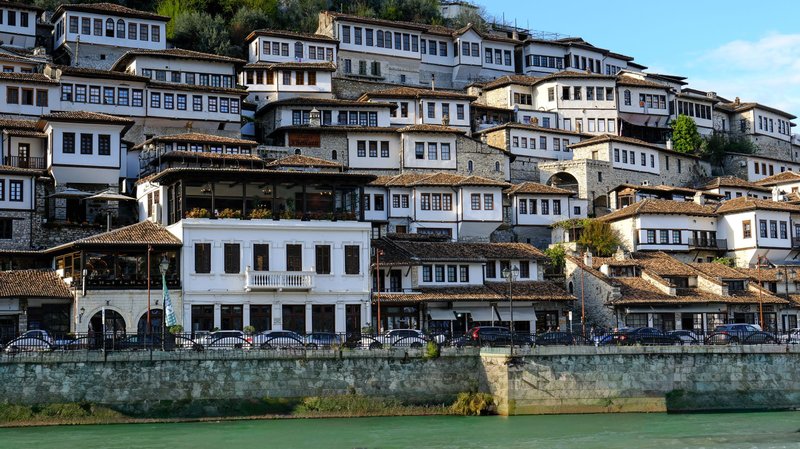
Berat is where I send nervous first-timers and solo women, full stop. The “town of a thousand windows” is a UNESCO-listed Ottoman quarter where the old stone houses stack up the hillside, and the historic center is so compact you can cross it in fifteen minutes. Pickpocketing is close to nonexistent here. This isn’t a crowd-and-chaos city where someone bumps you on a packed tram.
Solo female and night safety: Excellent. Women routinely report walking back from the riverside restaurants at 11 p.m. without a flicker of worry. The Mangalem and Gorica quarters, on either side of the Osum River, are both well-lit and residential.
Where to stay: Mangalem, right under the castle, puts you in the prettiest and safest part of town.
Honest caveat: Those gorgeous cobbled lanes up to Berat Castle are murder on the ankles in the dark, and street lighting on the climb is patchy. Wear real shoes, bring a phone light.
2. Gjirokastër
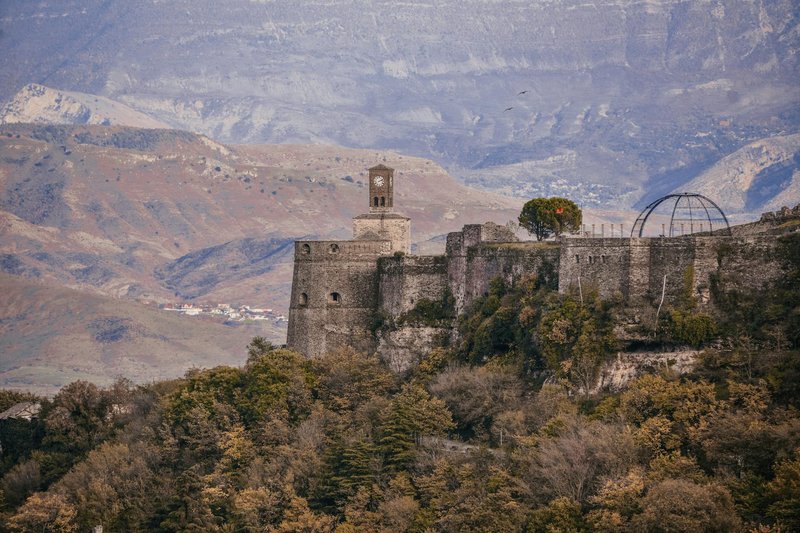
Another UNESCO stone town, even sleepier than Berat. Gjirokastër is built from grey slate that turns silver in the rain, and the pace is so slow that “crime wave” here means someone’s goat got loose. The bazaar district is the social heart, and it empties out early.
Solo female and night safety: Excellent, with one practical note: the town goes quiet after about 10 p.m., so late-night streets are empty rather than dangerous. Empty-quiet, not menacing-quiet.
Where to stay: The Old Bazaar area, within walking distance of the castle and the restaurants.
Honest caveat: The steep, polished-stone streets are genuinely slippery when wet, and Gjirokastër gets real rain. More travelers get hurt slipping here than anywhere on this list. The town is also less English-friendly than the coast, so download an offline translation app.
3. Ksamil
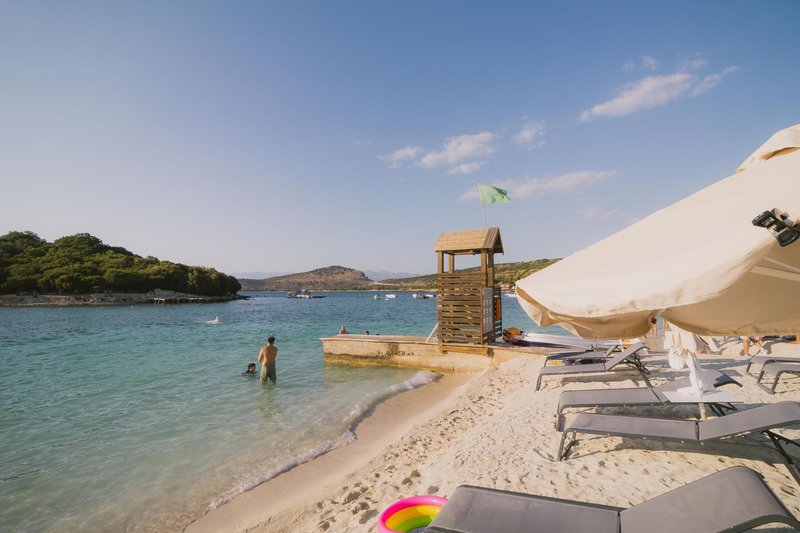
Ksamil is the postcard: turquoise water, little islands you can swim to, the southern tip of the Albanian Riviera almost close enough to touch Corfu. It runs on tourism, which means the whole village has a vested interest in visitors feeling safe and coming back. Families dominate the crowd in summer.
Solo female and night safety: Very good. The main drag and beach clubs stay busy and lit into the night during high season. It’s resort-calm rather than party-wild.
Where to stay: Anywhere near the main beaches; the village is small enough that location barely matters.
Honest caveat: Ksamil’s risk isn’t crime, it’s the wallet. Sunbed and food prices spike in July and August, and a few beach clubs are sloppy about quoting prices upfront. Confirm the cost before you sit down. Out of season (November to April) it’s nearly a ghost town, which means fewer people around if you need help.
4. Saranda
Saranda is Ksamil’s bigger, louder sibling, a proper coastal town with a horseshoe bay, a long promenade, and an actual nightlife scene. More people means slightly more petty opportunism than the sleepy stone towns, but we’re talking the occasional inflated taxi fare, not muggings.
Solo female and night safety: Very good. The seafront promenade is packed and well-lit until late, and women solo-traveling here consistently rate it as comfortable. Just stick to the busy waterfront after dark rather than cutting through quiet residential blocks uphill.
Where to stay: Along or just behind the main promenade.
Honest caveat: The taxi-from-the-port and ferry hustle is the most common annoyance. Agree on a fare first, or use a ride app where available. Summer crowds also make the waterfront chaotic, more pickpocket-friendly than the rest of the year, though still low risk by European standards.
5. Tirana
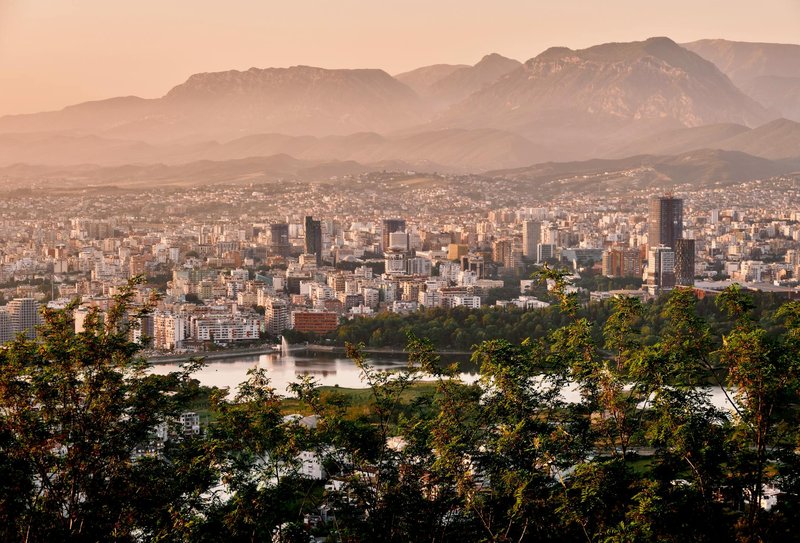
The capital, and the one city where you should switch from “village-relaxed” to “normal city smart.” Tirana is the digital-nomad hub: cheap coffee, fast wifi, a colorful, walkable center around Skanderbeg Square and the Blloku district. Violent crime against tourists is rare, and the heavy daytime foot traffic makes the center feel lively rather than threatening.
Solo female and night safety: Good. Blloku, the former communist-elite neighborhood turned bar-and-café district, is lively and safe well into the night. The standard city rules apply: watch your bag in crowds, don’t flash a phone on an empty street at 3 a.m.
Where to stay: Blloku or the area around Skanderbeg Square keeps you central and surrounded by people.
Honest caveat: Tirana’s traffic is the real boss fight. Crossing the street is a contact sport, cars treat lane markings as decoration, and pedestrian crossings are suggestions. The official UK Foreign Office travel advice for Albania specifically flags driving standards rather than crime. Believe it.
6. Vlorë
Where the Adriatic meets the Ionian, Vlorë is a relaxed family beach city with a long seaside boulevard that’s become genuinely pleasant since its recent makeover. It’s less touristy than Saranda, which means fewer hustlers and a more local, lived-in feel.
Solo female and night safety: Very good. The renovated Lungomare promenade is a parade of families and couples strolling until late, about as safe a night-time setting as Albania offers.
Where to stay: Near the Lungomare (the seafront boulevard).
Honest caveat: Step away from the polished waterfront and parts of the older town are run-down and poorly lit, not dangerous, just unwelcoming after dark. Stick to the boulevard at night and you’ll never notice.
7. Korçë
Inland and often skipped, Korçë rewards travelers who want the real, unglossy Albania. It’s a cultured town of wide boulevards, a famous Old Bazaar, beer festivals, and a serious café culture, sitting up on a plateau near the Greek border. Low tourist numbers mean low tourist-targeted crime.
Solo female and night safety: Very good. It’s a calm, conservative-feeling town where late-night streets are quiet and unbothered. The pedestrianized center is the place to be after dinner.
Where to stay: The center, near the Old Bazaar and the cathedral.
Honest caveat: Korçë sits at altitude and gets genuinely cold, even snowy, in winter, which catches beach-focused travelers off guard. And as an off-the-path town, English is thinner on the ground here than on the coast.
8. Durrës
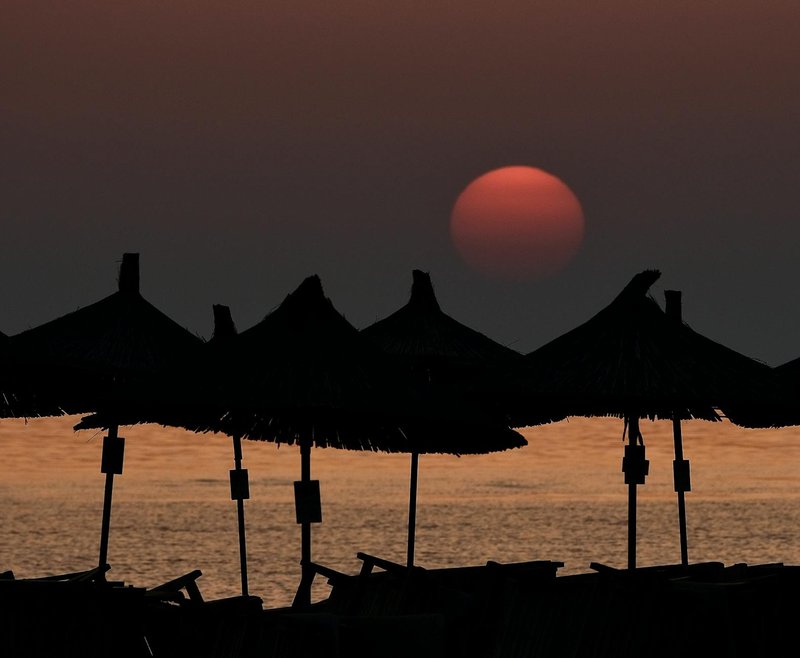
Albania’s main port and its closest beach to Tirana, which makes Durrës convenient but also its most “big city” entry. It mixes a working port, a sprawling beach resort strip, and Roman-era ruins right in the center. The crowds and the port traffic nudge the petty-crime risk up a notch, still low, but the highest on this list alongside Shkodër.
Solo female and night safety: Good. The beach promenade and central archaeological area are fine in the evening. The blocks immediately around the port and the train station are the ones to skip after dark.
Where to stay: The Currila or central beach area, away from the port itself.
Honest caveat: This is the one place a few travelers report bag-snatching and overcharging, concentrated around the busy port and transport hubs. Standard precautions handle it. The beach water quality near the port also isn’t the Riviera’s; head south to Golem for cleaner swimming.
9. Shkodër
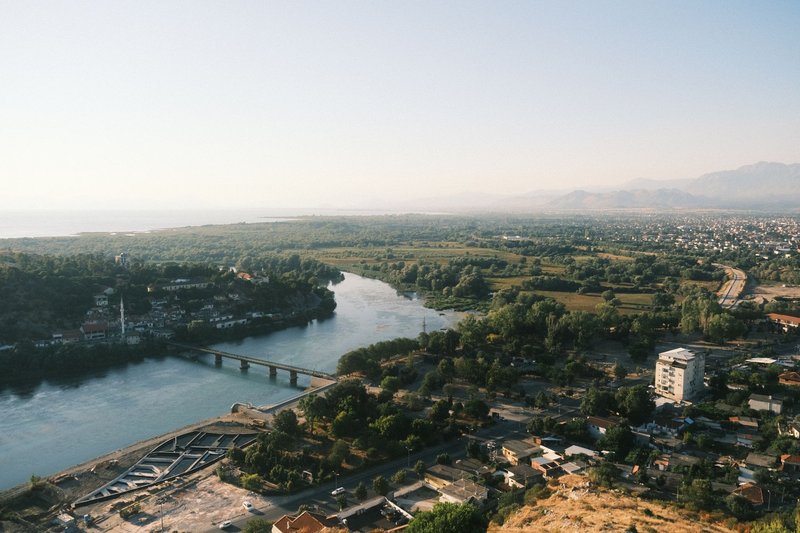
Shkodër lands at the bottom not because it’s unsafe, it isn’t, but because it’s the one city where residents themselves tell you to pay a little more attention. This northern cultural capital sits beside the Balkans’ largest lake, draws cyclists and Lake Komani trekkers, and has a buzzing pedestrian street. It also has a comparatively higher petty-crime rate than the towns above and a reputation for more aggressive traffic.
Solo female and night safety: Good, with caveats. The main pedestrian boulevard, Rruga Kolë Idromeno, is lively and fine at night. Solo women report it as comfortable overall, just less effortlessly relaxed than Berat or Gjirokastër.
Where to stay: Near the pedestrian center and the Rozafa-side approach, where the action and the lighting are.
Honest caveat: Bike theft is a known issue (ironic for Albania’s cycling capital), so lock up properly. Traffic, including a lot of bikes and scooters weaving through, is chaotic even by Albanian standards. This is the city where I’d most insist you look both ways twice.
The Risk Nobody Ranks: Traffic
If you take one thing from this list, make it this. Across every safety guide written by long-term Albania residents, the same point surfaces: the thing most likely to hurt you isn’t a person, it’s a vehicle.
Driving standards are loose, crosswalks are rare and routinely ignored, sidewalks vanish without warning, and pedestrians do not have the right of way in practice. The World Health Organization tracks road-traffic deaths as a leading injury risk across the Western Balkans, and Albania’s pedestrian environment is exactly why. Cross at corners, make eye contact with drivers, never assume a slowing car will stop, and skip the rental car entirely unless you’re a confident, defensive driver. Furgon minibuses and buses between cities are cheap and far less stressful.
Practical Safety Notes
A few things that apply everywhere on this list:
- Taxis: Agree on the fare before you get in, or use a ride app in Tirana. The taxi-from-the-port overcharge is the single most common traveler complaint, especially in Saranda and Durrës.
- Cash: Albania runs heavily on cash (the lek). Carry what you need, use ATMs attached to actual banks, and you’ll rarely have issues.
- Solo women: Albania consistently rates as one of the more comfortable Balkan countries for solo female travel. You’ll get curiosity and helpfulness far more than harassment. Standard precautions, no special fear required.
- Off-season: The coastal towns (Ksamil especially) empty out from November to April. Lovely and cheap, but fewer people around if you need help.
- Emergency number: 112 works for police, ambulance, and fire across the country.
The short version: Albania is safe, the Riviera and the stone towns more so than the cities. Pick Berat or Gjirokastër if you want to relax completely, Tirana if you want the buzz, and watch the traffic everywhere. The country will surprise you, just not in the way the movies led you to expect.