
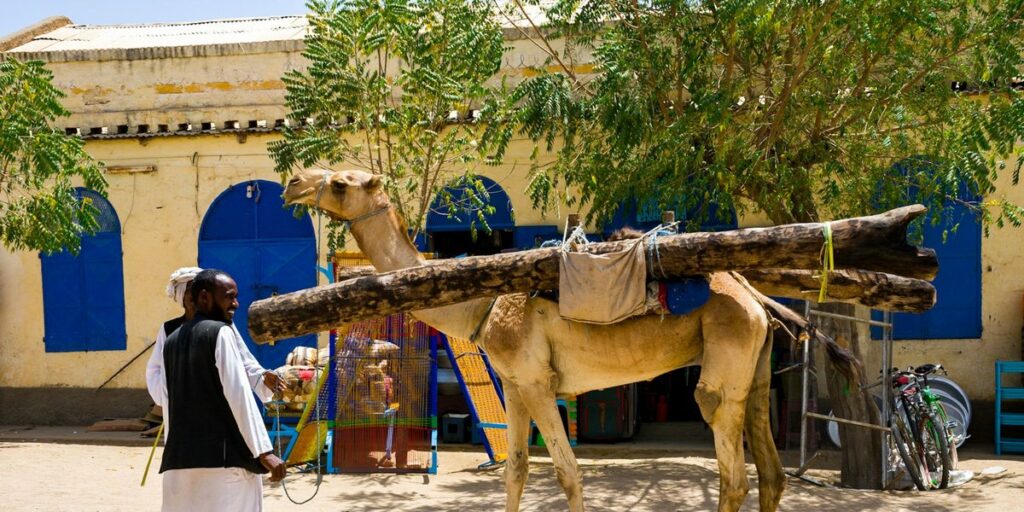
Eritrea is one of the few countries on Earth with no official national language. Not by accident, and not because nobody got around to picking one. It’s written into the way the country governs itself: all nine of its indigenous languages carry equal legal standing, and a child in a Kunama-speaking village learns to read and write in Kunama, not in the language of whoever holds power in the capital.
That single policy choice reshapes everything about how language works here. So before the list, the number that matters: nine indigenous languages, spread across three language families, written in three different scripts. Below is the full breakdown, plus the parts most guides skip — who speaks what, which tongues are slipping toward extinction, and why a country of roughly six million people refuses to crown a single national language.
Table of Contents
- The Quick Answer
- The Two Language Families (and a Third You’ll Miss)
- The Nine Languages, One by One
- Three Scripts in One Country
- The Equal-Status Policy That Defines Eritrea
- Mother-Tongue Schooling Through Grade Five
- The Languages Quietly Disappearing
- A Few Words to Carry With You
The Quick Answer {#the-quick-answer}
If you just want the count and the shape of it, here it is.
| Language | Family | Script | Approx. Speakers | Main Region |
|---|---|---|---|---|
| Tigrinya | Afro-Asiatic (Semitic) | Ge’ez | ~2.5 million | Highlands, central |
| Tigre | Afro-Asiatic (Semitic) | Ge’ez / Arabic | ~1.1 million | Northern & western lowlands |
| Saho | Afro-Asiatic (Cushitic) | Latin / Ge’ez | ~250,000 | Southeastern coast & escarpment |
| Afar | Afro-Asiatic (Cushitic) | Latin | ~300,000 | Denakil (Danakil) Depression, southeast |
| Bilen | Afro-Asiatic (Cushitic) | Latin / Ge’ez | ~120,000 | Around Keren |
| Beja | Afro-Asiatic (Cushitic) | Latin / Arabic | ~120,000 | Far northwest, near Sudan |
| Kunama | Nilo-Saharan | Latin | ~190,000 | Gash-Barka, southwest |
| Nara | Nilo-Saharan | Latin | ~80,000 | Western lowlands near Barentu |
| Dahlik | Afro-Asiatic (Semitic) | — (largely oral) | ~2,500 | Dahlak Archipelago |
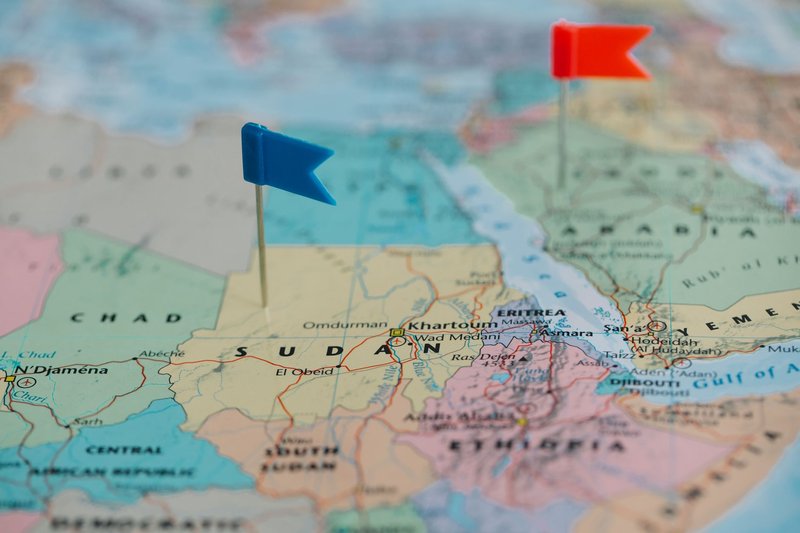
Two families do most of the work — Afro-Asiatic and Nilo-Saharan — and a single tiny island language, Dahlik, almost slipped off the list entirely until linguists confirmed it as distinct in the early 2000s. More on that below.
The Two Language Families (and a Third You’ll Miss) {#the-families}
Eritrea’s nine languages don’t sit in a flat row. They cluster into two big linguistic families, and within one of those families they split again — which is why “how many languages does Eritrea have” never gets you the whole story.
The Afro-Asiatic family covers seven of the nine. It breaks into two branches:
- Semitic — Tigrinya, Tigre, and Dahlik. These share roots with Arabic, Hebrew, and Amharic, and they descend from Ge’ez, the ancient liturgical language still used in the Eritrean Orthodox church.
- Cushitic — Saho, Afar, Bilen, and Beja. Older in the region than the Semitic branch, with their own grammar and sound systems. Afar, for instance, stretches across the border into Ethiopia and Djibouti as a single living language.
The Nilo-Saharan family is the outsider here, and it’s a big deal. Kunama and Nara aren’t related to the other seven languages at all — different roots, different structure, different deep history. They’re the linguistic signature of populations that predate the Semitic and Cushitic spread into the region. When people say Eritrea is a crossroads, this is the hard evidence: two unrelated language families living inside one small country.
The Nine Languages, One by One {#the-nine-languages}
Each language maps closely onto one of the country’s communities, so it helps to read this alongside the full breakdown of Eritrea’s ethnic groups and where they live — the two lists are really one story told from different angles.
Tigrinya
The most spoken language in the country, native to roughly half the population and concentrated in the central highlands around Asmara. It’s a Semitic language written in the Ge’ez script — the same elegant, syllable-based abugida used for Amharic across the border. If you only learn to recognize one Eritrean language on a sign, it’ll be this one, because Tigrinya and Arabic function as the de facto languages of national business even without official status.
Tigre
Don’t let the name fool you — Tigre is a separate language from Tigrinya, not a dialect of it. It’s spoken by well over a million people across the northern and western lowlands, making it the country’s second-largest first language. Predominantly spoken by Muslim communities, Tigre is written sometimes in Ge’ez and sometimes in Arabic script, a small detail that captures Eritrea’s whole linguistic personality.
Saho
A Cushitic language of the southeastern escarpment and coast, spoken by pastoralist and agro-pastoralist communities. Saho speakers have historically moved seasonally between highland and lowland grazing, and the language carries a rich oral tradition of poetry and genealogy.
Afar
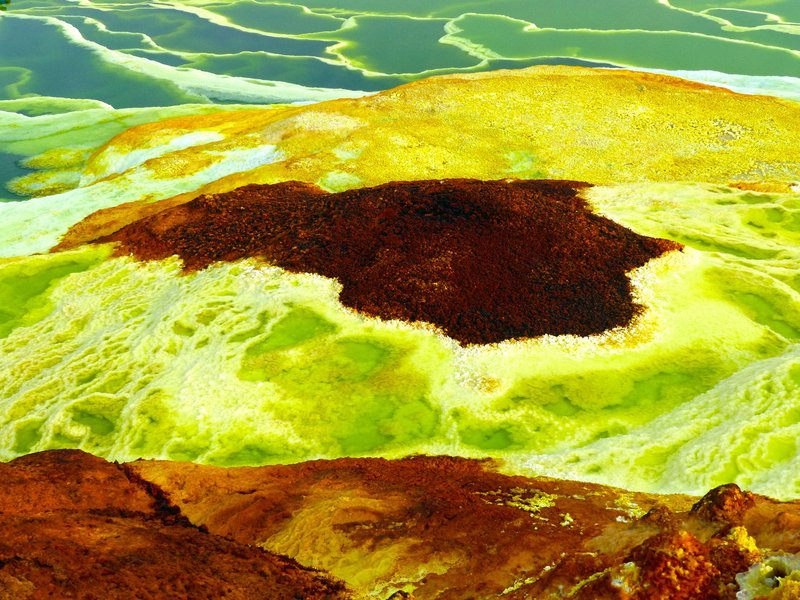
The language of the Afar people, who live across one of the most brutal landscapes on the planet — the Danakil Depression, where temperatures regularly top 45°C and salt flats stretch to the horizon. The Danakil sits among the hottest inhabited places measured on Earth, and the Afar have herded and mined salt there for centuries. The language spans three countries but remains unmistakably one people’s tongue.
Bilen
Centered on the town of Keren, Bilen is a Cushitic language spoken by a community that’s roughly split between Christian and Muslim faiths — a rare bridge culture. It’s the only major Cushitic language of the Eritrean highlands, surrounded by Semitic-speaking neighbors, and it has borrowed heavily from Tigrinya and Tigre as a result.
Beja
Spoken in the far northwest near the Sudanese border, Beja belongs to the Cushitic branch and is one of the oldest continuously spoken languages in the Horn of Africa, with roots that linguists trace back thousands of years. In Eritrea its speakers are a small minority; the larger Beja-speaking population lives across the border in Sudan.
Kunama
Here’s where the map changes. Kunama is Nilo-Saharan — completely unrelated to the seven Afro-Asiatic languages — and it’s spoken in the Gash-Barka region in the southwest. The Kunama are one of Eritrea’s oldest resident populations, and their language preserves a structure and vocabulary that connects them to the broader Nile basin rather than to their immediate neighbors.
Nara
The second Nilo-Saharan language, spoken in the western lowlands near Barentu by a community of fewer than 100,000 people. Nara and Kunama are neighbors geographically but not closely related linguistically, and Nara is the more vulnerable of the two — its speaker base is shrinking as younger people shift toward Tigrinya and Arabic.
Dahlik
The wildcard. Dahlik is spoken on the Dahlak Archipelago in the Red Sea by roughly 2,500 people, and for a long time it was assumed to be just a dialect of Tigre or Arabic. Linguistic fieldwork in the early 2000s established it as a distinct Semitic language in its own right — which means Eritrea’s official count of nine is itself a relatively recent and contested number. It’s the most endangered language in the country, largely unwritten, and it survives mostly in spoken form on a cluster of islands most travelers never reach.
Three Scripts in One Country {#three-scripts}
Most countries write everything in one alphabet. Eritrea uses three, and which script a language takes tells you about its history and its people.
- Ge’ez (Fidäl) — The ancient script of the highlands, an abugida where each character represents a consonant-vowel pair. It’s used for Tigrinya and often for Tigre. Visually it’s unmistakable: rounded, geometric, with small modifications hanging off each base character to mark vowels.
- Arabic script — Used for Tigre and Beja in Muslim communities, reflecting centuries of trade and religious connection across the Red Sea.
- Latin script — The newcomer, adopted for most of the Cushitic and both Nilo-Saharan languages (Saho, Afar, Bilen, Beja, Kunama, Nara). Latin was the practical choice for languages that had little or no prior written standard, and it made the mother-tongue education program below far easier to roll out.
So a single government document or school curriculum in Eritrea can require typesetting in three entirely different writing systems. That’s not a bureaucratic quirk. It’s a deliberate refusal to flatten the country into one script.
The Equal-Status Policy That Defines Eritrea {#equal-status-policy}
Here’s the part nearly every other guide leaves out, and it’s the most important thing to understand.
Eritrea has no official national language. Tigrinya and Arabic are widely used as working languages, but neither is enshrined in law as the national tongue. Instead, the state’s position — rooted in the 1997 constitution and the policy framework that came out of the independence struggle — is that all nine indigenous languages hold equal status. No hierarchy. No “national language” that others must defer to.
This is rare. Most multilingual countries pick one or two dominant languages and let the rest fend for themselves, which is how minority languages die. Eritrea inverted that. The reasoning came straight out of the thirty-year war for independence: a movement that united Christians and Muslims, highlanders and lowlanders, nine distinct peoples — and decided that privileging one language would fracture the very unity it had fought for. UNESCO has documented how language policy and group identity are deeply linked in multilingual states, and Eritrea is a case study in choosing equality over efficiency.
Whether the policy fully succeeds in practice is a fair debate — Tigrinya’s demographic weight gives it real-world dominance no statute can erase. But the principle itself is unusual enough to put Eritrea in a very short list of nations worldwide.
Mother-Tongue Schooling Through Grade Five {#mother-tongue-schooling}
The equal-status policy isn’t just symbolic. It runs through the classroom.
Eritrean children are taught in their mother tongue from grade one through grade five — in all nine languages. A Kunama child learns arithmetic in Kunama. A Saho child learns to read in Saho. English becomes the medium of instruction in later grades, and Arabic and Tigrinya are taught as subjects, but the early foundation is laid in the child’s first language whenever a community’s language is one of the nine.
This is genuinely hard to pull off. It means writing textbooks, training teachers, and developing standardized spelling for languages that, in some cases, had barely been written down before independence. The research consensus is clear that early mother-tongue instruction improves learning outcomes, so Eritrea’s approach lines up with what educators recommend — even if delivering it across nine languages strains a small country’s resources to the limit.
The practical upside: it’s a lifeline for the smaller languages. A language that’s taught to children in school has a fighting chance. A language relegated to the home does not.
The Languages Quietly Disappearing {#endangered-languages}
Equal status on paper doesn’t stop the slow pull of demographics. Two of the nine are in real trouble.
Dahlik is the most fragile, with roughly 2,500 speakers on the Dahlak Archipelago and almost no written tradition. A language that small, that isolated, and that recently identified sits squarely in the danger zone. If the islands’ younger generations shift fully to Arabic or Tigrinya, Dahlik could vanish within a couple of generations.
Nara is the other concern. With under 100,000 speakers and steady pressure from Tigrinya and Arabic in everyday and economic life, its transmission to children is weakening in places. It’s not on the brink the way Dahlik is, but the trend line points the wrong way.
The mother-tongue schooling policy is the strongest counterweight Eritrea has against both losses. It won’t reverse demographic gravity, but teaching a language to its own children in a classroom is the single most effective thing a state can do to keep it alive.
A Few Words to Carry With You {#a-few-words}
If your travels take you to Eritrea, a greeting in the local tongue lands far better than English ever will. In Tigrinya, the language you’ll hear most in Asmara and the highlands:
- Selam — Hello / peace (also the all-purpose greeting)
- Kemey alekha? — How are you? (to a man)
- Yekeniyeley — Thank you
- Eway — Yes
In Tigre, common across the northern lowlands, selam works too — a shared root that quietly proves how tangled these languages really are.
Nine languages, three families, three scripts, and a country that decided none of them gets to rule the others. That’s not a footnote about Eritrea. It’s close to the whole point of the place.