

Japan has 98 airports, but you’ll realistically choose between about seven. The trick isn’t knowing they exist — it’s knowing that landing at Narita instead of Haneda can cost you an extra hour and roughly 2,000 yen before you’ve even left the airport. Pick the wrong one and your first afternoon in Tokyo evaporates on a train.
This guide sorts the major international gateways by what actually matters when you’re booking: where they are, how you get out of them, and which itinerary each one suits. There’s a comparison table further down if you just want codes and numbers.
Table of Contents
- Which airport should I choose?
- Haneda (HND): Tokyo’s close one
- Narita (NRT): Tokyo’s far one
- Kansai (KIX): the gateway to Kyoto, Osaka, and Nara
- Chubu Centrair (NGO): Nagoya and central Japan
- New Chitose (CTS): your way into Hokkaido
- Fukuoka (FUK): Kyushu’s in-city airport
- Naha (OKA): Okinawa and the southern islands
- Comparison table
- Regional and domestic airports
- How to actually decide
Which airport should I choose?
The honest answer comes down to where you’re going first, not which airport is “best.”
Flying into Tokyo? Choose Haneda if you possibly can — it’s closer to the city and the transfer is faster and cheaper. Narita is the fallback when Haneda’s fares are brutal or your route only serves Narita.
Starting in the Kyoto–Osaka–Nara region? Fly into Kansai (KIX) and skip Tokyo entirely. Plenty of travelers waste a day backtracking from Tokyo to Kyoto because they assumed everyone flies into the capital.
Heading to Hokkaido, Okinawa, Nagoya, or Fukuoka first? Each has its own well-connected airport, and there’s rarely a reason to route through Tokyo to reach them.
One more thing worth knowing up front: Japan’s airports got hammered during the pandemic and have since roared back. Haneda and Narita together handled record international traffic through 2024, and budget carriers like Zipair and AirAsia have expanded routes that didn’t exist a few years ago. If you last flew to Japan before 2020, the cheap-flight map looks different now.
Haneda (HND): Tokyo’s close one
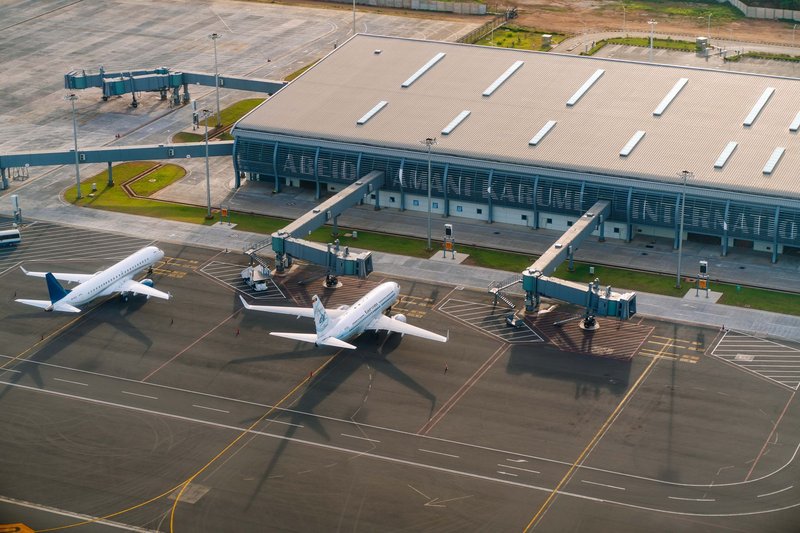
Tokyo Haneda Airport (IATA: HND) sits about 14 km south of central Tokyo, right on Tokyo Bay. That proximity is the whole point. From Haneda you can be in central Tokyo in roughly 30 minutes.
Two main routes get you out: the Tokyo Monorail to Hamamatsucho (about 13–18 minutes, connecting to the JR Yamanote loop line) and the Keikyu Line, which runs to Shinagawa in around 11–15 minutes and continues toward Asakusa and beyond. Both cost in the ballpark of 500 yen. A taxi to central Tokyo runs significantly more — think 5,000–7,000 yen depending on traffic and exactly where you’re headed.
Haneda has historically been Japan’s busiest airport by passenger volume, moving tens of millions of travelers a year, the bulk of them domestic. For years it was mostly a domestic hub, but it has steadily added international slots, and Terminal 3 now handles a growing slate of long-haul flights. Those flights are long, so it is worth choosing a travel pillow before you fly. If your fare and route allow Haneda, take it — the time and money you save on the transfer is real.
Narita (NRT): Tokyo’s far one
Narita International Airport (IATA: NRT) is the one most people picture when they think “flying to Tokyo,” and it’s where a lot of international flights still land. The catch: it’s in Chiba Prefecture, about 60 km east of central Tokyo. That distance shapes everything about the airport experience.
You’ve got a few ways in. The Narita Express (N’EX) is the fast, comfortable JR train to Tokyo, Shinjuku, and Shibuya stations — roughly 55–90 minutes depending on your destination, and covered by the Japan Rail Pass if you hold one. The Keisei Skyliner zips to Ueno in about 41 minutes and is often the quickest option for that side of the city. Budget travelers lean on cheaper limited-express trains or highway buses that cost less but take longer and depend on traffic.
Narita vs Haneda comes up constantly, and the verdict is simple: Haneda for convenience, Narita when the price or your specific route makes it the practical pick. Narita also tends to carry a lot of the low-cost international flights, so the cheaper fare can easily offset the longer transfer. Just budget the extra hour into your arrival day.
Kansai (KIX): the gateway to Kyoto, Osaka, and Nara
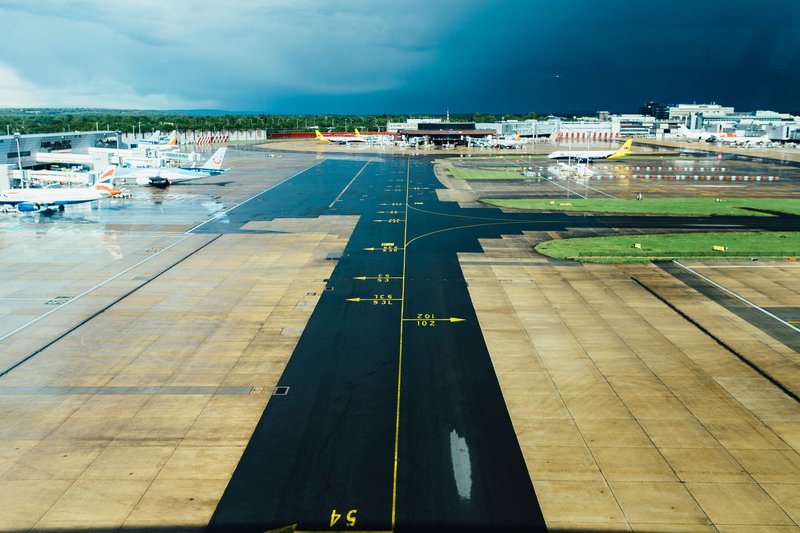
Kansai International Airport (IATA: KIX) is the main gateway to western Japan, and it’s an engineering oddity worth knowing about: the entire airport sits on an artificial island in Osaka Bay, connected to the mainland by a long bridge. It opened in 1994 specifically to take pressure off the cramped, in-city Osaka Itami airport.
For anyone whose trip centers on Kyoto, Osaka, or Nara, this is your airport — full stop. The JR Haruka limited express runs to Kyoto Station in about 75–80 minutes and to Tennoji/central Osaka faster than that; it’s covered by the Rail Pass. The Nankai Rapi:t is the sleek option to Namba in central Osaka in roughly 35–40 minutes. Either way you avoid the Tokyo detour that costs so many first-timers a day.
Kansai is consistently among Japan’s busiest airports for international passengers, and it’s a major base for low-cost carriers serving the rest of Asia. If your itinerary is “Kyoto temples and Osaka food,” fly here and don’t look back.
Chubu Centrair (NGO): Nagoya and central Japan
Chubu Centrair International Airport (IATA: NGO) serves Nagoya and the central Honshu region. Like Kansai, it’s built on a man-made island, this one in Ise Bay, and it opened in 2005.
The Meitetsu μ-Sky train connects the airport to Nagoya Station in around 28–40 minutes. Nagoya itself is a Shinkansen hub, so from there you’re well positioned to reach Kyoto, Osaka, or Tokyo by bullet train, plus the central mountain regions and Takayama. NGO is smaller and calmer than the Tokyo and Kansai giants, which some travelers genuinely prefer for a low-stress arrival. It’s a sensible entry point if central Japan, the Japanese Alps, or a Shinkansen-based loop is your plan.
New Chitose (CTS): your way into Hokkaido
New Chitose Airport (IATA: CTS) is the gateway to Hokkaido, Japan’s northern island, and it serves Sapporo. It’s one of the busiest domestic airports in the country — the Tokyo–Sapporo air corridor is among the most heavily trafficked routes on the planet — and it handles international flights too.
The JR rapid train runs to Sapporo Station in roughly 37–40 minutes. If your trip is built around Hokkaido — Sapporo’s food scene, the Niseko ski resorts in winter, the lavender fields and national parks in summer — flying directly into CTS saves you a long haul up from Tokyo. In ski season especially, plenty of travelers fly in here and never touch the rest of Japan.
Fukuoka (FUK): Kyushu’s in-city airport
Fukuoka Airport (IATA: FUK) has a feature the big hubs would kill for: it’s almost in the middle of the city. The subway connects the airport to Hakata Station in about 5 minutes and to the Tenjin district in around 11. That’s not a typo — you can land and be in downtown Fukuoka faster than it takes to clear baggage at some airports.
FUK is the main gateway to Kyushu, the southern of Japan’s main islands, and it sees heavy international traffic from elsewhere in Asia given how close Fukuoka is to the Korean Peninsula. If Kyushu — Fukuoka’s famous tonkotsu ramen, the hot springs of Beppu and Yufuin, the volcanoes around Kumamoto — is on your list, this is the obvious entry point.
Naha (OKA): Okinawa and the southern islands
Naha Airport (IATA: OKA) sits on the main island of Okinawa, Japan’s subtropical southern prefecture, and it’s the hub for the whole Ryukyu island chain. It handles international flights and connects to the smaller outer islands by short domestic hops.
The Yui Rail monorail links the airport to central Naha in about 12–15 minutes. Okinawa is a different Japan — beaches, coral reefs, a distinct Ryukyuan culture and cuisine, and a climate closer to Taiwan than Tokyo. If a beach-and-islands trip is the goal, you fly into Naha, not the mainland.
Comparison table
| Airport | IATA | City served | Distance to center | Fastest transfer |
|---|---|---|---|---|
| Haneda | HND | Tokyo | ~14 km | ~30 min |
| Narita | NRT | Tokyo | ~60 km | ~41 min (Skyliner to Ueno) |
| Kansai | KIX | Osaka / Kyoto | island, ~50 km to Osaka | ~35 min to Namba |
| Chubu Centrair | NGO | Nagoya | island, ~35 km | ~28 min to Nagoya |
| New Chitose | CTS | Sapporo | ~45 km | ~37 min to Sapporo |
| Fukuoka | FUK | Fukuoka | ~3 km | ~5 min to Hakata |
| Naha | OKA | Naha (Okinawa) | ~5 km | ~12 min to Naha |
A note on the numbers: passenger volumes shift year to year, but the broad pecking order is stable — Haneda leads on total passengers, with Narita and Kansai trading places at the top for international traffic. For the full ranked breakdown by passenger numbers, Japan’s Ministry of Land, Infrastructure, Transport and Tourism publishes the official aviation statistics.
Regional and domestic airports
Beyond the seven gateways above, Japan is laced with regional airports that mostly handle domestic flights, and they’re worth knowing about if you’re hopping around the country.
A few that come up often:
- Itami (ITM) — Osaka’s older, in-city airport, now almost entirely domestic. Closer to central Osaka than Kansai, so domestic travelers often prefer it.
- Sendai (SDJ) — the gateway to the Tohoku region in northern Honshu.
- Hiroshima (HIJ) — useful for the city itself and the Miyajima/Itsukushima area, though many reach Hiroshima by Shinkansen instead.
- Kagoshima (KOJ) — southern Kyushu, including the volcano Sakurajima and ferries to the Yakushima cedar forests.
For most domestic legs, the Shinkansen competes hard with flying and frequently wins on total door-to-door time once you account for airport transfers. The exception is the long hauls — Tokyo to Sapporo, Tokyo to Okinawa, anything to the far north or south — where flying clearly beats the rails.
How to actually decide
Strip away the details and the choice is almost always dictated by your first stop:
- Tokyo first → Haneda if you can get it, Narita if the price or route says so.
- Kyoto, Osaka, or Nara first → Kansai, and skip Tokyo.
- Nagoya or central Japan → Chubu Centrair.
- Hokkaido / Sapporo / Niseko → New Chitose.
- Kyushu / Fukuoka → Fukuoka, with its unbeatable 5-minute subway ride.
- Okinawa and the islands → Naha.
The single most common mistake is reflexively booking Tokyo because it’s the name you know, then losing a day backtracking west. Look at where your trip actually begins, match it to the nearest gateway, and check whether a budget carrier flies the route directly. Japan’s airports are easy, fast, and genuinely pleasant to move through — the only hard part is making the right pick before you book.