
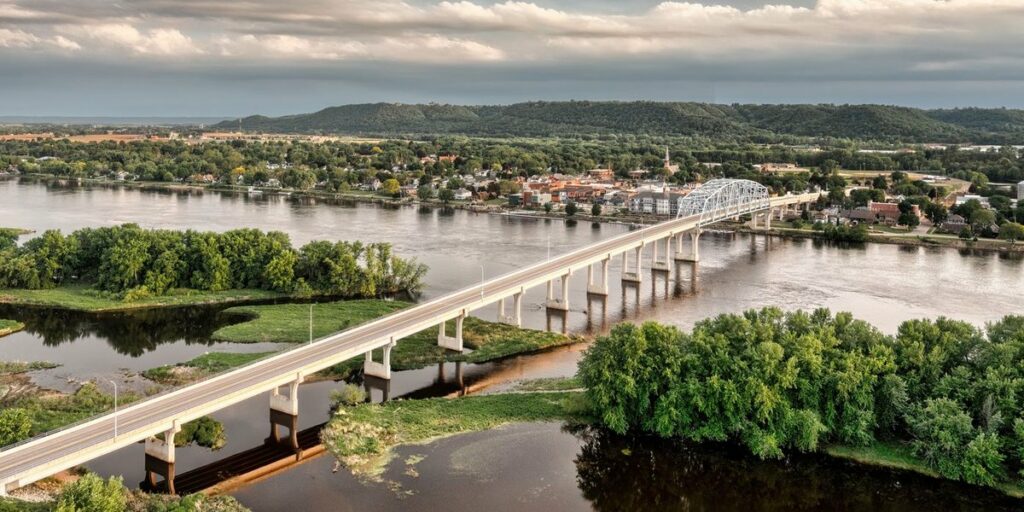
Here’s the thing nobody tells you up front: Wisconsin and Iowa don’t actually touch on land. The entire border between them is the Mississippi River, running down the main channel from roughly Prairie du Chien south to the corner near Dubuque. So if you searched “Wisconsin Iowa bordering towns” expecting a tidy list of places that meet at a county line, the literal answer is “none of them” — and that’s exactly the dead-end answer most pages give you before you close the tab in frustration.
The useful answer is different. What you’re really after is the towns that sit across the water from each other, connected by a bridge or, in one stubborn case, a seasonal ferry. Those are the Wisconsin–Iowa bordering towns that matter for a road trip, a genealogy hunt, or just understanding how this stretch of the Upper Mississippi fits together. Here’s the complete list, with the actual bridge names, what each crossing connects, and what you’d actually stop for.
Table of Contents
- Why there’s no land border
- The town pairs at a glance
- Prairie du Chien ↔ Marquette & McGregor
- Lansing ↔ the Wisconsin shore
- Dubuque ↔ Grant County and the tri-state point
- Tying it into a Great River Road drive
Why there’s no land border
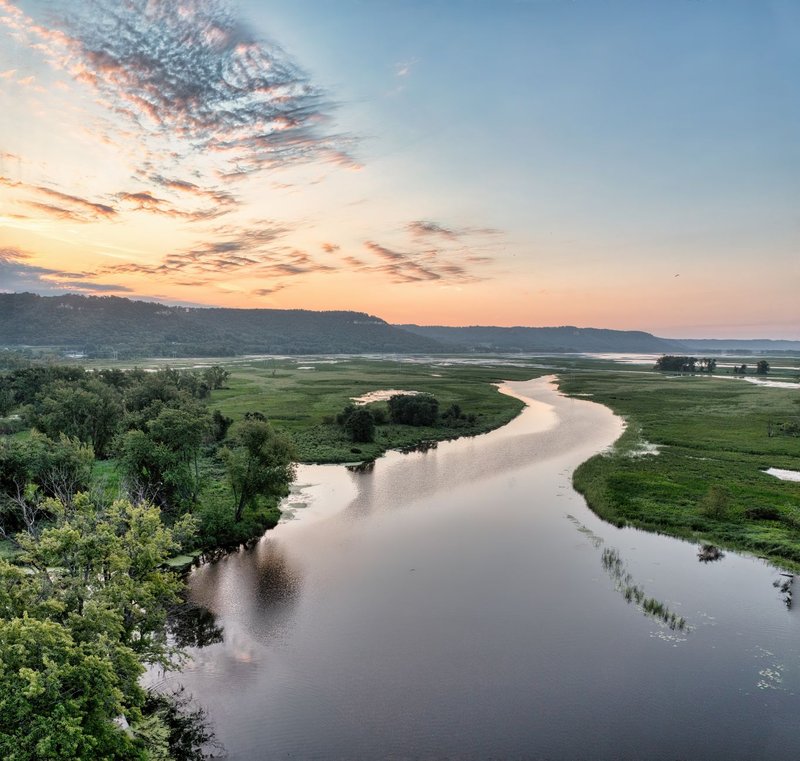
The Wisconsin–Iowa boundary follows the Mississippi River channel, a line drawn down moving water rather than across dry ground. That single fact reshapes the whole question. Towns on the Iowa side and towns on the Wisconsin side never share a street, a school district, or a “Welcome to” sign at a crossroads. They share a current.
This matters for two practical reasons. First, every connection between the two states is a structure — a highway bridge, a rail bridge, or a ferry. There’s no walking from one to the other. Second, the towns developed facing the river, not each other, which is why the Iowa-side and Wisconsin-side communities often have completely different personalities even when they’re less than a mile apart as the heron flies. The Wisconsin bluff towns lean into wineries and overlooks. The Iowa river towns lean into flea markets, fishing, and old steamboat history.
So when you map the “bordering towns,” you’re really mapping the bridges. Get the crossings right and the rest falls into place.
The town pairs at a glance
Here are the facing-town pairs along the Wisconsin–Iowa river border, from north to south, with the crossing that links each one.
| Iowa side | Wisconsin side | Crossing | Highway |
|---|---|---|---|
| Marquette | Prairie du Chien | Marquette–Joliet Bridge | US 18 |
| McGregor | Prairie du Chien | Marquette–Joliet Bridge (via Marquette) | US 18 |
| Lansing | Grant/Crawford County shore | Black Hawk Bridge | IA 9 / WIS 82 |
| Dubuque | Grant County (near Wisconsin border) | Dubuque–Wisconsin Bridge (US 151/61) + Julien Dubuque Bridge | US 151 / 61 / 20 |
A few notes before the detail. McGregor and Marquette are twin towns sitting side by side on the Iowa bank, so they effectively share the Prairie du Chien crossing. And the Dubuque area is the busy one: it’s where Iowa, Wisconsin, and Illinois nearly meet, with the actual tri-state point sitting just north of the city. More on that below. If you want the wider picture beyond the major crossings, our complete rundown of Iowa–Wisconsin bordering towns maps the full set of facing communities along the shared state line.
Prairie du Chien ↔ Marquette & McGregor
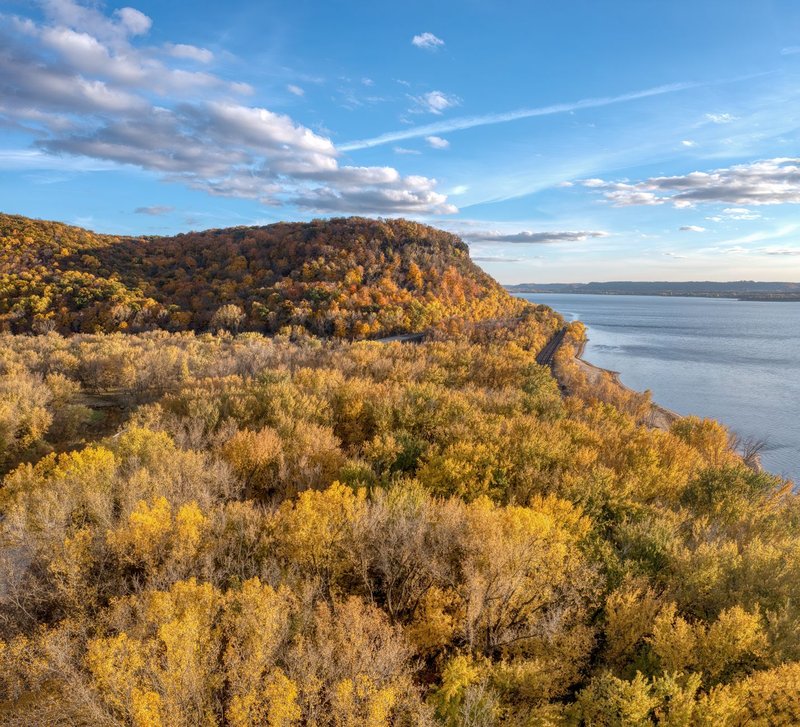
This is the marquee pairing, and the one most “bordering towns” searches are circling without naming it. Prairie du Chien is Wisconsin’s second-oldest European settlement, a fur-trade town at the mouth of the Wisconsin River. Directly across the Mississippi sit the Iowa twins of Marquette and McGregor.
The link is the Marquette–Joliet Bridge, carrying US Highway 18 over the river. Cross it westbound and you land in Marquette, a small river town that’s basically a gateway — there’s a casino on the Iowa bank and the road climbs fast into the bluffs from there. A couple of minutes south is McGregor, the more charming of the two: a tight main street of brick storefronts, antique shops, and the kind of riverfront that earned the nickname “Little Switzerland” for the surrounding bluff country.
What’s actually worth the stop on the Iowa side is Pikes Peak State Park, perched on a 500-foot bluff just below McGregor, with one of the best overlooks on the entire Upper Mississippi. On the Wisconsin side, Prairie du Chien’s draw is history — the Villa Louis estate and the old fur-trade footprint. Two towns, one bridge, two completely different reasons to stop.
Lansing ↔ the Wisconsin shore
North of the Prairie du Chien crossing, the next major bridge is the Black Hawk Bridge at Lansing, Iowa, connecting IA 9 to WIS 82 on the Wisconsin side. The original 1931 cantilever span — a skinny, rust-colored landmark locals called the “Lansing Bridge” — was a beloved eyesore for decades before being replaced by a modern structure, so depending on when you last drove through, the bridge you remember may not be the one standing now.
Lansing itself is a fishing town built into the bluffs, with Mount Hosmer rising right behind Main Street and a drive to the top that gives you a three-state view on a clear day. The Wisconsin side here is rural and quiet — you cross into Vernon and Crawford County farmland rather than a matching town, which is part of why this pair feels less like twin cities and more like a single river community with a bridge through it. For anglers and for the genealogy crowd tracing river families, Lansing is a name that comes up constantly.
Dubuque ↔ Grant County and the tri-state point
The southern anchor is Dubuque, Iowa’s oldest city and by far the biggest town on this border. This is where the geography gets interesting: just north of Dubuque, the Iowa–Wisconsin–Illinois tri-state point sits out in the river, the spot where all three state lines converge on the water.
Two bridges define the area. The Dubuque–Wisconsin Bridge carries US 151/61 northeast across the Mississippi toward Grant County, Wisconsin — the crossing you’d take heading for Cassville or the Wisconsin bluff towns. The Julien Dubuque Bridge carries US 20 east into Illinois. So Dubuque is genuinely a three-state hub: one city, with spans reaching into both neighboring states.
On the Wisconsin side near this crossing, Grant County gives you Cassville and the Stonefield historic site, plus the Cassville Car Ferry — one of the last working river ferries in the region, running seasonally between the Wisconsin shore and the Iowa side near the lock. Dubuque itself earns a full day: the National Mississippi River Museum, the Fenelon Place Elevator (a steep little funicular billed as the world’s shortest, steepest scenic railway), and a riverfront that’s been worked over by steamboats, lead mining, and a casino economy in turn.
Tying it into a Great River Road drive
The reason these town pairs are worth mapping isn’t trivia — it’s that they string together into one of the best river drives in the country. The Great River Road runs both banks of the Mississippi, which means you can do this border as a loop: down the Iowa side, across at Dubuque, and back up the Wisconsin bluffs.
A clean version looks like this. Start at Prairie du Chien, cross to Marquette and McGregor, and drive the Iowa Great River Road south through the bluffs toward Dubuque. Spend time in Dubuque, then cross the Dubuque–Wisconsin Bridge and head north on the Wisconsin side through Grant County — Cassville, the ferry, the overlooks — back up toward Prairie du Chien. Detour to Lansing’s Black Hawk Bridge if you want to add the northern crossing.
That’s roughly a 120-mile loop if you keep it tight around Dubuque and Prairie du Chien, longer if you push north to Lansing. The whole point of getting the bordering-towns geography right is that it turns a confusing “these towns don’t touch” question into a route. The Mississippi is the border. The bridges are how you cross it. And the towns on either side — facing each other across the water, never quite touching — are the reason to make the drive.