

Spanish will get you a hotel room in Asunción. Guaraní will get you invited to share tereré on someone’s porch. That’s the gap most phrasebooks miss about Paraguay: nearly everyone here speaks both, often in the same sentence, and the words that actually make people light up are the Guaraní ones. Locals don’t expect a tourist to know any, which is exactly why a single “Mba’éichapa?” lands so well.
Paraguay is the only country in the Americas where an Indigenous language is spoken by the majority — roughly 90% of the population uses Guaraní, according to the BBC. Most of the time you’ll hear it blended with Spanish into a hybrid called Jopara (the word literally means “mixture”). So this isn’t a “learn Guaraní in 30 days” thing. It’s a short list of phrases that travel well, sorted by when you’ll actually need them.
What’s on this page
- Quick-reference cheat sheet
- Start here: tereré and the heat
- Greetings and small talk
- Ordering food and drinks
- Getting around: taxis and buses
- Goodbyes and gratitude
- What NOT to say
- A note on pronunciation
Quick-reference cheat sheet
Screenshot this before your flight. Pronunciations are rough English approximations — stress the part in caps.
| Phrase | Means | Pronounce | Origin |
|---|---|---|---|
| Mba’éichapa? | How are you? / What’s up? | mba-EY-cha-pa | Guaraní |
| Iporã | Good / fine | ee-po-RAH | Guaraní |
| Aguyje | Thank you | ah-goo-JEH | Guaraní |
| Hakueterei | It’s so hot | ha-kwe-te-REY | Guaraní |
| Ja’u la tereré | Let’s drink tereré | ja-OO la te-re-REH | Jopara |
| Néike | Come on / let’s go / cheer up | NEY-ke | Guaraní |
| Nde rasa | That’s too much / unbelievable | nde rah-SAH | Guaraní |
| Tranquilopa | All good / no worries | tran-KEE-lo-pa | Jopara |
| Mbéu | Tell me / go on | MBEH-oo | Guaraní |
| Jajotopata | See you later | ja-jo-to-pa-TAH | Guaraní |
Start here: tereré and the heat
If you learn nothing else, learn the two phrases that run Paraguayan social life. Tereré is cold yerba mate, drunk through a metal straw from a shared cup called a guampa, and it’s everywhere — government offices, bus stops, the back of motorbikes. People drink it in a circle, passing one cup around. Getting waved into that circle is the whole experience.
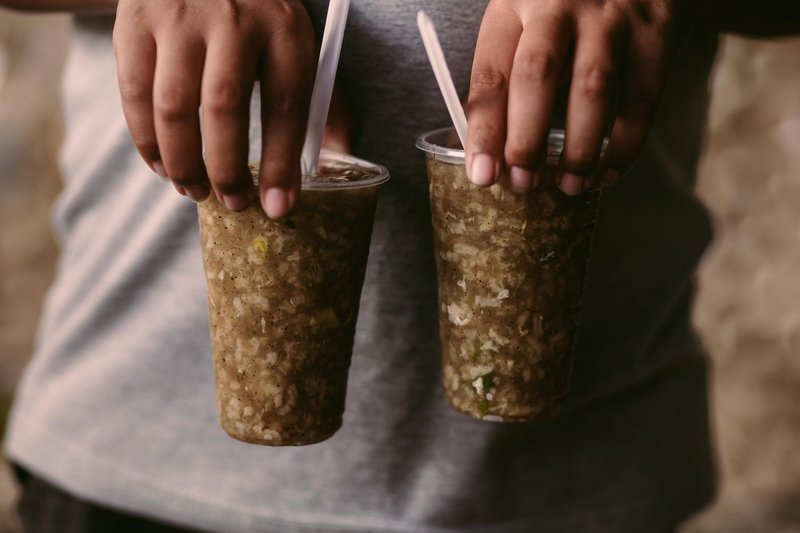
Ja’u la tereré (ja-OO la te-re-REH) — “Let’s drink tereré.” This is the social glue of the country. Say it and mean it. When the cup comes to you, drink the whole thing, then hand the guampa back to the person serving — don’t pass it to the next person yourself, and don’t hold the cup while you chat. Saying gracias when you take it actually means “I’m done, no more for me,” so only say it when you genuinely want to stop.
Hakueterei (ha-kwe-te-REY) — “It’s unbearably hot.” Paraguay’s summer regularly pushes past 40°C, and complaining about the heat is a national bonding ritual. Drop this with a slow head-shake and you’ll get instant solidarity. The -eterei ending is a Guaraní intensifier, like adding “way too” to anything.
Néike (NEY-ke) — the most useful single word you’ll learn. It’s “come on,” “let’s go,” “you’ve got this,” and “cheer up” all at once. Heard at football matches, when someone’s dragging their feet, and as general encouragement. Versatile and unmistakably local.
Greetings and small talk
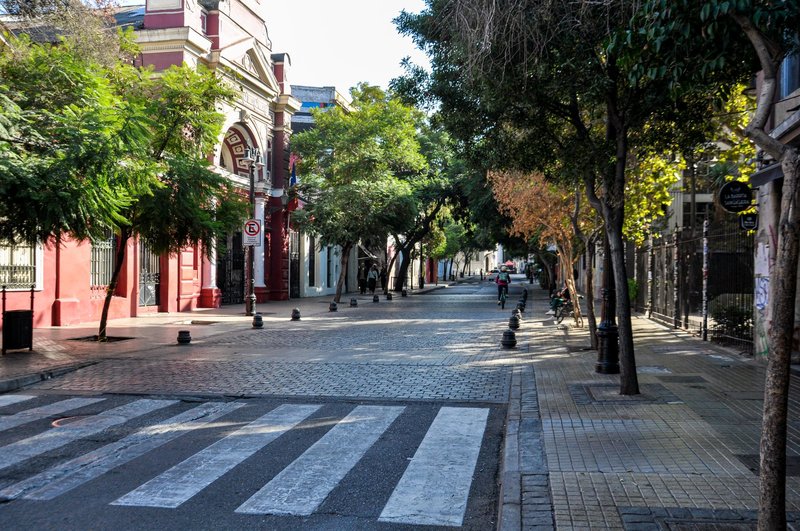
Mba’éichapa? (mba-EY-cha-pa) — “How are you / what’s up?” This is the door-opener. A vendor, a taxi driver, a hotel clerk — lead with this instead of hola and watch the temperature of the conversation change. They’ll usually grin, maybe say something back in Guaraní to test you.
Iporã (ee-po-RAH) — “Good,” the standard reply to the above. Also just means “nice” or “pretty” on its own. Someone shows you a view, you say iporã.
Mbéu (MBEH-oo) — “Tell me” or “go on.” Useful when you want to seem engaged, or when a local launches into a story and you want them to keep going.
Nde rasa (nde rah-SAH) — roughly “that’s too much” or “you’ve got to be kidding.” Expresses friendly disbelief, like when a price sounds absurd or a story gets wild. It’s mild and good-natured, not aggressive.
In Paraguayan Spanish you’ll also notice the voseo — people use vos instead of tú, same as Argentina. So it’s ¿De dónde sos? (“Where are you from?”), not ¿De dónde eres? No one will correct you for using tú, but vos sounds local.
Ordering food and drinks
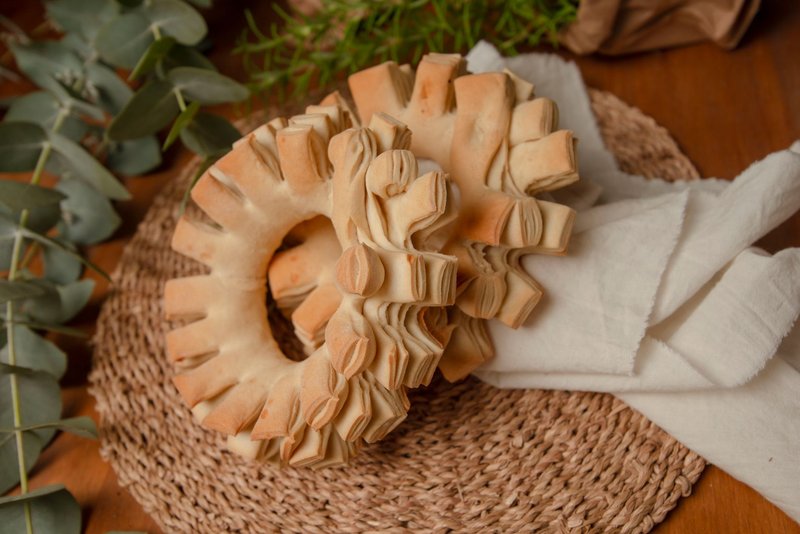
Paraguayan food leans on corn, cassava, and cheese, and the names are worth knowing so you can order without pointing.
Chipa — a dense, chewy cheese bread made with cassava flour, sold from baskets on buses and street corners. Ask for una chipa, por favor. Around Easter, families make chipa by the dozen.
Sopa paraguaya — the famous one. It’s not soup. It’s a savory cornbread with cheese and onion, one of the few “soups” you eat with a fork. The name comes from a cook who accidentally over-thickened a soup for a president and served the solid result anyway.
Mbeju (MBEH-joo) — a starchy cassava-and-cheese flatbread cooked in a pan. Note it sounds almost like mbéu (“tell me”) but means something completely different — context saves you.
Tereré rupa (te-re-REH ROO-pa) — literally “tereré’s bed,” the savory snack you eat before drinking tereré so the cold drink doesn’t hit an empty stomach. Asking for one shows you know the ritual.
For the check: La cuenta, por favor works everywhere. To say something’s delicious, heterei (he-te-REY) — same intensifier root as hakueterei, but for “tasty.”
Getting around: taxis and buses
City buses (colectivos) are cheap and chaotic; taxis and ride apps like Bolt and MUV operate in Asunción. A few phrases keep things smooth.
¿Cuánto sale? — “How much is it?” Sale is the local verb for “costs” here, more common than cuesta. Agree on the price before you get in an unmetered taxi.
Pará acá, por favor — “Stop here, please.” Note the vos form pará rather than para. On a colectivo you sometimes just say ¡La parada! to signal your stop.
¿Está lejos? — “Is it far?” Useful when a driver’s enthusiasm about a route doesn’t match your map.
Despacio, por favor — “Slowly, please.” Self-explanatory once you’ve experienced Asunción traffic.
If a driver asks ¿A dónde vas? (“Where are you going?”), that’s the vos form again. Name your destination and add por favor — politeness goes a long way, and Paraguayans are notably warm with visitors who try.
Goodbyes and gratitude
Aguyje (ah-goo-JEH) — “Thank you” in Guaraní. This is the one that earns you the biggest reaction. Tourists almost never say it, so a sincere aguyje after a meal or a favor genuinely surprises people.
Jajotopata (ja-jo-to-pa-TAH) — “See you later,” literally “we’ll meet again.” Warmer than a flat chau.
Tranquilopa (tran-KEE-lo-pa) — “All good, no worries.” A Jopara mashup of Spanish tranquilo and the Guaraní -pa ending. Perfect response when someone apologizes or frets over a small thing.
Chau is the everyday goodbye (borrowed from Italian, like in Argentina). Stack it for warmth: chau chau between friends isn’t redundant, it’s affectionate.
What NOT to say
A few things will mark you instantly, and one of them can actually land you in an awkward spot.
Don’t say gracias when you take the tereré cup. As mentioned above, in the tereré circle gracias means “I’m done.” Say it on the first round and you’ve just opted out of the whole ritual without realizing it.
Don’t confuse Paraguay with Uruguay, ever. Different country, different everything. Paraguayans are landlocked and proud, and the mix-up is the fastest way to look like you did zero homework.
Go easy on Argentine slang. Phrases like che and boludo are understood — Paraguay and Argentina share the voseo — but boludo ranges from “buddy” to a real insult depending on tone, and a foreigner deploying it sounds off. Stick to the Paraguayan phrases above.
Don’t over-perform your Guaraní. A couple of well-placed words charm people. Reciting a memorized paragraph at a confused street vendor does the opposite. Use the phrase that fits the moment and let the conversation drift back to Spanish.
And one cultural note: Paraguay still carries the memory of the War of the Triple Alliance, the 1860s conflict that devastated the country’s population. It’s not casual small talk — let locals raise their own history rather than quizzing them on it.
A note on pronunciation
Guaraní looks intimidating written down, but it’s mostly phonetic once you know two things. That apostrophe — the puso — is a glottal stop, the tiny catch in the middle of “uh-oh.” So ja’u is “ja” then a beat then “u,” not “jow.” And the nasal vowels (the ones with a tilde, like the ã in iporã) are pronounced through your nose, the way the French say “bon.”
You won’t nail it on the first try, and that’s fine. Paraguayans aren’t grading you. They’re reacting to the fact that you bothered, which is rare enough that the effort itself is the point. Get mba’éichapa and aguyje clean, say yes when the tereré comes around, and the rest of the country tends to open up from there.