
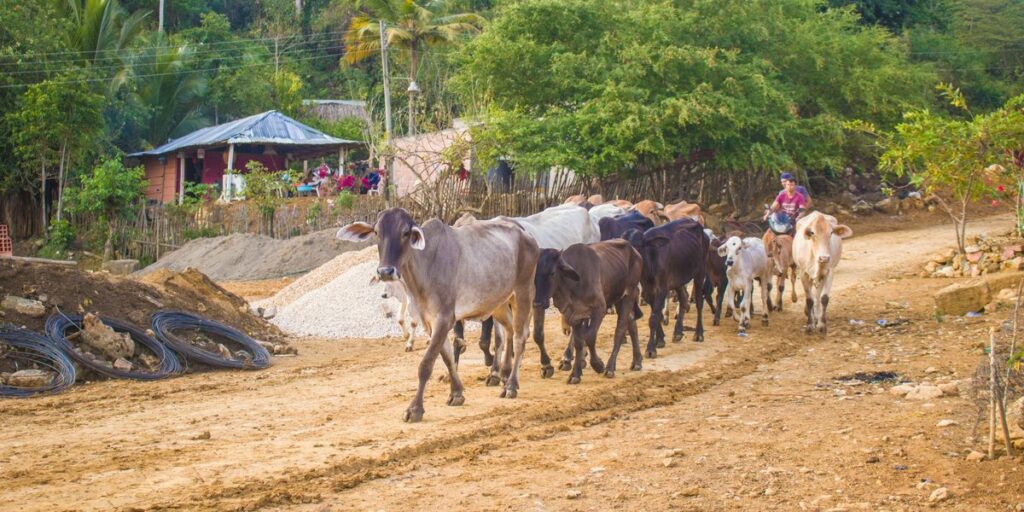
If you’ve studied Spanish in a classroom and then landed in Tegucigalpa, the first thing that hits you isn’t a vocabulary gap. It’s that nobody says tú. They say vos, with a verb ending your textbook never mentioned, and they swallow half the s sounds while doing it. Honduras doesn’t speak one language with one accent. It speaks Spanish in a distinctly Central American register, plus a cluster of indigenous tongues hanging on along the coast and in the mountains, plus actual English on a few Caribbean islands.
This guide breaks down how Honduran Spanish works mechanically — the conjugations, the pronunciation quirks, the slang you’ll actually hear — and then catalogs the indigenous and immigrant languages that share the country with it.
Table of Contents
- The short version
- Honduran Spanish: the main event
- Voseo: why nobody says tú
- The disappearing s and other pronunciation moves
- Honduran (catracho) slang glossary
- Coastal vs. interior: two soundscapes
- The Bay Islands speak English
- Indigenous languages of Honduras
- A pronunciation cheat sheet
- Wrapping up
The short version
Spanish is the official language and what roughly 99% of the country speaks. The Honduran variety belongs to the broader Central American Spanish family, and its three defining features are voseo (using vos instead of tú), s-aspiration (turning s into a soft h or dropping it entirely), and a melodic, almost sing-song intonation that other Spanish speakers immediately clock as Central American.
Alongside Spanish, Honduras is home to several indigenous languages — Garífuna, Miskito, and a handful of smaller Lenca, Pech, Tol, and Tawahka tongues — most of them endangered. And on the Bay Islands off the Caribbean coast, a chunk of the population grows up speaking English-based Creole, not Spanish, at home.
That’s the map. Now the detail.
Honduran Spanish: the main event
Honduran Spanish is what linguists file under Central American Spanish, the same broad group that includes Nicaragua, Guatemala, El Salvador, and Costa Rica. Within that group, Honduras shares the most with Nicaragua and El Salvador — the voseo, the dropped consonants, the relaxed delivery. Honduras is just one stop on a much larger map of countries that speak Spanish, and where it sits in that family explains a lot about how it sounds.
What it is not is the Spanish of Spain or even the Spanish of Mexico, the variety most North American learners are taught. A Honduran will understand your Mexican-textbook Spanish fine. But the reverse takes adjustment, because so much of what makes Honduran speech distinctive happens at the level of sound and grammar, not just vocabulary.
People here often call themselves catrachos — a nickname that traces back to a 19th-century Honduran general, Florencio Xatruch, whose name got garbled into “catrachos” by Nicaraguan soldiers. The word stuck. Honduran Spanish, slang and all, gets called catracho too.
Voseo: why nobody says tú
This is the single biggest thing to internalize. In Honduras, the informal second-person pronoun is vos, not tú. And vos takes its own verb conjugations.
Here’s the pattern. Where standard Spanish gives you tú hablas, tú comes, tú vives, voseo gives you:
- vos hablás (you speak)
- vos comés (you eat)
- vos vivís (you live)
The stress jumps to the final syllable, and the verb ending shifts. For -ar verbs you get -ás, for -er verbs -és, for -ir verbs -ís. In the present tense, that final-syllable stress is the giveaway. ¿Qué querés? (What do you want?) instead of ¿Qué quieres? Notice it also kills the stem change — querés, not quieres.
Commands work differently too: vení (come), decí (say), mirá (look). Drop the final -d you’d expect from a Spanish venid, stress the last syllable, done.
Voseo isn’t sloppy or substandard. It’s the default register for friends, family, peers, and anyone you’d address informally. Honduras uses usted for formality and distance, vos for everything familiar, and tú almost not at all — it can even sound a little affected or foreign coming from a local. If you want to sound like you actually live here, vos is non-negotiable. The voseo phenomenon is widespread across the Spanish-speaking Americas, but Honduras is squarely in the zone where it’s the everyday norm rather than a regional curiosity.
The disappearing s
If voseo is the grammar, s-aspiration is the sound. Hondurans routinely take the s at the end of a syllable and either soften it into a breathy h or drop it altogether.
So los pescados (the fish) comes out closer to loh pehcao. Está becomes ehtá. Las casas turns into lah casa. This is called s-aspiration, and it’s one of the most consistent markers of Honduran — and broadly Caribbean and Central American — speech.
For a learner trained to pronounce every letter crisply, this is disorienting at first. You’ll hear a sentence and feel like words are missing, because acoustically they kind of are. The trick is to stop listening for the s and start listening for the breath and the rhythm. Once your ear adjusts, the dropped s stops being noise and becomes information — it tells you exactly where in the Spanish-speaking world you are.
Layered on top is the intonation. Honduran Spanish has a noticeably melodic, rising-and-falling cadence — people often describe it as “sing-songy.” Sentences swing up and down more than the flatter delivery of, say, central Mexican Spanish. Combined with the relaxed consonants, it gives Honduran speech a smooth, almost musical quality that’s hard to mistake once you’ve heard it a few times.
Honduran slang glossary
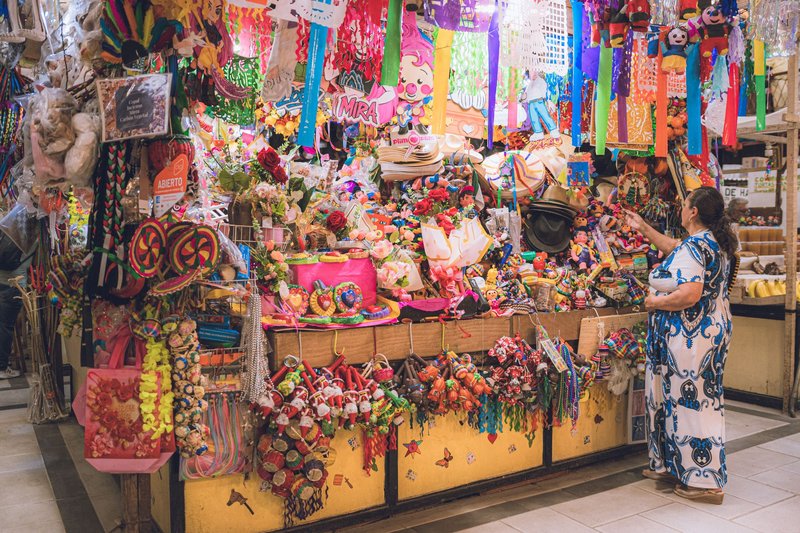
Vocabulary is where Honduran Spanish gets fun, and where loanwords from indigenous languages, English, and Afro-Caribbean Garífuna all surface. Here’s a working glossary of catracho slang you’ll hear constantly:
- Catracho / catracha — a Honduran (also the name of the national breakfast dish: beans, eggs, tortilla, cheese)
- Pisto — money. The universal word for cash. No tengo pisto = I’m broke.
- Cipote / cipota — a kid, a child. Borrowed across the region.
- Maje — dude, guy, buddy. The all-purpose filler word, used like güey in Mexico. ¿Qué onda, maje?
- Pija — vulgar but everywhere; can intensify anything. Está bien pija roughly means “it’s really cool” or “really intense,” depending on context. Use with care.
- Chamba — a job, work. Buscando chamba = looking for work.
- Birria — beer. (Different meaning from the Mexican stew.)
- Cheque — okay, cool, sounds good. Cheque, nos vemos = cool, see you.
- Chele / chela — a light-skinned or blond person; also slang for a beer.
- Tuanis — cool, great, awesome. Shared with Costa Rica and Nicaragua.
- Pulpería — a small corner store. Not slang exactly, but essential daily vocabulary you won’t find in a textbook.
A few of these — pisto, cipote, maje — are the words that most instantly mark someone as Honduran or Central American. Sprinkle them in and locals will clock you as someone who’s actually been around, not someone repeating phrasebook Spanish.
Coastal vs. interior
Honduras isn’t acoustically uniform. There’s a real split between the interior highlands and the Caribbean coast.
The interior — Tegucigalpa, Comayagua, the mountainous center — speaks the “standard” Honduran Spanish described above: voseo, aspirated s, melodic intonation, relatively conservative vocabulary.
The north coast — San Pedro Sula, La Ceiba, Tela, Trujillo — carries heavier Afro-Caribbean and Garífuna influence. The coast was historically tied to the banana industry, English-speaking Caribbean labor, and Garífuna communities, and that mix seeped into the local speech. You’ll hear more English-derived words and a different cultural rhythm. The coast feels Caribbean in a way the interior doesn’t, and the language follows.
Then there’s the genuine outlier: the Bay Islands, where the dominant home language isn’t a flavor of Spanish at all.
The Bay Islands speak English
Off the Caribbean coast sit Roatán, Utila, and Guanaja — the Bay Islands. Their linguistic history runs straight back to British settlement, English and Scottish colonists, and Afro-Caribbean populations who arrived speaking English-based Creole.
The result is that a large share of native Bay Islanders grow up speaking Bay Islands English — an English-based Creole — as their first language, with Spanish learned as a second. Walk into a shop on Roatán and you may well be greeted in English-accented Creole before anyone tries Spanish.
This makes the Bay Islands one of the more striking linguistic pockets in Latin America: a Spanish-official country with an English-speaking island population whose roots are Caribbean and British rather than Hispanic. Spanish has gained ground over the decades through migration from the mainland and national schooling, but the Creole heritage is still very much alive and a point of local identity.
Indigenous languages of Honduras
Before Spanish, the territory now called Honduras held a patchwork of indigenous languages. Several survive, though most are endangered, and a few are already extinct or down to a handful of elderly speakers. These communities are part of the wider mosaic of ethnic groups across North America, each carrying its own language and history. Here’s the landscape:
| Language | Family | Region | Approx. speakers | Status |
|---|---|---|---|---|
| Garífuna | Arawakan (with Carib & African influence) | North Caribbean coast | ~98,000 (Honduras) | Vulnerable but active |
| Miskito | Misumalpan | Gracias a Dios (Mosquito Coast), east | ~29,000+ | Living, actively spoken |
| Tol (Tolupán/Jicaque) | Jicaquean | Yoro, Montaña de la Flor | ~500 | Severely endangered |
| Pech (Paya) | Chibchan | Olancho, Colón | ~1,000 | Endangered |
| Tawahka (Sumo) | Misumalpan | Río Patuca region | ~700 | Endangered |
| Ch’orti’ | Mayan | Western border (near Copán) | very few in Honduras | Nearly extinct locally |
| Lenca | (isolate / unclassified) | Western/central highlands | effectively 0 fluent | Extinct as spoken language |
A few of these deserve a closer look:
Garífuna is the most vibrant. The Garífuna people descend from Afro-Caribbean and Indigenous Carib ancestry, deported from St. Vincent and settled along the Central American coast in the late 1700s. Their language, music, and culture are recognized by UNESCO as part of humanity’s intangible cultural heritage. Along the north coast you’ll find whole communities where Garífuna is the daily language alongside Spanish.
Miskito is the everyday language of the Miskito people in the remote eastern Mosquito Coast (La Mosquitia), a region so isolated that Spanish never fully displaced it. It’s one of the healthier indigenous languages in the country, still passed to children.
Lenca is the cautionary tale. The Lenca are one of Honduras’s largest indigenous groups by population — but their language has effectively died out as a spoken tongue, with the community now speaking Spanish. Revitalization efforts exist, but fluent native speakers are essentially gone. It’s a stark example of how an ethnic identity can outlive its language.
The smaller tongues — Tol, Pech, Tawahka — survive in pockets numbering in the hundreds, mostly among older speakers, and linguists generally rate them as endangered or severely so. Honduras’s broader linguistic diversity is documented in catalogs like Ethnologue, which track speaker numbers and vitality across the country’s languages.
A pronunciation cheat sheet
If you’re traveling or learning, here’s the quick-reference version of how to actually adjust your ear and mouth:
- Swap tú for vos. ¿Cómo estás? → ¿Cómo estás vos? and shift to vos verb forms (tenés, querés, podés).
- Soften your s. Don’t pronounce a hard s at the end of syllables. Let it breathe into an h or vanish: gracias → graciah, vamos → vamoh.
- Stress the last syllable in vos verbs. Hablás, not háblas. The accent moves.
- Use the commands. Vení, mirá, decí, andá. Final-syllable stress, no -d.
- Listen for rhythm, not letters. The intonation rises and falls; ride it rather than fighting for crisp enunciation.
- Stock a few slang words. Maje, pisto, cipote, cheque. Four words and you sound local.
None of this is about speaking “incorrectly.” It’s about speaking the way the country actually speaks, which is the whole point of learning a regional variety in the first place.
Wrapping up
Dialects in Honduras come down to one dominant variety with strong personality — Honduran Spanish, defined by voseo, dropped s, and that melodic Central American lilt — surrounded by a coast and an island chain that complicate the picture beautifully. The Caribbean shore carries Afro-Garífuna influence, the Bay Islands speak English Creole, and a scattering of indigenous languages from Garífuna and Miskito down to nearly-vanished Lenca and Tol hold on in the margins.
For a traveler, the practical takeaway is small but powerful: learn vos, relax your s, pocket a few catracho words, and you’ll connect with people in a way that textbook Spanish never quite manages. For anyone studying the country’s culture, the language map is a quick history lesson — colonial Spanish, British Caribbean settlement, African diaspora, and pre-Columbian roots, all still audible in how Hondurans talk today.