

TLDR
Resistencia, capital of Chaco province, consistently tops the list as Argentina’s poorest city by poverty rate, with Concordia in Entre Ríos and Greater Buenos Aires’s southern conurbano close behind. The pattern isn’t random: cities dependent on informal labor, agriculture, or a single stagnant industry post the worst numbers, while diversified provincial capitals like Córdoba fare comparatively better. Below, all nine ranked with the numbers behind them.
Table of Contents
- How This Ranking Works
- 1. Resistencia, Chaco
- 2. Concordia, Entre Ríos
- 3. Presidencia Roque Sáenz Peña, Chaco
- 4. Formosa, Formosa
- 5. Santiago del Estero–La Banda, Santiago del Estero
- 6. Greater Buenos Aires (Southern Conurbano)
- 7. Salta, Salta
- 8. Rosario, Santa Fe
- 9. Córdoba, Córdoba
- Why the Same Provinces Keep Showing Up
Argentina’s poverty numbers move fast, and not in the direction anyone wants. National poverty climbed past 50% during the worst of the 2023–2024 inflation spike before easing somewhat in 2025, but the gap between the country’s poorest and richest cities has barely budged in a decade. The same handful of northern and Litoral cities keep landing at the bottom, year after year, election cycle after election cycle.
This isn’t a continent-wide ranking padded out with one or two Argentine entries. It’s a dedicated look at nine cities and metro areas where the numbers, the industries, and the daily reality of getting by all point the same direction.
How This Ranking Works
Argentina’s national statistics agency, INDEC, measures poverty using a cost-of-basic-basket method across 31 urban agglomerations twice a year. That’s the backbone of this ranking. Where INDEC groups multiple cities into one metro reading (Greater Resistencia, Greater Rosario), we’ve noted it, since that’s how the data actually gets collected — you can’t cleanly separate a city from the towns fused to it by decades of sprawl.
We weighted four things per entry: the official poverty rate, population size (so a poor pocket of 20,000 people doesn’t outrank a struggling city of 400,000 in relevance), the dominant economic driver behind the number, and what daily life there actually looks like. Rates cited reflect INDEC’s most recent semester reporting; expect them to shift as new data lands, because in Argentina, they always do.
1. Resistencia, Chaco
Population: ~400,000 (metro)
Resistencia has topped or near-topped INDEC’s poverty rankings for most of the last decade, with rates that have touched above 60% during the worst stretches of the recent crisis. It’s the capital of Chaco, one of Argentina’s least industrialized provinces, and the economy runs heavily on informal work — street vending, day labor, small-scale agriculture on the city’s edges.
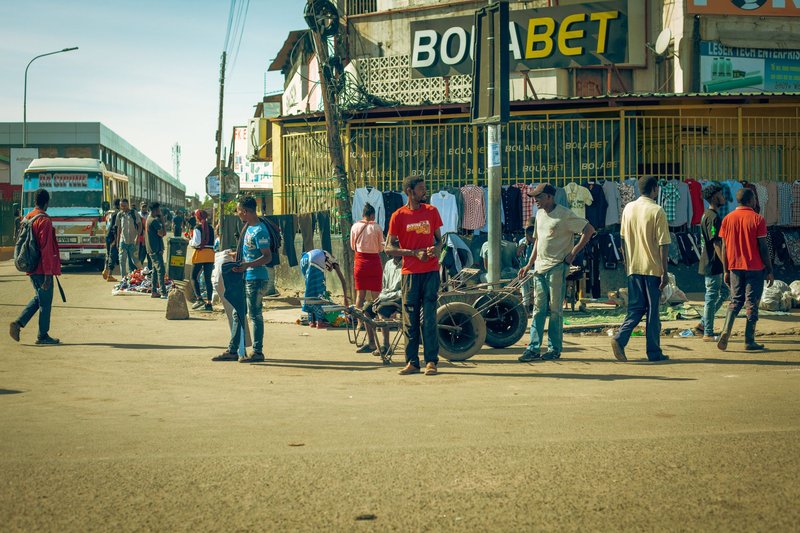
What makes Resistencia different from a news statistic is the scale of the informal settlements ringing the city center. Local parishes have become de facto social services in neighborhoods where the state barely reaches, running soup kitchens that feed hundreds of families a day. The city calls itself “the city of sculptures” for its public art scattered through plazas — a strange, almost defiant contrast to the poverty just blocks away.
2. Concordia, Entre Ríos
Population: ~150,000
Concordia sits on the Uruguay River, across from Salto in Uruguay, and its economy leans hard on citrus farming — oranges, mandarins, and the packing plants that process them. That’s a seasonal, weather-exposed industry, and when a frost or a bad export year hits, unemployment spikes fast. Poverty rates here have run consistently in the 40–50% range through recent INDEC surveys.
The city’s other economic pillar, tourism around its thermal springs, brings in visitors but not the kind of steady, well-paid employment that shrinks poverty numbers. Most of the jobs tied to tourism are seasonal and low-wage, which means Concordia’s poverty problem doesn’t ease much even when the hot springs are packed in winter high season.
3. Presidencia Roque Sáenz Peña, Chaco
Population: ~110,000
Chaco’s second-largest city shares its province’s structural problems: minimal industry, a workforce concentrated in informal and agricultural labor, and chronic underinvestment from both provincial and federal budgets. Cotton and sunflower farming employ a meaningful share of the surrounding rural population, but commodity price swings hit household income directly, with no diversified urban economy to cushion the fall.
Sáenz Peña rarely makes international headlines the way Resistencia does, but INDEC’s provincial breakdowns consistently show Chaco as one of the two or three poorest provinces in the country, and its second city tracks the capital’s numbers closely.
4. Formosa, Formosa
Population: ~235,000
Formosa city anchors a province that borders Paraguay, and its economy has long depended on public-sector employment — a symptom of how little private industry has taken root there. When state jobs are the most stable work available, poverty becomes structural rather than cyclical: it doesn’t spike and recover with the business cycle, because there wasn’t much of a private business cycle to begin with.
Cross-border informal trade with Paraguay provides another income stream for many residents, but it’s precarious and untaxed, which means it doesn’t show up in formal employment statistics even as it keeps households afloat.
5. Santiago del Estero–La Banda, Santiago del Estero
Population: ~340,000 (combined metro)
Santiago del Estero is Argentina’s oldest city, founded in 1553, but its age hasn’t translated into economic depth. The metro area, which INDEC measures together with neighboring La Banda across the Dulce River, has posted poverty rates in the 35–45% range in recent surveys. Agriculture (cotton, soy) and construction dominate employment, both sensitive to national credit conditions and export prices.
The province has one of the country’s youngest populations and highest birth rates, which means the poverty burden falls disproportionately on children — a pattern INDEC’s household breakdowns confirm nationally, where child poverty consistently outpaces the overall rate.
6. Greater Buenos Aires (Southern Conurbano)
Population: several million across the districts
This is the outlier on the list: not a standalone city, but the southern belt of Buenos Aires province that rings the capital — districts like Florencio Varela, Quilmes, and La Matanza. Villa 31, the dense informal settlement visible from the elevated highway into downtown Buenos Aires, has become an unofficial symbol of this gap between the capital’s wealth and its periphery’s poverty.
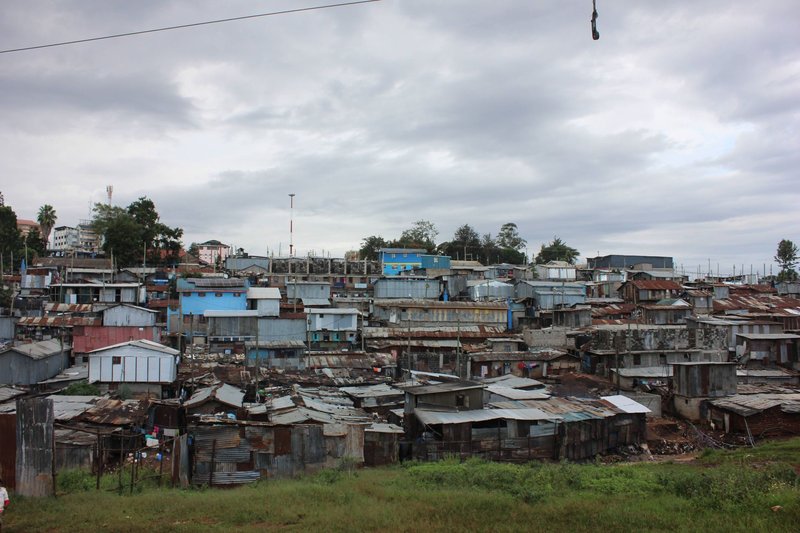
The southern conurbano’s poverty rate runs well above the national average even though it sits minutes from Argentina’s wealthiest neighborhoods. Deindustrialization hit this belt hard starting in the 1990s — factories that once employed entire neighborhoods closed or relocated, and the informal economy filled the gap without replacing the wages. Millions of people live here, which means the raw number of people in poverty exceeds any single city on this list, even where the percentage is lower than Resistencia’s.
7. Salta, Salta
Population: ~700,000
Salta city itself draws tourists for its colonial architecture and Andean backdrop, but the wealth from that tourism doesn’t spread evenly. Informal settlements on the city’s outskirts, populated partly by migration from rural Salta and neighboring Bolivia, sit in stark contrast to the restored plazas downtown that make the postcards. Provincial poverty rates have hovered in the 35–40% range in recent INDEC data.
Salta’s economy also depends on agriculture — tobacco, soy, and increasingly lithium extraction in the province’s remote northwest — none of which have generated the kind of broad-based urban employment that would meaningfully cut the city’s poverty rate.
8. Rosario, Santa Fe
Population: ~1.3 million (metro)
Rosario’s inclusion surprises people who know it as a major port city and Messi’s hometown, with real industrial and agribusiness muscle. But Greater Rosario’s poverty rate has climbed in recent years alongside a well-documented spike in drug-trafficking violence that’s disrupted entire neighborhoods, particularly in the city’s south and west. Poverty here isn’t uniform — it’s concentrated in specific barrios where informal economies, including illicit ones, have filled the space left by shrinking legal employment.
The city exports more grain than almost anywhere else in the country through its river port, which makes the pockets of entrenched poverty a few kilometers away a sharper contrast than in cities without that wealth running through them.
9. Córdoba, Córdoba
Population: ~1.5 million (city proper)
Argentina’s second-largest city rounds out the list, and it belongs here less because its poverty rate is catastrophic — it typically runs below the national average — and more because a city this large still has hundreds of thousands of residents below the poverty line, concentrated in peripheral neighborhoods like Ciudad de mis Sueños and parts of the city’s east side. Córdoba’s diversified economy (autos, universities, agribusiness, tech) is exactly why its rate stays lower than the cities above it, which underscores the point running through this whole list: diversification, not luck, is what keeps a city off the worst end of this ranking.
Why the Same Provinces Keep Showing Up
Three things separate Argentina’s poorest cities from its more resilient ones. First, informal employment: cities where a large share of workers operate outside the formal, taxed economy see poverty numbers that don’t respond to national growth the way formal-sector wages do. Second, single-industry exposure: citrus in Concordia, cotton in Chaco, tobacco in Salta — when one commodity or sector dominates local employment, a bad season becomes a poverty spike. Third, distance from federal investment: Chaco, Formosa, and Santiago del Estero have received a smaller share of national infrastructure spending relative to population than the Pampas provinces for decades, according to patterns documented in World Bank regional development reporting on Argentina.
None of that changes quickly, which is why this ranking has looked roughly the same for the better part of ten years, even as the exact percentages swing with inflation, elections, and currency crises. The cities at the bottom aren’t unlucky. They’re structurally exposed in ways that a single good year in Buenos Aires never fixes.