Table of Contents
- TLDR
- Ethnicity, Nationality, and Mother Tongue Aren’t the Same Thing
- The Numbers
- Who Are the Luxembourgers?
- The Portuguese Community: Luxembourg’s Largest Immigrant Group
- Italians and the Steel Legacy
- French, Belgians, and Germans: The EU Institution Effect
- The Frontaliers: A Workforce That Commutes In From Three Countries
- The Language Question
- FAQ
TLDR
Luxembourg’s resident population is roughly 53% native Luxembourgers and 47% foreign nationals, according to Statec, the country’s statistics institute. The Portuguese are the largest single immigrant group at around 13-14%, followed by French residents at about 7% and Italians at 4-5%. The rest is a patchwork of Belgians, Germans, and more than 170 other nationalities. But the resident count only tells half the story — roughly half of Luxembourg’s actual workforce lives across the border in France, Belgium, or Germany and commutes in daily. That distinction between who lives there and who works there is the thing most reference pages skip entirely.
Ethnicity, Nationality, and Mother Tongue Aren’t the Same Thing
Most pages about Luxembourg’s population mash three different categories into one number, and it makes the country look more confusing than it is.
Nationality is a legal status — the passport someone holds. Ethnicity is about ancestry and cultural background, which Luxembourg’s census doesn’t actually measure directly (unlike, say, the US Census). Mother tongue is the language someone grew up speaking at home, and in Luxembourg that’s a genuinely separate axis from both of the above.
A third-generation Portuguese-Luxembourger might hold a Luxembourgish passport, speak Luxembourgish at school and Portuguese at home, and still identify culturally as Portuguese. So when a stat site says “13% Portuguese,” what it usually means is 13% of residents hold Portuguese nationality — not that 13% of the country traces its ancestry there, though the two overlap heavily since most of that community arrived within the last two generations.
This distinction matters because Luxembourg has one of the highest foreign-resident shares of any country in Europe, and conflating nationality with ethnicity makes the numbers read as more dramatic than the lived reality, where multilingual, multi-national households are just normal.
The Numbers
Here’s the breakdown by nationality, based on Statec’s most recent resident population figures:
| Group | Share of resident population | Background |
|---|---|---|
| Luxembourgers | ~53% | Native population |
| Portuguese | ~13-14% | Post-1960s labor migration |
| French | ~7% | EU institution staff, border proximity |
| Italians | ~4-5% | Post-WWII steel industry migration |
| Belgians | ~3% | Border proximity, EU institutions |
| Germans | ~2% | Border proximity |
| Other nationalities | ~18-20% | 170+ countries represented |
No other EU country comes close to that foreign-resident share among its permanent population. It’s not a recent spike, either — Luxembourg has been building this composition for over 70 years, in three distinct waves.
Who Are the Luxembourgers?
The native population descends from a small Frankish-Germanic-Romance mix that’s occupied this stretch of land since before the country existed as a modern state in 1839. Luxembourgish (Lëtzebuergesch) is a Moselle Franconian language, closely related to the dialects spoken across the border in Germany’s Eifel region, but it’s been standardized and taught in schools as its own national language since the mid-20th century.
What makes “being Luxembourgish” slippery as a category is that citizenship law changed substantially in 2009, opening a path for long-term foreign residents to naturalize without giving up their original nationality. Thousands of Portuguese, Italian, and French residents have taken that route since. A person born in Lisbon who’s held a Luxembourgish passport for a decade shows up in the “Luxembourger” column in nationality statistics, even though nobody would call them ethnically Luxembourgish. The country’s own demographers acknowledge this makes ethnicity, as distinct from nationality, nearly impossible to measure cleanly.
The Portuguese Community: Luxembourg’s Largest Immigrant Group
Walk through Luxembourg City’s Bonnevoie neighborhood and you’ll pass Portuguese bakeries, a Portuguese Catholic parish, and pastelarias selling pastéis de nata next to Luxembourgish bakeries selling quetschentaart. This isn’t a small enclave — it’s the largest foreign community in the country by a wide margin, and it didn’t happen by accident.

Portuguese immigration to Luxembourg started in earnest in the 1960s and accelerated through the 1970s, driven by two things: political instability and poverty under the Estado Novo dictatorship at home, and an active labor recruitment push from Luxembourg’s construction and service sectors, which needed workers as the country’s economy shifted away from heavy industry. Portugal’s 1974 Carnation Revolution and subsequent economic turbulence pushed a second wave through the late ’70s and ’80s.
Unlike a lot of European labor migrations, this one never really stopped. Family reunification, chain migration through existing community networks, and Portugal’s own economic struggles during the 2008 financial crisis and its aftermath kept the pipeline open for decades. Today, Luxembourg has one of the largest Portuguese communities outside Portugal itself, proportionally speaking — and it’s deeply embedded in the country’s construction, hospitality, and public sector workforce.
Italians and the Steel Legacy
Long before the Portuguese arrived, Italians were Luxembourg’s first major immigrant community, and their story is tied directly to the country’s industrial past.
In the late 1800s and again heavily after World War II, Luxembourg’s south — the “Minett” region around cities like Esch-sur-Alzette and Differdange — was one of Europe’s major iron and steel producing areas. The mines and mills needed labor the local population couldn’t supply, so Luxembourg recruited heavily from Italy, particularly from the poorer south. By the mid-20th century, entire towns in the Minett had Italian churches, Italian social clubs, and Italian as a commonly heard second language on the factory floor.
Luxembourg’s steel industry contracted sharply from the 1970s onward as global steel production shifted and automation reduced labor needs, but the Italian community that had settled during the boom years stayed, intermarried, and became one of the most integrated foreign-origin groups in the country. Many Italian-Luxembourgers today are third- or fourth-generation, culturally distinct but legally indistinguishable from native Luxembourgers in the nationality statistics if they’ve naturalized.
French, Belgians, and Germans: The EU Institution Effect
Luxembourg City’s Kirchberg plateau is home to the European Court of Justice, the European Investment Bank, and major arms of the European Parliament and European Commission’s administration — a legacy of Luxembourg being one of the six founding members of the European Coal and Steel Community and a permanent host of EU institutions ever since. That status pulls in a very different kind of migrant than the Portuguese or Italian waves: lawyers, translators, economists, and civil servants, disproportionately French, Belgian, and German.
This is a newer and steadily growing slice of the population compared to the older labor migrations, and it skews toward higher income and shorter average residency — EU officials often rotate through Luxembourg for a posting rather than settling permanently. It’s also why French, unlike Portuguese or Italian, functions as something close to a working lingua franca in Luxembourg’s professional and administrative life, alongside its role as one of the three official languages.
The Frontaliers: A Workforce That Commutes In From Three Countries
Here’s the part almost every reference page glosses over: Luxembourg’s population statistics only count people who live there. They say nothing about who works there.
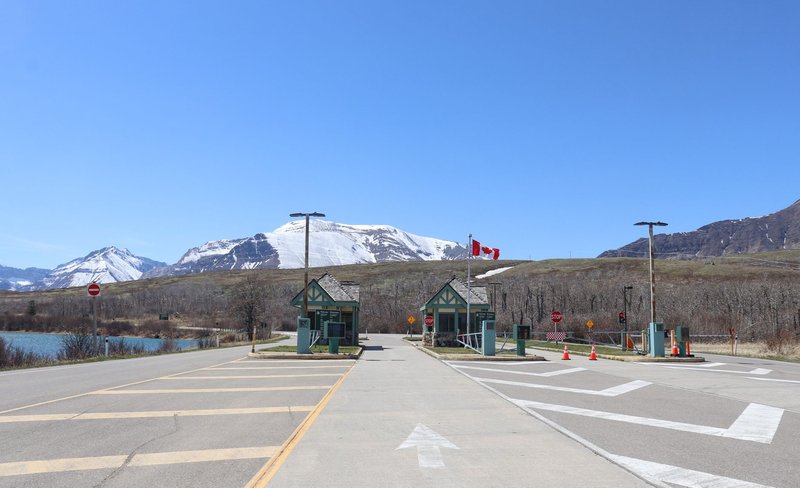
Every weekday morning, roughly 220,000 people cross into Luxembourg from France, Belgium, and Germany, work a full day, and drive or take the train home in the evening. These are the frontaliers, and they make up close to half of Luxembourg’s total workforce — a proportion no other country in the EU matches. France supplies the largest share, followed by Germany and Belgium, with commuters funneling in through towns like Thionville, Trier, and Arlon that have essentially become Luxembourg’s bedroom communities without being part of Luxembourg at all.
The scale of this exists because of a mismatch between Luxembourg’s tiny land area (about 2,586 square kilometers, smaller than Rhode Island) and its outsized economy, built on financial services, EU institutions, and steel-era infrastructure. Housing inside the country’s borders is expensive and limited, so a huge share of the people who staff Luxembourg’s banks, ministries, and shops simply live somewhere cheaper nearby and commute. According to Eurostat, Luxembourg has by far the highest cross-border commuter inflow relative to population of any EU member state.
This has a real cultural effect too: walk around downtown Luxembourg City at 6 p.m. and it empties out fast, because a huge chunk of the daytime population isn’t Luxembourg’s population at all. Any accurate picture of “who’s in Luxembourg” during a workday has to include frontaliers, even though they never show up in a census.
The Language Question
Luxembourg runs on three official languages — Luxembourgish, French, and German — and which one you hear depends entirely on context. Luxembourgish is the national language and the one spoken at home by most native Luxembourgers. French dominates legal and administrative documents, restaurant menus, and a lot of daily commerce, partly a holdover from history and partly because it’s the common language between Luxembourgers and the huge French and francophone-Belgian population. German shows up heavily in media, older legal texts, and is often the first foreign language taught in schools.
Portuguese, meanwhile, is spoken at home by a large enough share of residents that it functions as a genuine fourth language in practice, even without official status. Public signage in some neighborhoods, church services, and community organizations regularly operate in Portuguese. It’s a reminder that “official language” and “commonly spoken language” are two different lists in Luxembourg, same as ethnicity and nationality are two different columns.
FAQ
What percentage of Luxembourg’s population is ethnically Luxembourgish? Around 53% of residents hold Luxembourgish nationality, though that figure includes naturalized citizens of foreign origin, so the ethnically native share is somewhat lower and harder to pin down precisely.
Why are there so many Portuguese people in Luxembourg? Labor recruitment starting in the 1960s, driven by Luxembourg’s need for construction and service workers and Portugal’s political instability under the Estado Novo dictatorship, followed by decades of family reunification migration.
What is a frontalier? A frontalier is a cross-border commuter — someone who lives in France, Belgium, or Germany but crosses into Luxembourg daily for work. They make up close to half of Luxembourg’s workforce.
Is Luxembourgish the only official language of Luxembourg? No. Luxembourg has three official languages: Luxembourgish, French, and German, each used in different official and social contexts.
Are foreigners a majority of Luxembourg’s population? Not quite — foreign nationals make up around 47% of residents, just under half, which is still the highest foreign-resident share of any EU country.