Table of Contents
- TLDR: The Quick List
- Volubilis
- Fez el-Bali (Medina of Fez)
- Aït Benhaddou
- Marrakesh Medina
- Chefchaouen
- Essaouira’s Ramparts
- El Badi Palace
- Bahia Palace
- Saadian Tombs
- Meknes and Bab Mansour
- Chellah Necropolis, Rabat
- Hassan Tower, Rabat
- Hassan II Mosque, Casablanca
- Tangier’s Kasbah and American Legation
- Asilah’s Portuguese Walls
- How to Actually Route This
TLDR: The Quick List
If you’re building an itinerary and need the short version, here’s the order of importance:
- Volubilis — Morocco’s best-preserved Roman ruins, mosaics still in place
- Fez el-Bali — the world’s largest car-free urban zone, a working medieval medina
- Aït Benhaddou — the fortified kasbah every Game of Thrones fan already recognizes
- Marrakesh Medina — Koutoubia, Jemaa el-Fnaa, and a thousand years of dynasties layered on top of each other
- Chefchaouen — the blue-washed hill town founded to fight off Portuguese invasion
The rest fill in the gaps between imperial capitals, coastal fortresses, and the two or three places most lists skip entirely. Below, all fifteen, with the history that explains why each one matters and the logistics you need to actually get there.
Volubilis
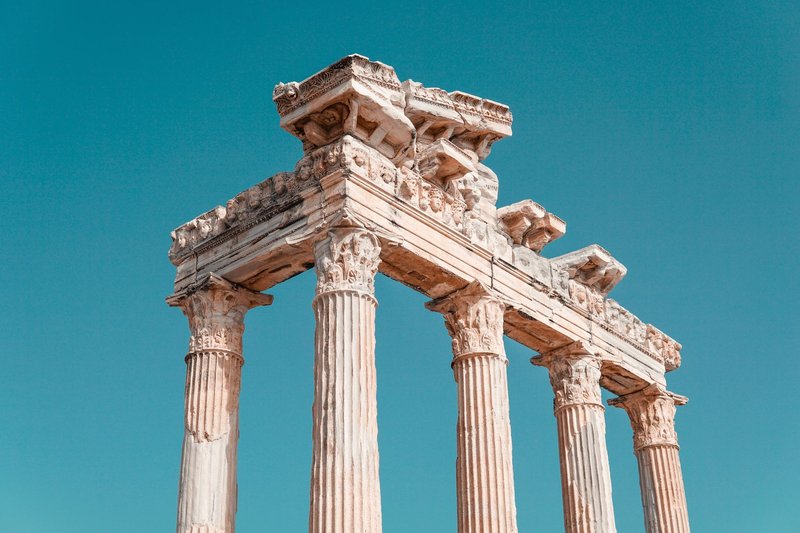
Volubilis was a working Roman city for nearly three centuries, the administrative capital of Mauretania Tingitana until Rome pulled its garrisons out around 285 AD. What’s striking isn’t just that the ruins survive — it’s how much survives. The triumphal arch honoring Caracalla still stands, and the mosaic floors in the House of Orpheus and the House of the Athlete are intact enough that you can make out the dolphins and the wrestling scenes without squinting.
Berber and later Islamic communities kept living among the ruins for centuries after Rome left, which is part of why so much of the layout — the basilica, the forum, the olive presses — never got fully buried or bulldozed. According to UNESCO’s World Heritage documentation, Volubilis is inscribed as part of the “Archaeological Site of Volubilis,” recognized as one of the richest sites of its period in North Africa.
Practical details: Open daily, roughly 8:30am to sunset, with slightly shorter hours in winter. Entry runs around 70 dirhams (roughly $7). It’s about 30 minutes from Meknes and often paired with a stop in Moulay Idriss, the hill town where Morocco’s first Islamic dynasty began. Go early morning or late afternoon — there’s zero shade and the site sits on an exposed plateau.
Fez el-Bali (Medina of Fez)
Fez el-Bali is the old walled core of Fez, founded in the 9th century and built out under the Marinid dynasty into the intellectual and religious heart of Morocco. Al-Qarawiyyin, the university and mosque complex inside its walls, is recognized by UNESCO and the Guinness Book of World Records as the oldest continuously operating institution of higher learning on record — founded in 859 AD, before Oxford existed in any form.
What makes Fez different from a museum piece is that it’s still a functioning city. Over 9,000 alleys wind through leather tanneries, brass workshops, and residential quarters where families have lived for generations. It’s the largest car-free urban area in the world, which means the traffic you’ll deal with is donkeys hauling propane tanks, not cars.
Practical details: The medina itself is open access, no ticket required, though individual sites (the Bou Inania Madrasa, the tanneries) charge small entry fees, typically 20-60 dirhams. Hire a licensed guide for your first visit — the alley network genuinely defeats first-timers, and unlicensed “guides” who latch onto tourists near the gates are a known hassle. Best visited morning to early afternoon when workshops are active; Fridays are quieter since many shops close for prayer.
Aït Benhaddou
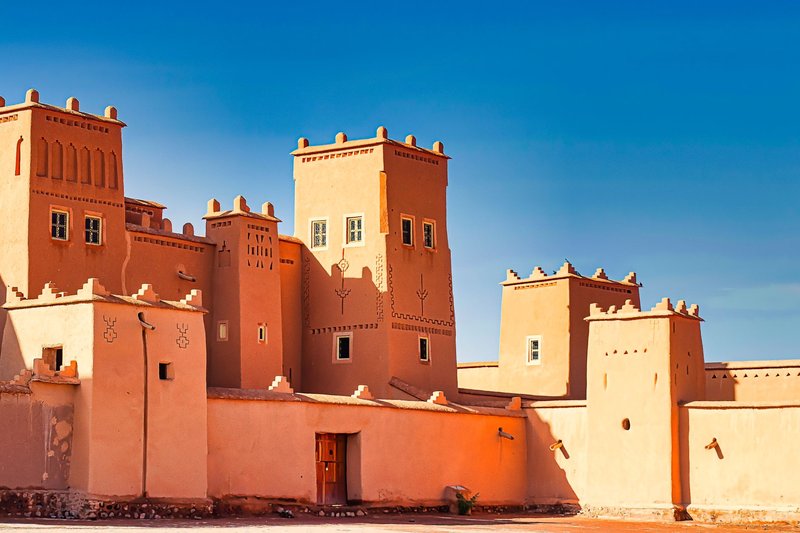
Aït Benhaddou is a ksar — a fortified earthen village — built along what was once a caravan route between the Sahara and Marrakesh. The current structures date mostly from the 17th century, though the site has been settled far longer. Its red clay towers and defensive walls made it a natural filming location, and you’ll recognize it even if you’ve never been: it’s stood in for Jerusalem, Egypt, and Westeros across dozens of productions.
Only a handful of families still live inside the ksar itself; most residents relocated to the modern village across the river decades ago, which is part of why the structure has stayed so intact — fewer renovations, less pressure to modernize. It earned UNESCO recognition in 1987 as an exceptional example of pre-Saharan earthen architecture.
Practical details: Entry is around 20 dirhams, plus a small fee if you want a guide to walk you to the top for the valley view (worth it). It’s roughly 30 minutes from Ouarzazate, making it an easy stop on the Marrakesh-to-Sahara route over the Tizi n’Tichka pass. Go at golden hour — the clay walls turn a deep orange that flat midday light kills entirely.
Marrakesh Medina
The Marrakesh medina has been rebuilt and repurposed by four separate dynasties — Almoravid, Almohad, Saadian, and Alaouite — each leaving its own layer. The Koutoubia Mosque’s minaret, finished under the Almohads in the 12th century, became the template for the Giralda in Seville and the Hassan Tower in Rabat, all built by the same dynasty within a few decades of each other.
Jemaa el-Fnaa square sits at the medina’s center, and it’s done double duty as marketplace and public stage since at least the 11th century — UNESCO recognized it not for its buildings but for the oral tradition still performed there, storytellers, musicians, and food vendors keeping a centuries-old public ritual alive rather than freezing it as a monument.
Practical details: The medina is free to wander; individual monuments (Koutoubia grounds, museums) charge separately. Riads inside the walls put you steps from everything but can be hard for taxis to reach directly — confirm your riad has porter pickup at the nearest accessible gate. Evenings in Jemaa el-Fnaa get considerably more crowded and more atmospheric than daytime visits.
Chefchaouen
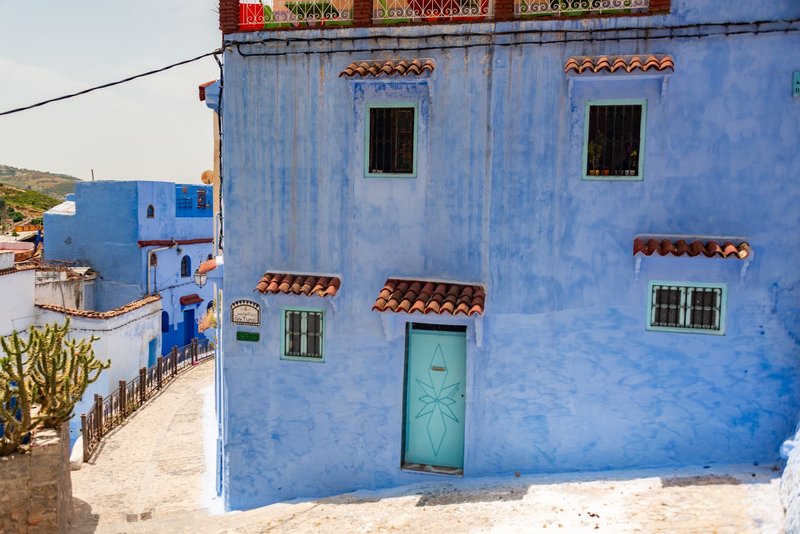
Chefchaouen was founded in 1471 as a fortress to resist Portuguese expansion into northern Morocco, and its layout still reflects that defensive origin — narrow, steep, easy to get lost in on purpose. The blue paint that made it famous is a more recent layer of history: Jewish refugees fleeing persecution in Europe settled here in the 1930s and brought the tradition of blue-washed walls, a color with roots in Sephardic symbolism.
The Kasbah at the center of town, built by the town’s founder Moulay Ali ibn Rashid, now houses a small ethnographic museum and gardens that give you a break from the vertical alleys outside.
Practical details: The Kasbah museum charges a small entry fee, around 20 dirhams; the rest of the town costs nothing to walk. Chefchaouen sits in the Rif Mountains, about 2.5 hours from Tangier or Fez by road — there’s no train, so you’re looking at a grand taxi, bus, or private transfer. Spring and fall keep the mountain heat manageable; summer gets uncomfortably hot for the uphill walking the town demands. If summer is your only window, a handheld or neck fan helps on the climbs.
Essaouira’s Ramparts
Essaouira’s Skala de la Ville — the seafront rampart lined with cannons — was built by a French military architect in the 18th century under Sultan Mohammed III, who wanted a fortified Atlantic port to rival Portuguese and European trading posts. The design deliberately mixed European fortification techniques with Moroccan materials, which is part of why the town has a distinctly different feel from the red-clay cities inland.
Before the Alaouite fortifications, the site was Mogador, contested for centuries by Phoenicians, Romans, and Portuguese traders drawn by the purple dye extracted from local sea snails — the same murex dye that colored Roman senatorial togas.
Practical details: Walking the ramparts is free and takes about 30-45 minutes end to end. Essaouira is roughly 2.5-3 hours from Marrakesh by grand taxi or bus, and it’s a common day trip, though the town rewards an overnight stay — the fishing port and blue-and-white streets feel different once the day-trippers leave. Wind is near-constant here, which is exactly why it’s also a kitesurfing destination; bring a layer even in summer.
El Badi Palace
El Badi was commissioned by Saadian Sultan Ahmad al-Mansur in 1578, funded largely by ransom money from Morocco’s victory over Portugal at the Battle of the Three Kings — a win so decisive it effectively ended Portuguese imperial ambitions in North Africa. The palace was, by contemporary accounts, extravagant even by royal standards: onyx floors, gold-trimmed ceilings, a sunken garden with reflecting pools.
Almost none of that decoration survives. When the Alaouite dynasty took power in the late 17th century, Sultan Moulay Ismail stripped El Badi for materials to build his own capital at Meknes, leaving the shell you see today — a rare case where a monument’s ruined state tells its own story about a dynastic changing of the guard.
Practical details: Entry runs around 70 dirhams, with a small additional fee to climb the ramparts for rooftop views over the medina. Storks nest on the walls seasonally, which is worth timing a visit around if you’re into that. Open daily except during prayer hours on Fridays.
Bahia Palace
Bahia Palace is younger than most entries on this list — built in the late 19th century for Si Moussa, grand vizier to the sultan, and expanded by his son Bou Ahmed. “Bahia” means “brilliance,” and the palace earns it: painted cedar ceilings, zellige tilework, and a series of courtyards designed around the seasons and the households of Bou Ahmed’s wives and concubines.
It’s a useful counterpoint to El Badi — where El Badi shows Saadian-era imperial excess reduced to rubble, Bahia shows what a wealthy court official’s private residence looked like at the tail end of Morocco’s pre-colonial period, largely intact because it was never targeted for demolition.
Practical details: Entry is around 70 dirhams. It’s a short walk from the Marrakesh medina’s southern quarters, near the Mellah (former Jewish quarter). Go on a weekday morning if you can — tour groups cluster here midday and the courtyards get crowded fast.
Saadian Tombs
The Saadian Tombs sat sealed and forgotten for roughly 300 years. When Moulay Ismail dismantled El Badi Palace, he reportedly left the adjacent royal necropolis untouched — some accounts say out of respect for the dead, others say simple superstition — and then walled off the access route entirely. The tombs were only rediscovered in 1917, via aerial photography taken by the French protectorate.
That isolation is why the marble, gold leaf, and Carrara stonework inside the mausoleum survived in far better condition than almost anything else from the Saadian period. Sultan Ahmad al-Mansur, the same ruler behind El Badi, is buried here.
Practical details: Entry is roughly 70 dirhams, and access is through a narrow passage next to the Kasbah Mosque — expect a line, since only a limited number of visitors are let into the inner chamber at once. Arrive at opening time to avoid the worst of it.
Meknes and Bab Mansour
Meknes was Sultan Moulay Ismail’s answer to Versailles — his contemporary, in fact, and by some accounts he corresponded with Louis XIV. Ismail spent over 50 years building an imperial capital with 25 kilometers of defensive walls, vast stables designed to hold 12,000 horses, and granaries built partly underground to keep grain cool for a city under permanent siege-readiness.
Bab Mansour, the monumental gate completed after Ismail’s death by his son, is considered one of the finest gates in North Africa — green and white zellige tilework over marble columns salvaged, once again, from the plundered ruins of El Badi in Marrakesh.
Practical details: The gate itself is free to view and photograph; the Heri es-Souani granaries and royal stables charge a small entry fee, around 20-70 dirhams. Meknes is a 45-minute drive or short train ride from Fez, making the two an easy pairing, with Volubilis sitting conveniently between them.
Chellah Necropolis, Rabat
Chellah has two distinct histories stacked on top of each other. The site started as a Roman settlement, Sala Colonia, before the Marinid dynasty converted it into a royal necropolis in the 14th century, building a mosque, minaret, and mausoleums for Marinid sultans and their families within the old Roman walls.
The site was abandoned after a 1755 earthquake — the same one that devastated Lisbon — and nature took over from there. Storks now nest on the minaret, and the walled gardens have gone semi-wild in a way that feels closer to a ruin in the romantic sense than a maintained monument.
Practical details: Entry is around 70 dirhams. It sits just outside central Rabat, an easy taxi ride or a 20-minute walk from the medina. Late afternoon light through the gardens is the best time to visit, and it’s noticeably less crowded than Rabat’s other major sites.
Hassan Tower, Rabat
The Hassan Tower was meant to be the minaret of the largest mosque in the western Islamic world, commissioned by Almohad Sultan Yaqub al-Mansur in 1195. Construction stopped when he died in 1199, and it was never finished — the tower stands at roughly 44 meters, well short of its planned height, and the mosque’s 200-plus columns around it were toppled by the same 1755 earthquake that leveled Lisbon.
It sits directly across from the Mausoleum of Mohammed V, Morocco’s 20th-century king who led the country to independence, which puts 800 years of Moroccan history into a single sightline — an unfinished medieval minaret facing a modern royal mausoleum guarded by ceremonial cavalry.
Practical details: The esplanade is free and open daily. The mausoleum has its own free entry but modest dress is enforced. It’s centrally located in Rabat, an easy walk from the medina and the Kasbah of the Udayas.
Hassan II Mosque, Casablanca
Hassan II Mosque is modern — completed in 1993 — but it belongs on a historical-sites list because of what it deliberately references: built partly over the Atlantic on land reclaimed from the sea, its minaret at 210 meters is the tallest religious structure in the world outside Mecca and Medina, echoing centuries of Moroccan minaret design going back to the Koutoubia and the Hassan Tower.
Roughly 10,000 artisans worked on the building’s zellige, carved plaster, and cedar woodwork using traditional techniques, which makes it less a break from Morocco’s architectural history than a continuation of it at industrial scale, funded through a public subscription that Moroccan citizens across the country contributed to.
Practical details: It’s one of the only mosques in Morocco open to non-Muslim visitors, via guided tour, for a fee around 130 dirhams. Tours run several times daily except Fridays. It’s directly on the Casablanca coastline, a short taxi ride from the city center.
Tangier’s Kasbah and American Legation
Tangier’s Kasbah sits atop the city’s oldest settled ground, with defensive walls rebuilt across Phoenician, Roman, Portuguese, and Alaouite control of the strait. But the more unusual historical layer here is the American Legation, tucked into the medina below the Kasbah: Morocco was the first country to recognize American independence in 1777, and the building the sultan later gave the United States is the only National Historic Landmark located outside U.S. territory.
Tangier’s 20th-century run as an “International Zone” — jointly administered by multiple foreign powers from 1923 to 1956 — also shaped the city into a haven for writers and artists, a stretch of history the Legation’s museum covers in detail.
Practical details: The Kasbah is free to walk; the Kasbah Museum charges a small fee. The American Legation Museum is free, though donations are welcome, and it’s closed Sundays and Mondays. Tangier is well connected by high-speed rail from Casablanca and Rabat, making it an easy add-on rather than a detour.
Asilah’s Portuguese Walls
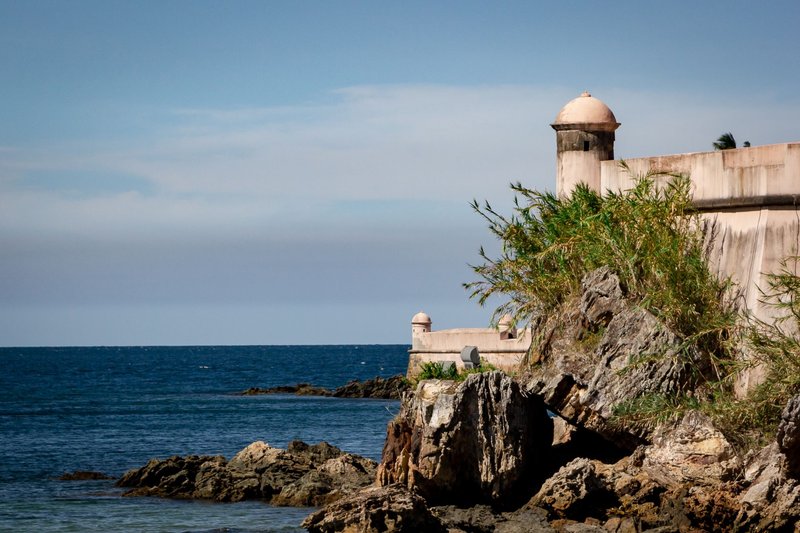
Asilah gets skipped by most Morocco lists in favor of its bigger neighbors, which is exactly why it’s worth including. The Portuguese fortified the town in the 15th century as an Atlantic stronghold, and the ramparts they built still enclose the old medina almost completely intact — you can walk the full circuit along the sea walls in under an hour.
What sets Asilah apart today is what locals have done with those walls: since the 1970s, an annual arts festival has turned the medina’s whitewashed walls into a rotating open-air mural gallery, murals painted directly onto centuries-old Portuguese fortifications, repainted year after year. It’s a rare example of a historical structure staying actively, visibly alive rather than roped off.
Practical details: Walking the ramparts and medina is free. Asilah is about 40 minutes south of Tangier by train or grand taxi, an easy half-day trip. Late afternoon, when the light hits the whitewashed walls at an angle, is the best time for photos, and it’s noticeably quieter than Chefchaouen if you want blue-and-white streets without the crowds.
How to Actually Route This
Most Morocco itineraries try to force these sites into one straight line, and it doesn’t work — the imperial cities (Fez, Meknes, Rabat) sit inland to the north, the Atlantic sites (Essaouira, Asilah, Tangier) run along the coast, and Aït Benhaddou requires crossing the Atlas Mountains entirely.
If you have 10-14 days, the natural loop is Casablanca or Tangier in, north through Chefchaouen and Asilah, south to Fez and Meknes (with Volubilis between them), then Marrakesh, then a detour over the Tizi n’Tichka pass to Aït Benhaddou and Ouarzazate before looping back or flying out of Marrakesh. That order respects the geography instead of fighting it — you’re not backtracking across the Atlas twice.
If you only have a week, pick one region rather than trying to hit all fifteen. The imperial-cities cluster (Fez, Meknes, Volubilis, Rabat) works as a self-contained history trip; the Marrakesh-and-south cluster (Marrakesh, El Badi, Bahia, Aït Benhaddou) works as a second. Both give you Roman ruins, medieval medinas, and at least one UNESCO site without four extra travel days spent in transit.