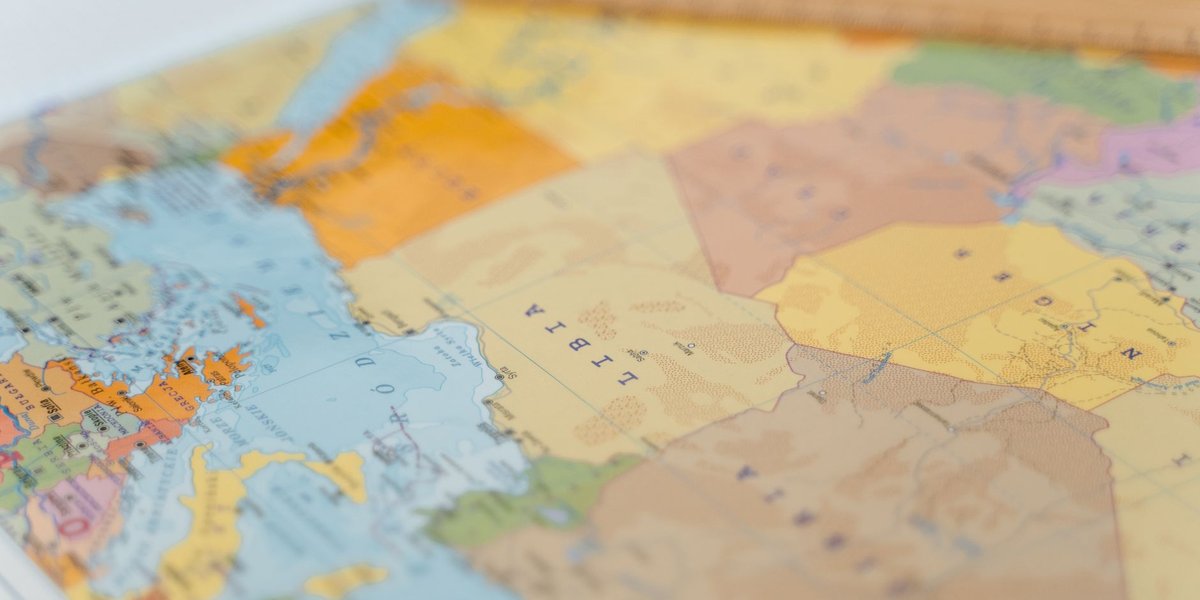
Africa has 54 recognized countries, and 16 of them never touch open water. That’s roughly a third of the continent — more landlocked nations than any other continent on earth, packed mostly into two bands: the Sahel belt south of the Sahara, and the cluster around the Great Lakes and Southern Africa.
Being landlocked isn’t trivia. It shapes how a country trades, what it pays to import fuel, and which neighbors it has to stay on good terms with just to reach a port. Ethiopia alone routes roughly 95% of its trade through the tiny port of Djibouti — a dependency it didn’t choose so much as inherit when Eritrea split off in 1993.
Quick answer
Africa’s 16 landlocked countries are: Botswana, Burkina Faso, Burundi, Central African Republic, Chad, Eswatini, Ethiopia, Lesotho, Malawi, Mali, Niger, Rwanda, South Sudan, Uganda, Zambia, and Zimbabwe.
- Largest by area: Chad (about 1,284,000 km²)
- Smallest by area: Eswatini (about 17,364 km²)
- Most populous: Ethiopia (around 132 million people — also the world’s most populous landlocked country, not just Africa’s)
- Least populous: Eswatini (around 1.2 million people)
- Fully surrounded by one country: Lesotho, entirely enclosed within South Africa
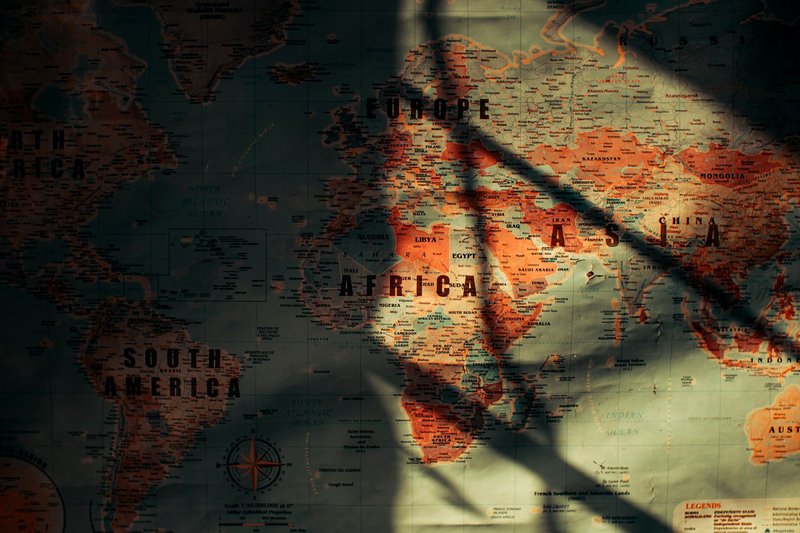
Table of contents
- Why landlocked status actually matters
- The 16 landlocked countries, compared
- Country by country
- Regional trade blocs these countries lean on
- Which ones are actually easy to visit
- FAQ
Why landlocked status actually matters
A landlocked country has no choice but to ship everything overland or by river through a neighbor’s territory before it ever reaches a port. That means extra border crossings, extra customs fees, extra transit agreements that can sour with a single political dispute — and it shows up directly in the price of everything from diesel to fertilizer. The UN Office for the High Representative for Landlocked Developing Countries tracks this as a structural handicap, not a temporary one: it doesn’t go away with a good harvest or a new government.
It also explains a lot of African history that outsiders miss. Ethiopia had a coastline until Eritrea’s independence in 1993 — one of the more consequential redraws of the map in modern African history, and it turned a coastal empire into a landlocked one overnight. South Sudan’s independence in 2011 created the world’s newest country, and also its newest landlocked one, dependent on a pipeline through Sudan to move its oil to the Red Sea.
The 16 landlocked countries, compared
| # | Country | Capital | Area (km²) | Population (approx.) | Regional bloc |
|---|---|---|---|---|---|
| 1 | Chad | N’Djamena | 1,284,000 | 19 million | ECCAS |
| 2 | Niger | Niamey | 1,267,000 | 27 million | ECOWAS |
| 3 | Mali | Bamako | 1,240,000 | 23 million | ECOWAS |
| 4 | Ethiopia | Addis Ababa | 1,104,300 | 132 million | COMESA |
| 5 | Zambia | Lusaka | 752,600 | 21 million | SADC |
| 6 | South Sudan | Juba | 644,000 | 11 million | EAC |
| 7 | Central African Republic | Bangui | 623,000 | 5.7 million | ECCAS |
| 8 | Botswana | Gaborone | 581,700 | 2.7 million | SADC |
| 9 | Zimbabwe | Harare | 390,800 | 16.7 million | SADC |
| 10 | Burkina Faso | Ouagadougou | 274,200 | 23 million | ECOWAS |
| 11 | Uganda | Kampala | 241,000 | 49 million | EAC |
| 12 | Malawi | Lilongwe | 118,500 | 21 million | SADC |
| 13 | Lesotho | Maseru | 30,355 | 2.3 million | SADC |
| 14 | Burundi | Gitega | 27,834 | 13.2 million | EAC |
| 15 | Rwanda | Kigali | 26,338 | 14 million | EAC |
| 16 | Eswatini | Mbabane | 17,364 | 1.2 million | SADC |
Populations are current estimates and will drift year to year, but the ranking rarely reshuffles — Ethiopia has led this list for decades and shows no sign of losing the top spot.
Country by country
1. Chad
Chad is Africa’s largest landlocked country and its fifth largest overall, most of it Sahara and Sahel. Lake Chad, once one of the continent’s biggest freshwater lakes, has shrunk to roughly a tenth of its 1960s size, and that collapse has reshaped livelihoods for millions of people across four countries, not just Chad.
2. Niger
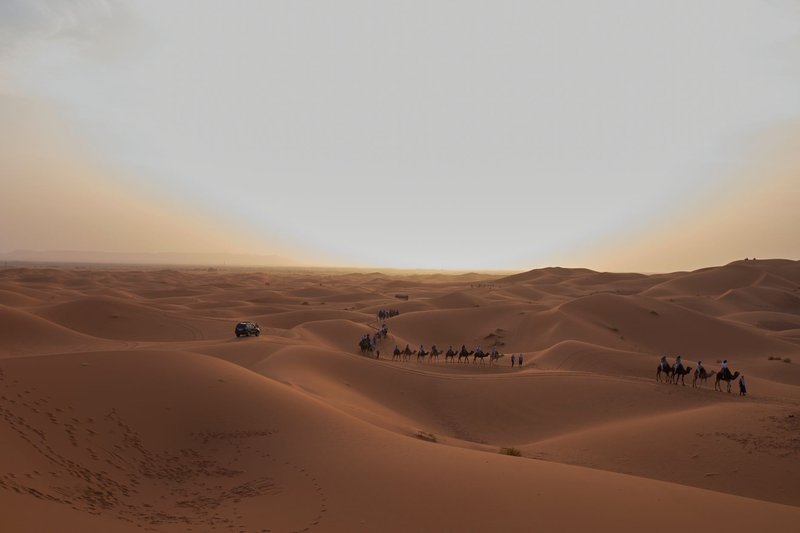
Niger is almost entirely desert, and its economy leans hard on uranium — it’s one of the world’s top producers, feeding reactors thousands of miles away while much of the country itself lacks reliable electricity. Agadez, in the north, was a major caravan trading post for centuries before it became a transit point for a different kind of crossing: migration routes toward Libya and the Mediterranean.
3. Mali
Mali’s story runs through Timbuktu, the UNESCO-listed city that was a center of Islamic scholarship and manuscript trading in the 14th and 15th centuries, when the Mali Empire controlled gold and salt routes across West Africa. The Niger River still cuts through the country’s south, the closest thing Mali has to a coastline.
4. Ethiopia
Ethiopia is the odd one out on this list: it’s the most populous landlocked country on the planet, not just in Africa, and it had a coastline until Eritrea’s 1993 secession took it away. Today it moves the overwhelming majority of its trade through the port of Djibouti, a dependency that shapes Ethiopian foreign policy more than almost anything else.
5. Zambia
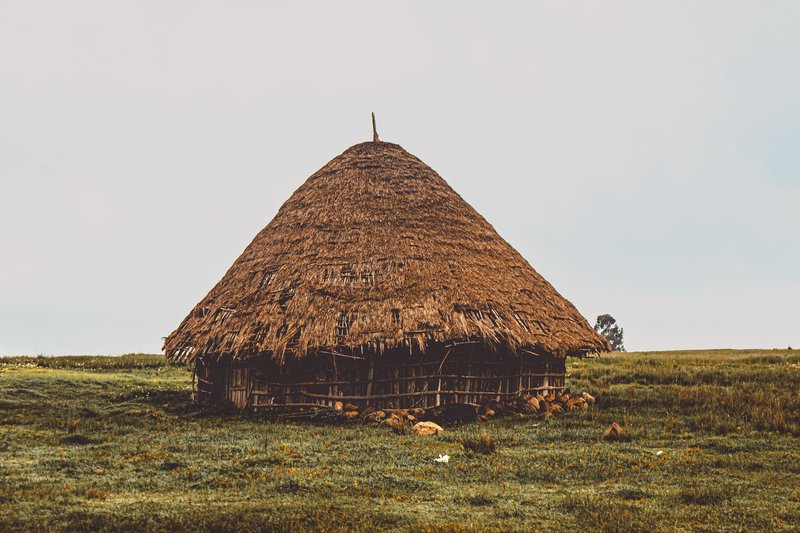
Zambia shares Victoria Falls with Zimbabwe and built much of its modern economy on copper, still one of Africa’s top producers. The Zambezi River defines its southern border and its power supply — hydroelectric dams here keep the lights on for much of the region.
6. South Sudan
South Sudan became the world’s newest country in 2011, splitting from Sudan after decades of civil war. It’s oil-rich but landlocked in the least convenient way possible: its crude has to move by pipeline through Sudan to reach the Red Sea, which means every dispute between Juba and Khartoum has a direct line to South Sudan’s national budget.
7. Central African Republic
The Central African Republic sits on real mineral wealth — diamonds, gold, uranium — and remains one of the world’s poorest countries anyway, a gap that’s hard to explain without pointing at decades of instability and weak infrastructure. The Ubangi River, a Congo tributary, is the country’s main link to river trade.
8. Botswana
Botswana is the counterexample everyone cites: diamond revenue managed carefully enough to build one of Africa’s most stable democracies and highest per-capita incomes, landlocked status notwithstanding. The Okavango Delta, an inland river system that fans out and evaporates into the Kalahari instead of reaching any sea, is one of the more unusual landscapes on the continent.
9. Zimbabwe
Zimbabwe’s Great Zimbabwe ruins gave the country its name and stand as the largest stone structure in sub-Saharan Africa built before the colonial era. It shares Victoria Falls with Zambia on its northern border, and its economy has spent much of the last two decades recovering from currency collapse and hyperinflation.
10. Burkina Faso
Burkina Faso’s name, adopted in 1984 when the country dropped “Upper Volta,” translates roughly to “land of upright people.” It sits squarely in the Sahel, and its capital, Ouagadougou, is often just called “Ouaga” by people who don’t want to attempt the full name twice in one sentence.
11. Uganda
Uganda holds one of the sources of the Nile at Lake Victoria, and Winston Churchill’s line calling it the “Pearl of Africa” still gets quoted in every tourism brochure. It’s landlocked but water-rich — Lake Victoria alone gives it a coastline of sorts, just not one that leads anywhere near the ocean.
12. Malawi
Lake Malawi swallows almost a third of the country and holds more freshwater fish species than any other lake on earth, which has made it a magnet for both researchers and aquarium exporters. Malawi has no major mineral export to fall back on, so tourism and agriculture carry more of the economic weight than in most of its neighbors.
13. Lesotho
Lesotho is the one true geographic outlier here: it’s entirely enclosed within South Africa. Besides Lesotho, several other nations border South Africa, each with a distinct economic and political relationship with their larger neighbor. It’s one of only three countries in the world completely surrounded by a single other nation. Nicknamed the “Kingdom in the Sky,” it also has the highest lowest point of any country on earth — its lowest elevation still sits above 1,400 meters.
14. Burundi
Burundi moved its capital from Bujumbura to Gitega in 2019, though Bujumbura, on the shore of Lake Tanganyika, remains the larger and more economically important city. It’s one of the smallest and most densely populated countries in Africa, with most of its population still working the land.
15. Rwanda
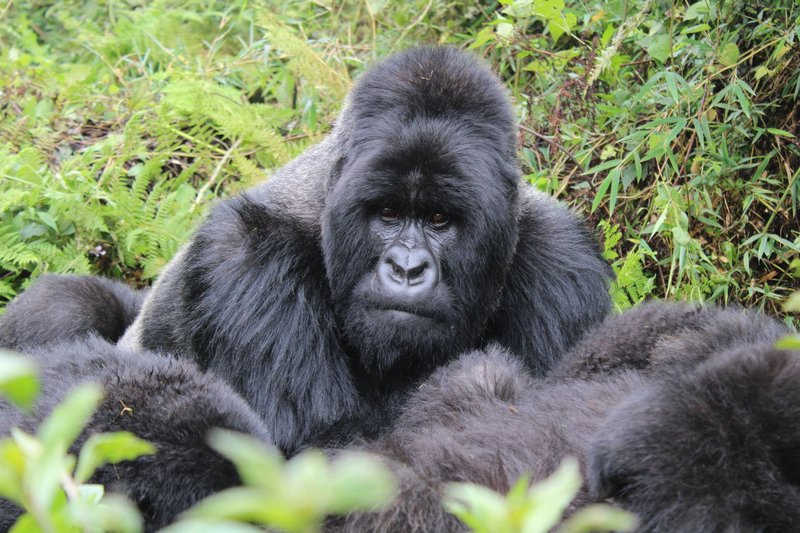
Rwanda calls itself the “land of a thousand hills,” and it’s not exaggerating much — the terrain barely lets you walk in a straight line. Volcanoes National Park protects some of the last mountain gorillas on the planet, and Rwanda’s post-1994 recovery, including a national ban on plastic bags enforced since 2008, gets cited constantly as a model for the region.
16. Eswatini
Eswatini, renamed from Swaziland in 2018, is both the smallest landlocked country in Africa by area and one of the last two absolute monarchies left in the world. King Mswati III rules by decree, and the country’s small size hasn’t stopped it from becoming a regular stop for travelers doing a loop through South Africa and Mozambique.
Regional trade blocs these countries lean on
Landlocked countries survive by treaty as much as by geography, and most of these 16 belong to regional economic blocs that smooth out cross-border trade and transit rights:
- ECOWAS (Economic Community of West African States) — Burkina Faso, Mali, and Niger, giving them negotiated transit access through coastal members like Togo and Ghana.
- ECCAS (Economic Community of Central African States) — Chad and the Central African Republic, both leaning on Cameroon’s ports.
- EAC (East African Community) — Uganda, Rwanda, Burundi, and South Sudan, which route heavily through Kenya’s port of Mombasa or Tanzania’s Dar es Salaam.
- SADC (Southern African Development Community) — Botswana, Zambia, Zimbabwe, Malawi, Lesotho, and Eswatini, spread across South Africa’s, Mozambique’s, and Namibia’s ports.
- COMESA (Common Market for Eastern and Southern Africa) — Ethiopia’s main framework, alongside its bilateral arrangement with Djibouti.
These blocs matter more here than in most parts of the world. A coastal country can afford to be prickly with one neighbor. A landlocked one usually can’t.
Which ones are actually easy to visit
Landlocked doesn’t mean hard to reach — most of these countries have functioning international airports, and a few make visiting genuinely simple. Rwanda offers visa-on-arrival for most nationalities and has invested heavily in tourism infrastructure around gorilla trekking, even as permit prices climb into four figures. Botswana and Zambia both run well-organized safari circuits, with Zambia’s side of Victoria Falls generally quieter and cheaper than Zimbabwe’s. Uganda pairs gorilla trekking with a lower price tag than Rwanda, at the cost of longer drives between parks. Malawi is the slow, budget-friendly option — lakeside towns, minimal crowds, and a visa policy that’s straightforward for most Western passport holders.
Mali, Chad, the Central African Republic, and South Sudan sit at the other end of the spectrum — travel advisories from most governments currently discourage nonessential travel to all four, mainly due to conflict and kidnapping risk in parts of the country.
FAQ
How many landlocked countries are in Africa? Sixteen: Botswana, Burkina Faso, Burundi, Central African Republic, Chad, Eswatini, Ethiopia, Lesotho, Malawi, Mali, Niger, Rwanda, South Sudan, Uganda, Zambia, and Zimbabwe.
What’s the largest landlocked country in Africa? Chad, at roughly 1,284,000 square kilometers — bigger than France, Germany, and Spain combined.
Are there any “double landlocked” countries in Africa? No. A double-landlocked country is surrounded entirely by other landlocked countries, so it would need two borders crossed to reach the sea. Only two countries in the world qualify: Liechtenstein and Uzbekistan. None of Africa’s 16 landlocked nations meet that bar, since each one borders at least one country with coastal access.
Which landlocked African country has the smallest population? Eswatini, with around 1.2 million people — also the continent’s smallest landlocked country by land area.
What are the main economic challenges landlocked African nations face? Higher transport and logistics costs, dependence on neighboring countries’ ports and political stability, exposure to border closures and transit disputes, and generally slower integration into global supply chains than coastal peers with direct shipping access.
Is Lesotho really surrounded by just one country? Yes — Lesotho is entirely enclosed within South Africa, making it one of only three countries in the world (along with San Marino and Vatican City) completely surrounded by a single neighbor.