Table of Contents
- TLDR
- Which Languages Count as Indigenous, and Why
- Crimean Tatar: the largest, and still losing ground
- Crimean Romani: shaped by centuries next to Crimean Tatar
- Karaim: down to a few dozen fluent speakers, worldwide
- Krymchak: as few as five native speakers left
- Speaker Numbers and Status at a Glance
- December 2025: the Charter Vote That Rewrote the Legal Picture
- What the Occupation Did to These Communities
TLDR
Ukraine legally recognizes four indigenous languages: Crimean Tatar, Crimean Romani, Karaim, and Krymchak — all native to Crimea, all belonging to peoples with no other homeland. The designation comes from the 2021 Law “On Indigenous Peoples of Ukraine,” which named Crimean Tatars, Karaites, and Krymchaks (Crimean Roma were added to the indigenous-languages protection list later). Crimean Tatar is the only one with a substantial speaker base — tens of thousands, still shrinking under Russian occupation. Karaim and Krymchak are down to double digits and single digits, respectively. On December 3, 2025, the Verkhovna Rada extended European Charter protection to all four, alongside 14 other minority languages, in the same vote that stripped Russian off the list entirely.
Which Languages Count as Indigenous, and Why
Ukraine draws a hard legal line between “national minority” languages — Hungarian, Romanian, Bulgarian, Polish, and others spoken by communities with a kin-state elsewhere — and “indigenous” languages, spoken by peoples who formed as distinct ethnic groups on Ukrainian soil and have nowhere else to call home. Only four languages get the second label.
That distinction isn’t academic. The 2021 law grants indigenous peoples rights that go beyond standard minority protections: native-language education, self-governing representative bodies, dedicated media, and a formal say in decisions affecting their historic territory. Crimean Tatars, Crimean Karaites, and Krymchaks were named explicitly in the law’s text. Crimean Roma — an ethnically and linguistically distinct group from Ukraine’s broader Romani population — were folded into the same indigenous framework through later legislative and Charter action, because their dialect, like the other three, developed nowhere but Crimea.
All four languages share a geography and, to varying degrees, a genealogy: heavy contact with Turkic speech patterns, centuries of coexistence on the peninsula, and a 20th century that very nearly erased them.
Crimean Tatar: the largest, and still losing ground
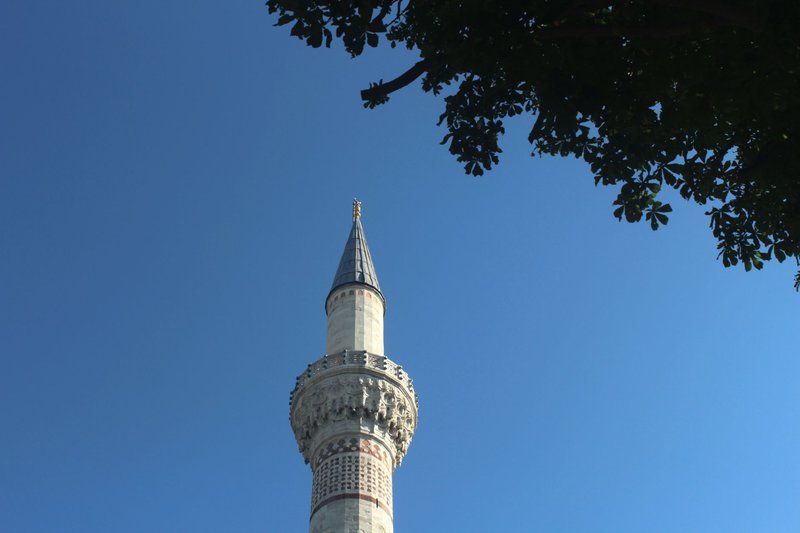
Crimean Tatar is a Kipchak-Oghuz Turkic language, distinct from the Tatar spoken in Russia’s Volga region, despite the shared name causing constant confusion. It’s the only one of the four with enough speakers to sustain schools, publishing, and broadcast media — Ukraine’s ATR channel produced Crimean Tatar-language programming until Russian authorities forced it off the peninsula after 2014.
Roughly 260,000 people in Ukraine identify ethnically as Crimean Tatar, but fluency runs well behind ethnicity. Researchers and UNESCO-linked estimates put the number of people who actually speak the language at somewhere between 60,000 and 90,000, concentrated in Crimea itself and in diaspora communities in Uzbekistan — a legacy of Stalin’s 1944 mass deportation, when the entire Crimean Tatar population was forcibly relocated to Central Asia in cattle cars, and roughly a fifth died en route or in the following months.
UNESCO classified Crimean Tatar as severely endangered back in 2010. Linguists tracking the language since Russia’s 2014 annexation of Crimea argue the real threat level has climbed since — Crimean Tatar-medium schools on the peninsula have been shut down or converted to Russian instruction, and speaking the language in public has become something occupation authorities actively discourage. In April 2025, Ukraine’s Cabinet of Ministers approved a new Latin-script Crimean Tatar orthography, a move aimed squarely at strengthening the language’s footing on the mainland while it’s under pressure in its homeland.
Crimean Romani: shaped by centuries next to Crimean Tatar
Crimean Roma are a distinct sub-group within Ukraine’s broader Romani population, numbering roughly 25,000 across Ukraine and Russia combined. Their dialect belongs to the Balkan branch of Romani, but centuries of proximity to Crimean Tatar speakers left it with heavy Turkic borrowings in vocabulary and pronunciation — a linguistic fingerprint you won’t find in any other Romani variety.
Crimean Roma share the darkest chapter of Crimean Tatar history almost exactly: they were deported alongside Crimean Tatars in 1944, and the dialect’s speaker base never recovered. What remains is classified as critically endangered, kept alive mostly by older speakers in scattered communities, with a small but active revitalization push from Romani cultural organizations working to document and teach the dialect before that generation is gone.
Karaim: down to a few dozen fluent speakers, worldwide
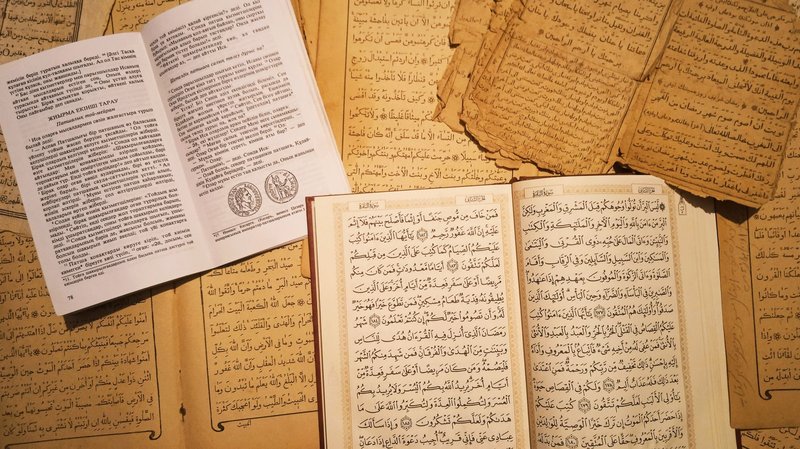
Karaim belongs to the Kipchak Turkic family and is tied to Karaite Judaism, a branch of Judaism that rejects the Talmud in favor of scripture read directly. Crimean Karaites developed the language over centuries on the peninsula, writing it in Hebrew script for religious texts and later in Cyrillic and Latin scripts for secular use.
The numbers are stark. UNESCO’s Red Book on Endangered Languages classifies Karaim as seriously endangered, and current counts put fluent speakers at around 30 people worldwide — most of them elderly, most of them in Lithuania’s Trakai region rather than Crimea, the result of migrations that predate Soviet rule. A 2003 study found that out of roughly 400 ethnic Karaites across Lithuania and Poland, fewer than 90 could even understand the language, let alone speak it fluently. No school teaches Karaim as a medium of instruction anywhere. A summer school held in Trakai each year is one of the only structured settings left where the language gets passed on at all.
Krymchak: as few as five native speakers left
Krymchak is a Turkic language historically written in Hebrew script, spoken by a Crimean Jewish community that, unlike the Ashkenazi and Sephardic communities more familiar to most readers, developed independently on the peninsula over centuries. The Krymchak language and its speakers absorbed catastrophic losses in the 20th century: the Holocaust killed the majority of the Krymchak population outright — Nazi occupation forces and collaborators targeted Krymchaks specifically as a Jewish ethnic group — and Soviet-era assimilation pressure did most of the rest.
What’s left is close to nothing. Estimates range from zero fluent native speakers to a handful — most linguists cite five to seven people worldwide who still speak Krymchak as a first language, out of a global Krymchak population of roughly 1,500 to 2,000 people now living mainly in Israel, Crimea, Russia, and the United States. Linguists classify the language’s vitality as moribund, one step short of extinct. Krymchak may be the most endangered language recognized anywhere in Europe.
Speaker Numbers and Status at a Glance
| Language | Estimated fluent speakers | UNESCO / linguistic status | Where spoken today |
|---|---|---|---|
| Crimean Tatar | 60,000–90,000 (Ukraine); up to 500,000 worldwide incl. diaspora | Severely to critically endangered | Crimea, mainland Ukraine, Uzbekistan diaspora |
| Crimean Romani | Small and declining (population base ~25,000) | Critically endangered | Scattered communities, Ukraine and Russia |
| Karaim | ~30 worldwide | Seriously endangered (UNESCO Red Book) | Mostly Trakai, Lithuania; small Crimean presence |
| Krymchak | ~5–7 native speakers | Moribund / critically endangered | Israel, Crimea, Russia, United States (diaspora) |
December 2025: the Charter Vote That Rewrote the Legal Picture
On December 3, 2025, the Verkhovna Rada passed amendments updating Ukraine’s ratification of the European Charter for Regional or Minority Languages, the Council of Europe treaty that obligates signatory states to actively support named minority and indigenous languages rather than just tolerate them. The revised list protects 18 languages, including Karaim and Krymchak alongside Crimean Tatar, Romani, Belarusian, Bulgarian, Yiddish, and others. In the same vote, Russian was removed from the protected list entirely — lawmakers argued a language spoken by a regional aggressor with no shortage of institutional support elsewhere doesn’t meet the Charter’s definition of a minority language in need of protection.
The practical effect for Karaim and Krymchak specifically is significant: Charter status obligates the state to support language teaching, media, and cultural activity, formal commitments that didn’t previously extend to either language. The Council of Europe’s Kyiv office has tracked this shift alongside a broader push — including the first-ever Congress of the Indigenous Peoples of Ukraine, which brought Crimean Tatar, Karaite, and Krymchak representatives together during the war to coordinate cultural preservation efforts. Ukraine’s Ministry of Culture separately reported strengthening institutional support for indigenous-peoples culture through 2025, including a dedicated grant program from the Ukrainian Cultural Foundation aimed at Crimean Tatar, Karaite, and Krymchak heritage projects, part of a wider reorganization of the country’s cultural funding institutions.
What the Occupation Did to These Communities
Every one of these four languages traces its center of gravity to Crimea, and Crimea has been under Russian occupation since 2014. That’s not incidental to the endangerment numbers above — it’s a primary driver of them. Crimean Tatar-medium education has been curtailed on the peninsula. Crimean Tatar civic and media institutions that once supported the language, including the ATR broadcaster, were forced to relocate to mainland Ukraine or shut down. Prominent Crimean Tatar activists and Mejlis leaders, the community’s traditional representative body, have faced prosecution, exile, or worse under occupation authorities.
Karaim and Krymchak communities, tiny to begin with, lost what institutional footing they had in Crimea as the peninsula’s cultural infrastructure reoriented around Russian state priorities. That’s part of why the mainland-based response — the 2021 indigenous peoples law, the 2025 orthography reform, the December 2025 Charter vote, the new cultural-funding programs — reads less like routine policy housekeeping and more like a deliberate bet: that legal recognition and funding on the government-controlled mainland can keep these languages alive long enough to return to Crimea, whenever that becomes possible again.