
Table of Contents
- Why a phrase or two actually matters here
- Arabic, French, or English: when to use which
- Greetings and arrival
- Taxis and getting around
- Restaurants and mezze etiquette
- Souks and bargaining
- Asking for directions
- Emergencies and safety
- Slang you’ll hear constantly
- One more thing before you go
Why a phrase or two actually matters here
You will not need Arabic to get through a trip to Lebanon. Menus have English. Taxi drivers in Beirut and Byblos switch languages mid-sentence without thinking about it. But the couple of phrases you do use land differently than they would in, say, Paris or Tokyo — say “marhaba” to a shopkeeper in Gemmayze and you’ll watch their whole posture change. It’s not about fluency. It’s about signaling that you noticed you’re a guest, not a customer walking through a theme park.
This isn’t a flat list of ten words to memorize on the plane. It’s organized by the situations you’ll actually hit — checking into a hotel, haggling over a scarf in Tripoli’s souk, ordering mezze you can’t pronounce, or the rare moment things go sideways and you need help fast. Each phrase comes with the transliteration, a rough pronunciation, the Arabic script (so you can point at it if your accent doesn’t land), and why it’s said the way it’s said.
Arabic, French, or English: when to use which
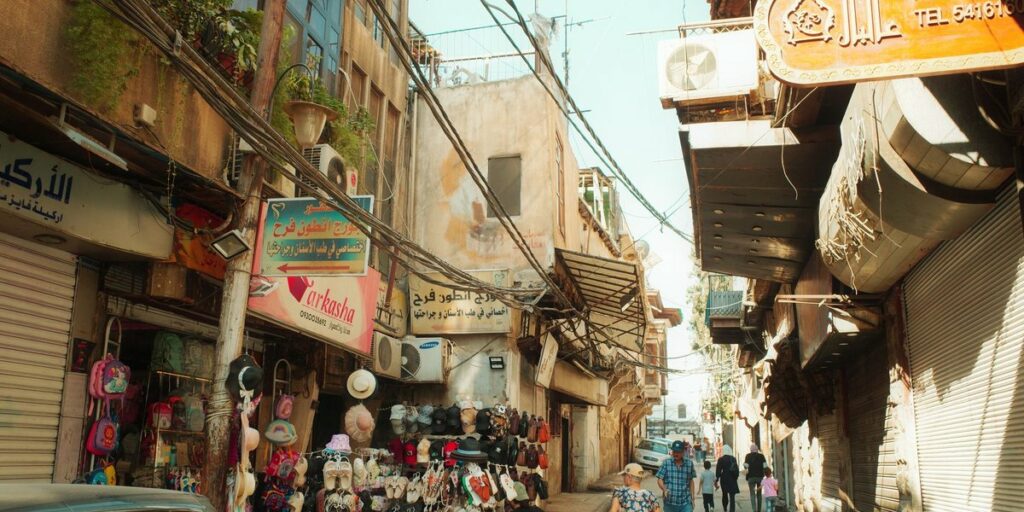
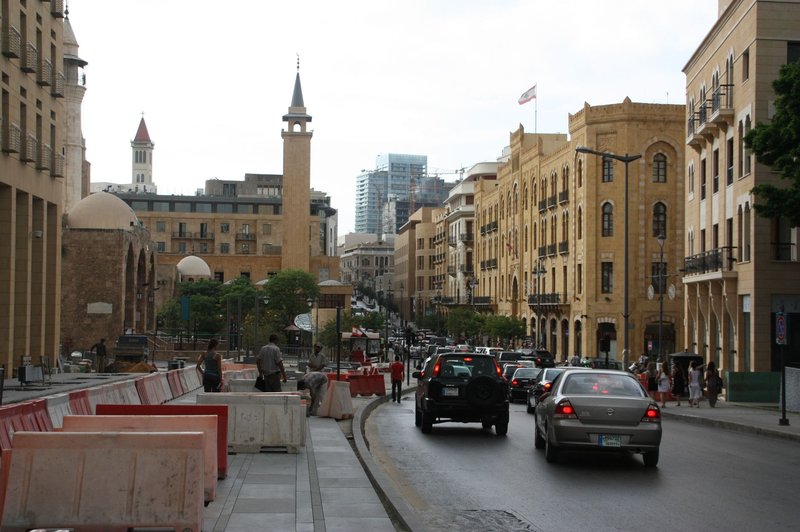
Lebanon runs on three languages at once, and which one gets you furthest changes block by block. Beirut’s Hamra and Achrafieh neighborhoods, plus Byblos and Jounieh, lean French — menus, street signs, and small talk default to it, a holdover from the French Mandate era. Batroun and the beach clubs catering to diaspora and Gulf visitors have gone almost entirely English. Outside the tourist corridors — mountain villages, the Bekaa Valley, the south — Arabic does the actual work, and English gets thinner fast.
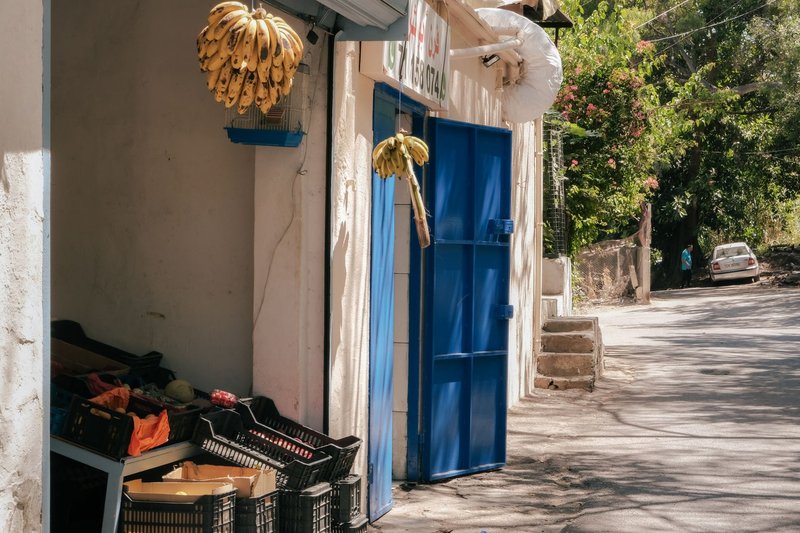
The trilingual habit isn’t a formality either. Lebanese speakers genuinely code-switch mid-sentence, dropping a French word into an Arabic clause and finishing in English without noticing they did it. Researchers who study the region’s sociolinguistics point to this as a direct legacy of Lebanon’s layered colonial and trade history — Ottoman, French, and now globalized English all left residue. Practically, this means: try Arabic first with anyone older or outside Beirut, French with anyone in a French-leaning neighborhood who doesn’t answer in English, and don’t be shy about English in Beirut proper — it’ll usually work, and nobody will hold it against you for trying Arabic badly first.
Greetings and arrival
Marhaba (مرحبا) — mar-HA-ba — “Hello.” Your safest default. It works with a Muslim shopkeeper, a Christian hotel clerk, and a Druze taxi driver equally, which matters in a country where greetings can quietly signal religious identity.
Ahla w sahla (أهلا وسهلا) — AH-la w SAH-la — “Welcome.” Said when you’re the one arriving — into a home, a shop, a taxi. Often shortened to just “ahla” back at you, which is the local equivalent of a warm nod.
Kifak / Kifik (كيفك) — KEE-fak (to a man) / KEE-fik (to a woman) — “How are you?” Lebanese Arabic is gendered down to this level, so pay attention to who you’re addressing. Getting it backward isn’t offensive, just noticeably foreign — which, fine, you are.
Mnih, el hamdillah (منيح، الحمد لله) — mnee7, ham-dil-LAH — “Good, thank God.” The standard reply to “kifak,” used reflexively by religious and non-religious Lebanese alike. Answering with a flat “good” instead reads as slightly clipped.
Salam alaykum (السلام عليكم) — sa-LAM aa-LAY-koom — “Peace be upon you.” More specifically associated with Muslim Lebanese than “marhaba,” with the expected reply “wa alaykum el salam.” If you’re unsure of the context, marhaba stays the safer opener.
Taxis and getting around
Wayn el taxi? (وين التاكسي؟) — wayn et-TAK-see — “Where’s the taxi?” Useful outside hotels and airports, where drivers don’t always wait in an obvious line.
Addeysh el ujra? (قديش الأجرة؟) — ad-DAYSH el UJ-ra — “How much is the fare?” Ask this before you get in, not after. Meters are the exception in Lebanon, not the rule, and a price agreed on the sidewalk beats an argument at your destination.
Baddi rouh la… (بدي روح ع…) — BED-dee rooh la… — “I want to go to…” Follow it with the neighborhood name. Drivers navigate by landmarks and neighborhood far more than by street address, so “Baddi rouh la Gemmayze” gets you further than any address on a booking confirmation.
Wa’ef hon, low samaht (وقف هون لو سمحت) — WA-ef hone, low sa-MAHT — “Stop here, please.” “Low samaht” (“if you please”) is the all-purpose politeness suffix — tack it onto almost any request and it softens it instantly.
Restaurants and mezze etiquette
Sahtein (صحتين) — sah-TAYN — “Double health,” roughly “enjoy your meal.” Said to you as food arrives, and you say it back before or during eating, not after. It literally means “two healths” — one for the eater, one for the cook — which is a nicer idea than “bon appétit” if you sit with it a second.
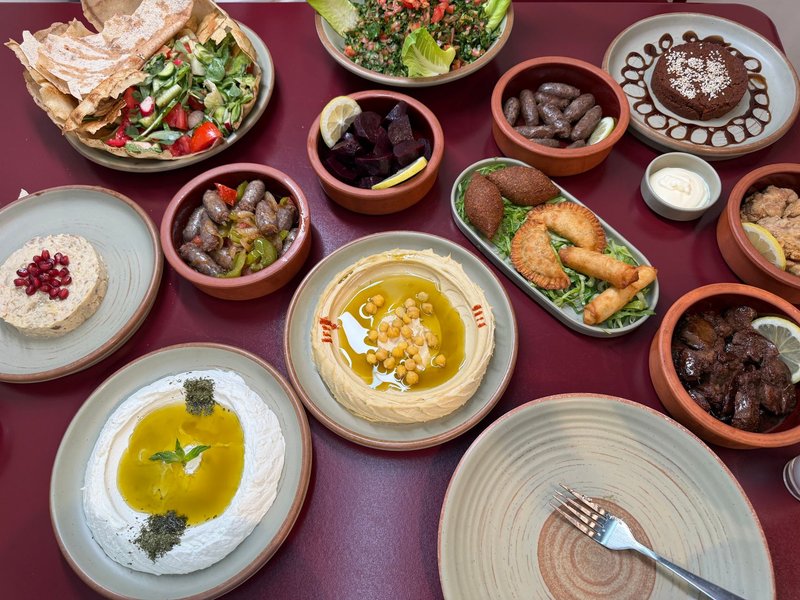
Lebanon’s mezze culture — the spread of small shared plates that opens most meals — isn’t a starter course the way tapas sometimes gets treated elsewhere. It’s frequently the whole meal, and it’s the product of centuries of trade layered on top of each other: Phoenician seafood habits, Ottoman grilling, and French pastry technique, according to National Geographic’s reporting on Lebanese cuisine. Don’t rush it. Ordering five mezze plates and taking two hours over them is the point, not a sign the kitchen is slow.
Baddna mezze, low samaht (بدنا مazza لو سمحت) — BED-na MEZ-za, low sa-MAHT — “We’d like mezze, please.” A reasonable opener if you want the waiter to steer rather than you guessing at an unfamiliar menu.
Ktir tayyeb (كتير طيب) — kteer TAY-yeb — “Very delicious.” The compliment that gets you noticed — and often an unprompted extra plate on the house.
El hsab, low samaht (الحساب لو سمحت) — el-hsab low sa-MAHT — “The bill, please.” Lebanese dining culture involves genuine fights over who pays. If you’re a guest, expect to lose that fight — graciously.
Yislamo (يسلمو) — yis-LA-mo — “Thanks” (casual, local alternative to “shukran”). Shukran works everywhere and is understood instantly, but yislamo is what you’ll actually hear locals say to each other.
Souks and bargaining
Addeysh haida? (قديش هيدا؟) — ad-DAYSH HAY-da — “How much is this?” The opening line in any souk, from Tripoli’s covered market to the smaller stalls in Byblos’s old town.
Ktir ghali (كتير غالي) — kteer GHA-lee — “That’s too expensive.” Said with a slight smile, not a scowl — bargaining in Lebanon is closer to a conversation than a confrontation, and vendors expect the back-and-forth as much as you do.
Ma fi shway takhfeed? (ما في شوي تخفيض؟) — ma fee SHWAI takh-FEED — “Isn’t there a bit of a discount?” A softer, more indirect version than flatly naming your price — which tends to go over better than an aggressive first counteroffer.
Dughri (دغري) — DUGH-ree — “Straight” or, by extension, “honestly.” A distinctly Levantine word (not standard Arabic) that shows up in bargaining as “kun dughri,” meaning “give me your straight price.” Using it signals you’re not a total first-timer, and vendors tend to skip a round of theater when they hear it.
Asking for directions
Wayn…? (وين…؟) — wayn — “Where is…?” The single most useful word in this entire list. Attach any destination to it.
Yamin / Shmal (يمين / شمال) — ya-MEEN / shmal — “Right / Left.”
Dughri (دغري) — DUGH-ree — “Straight ahead.” Same word as the bargaining sense above — context tells you which meaning is intended.
Addeysh el masafeh? (قديش المسافة؟) — ad-DAYSH el ma-SAF-eh — “How far is it?” Handy in mountain towns and along the coast, where “not far” from a local can mean anything from a five-minute walk to a twenty-minute drive.
Emergencies and safety
Saaedni! (ساعدني) — sa-ED-nee — “Help me!” Loud, direct, understood immediately in any Lebanese crowd.
Fi mushkileh (في مشكلة) — fee MUSH-ki-leh — “There’s a problem.” A calmer opener than shouting for help — useful when you need to explain a situation to a hotel clerk, driver, or passerby rather than signal outright danger.
Btehki ingleezi? (بتحكي إنجليزي؟) — bit-HAK-ee in-glee-ZEE — “Do you speak English?” Worth having ready even though English is widely spoken in tourist areas — outside them, it isn’t guaranteed, and asking first is more useful than assuming.
Wayn el mustashfa? (وين المستشفى؟) — wayn el moos-tash-FA — “Where’s the hospital?”
Ittasel bil police (اتصل بالبوليس) — it-TA-sel bil po-LEES — “Call the police.”
Lebanon’s security situation shifts by region and by month more than most destinations, so check the U.S. State Department’s current Lebanon travel advisory before you go and again once you’re there — not because a phrase list can substitute for that information, but because it can’t.
Slang you’ll hear constantly
Yalla (يلا) — YAL-la — “Let’s go,” “come on,” or “hurry up,” depending entirely on tone. You’ll hear it as a sentence-ender on phone calls (“yalla, bye”), from a taxi driver stuck in traffic, and from a friend hurrying you out the door. It’s the most-used word in the entire dialect, full stop.
Habibi / Habibti (حبيبي / حبيبتي) — ha-BEE-bee (to a man) / ha-BEEB-tee (to a woman) — “My dear.” Don’t read into it. Taxi drivers, shopkeepers, and grandmothers use it on total strangers constantly — it’s a term of warmth, not romance.
Ya’tik el afye (يعطيك العافية) — ya-TEEK el-AF-yeh — Roughly, “may you be given strength,” said to someone at work. You’ll hear this said to a waiter, a mechanic, a cleaner — anyone doing a task in front of you. The expected reply is “Allah ya’afik,” which returns the same wish.
Tikram aynak (تكرم عينك) — tik-RAM AY-nak — Literally “may your eye be honored,” meaning “you’re welcome” or “sure, no problem.” A flowery reply to thanks that tells you a lot about how Lebanese Arabic handles courtesy — through indirect blessing rather than a flat “you’re welcome.”
One more thing before you go
None of this replaces a translation app, and nobody expects a tourist to nail the gendered forms or get “dughri” right on the first try. What these phrases do is buy you something an app can’t: a beat of recognition. Say “sahtein” before a plate of mezze arrives and the table treats you differently for the rest of the meal — not because your Arabic is good, but because you clearly asked someone before you came. That’s the whole trick. Lebanon rewards effort out of proportion to how much effort it actually takes.