TLDR
No dataset ranks Afghan cities by poverty directly — the country doesn’t publish city-level poverty surveys. What it does publish is provincial data, and since each of the cities below is the administrative seat of its province, that data is the closest thing to a real answer. Ranked by poverty rate: Qala-i-Naw (Badghis) comes out worst, followed by Parun (Nooristan), Aybak (Samangan), Qalat (Zabul), Maimana (Faryab), Kunduz City, Chaghcharan (Ghor), Jalalabad, Kandahar City, and Herat City — which, despite the lowest poverty rate on this list, houses the largest raw number of poor residents in the country.
Table of Contents
- Why “poorest cities” is a harder question than it looks
- 1. Qala-i-Naw, Badghis
- 2. Parun, Nooristan
- 3. Aybak, Samangan
- 4. Qalat, Zabul
- 5. Maimana, Faryab
- 6. Kunduz City, Kunduz
- 7. Chaghcharan, Ghor
- 8. Jalalabad, Nangarhar
- 9. Kandahar City, Kandahar
- 10. Herat City, Herat
- The bigger picture
Why “poorest cities” is a harder question than it looks
Search “poorest cities in Afghanistan” and you’ll get provincial poverty rankings, a Wikipedia page on national poverty trends, or a single profile of a family surviving in Kabul. Nobody has actually ranked the cities, because nobody collects the data at that resolution. The Afghanistan Multidimensional Poverty Index, run jointly by Afghan statisticians and the Oxford Poverty and Human Development Initiative (OPHI), measures poverty at the provincial level — health, education, and living-standard deprivations rolled into one score per province, not per city.
The workaround: every city on this list is the capital of its province, so the provincial poverty rate is a legitimate stand-in for what’s happening in that specific urban center, even if it also captures the surrounding rural districts. Where a city’s economy diverges meaningfully from its province — Herat and Kandahar both do, for different reasons — that gets called out.
The baseline numbers come from the UNDP/OPHI 2024 Global Multidimensional Poverty Index, built on Afghanistan’s 2022/23 Living Conditions Survey. As of that survey, 64.9% of Afghans are multidimensionally poor and another 19.9% are on the edge of it — and that was before the drought and aid cuts of 2025 pushed things further.
1. Qala-i-Naw, Badghis
Badghis posts the highest MPI value of any province — 0.504 — and a poverty headcount around 86%, the worst in the country by rate. Qala-i-Naw, its capital, sits in Afghanistan’s dry northwest near the Turkmenistan border, where the local economy runs on rain-fed wheat and livestock. When the rains fail, as they have in repeated cycles over the last decade, there’s no industrial or trade sector to absorb the shock. Badghis was also the epicenter of a 2018 famine warning that predated the Taliban takeover by three years — this isn’t a new crisis dressed up in new headlines.
2. Parun, Nooristan
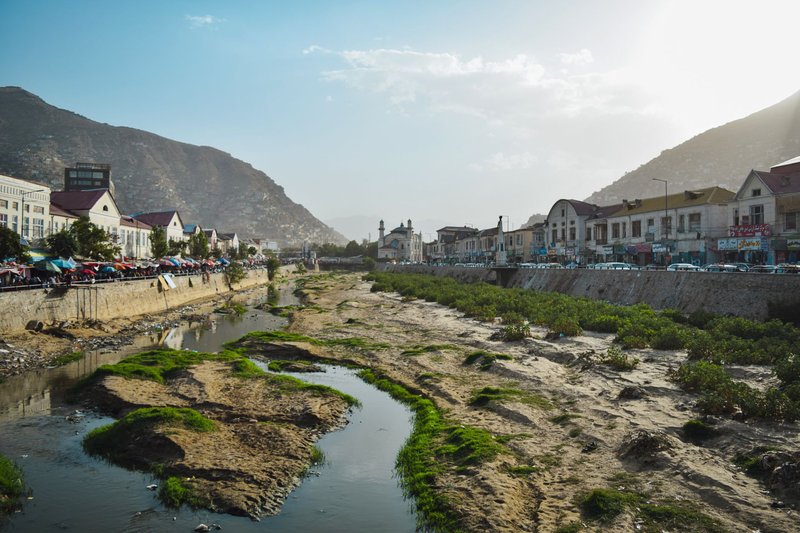
Nooristan’s MPI value (0.476) and poverty rate (roughly 80%) put it second nationally, and geography explains most of it. Some valleys in this mountainous province still don’t have a year-round vehicle road connecting them to Parun, the provincial capital — supplies, students, and patients move by foot or pack animal for parts of the year. Nooristan is also one of only two provinces (with Urozgan) where poverty measurably fell between 2015/16 and 2022/23, according to OPHI’s tracking. It’s still brutally poor. It’s poor and getting slightly less so, which is a different story than the rest of this list tells.
3. Aybak, Samangan
Samangan is one of nine provinces where OPHI recorded a statistically significant increase in poverty between 2015/16 and 2022/23 — not stagnation, a reversal. Aybak, the capital, sits on the ring road between Mazar-i-Sharif and Kabul, which in theory should make it a trade waypoint. In practice, that stretch of highway has seen enough banditry and instability over the years that transit trade never built the kind of local economy a through-road usually generates.
4. Qalat, Zabul
Zabul is the other southern province on the list of nine with significant poverty increases. Qalat, its capital, straddles the Kabul–Kandahar highway — Afghanistan’s single most important commercial artery — and still can’t convert that location into local prosperity. Decades of conflict along this corridor scared off the kind of settled investment that turns a highway town into a market town; Zabul remains one of the least populated, least developed provincial capitals in the south.
5. Maimana, Faryab
Faryab doesn’t top the poverty-rate charts, but it has the fifth-largest raw number of multidimensionally poor people of any province, and it’s also among the nine with a significant poverty increase since 2015/16. Maimana functions as a regional hub for northern Afghanistan’s karakul wool and carpet trade, industries that depend on export routes through Central Asia — routes that have gotten harder, not easier, to use since 2021 sanctions and banking restrictions cut off most formal international transactions.
6. Kunduz City, Kunduz
Kunduz province ranks among the five poorest by headcount ratio, and Kunduz City carries a specific kind of instability on top of the poverty: it fell to Taliban forces twice before the 2021 takeover — in 2015 and again in 2016 — each time displacing tens of thousands of residents and gutting local business for years afterward. The province is otherwise one of the country’s more fertile agricultural belts, known for melons and cotton, which makes the persistence of its poverty numbers harder to explain by geography alone and easier to explain by two decades of recurring conflict.
7. Chaghcharan, Ghor
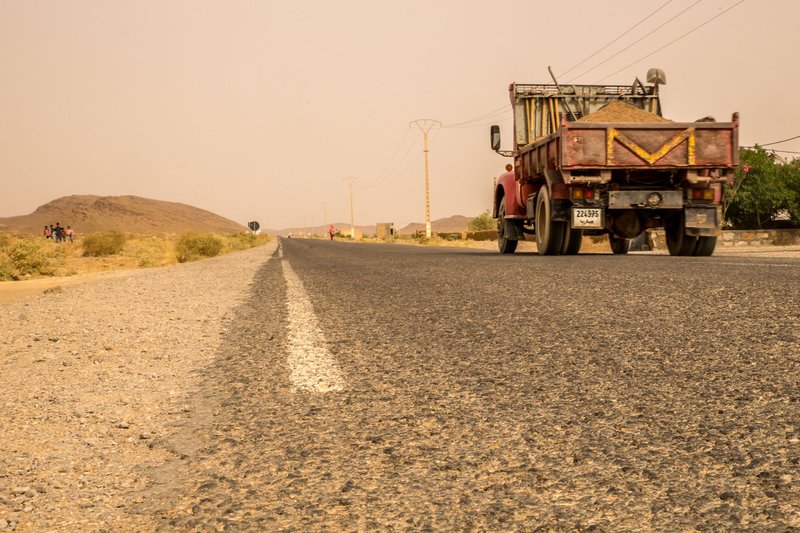
Ghor is another of the nine provinces with a significant poverty increase since 2015/16, and Chaghcharan is arguably the most physically isolated provincial capital on this list — sitting at over 2,200 meters in the central highlands, it’s regularly cut off by snow for parts of the winter. There’s no rail, no navigable river, and the road connections to Herat and Kabul are unpaved for long stretches. Development aid that reaches lowland provinces routinely stalls before it gets to Ghor simply because the logistics cost more than the aid itself.
8. Jalalabad, Nangarhar
Nangarhar has the second-largest number of multidimensionally poor people of any province, right behind Herat. Jalalabad sits a short drive from the Torkham border crossing into Pakistan — historically one of the busiest land crossings in the region — which should make it an economic engine. Instead, Torkham has become a bottleneck: mass deportations of Afghans from Pakistan since 2023 have funneled hundreds of thousands of returnees through the city with little absorption capacity waiting on the other side, adding population pressure faster than the local economy can generate jobs.
9. Kandahar City, Kandahar
Kandahar has the third-highest number of multidimensionally poor residents nationally, which is a strange fact set against its political weight — Kandahar, not Kabul, is where the Taliban’s supreme leader and inner leadership circle are based, making it the de facto seat of power in Afghanistan since 2021. Political centrality hasn’t translated into economic investment for ordinary residents. Unemployment and underemployment in the city track the national pattern of roughly seven in ten working-age Afghans lacking sufficient income, and the city’s historic pomegranate and fruit export trade has struggled against the same banking and sanctions restrictions squeezing every other province.
10. Herat City, Herat
Herat has the single largest number of multidimensionally poor people of any province in Afghanistan — more than Nangarhar, Kandahar, or Kunduz — despite having, on paper, the strongest private-sector economy outside Kabul thanks to decades of trade with Iran. That trade relationship has become a liability rather than an asset since 2023: Iran has deported well over a million Afghans, many with nowhere to go but Herat, the nearest major Afghan city to the border. The city that once exported labor to Iran is now absorbing it back faster than housing, water, or job markets can adjust — which is exactly why raw poverty rate undersells what’s actually happening here.
The bigger picture
Two numbers frame everything above. First, in September 2021, UNDP projected that up to 97% of Afghans could fall below the poverty line by mid-2022 if the economic collapse following the Taliban takeover continued unchecked — a projection that turned out to be roughly on target. Second, more recent UN reporting puts around 28 million Afghans in poverty as of 2025, with the UN News service documenting how record returnee flows from Pakistan and Iran, a worsening drought, and a 16.5% drop in international aid have combined to deepen the crisis rather than ease it.
None of the ten places above are poor because of a single cause. Badghis and Ghor are poor because of geography and drought. Kunduz and Zabul are poor because conflict never really left. Jalalabad and Herat are poor in aggregate because they’re absorbing returnees that smaller provinces couldn’t handle at all. What connects them is a national economy that, according to OPHI’s 2024 country briefing, added 5.3 million more people into multidimensional poverty between 2015/16 and 2022/23 alone — a trendline that predates 2021 and has only steepened since.
If there’s a pattern worth remembering, it’s this: the poorest cities in Afghanistan by rate are the small, rural, geographically isolated provincial capitals — Qala-i-Naw, Parun, Chaghcharan — while the cities with the most poor people in absolute terms are the big ones — Herat, Nangarhar, Kandahar — because scale eventually beats rate. A province can improve its poverty rate and still add more poor residents than a worse-off province with a tenth the population. Both numbers are true. Neither one alone tells you the whole story, which is exactly why nobody’s managed to publish a clean “poorest cities” list before now.