Table of Contents
- The quick reference
- Tongan: the one everyone means when they say “Tongan”
- Niuafoʻou: a language holding on by a few hundred speakers
- Niuatoputapu: the language that survives only in a sailor’s notebook
- How three languages ended up on one archipelago
- The diaspora problem: keeping a language alive 5,000 miles from home
- The 2022 push to put Niuafoʻou back in the classroom
- What’s actually at stake
Search “languages of Tonga” and you get Tongan, full stop, maybe a line about English being co-official. That’s the answer for a tourist. It’s not the whole answer. Tonga’s 170-some islands have been home to at least three distinct indigenous languages, and their fates split three ways: one is a national language with nearly 200,000 speakers, one is down to a few hundred people on a single volcanic island, and one hasn’t been spoken since before Captain Cook ever wrote the word “Tonga” in a logbook.
The quick reference
| Language | Status | Approx. speakers | Family |
|---|---|---|---|
| Tongan (lea fakatonga) | Living, official | ~187,000 | Tongic (Polynesian) |
| Niuafoʻou | Endangered | ~500–1,000 | Tongic (Polynesian) |
| Niuatoputapu | Extinct (18th–19th century) | 0 | Samoic-Outlier (Polynesian) |
Tongan: the one everyone means when they say “Tongan”
Tongan is one of two official languages of the Kingdom of Tonga, alongside English, and it’s the language you’ll actually hear used — in Parliament, in church, on the radio, at the market in Nukuʻalofa. Speaker counts vary by source, but the range sits around 187,000 worldwide, with over 100,000 of those in Tonga itself and the rest scattered through the diaspora.
Linguistically, Tongan sits in the Tongic branch of Polynesian, a subgroup it shares with only one other language: Niuean, spoken on the separate nation of Niue roughly 800 kilometers away. That’s a narrow family tree. Most of Tonga’s Pacific neighbors — Samoan, Fijian, Tuvaluan — belong to a different Polynesian branch entirely, which is part of why Tongan sounds distinct to a trained ear even among languages from the same ocean.
What makes Tongan unusual for a Polynesian language is how formalized it is. It has an official orthography, government-produced dictionaries, a written literary tradition going back to 19th-century missionary presses, and — critically for its survival — full instruction in Tongan primary and secondary schools. That combination is rare. Most of the world’s Polynesian languages never got the infrastructure that keeps a language alive past a couple of generations: standardized spelling, a body of printed text, a place in the school day. Tongan got all three, which is a large part of why it isn’t on anyone’s endangered list.
Niuafoʻou: a language holding on by a few hundred speakers
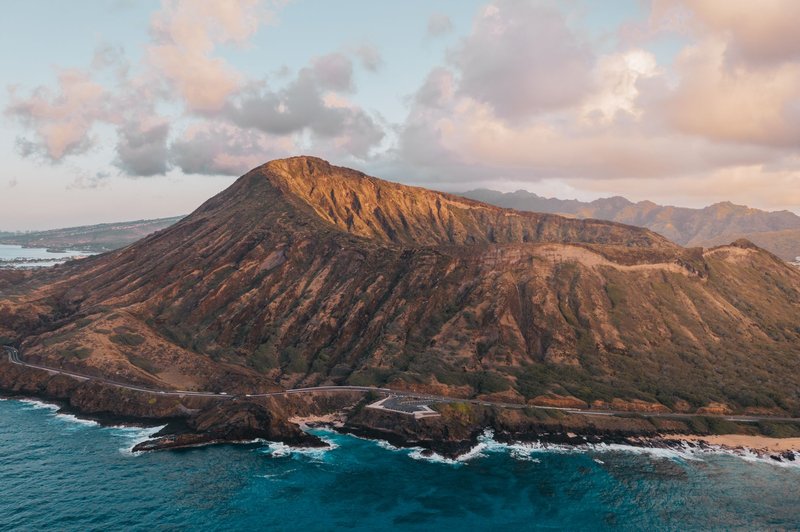
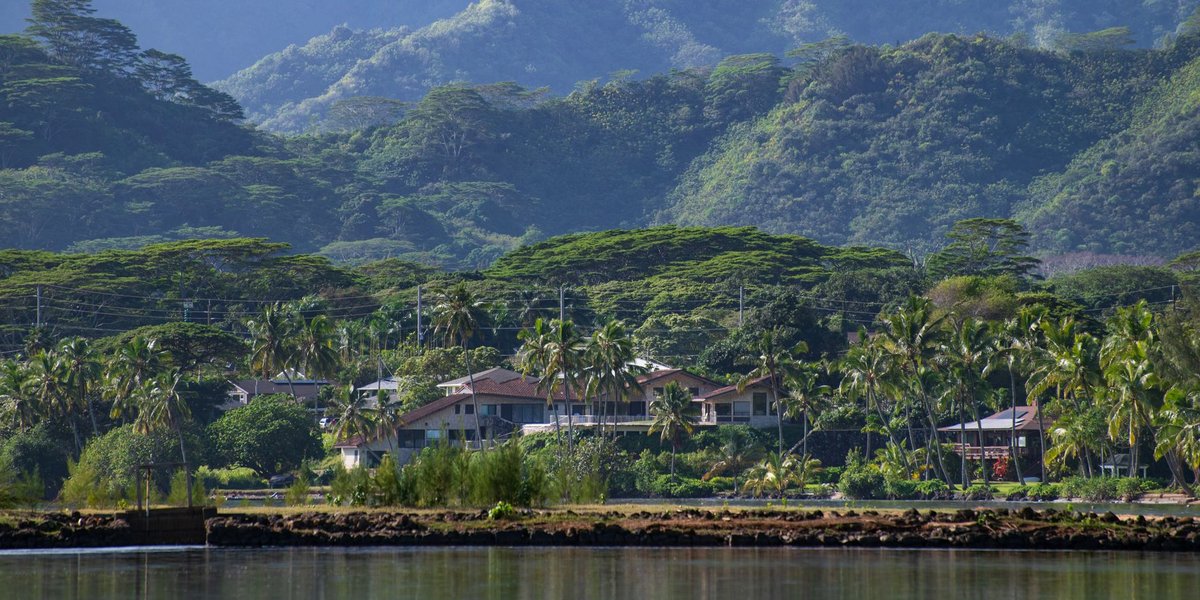
Niuafoʻou is Tonga’s northernmost island — a volcanic ring with a lake in the middle, closer to Samoa than to the Tongan capital — and its language is a separate Tongic tongue, related to Tongan but not a dialect of it. Estimates put the number of fluent speakers somewhere between 500 and 1,000, and that number has been shrinking for eight decades, not gradually but in a single sharp drop.
In 1946, a volcanic eruption forced the entire population of Niuafoʻou off the island. Everyone relocated to Tongatapu, where Tongan is the language of daily life, and the community never fully returned — some families resettled Niuafoʻou years later, but most descendants grew up on the main island speaking Tongan as their working language and Niuafoʻou, if at all, as something used at home. That’s the classic shape of language endangerment: not a ban, not a single event of suppression, just decades of a smaller language losing ground to a bigger one in every domain except the kitchen and the family gathering.
What survives, survives there — in private conversation, in the way older residents narrate the island’s own history, in chants tied to specific places on Niuafoʻou that don’t translate cleanly into Tongan. Almost none of it survives in writing. There’s no standard orthography in wide use, no dictionary comparable to what Tongan has, and until recently no institutional teaching of it at all. The University of the South Pacific added a Niuafoʻou language course at its Tonga campus in recent years — a small but real step, given that until then the language had no formal instruction anywhere.
Niuatoputapu: the language that survives only in a sailor’s notebook
Niuatoputapu is the strangest entry on this list, because it isn’t a living language, an endangered language, or even a well-documented dead one. It’s a language known almost entirely from a single source: a 32-word list compiled by the Dutch navigator Jacob Le Maire, who anchored off the neighboring islet of Tafahi for two days in April 1616 during the first European voyage to round Cape Horn. That word list, recorded in Early Dutch Loanwords in Polynesia, published in the Journal of the Polynesian Society, is close to the entire surviving written record of the language.
Genetically, Niuatoputapu wasn’t Tongic at all — it belonged to the Samoic-Outlier group, making it closer kin to Samoan, East Futunan, Tokelauan, and Tuvaluan than to Tongan or Niuafoʻou, despite sitting geographically inside Tonga’s northern island group. Sometime between the 18th and 19th centuries, it died out, replaced by Tongan as trade and political consolidation under the Tuʻi Tonga pulled the northern islands into a Tongan-speaking sphere. No one recorded when the last fluent speaker died, or even roughly when. The island’s name lives on. The language spoken there when Le Maire’s ship passed through does not.
It’s a useful corrective to the idea that language death is a modern phenomenon driven by globalization and school systems. Niuatoputapu went extinct centuries before either existed in its current form, replaced by a more politically dominant neighbor for reasons that were probably as mundane as marriage, trade, and which language got you understood in the next village over.
How three languages ended up on one archipelago
The short version: Tonga’s islands were settled in at least two separate waves by Polynesian voyagers carrying different but related languages, and Tongan political dominance — centered on Tongatapu and expressed through the Tuʻi Tonga maritime empire, which at its height extended influence across much of the western Pacific — gradually absorbed the smaller island languages into its orbit. Niuafoʻou, sharing a closer ancestor with Tongan, held on longer and still holds on today, on the island itself and nowhere else. Niuatoputapu, more distantly related and geographically closer to the political center, went first.
This is the part general audiences usually never see, because every existing write-up treats one language at a time — a Tongan grammar page here, a Niuafoʻou dictionary entry there — without connecting the dots into what it actually was: a small linguistic ecosystem, most of which has already collapsed into a single dominant language.
The diaspora problem: keeping a language alive 5,000 miles from home
Tongan’s speaker count outside Tonga is nearly as large as inside it, and that’s its own story. Chain migration from the 1970s onward built substantial Tongan communities in Auckland, the San Francisco Bay Area, Salt Lake City, and Melbourne, and for a generation those communities ran largely in Tongan — church services, extended-family gatherings, market days.
That’s thinning out. Migration Policy Institute research on Tonga’s diaspora documents a pattern common to second- and third-generation immigrant communities everywhere: kids raised outside Tonga increasingly grow up understanding some Tongan but speaking mostly English, and identify with a broader Pacific Islander category rather than a specifically Tongan one. Community leaders in New Zealand and the US describe real anxiety about whether Tongan language and customs survive intact past the generation that actually emigrated.
Where it’s holding on, it’s holding on institutionally rather than accidentally — Tongan-language programs built into New Zealand’s national curriculum, church-run Tongan preschools, and community language nests that function the way Māori kōhanga reo do: deliberate, structured spaces where a heritage language gets used because nothing in the surrounding environment will otherwise force it into a child’s mouth. Te Ara, the Encyclopedia of New Zealand, notes that Methodist congregations and cultural practice like tapa-cloth making function as some of the strongest remaining transmission points — places where language survives because it’s bundled with something else people show up for.
The 2022 push to put Niuafoʻou back in the classroom

In September 2022, language advocates on Niuafoʻou publicly called for the language to be added to the primary school curriculum on the island — a step that, unlike Tongan’s century-plus of institutional support, Niuafoʻou had simply never had. The campaign’s logic is straightforward and a little brutal: a language spoken by a few hundred people, used mainly by an aging population, and absent from any classroom anywhere doesn’t have a natural path back from decline. It either gets a deliberate institutional foothold, the way Tongan has always had, or it follows Niuatoputapu.
It’s a smaller, more recent echo of what UNESCO’s endangered-languages framework treats as the standard first intervention for a shrinking language: get it into a school before the last fluent generation ages out of teaching it to the next one. Tonga’s government hasn’t rolled out a formal Niuafoʻou curriculum at the scale Tongan enjoys, but the campaign — combined with the University of the South Pacific’s new coursework — marks the first time in the language’s documented history that anyone has tried to build it a formal teaching structure at all.
What’s actually at stake
Line these three languages up and you get something closer to a timeline than a list: a language that died quietly before anyone thought to write it down beyond a sailor’s 32 words, a language currently in the position Niuatoputapu was probably in two centuries ago — small, undocumented, losing speakers to a bigger neighbor — and a language that avoided that fate entirely because it got official status, a writing system, and a school system behind it before it had the chance to shrink.
Niuafoʻou is the one that’s still undecided. It has more speakers today than most endangered languages get to keep, a university course that didn’t exist a decade ago, and a 2022 campaign putting real pressure on the one institution — the primary school — that has historically been the difference between a language that survives its own community’s move to the mainland and one that doesn’t. Tongatapu’s classrooms taught Tongan to Niuafoʻou families after 1946 by default. Whether Niuafoʻou itself ever gets that same treatment is still being decided, on one small island, by people who are running out of time to decide it.