Table of Contents
- The quick answer
- Greek, the official language
- The regional dialects still spoken today
- Minority and immigrant languages
- Does English actually work in Greece?
- A traveler’s phrasebook that isn’t useless
- Language snapshot: who speaks what
The quick answer
Greek is the official language, spoken by roughly 99% of the population as a first or fluent second language, according to the CIA World Factbook. That’s the headline every source agrees on. What most skip is everything underneath it: a handful of regional dialects clinging on in specific villages, recognized minority languages in the north, and an English-proficiency map that changes completely depending on whether you’re in Athens, on Santorini, or in a mountain village in Epirus.
If you’re planning a trip and just need the practical version: yes, English gets you through Athens and the major islands without trouble. Rural areas and older generations are a different story, which is why the phrasebook section below is worth two minutes of your time.
Greek, the official language
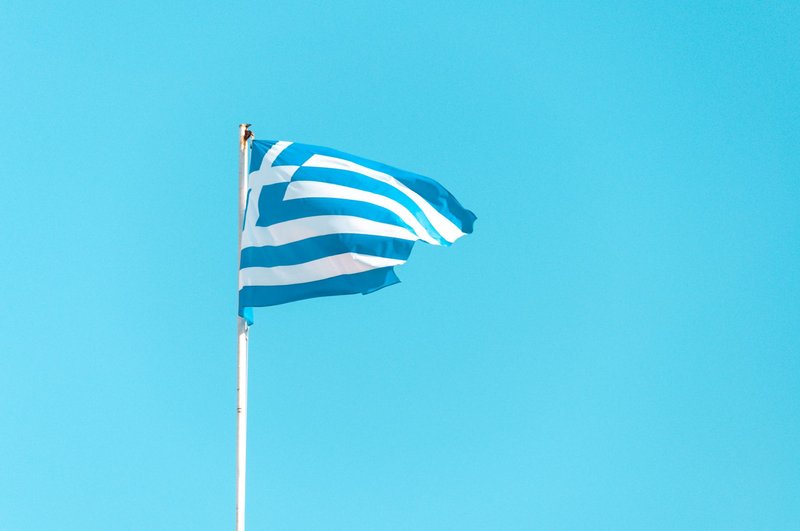
Modern Greek has been the sole official language of Greece since the country’s founding, written into the constitution and used in every government function, school, and courtroom. It’s not a dialect of anything else — Greek is its own branch of the Indo-European language family, with a written record stretching back over 3,000 years, longer than almost any other living language in Europe.
The version taught in schools and used on the news is Standard Modern Greek, based on the dialect of Athens and the Peloponnese that won out during the 20th century’s language standardization push (the “language question,” or glossiko zitima, was a genuine political fight that lasted decades). But standardization never fully erased what came before it, which is where things get more interesting.
The regional dialects still spoken today
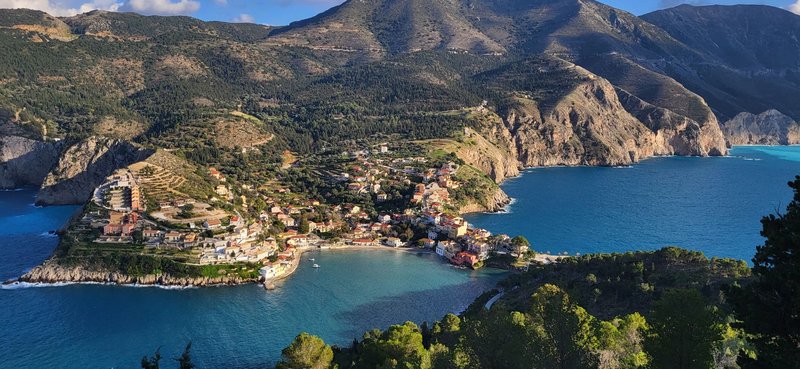
Most “languages of Greece” articles list dialects like museum pieces. A few are still alive, and knowing which ones tells you something real about the country.
Cretan Greek is the healthiest of the bunch. It’s less a separate language than a heavily accented, vocabulary-rich version of Greek, and you’ll hear it clearly the moment you land in Chania or Heraklion — older Cretans especially keep words and cadences that mainlanders don’t use.
Pontic Greek came with the refugees. After the population exchanges of the 1920s, hundreds of thousands of Greeks from the Black Sea coast of Turkey resettled in Greece, and their descendants — concentrated in Macedonia and parts of northern Greece — kept a dialect that split off from mainstream Greek over a thousand years ago. It’s mutually unintelligible with Standard Greek in its spoken form, which is unusual for something still called a “dialect.”
Maniot survives in the Mani peninsula, the rocky finger of the Peloponnese that stayed isolated enough, for long enough, to keep its own vocabulary and a reputation (accurate, according to locals) for blunt speech.
Tsakonian is the one worth paying attention to, because it’s disappearing. Spoken in a cluster of villages in the Kynouria region of the eastern Peloponnese, Tsakonian descends from ancient Doric rather than the Koine Greek that produced every other Greek dialect — meaning it’s arguably not a dialect of Modern Greek at all, but a separate surviving branch. UNESCO’s Atlas of the World’s Languages in Danger classifies it as severely endangered, with active speakers now mostly limited to a shrinking population of elderly residents. There’s no dramatic reversal underway — local schools teach it in small pilot programs, but the generational transmission that keeps a language alive has largely stopped.
Minority and immigrant languages
Greece recognizes a small number of minority languages, mostly concentrated in the north, tied to specific historical communities rather than recent migration:
- Turkish — spoken by the Muslim minority of Western Thrace, a status formally protected under the 1923 Treaty of Lausanne, which makes it the only minority language with that kind of treaty-level recognition.
- Pomak — a Slavic language spoken by Pomak communities in the mountain villages of Thrace, distinct from both Turkish and Bulgarian despite regional overlap with both.
- Arvanitika — an old form of Albanian brought by settlers centuries ago, historically spoken across parts of Attica and the Peloponnese. It’s fading fast; most remaining speakers are elderly, and the community itself identifies as ethnically Greek.
- Aromanian (Vlach) — a Romance language related to Romanian, spoken by Vlach shepherd communities in the Pindus mountains.
- Romani — spoken by Roma communities across the country, concentrated in specific settlements rather than evenly distributed.
- Modern Albanian — separate from Arvanitika, this is the language of the large Albanian immigrant population that arrived from the 1990s onward, now Greece’s largest immigrant community.
- Armenian — spoken by descendants of Armenian refugees who settled in Greece after the Armenian genocide, concentrated in Athens and Thessaloniki.
None of these show up in an official language policy the way, say, Welsh does in the UK. Greece’s constitution doesn’t formally recognize linguistic minorities as a category, which has been a point of friction with European human rights bodies over the years — worth knowing if you’re researching the topic rather than just visiting.
Does English actually work in Greece?
Better than most of Southern Europe, worse than the Netherlands. The European Commission’s Eurobarometer surveys put English proficiency among Greeks in the range of roughly half the population reporting they can hold a conversation in it, per the European Commission’s language survey data — concentrated heavily in younger age groups and tourism-facing jobs.
In practice, that breaks down by geography:
- Athens — hotel staff, restaurant workers, and anyone under 40 will generally handle English fine. Signage is bilingual in the metro and most tourist areas.
- The major islands (Santorini, Mykonos, Crete, Rhodes) — tourism runs the local economy, so English is close to universal in anything customer-facing, sometimes better spoken than in Athens.
- Smaller islands and rural mainland — hit or miss. Older shopkeepers and taxi drivers may have none at all, and Google Translate’s camera feature earns its keep on menus.
- Government offices, pharmacies, some intercity buses — plan on Greek only, or bring a translation app.
A traveler’s phrasebook that isn’t useless
Most phrasebook sections give you “hello” and “thank you” and call it done. Here’s what actually gets used:
| Greek | Pronunciation | Meaning |
|---|---|---|
| Γειά σας | Yassas | Hello (formal/plural) |
| Ευχαριστώ | Efharisto | Thank you |
| Παρακαλώ | Parakalo | Please / you’re welcome |
| Ναι / Όχι | Ne / Ohi | Yes / No |
| Πόσο κάνει; | Poso kani? | How much does it cost? |
| Πού είναι…; | Pou ine…? | Where is…? |
| Μιλάτε Αγγλικά; | Milate Anglika? | Do you speak English? |
| Ο λογαριασμός, παρακαλώ | O logariasmos, parakalo | The bill, please |
Two things that trip people up: Greek uses its own alphabet, not a Latin-script variant, so street signs in smaller towns may only show Greek characters — download an offline translation app before you’re somewhere without signal. And “ohi” (no) sounds close enough to “okay” that first-time visitors sometimes hear agreement where there’s a flat refusal.
Language snapshot: who speaks what
| Language | Approx. speakers | Where spoken | Status |
|---|---|---|---|
| Modern Greek | ~10.5 million | Nationwide | Official, thriving |
| Cretan Greek | Regional dialect, no separate count | Crete | Stable |
| Pontic Greek | ~200,000–300,000 | Macedonia, northern Greece | Stable but declining among youth |
| Tsakonian | Low thousands | Kynouria villages, eastern Peloponnese | Severely endangered |
| Turkish | ~50,000–120,000 | Western Thrace | Protected minority language |
| Pomak | ~30,000–40,000 | Thrace mountain villages | Stable, localized |
| Albanian (modern) | ~275,000+ | Nationwide, esp. urban centers | Growing, immigrant community |
| Arvanitika | Small, aging population | Attica, Peloponnese | Endangered |
| Aromanian | Tens of thousands | Pindus mountains | Declining |
| Romani | Tens of thousands | Scattered settlements | Stable within communities |
| Armenian | ~20,000 | Athens, Thessaloniki | Stable within community |
The gap between what Wikipedia lists and what you’ll actually encounter on a trip is real. You’re extremely unlikely to hear Tsakonian on a two-week island hop, but you’ll absolutely notice the switch from fluent English on Mykonos to gestures-and-patience in a village taverna three hours from the nearest airport. Knowing both — the sociolinguistic picture and the practical one — is what actually helps you get around, not just pass a trivia question.