Table of Contents
- The short answer
- Language breakdown by the numbers
- Region by region
- Kichwa vs. Quechua: same family, different spelling
- Ecuadorian Spanish: the accent and the slang
- Will English get you by?
- The languages running out of time
- FAQ
The short answer
Spanish is Ecuador’s language, full stop, spoken by somewhere between 93 and 98 percent of the country depending on which count you trust. But “Ecuador speaks Spanish” is the kind of answer that’s technically true and misses the point. This is a country with 14 recognized nationalities and 13 living languages, two of which — Kichwa and Shuar — hold official status alongside Spanish for use in their own communities: schools, local government, courtrooms.
Here’s the map in one paragraph: Spanish everywhere, Kichwa in the Andean highlands and scattered through the Amazon, Shuar in the southeast jungle provinces, and a scatter of smaller Amazonian and coastal languages that most Ecuadorians outside those regions have never heard spoken.
Language breakdown by the numbers
The CIA World Factbook puts Spanish at 98.6 percent and lumps the rest into Quechua (3.2 percent), other indigenous languages (0.7 percent), and foreign languages. Ecuador’s own 2022 census lands closer to 97 percent Spanish, with about 3.2 percent of the population reporting an indigenous language as their primary tongue. Neither number is wrong; they’re just measuring slightly different things — who speaks Spanish at all versus who speaks it as a first language.
| Language | Region | Approx. speakers | Status |
|---|---|---|---|
| Spanish | Nationwide | ~16.5 million | Official |
| Kichwa (Quichua) | Sierra, scattered Amazon | 527,333 | Official (intercultural) |
| Shuar | Morona Santiago, Pastaza | 59,894 | Official (intercultural) |
| Achuar | Southeastern Amazon | ~5,000 | Recognized minority |
| Cofán (A’ingae) | Sucumbíos | ~800 | Recognized minority |
| Tsa’fiki | Santo Domingo | ~2,000 | Recognized minority |
| Cha’palaachi | Esmeraldas | ~10,000 | Recognized minority |
| Zápara | Pastaza | 4–5 | Critically endangered |
Kichwa accounts for 40.5 percent of Ecuador’s indigenous-language speakers, according to language-mapping data from Translators without Borders. Shuar makes up another 4.6 percent. The remaining share is split across eleven smaller languages, several of which have fewer living speakers than a mid-size high school.
Region by region
Ecuador is small enough to drive across in a day but splits into four distinct language zones, and they don’t blend into each other gently — they change at the mountain passes.
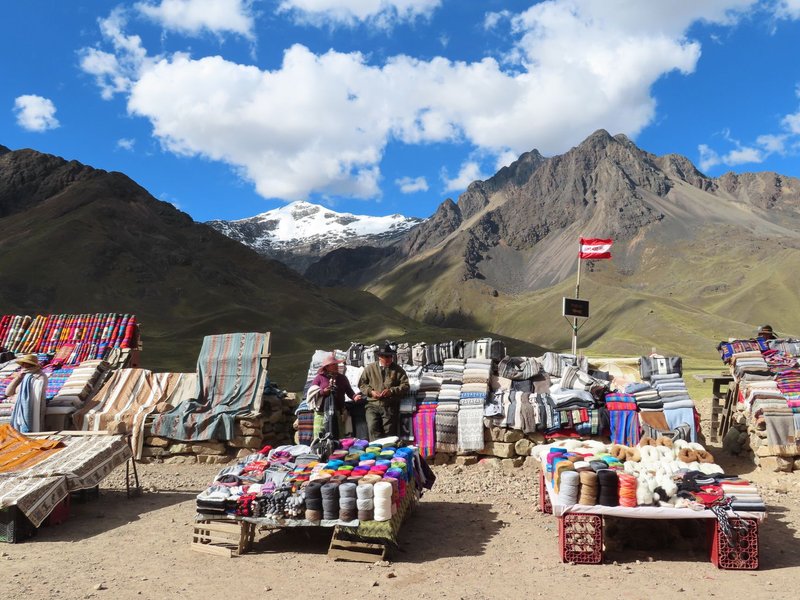
Sierra (the Andean highlands). Spanish dominates the cities — Quito, Cuenca, Ambato — but step into rural Chimborazo, Cotopaxi, or Imbabura and Kichwa is often the language people reach for first, especially with grandparents. Chimborazo has the country’s largest concentration of Kichwa speakers, and it’s common to hear a sentence start in Spanish and finish in Kichwa mid-thought.
Costa (the coast). Almost entirely Spanish, with two exceptions worth knowing: Tsa’fiki, spoken by the Tsáchila people around Santo Domingo, and Cha’palaachi, spoken by the Chachi near Esmeraldas. Both communities still run bilingual schools.
Amazon (the Oriente). The most linguistically dense region in the country. Shuar and Achuar speakers in Morona Santiago and Pastaza, Cofán along the Sucumbíos rivers near the Colombian border, Waorani deeper in the rainforest, and the last handful of Zápara speakers near the Peruvian border. Tour operators running Amazon lodges frequently employ Kichwa- or Shuar-speaking guides specifically because the wildlife knowledge lives in those languages first and gets translated into Spanish second.
Galápagos. Spanish, with a heavier dose of English than anywhere else in the country, purely because the local economy runs on foreign tourists. Don’t expect indigenous-language signage here — the islands were uninhabited until the 1800s and never had a resident indigenous population.
Kichwa vs. Quechua: same family, different spelling
This trips up a lot of people, so here’s the short version: Quechua is the language family that stretches from southern Colombia through Peru, Bolivia, and into Argentina and Chile. Kichwa is Ecuador’s specific branch of that family, and the spelling difference is deliberate, not sloppy — Ecuadorian language activists standardized “Kichwa” in the 1980s to reflect local pronunciation and to distance the Ecuadorian variety from the colonial-era spelling used elsewhere.
Practically, that means a Kichwa speaker from Otavalo and a Quechua speaker from Cusco will understand each other reasonably well, the way a Portuguese and Galician speaker might, but they’re not reading from the identical grammar book. If you’re trying to book a Kichwa lesson online and keep finding Peruvian Quechua courses instead, that’s why — search engines mostly haven’t caught up to the distinction.
Ecuadorian Spanish: the accent and the slang
Ecuadorian Spanish is often described, even by other Latin Americans, as one of the easier accents to parse: clear consonants, a moderate pace, none of the dropped final “s” sounds you’ll hit in coastal Colombia or the Caribbean. Cuenca in particular has a reputation for slow, deliberate speech that language learners gravitate toward.
What makes it distinct isn’t the accent, though. It’s the vocabulary. Ecuadorian Spanish absorbed more everyday Kichwa than Spanish in other Spanish-speaking countries, and the words show up in ordinary conversation, not just folklore:
- Guagua — baby or small child. “La guagua está llorando” means exactly what it sounds like.
- Chuchaqui — hungover. You’ll hear it constantly on a Sunday morning in Quito.
- Achachay — an exclamation for “it’s freezing.” Step outside on a Cuenca morning and someone will say it before you do.
- Ñaño / ñaña — brother or sister, used casually the way English speakers use “bro” or “sis,” including for people who aren’t related to you at all.
None of these are textbook Spanish. They’re the words that mark someone as having actually lived in Ecuador rather than studied it.
Will English get you by?
Not really, and it’s worth planning around that rather than hoping otherwise. Ecuador ranks in the “low proficiency” band on the EF English Proficiency Index, sitting around 83rd globally out of roughly 116 ranked countries — below most of its South American neighbors. Outside the tourist zones of Quito’s Mariscal district, Baños, and the Galápagos, English drops off fast.
That said, the gap is narrower in a few predictable places: upscale hotels, dive shops and tour operators in the Galápagos, and university-adjacent neighborhoods in Quito and Cuenca where a wave of English-speaking expats and remote workers has settled. A handful of Kichwa or basic Spanish phrases will get you further with a market vendor in Otavalo than fluent English ever will.
The languages running out of time
Ecuador’s smallest languages are disappearing inside a single generation. Zápara is the extreme case — as few as four or five fluent speakers remain, all elderly, which is why UNESCO declared the Zápara oral tradition an Oral and Intangible Heritage of Humanity in 2001, an attempt to fund documentation before the last speakers are gone. Andoa is already considered extinct as a spoken language, surviving only in recordings and word lists.
Cofán, Siona, and Secoya sit in a similar bracket: a few hundred to a couple thousand speakers each, concentrated in single river valleys, competing against Spanish-language schooling that most families still choose because it opens more doors economically. Kichwa and Shuar aren’t at that kind of risk — hundreds of thousands of speakers each, plus official status — but the eleven smaller languages beneath them are the ones a linguist would tell you to worry about.
FAQ
What is the official language of Ecuador? Spanish, constitutionally. Kichwa and Shuar hold official status specifically for “intercultural relations” — use within their own communities and in dealings with the state — while eleven other indigenous languages have official use rights in the territories where their speakers live.
Is Ecuadorian Spanish hard to understand? Generally not, by regional Spanish standards. It’s considered clearer and slower-paced than Caribbean or Chilean Spanish, though the Kichwa-derived vocabulary can throw off learners who studied European or Mexican Spanish.
Do people speak English in Ecuador? In tourist hubs and the Galápagos, enough to get by. Outside those pockets, expect little to no English, especially in rural Sierra and Amazon communities.
Is Kichwa the same as Quechua? Same language family, different national branch. Kichwa is Ecuador’s variety, standardized with its own spelling; Quechua usually refers to the Peruvian and Bolivian varieties. Speakers can understand each other with effort, similar to two closely related dialects.