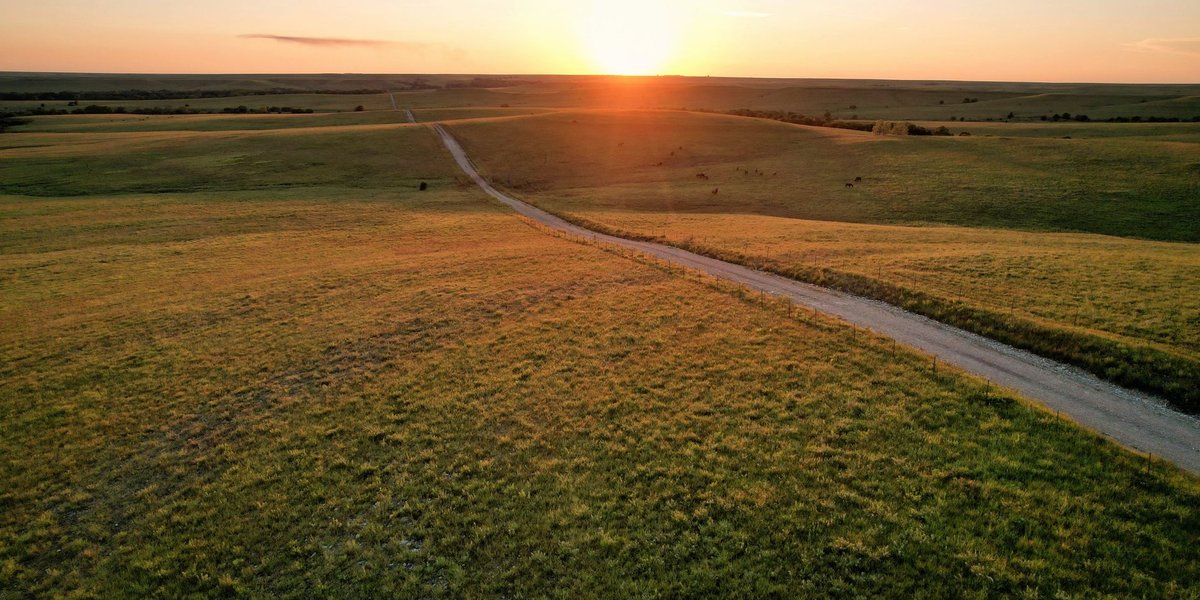
Kansas has no national park. What it has is five National Park Service units: one preserve and four national historic sites, all free to enter. Together they cover the last big stretch of tallgrass prairie, the Santa Fe Trail, and two of the most important chapters of Black American history in the Midwest.
TLDR
- No site in Kansas carries the “National Park” title. The NPS runs five units here and none charges an entrance fee.
- The one to prioritize for scenery is Tallgrass Prairie National Preserve. For history, it’s Brown v. Board of Education in Topeka and Nicodemus.
- Fort Scott and Fort Larned are the two military sites, at opposite ends of the state.
- A loop of the first four takes three days. Nicodemus adds a long detour into the northwest.
Contents
- Why Kansas has no national park
- The five NPS sites at a glance
- Tallgrass Prairie National Preserve
- Brown v. Board of Education National Historic Site
- Fort Scott National Historic Site
- Fort Larned National Historic Site
- Nicodemus National Historic Site
- The national historic trails
- A 3-day Kansas route
- If you want a “real” national park nearby
- FAQ
Why Kansas has no national park
The National Park Service uses “national park” for large areas protected for natural features, and Congress creates each one by law. Kansas never got one. The landscape that might have qualified, the Flint Hills prairie, sits almost entirely on private ranchland, so the federal government could only protect a small piece of it.
That piece became Tallgrass Prairie National Preserve. A preserve is managed much like a park but allows some uses a park doesn’t, such as grazing or hunting, depending on the enabling law. A national historic site protects a place tied to a specific event or person. A national historic trail is a route, not a place, and mostly crosses private land with markers and small interpretive stops.
The five NPS sites at a glance
| Site | Nearest town | Designation | Entry fee | Best season | Time needed |
|---|---|---|---|---|---|
| Tallgrass Prairie | Strong City | National Preserve | Free | Late spring to early fall | 3 to 5 hours |
| Brown v. Board of Education | Topeka | National Historic Site | Free | Year-round | 1 to 2 hours |
| Fort Scott | Fort Scott | National Historic Site | Free | Spring and fall | 2 to 3 hours |
| Fort Larned | Larned | National Historic Site | Free | Spring and fall | 2 to 3 hours |
| Nicodemus | Nicodemus | National Historic Site | Free | Spring and fall | 1 to 2 hours |
Hours and tour schedules shift by season, and staffing at the smaller sites changes. Check each park’s page on nps.gov before you leave.
Tallgrass Prairie National Preserve
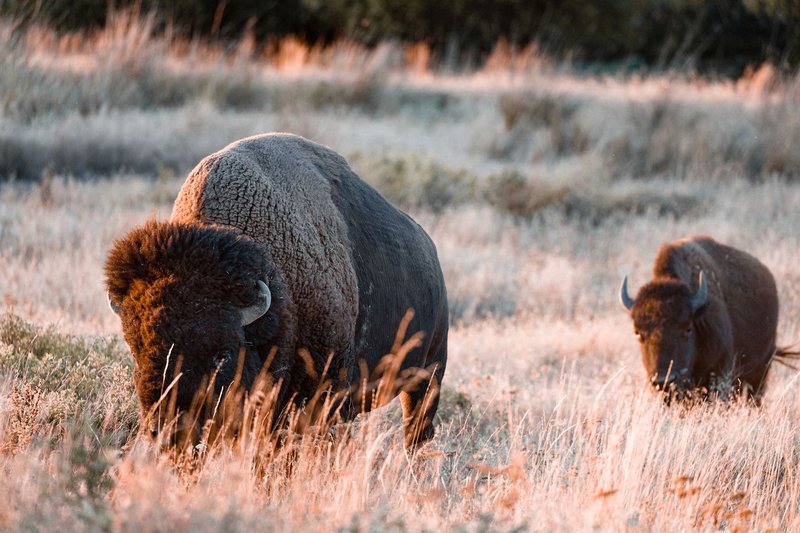
Less than 4 percent of the original North American tallgrass prairie survives, and the Flint Hills hold most of what’s left. The preserve’s Spring Hill Ranch sits on about 11,000 acres outside Strong City, and it has a bison herd, reintroduced in 2009, grazing the hills again.
The ranch itself is part of the draw. A three-story limestone mansion, a limestone barn, and a one-room schoolhouse date from the 1880s, when cattleman Stephen Jones built the place. Inside the mansion, take the guided tour if it’s running.
Then get outside. Hiking trails run through open grass with almost no shade, and a bus tour covers the parts of the preserve that you can’t reach by car. If you only do one thing here, ride the bus out to the bison. You’ll see them closer than you’d expect, and the guides know exactly where the herd has been grazing.
Practical tip: Go in late May or June, when the grass is tall and green. In summer, bring water and a hat. There’s nowhere to hide from the sun.
Brown v. Board of Education National Historic Site
Topeka’s Monroe Elementary was one of four segregated Black schools in the city. In 1954 the Supreme Court ruled that segregated public schools were unconstitutional, in a decision that combined cases from Kansas, South Carolina, Virginia, and Delaware. The Topeka case gave the ruling its name.
The building is now a museum. Exhibits cover the case itself and the longer history of school segregation, and you can stand in a restored classroom. It’s small, and it works better than most big museums because it’s in the actual building.
Practical tip: Pair it with the Kansas State Capitol and the Kansas Historical Society’s museum a few minutes away if you want a full day in Topeka.
Fort Scott National Historic Site
Fort Scott, in southeast Kansas near the Missouri line, started in 1842 as a frontier army post. It’s the site people tend to underrate. Two eras are preserved: the dragoon years of the 1840s, when soldiers guarded the “permanent Indian frontier,” and the Civil War years, when it was a supply base and a recruiting center, including for Black regiments.
The restored buildings surround a parade ground, and the park runs living history events in warmer months. The tallgrass prairie restoration out back is a bonus. It’s small, but it lets you see what the soldiers looked at.
Practical tip: Time your visit for a living history weekend, when staff in period dress run demonstrations.
Fort Larned National Historic Site
Fort Larned sits on the Santa Fe Trail in central Kansas and is among the best preserved Indian Wars-era forts in the country. Nine original sandstone buildings from the 1860s still stand around the parade ground, which is unusual, since most frontier forts from this period were built of wood and are gone.
The fort protected travelers and mail along the trail, and its story gets more complicated: it also served as a place where the government dealt with the Plains tribes. The exhibits take that up. You can wander the barracks, officers’ quarters, and the commissary, and the ruts of the trail itself are nearby.
Practical tip: The surrounding country is flat and wide open. A walk to the edge of the grounds shows you why wagon trains saw this as a landmark.
Nicodemus National Historic Site
Nicodemus, in the northwest corner of the state, was founded in 1877 by formerly enslaved African Americans who left Kentucky during Reconstruction. It’s the oldest and only remaining all-Black town west of the Mississippi River that was settled in that era, and descendants still live there.
Five buildings are part of the site, including the First Baptist Church and the St. Francis Hotel. The visitor center is in the old township hall. The first settlers lived in dugouts on the open plains in the first winter, and the displays explain how the town survived, then grew, then slowly shrank when the railroad bypassed it.
Practical tip: The last weekend of July is Emancipation Day, the town’s homecoming. It’s crowded and worth it, but book lodging early because options are sparse.
The national historic trails
Five national historic trails cross Kansas: the Oregon, Santa Fe, California, Pony Express, and Lewis and Clark trails. They’re administered by NPS but are not parks. Most of the route is private land.
What you can do is stop at specific points. Fort Larned sits directly on the Santa Fe Trail. Near Larned, you can see deep wagon ruts in the prairie. Along the Oregon and California trails in northeast Kansas, look for the Alcove Spring site near Marysville and Pony Express Station in Hanover. The National Trails Intermountain Region page lists markers and driving routes.
A 3-day Kansas route
Distances here are approximate driving times on main highways.
Day 1: Fort Scott to Topeka. Spend the morning at Fort Scott, then drive about two hours north to Topeka. See Brown v. Board of Education in the afternoon, and stay overnight in Topeka.
Day 2: Topeka to Tallgrass Prairie. Drive about an hour and a half southwest to Strong City. Do the bus tour, the ranch buildings, and a hike. Cottonwood Falls, the next town over, has the courthouse, a restaurant or two, and places to sleep.
Day 3: Strong City to Fort Larned. The drive is about two hours west. Spend the afternoon at the fort and walk to the Santa Fe Trail ruts nearby.
Nicodemus: It’s roughly two and a half hours north of Larned. Add a fourth day, or visit it as a separate trip from Hays, about an hour away.

If you want a “real” national park nearby
Kansas’s state parks are the closest substitute for scenery. Several have rock formations and reservoirs that the NPS sites lack. For a designated national park, though, the nearest are well outside the state. Rocky Mountain, Great Sand Dunes, and Mesa Verde in Colorado, or Hot Springs in Arkansas, all take a long day’s drive from eastern Kansas. Closer, but not parks, are Homestead National Historical Park in Beatrice, Nebraska, and Ozark National Scenic Riverways in Missouri.
FAQ
Does Kansas have any national parks? No. It has five NPS units: one national preserve and four national historic sites.
Is it free to visit national sites in Kansas? All five NPS units in the state are free to enter. Some activities, such as the Tallgrass bus tour, may have a small fee.
What’s the best NPS site in Kansas? Tallgrass Prairie National Preserve is the best for scenery and wildlife. Brown v. Board of Education and Nicodemus are the most significant historically.
How long do you need to see them all? Three days for the four sites in the eastern and central part of the state, plus another day to reach Nicodemus.
When should I go? Late spring and early fall. Summer is hot with little shade, and winter cuts hours at the smaller sites.