
Nepal has more airports than most people expect — over 50 on paper — but the number that actually matters to a traveler is small, and which one you need depends entirely on where you’re headed. Fly into Kathmandu for almost everything. Fly into Lukla if you want to walk to Everest Base Camp. Fly into Pokhara if the Annapurnas are the plan. The rest is detail, and the detail is where trips get saved or wrecked.
This guide sorts the airports in Nepal by what they do for you: the three international gateways that get you into the country, and the domestic strips that get you to the trailhead. We’ll flag which airports are non-operational (a few of the names you’ll find on old lists no longer take flights), what the baggage rules look like on the small mountain planes, and why Lukla earned its reputation as the scariest landing in commercial aviation.
Table of Contents
- Quick Reference: Nepal’s Main Airports
- The Three International Airports
- Lukla: The World’s Most Dangerous Airport
- Key Domestic Airports
- Which Airport for Which Trek or Region
- Flying on Nepal’s Mountain Planes: What to Know
- Frequently Asked Questions
Quick Reference: Nepal’s Main Airports
If you only skim one thing, make it this. These are the airports a traveler is actually likely to use.
| Airport | City / Region | IATA | Type | Status |
|---|---|---|---|---|
| Tribhuvan International | Kathmandu | KTM | International | Operational |
| Pokhara International | Pokhara | PKR | International | Operational (limited intl. service) |
| Gautam Buddha International | Bhairahawa (Lumbini) | BWA | International | Operational (limited intl. service) |
| Tenzing-Hillary | Lukla | LUA | Domestic | Operational (seasonal/weather-dependent) |
| Pokhara (old domestic role) | Pokhara | PKR | Domestic hub | Folded into PKR |
| Nepalgunj | Nepalgunj | KEP | Domestic hub | Operational |
| Biratnagar | Biratnagar | BIR | Domestic hub | Operational |
| Bharatpur | Chitwan | BHR | Domestic | Operational |
| Simara | Simara/Birgunj | SIF | Domestic | Operational |
| Jomsom | Jomsom (Mustang) | JMO | Domestic | Operational (morning flights only) |
| Surkhet | Surkhet | SKH | Domestic | Operational |
| Dhangadhi | Dhangadhi | DHI | Domestic | Operational |
Everything below the top three is a domestic flight, which almost always means routing through Kathmandu (and sometimes Pokhara) first.
The Three International Airports
For decades Nepal had exactly one international airport. Now there are three on paper, though only one carries real international traffic. Here’s the honest state of each.
Tribhuvan International Airport (KTM), Kathmandu
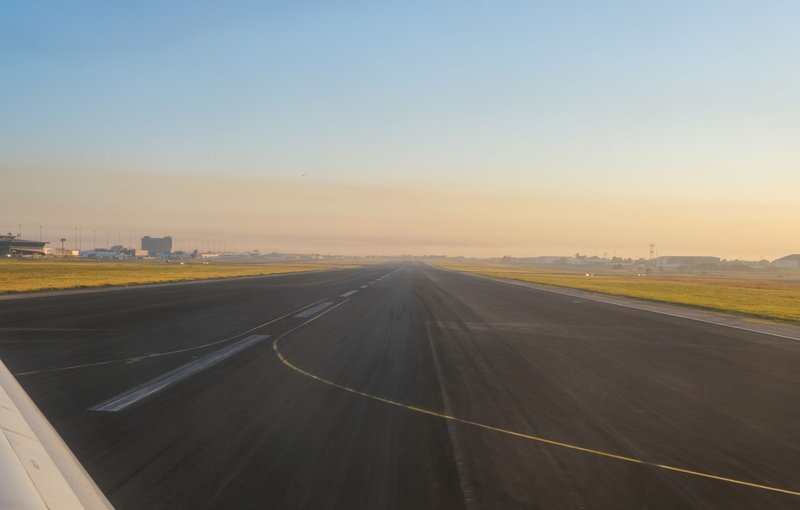
This is Nepal’s front door, and for most travelers it’s the only international airport that matters. Tribhuvan sits about 6 km east of central Kathmandu, in the Kathmandu Valley at roughly 1,338 m (4,390 ft) elevation. It has two terminals — one international, one domestic — and they’re close enough that a same-day connection from an inbound flight to a domestic mountain flight is normal, if tight.
KTM is where you’ll connect for nearly every domestic flight in the country, including Lukla. It’s also notoriously congested: a single runway, a tight valley approach ringed by hills, and peak-season morning rushes that produce holding patterns and delays. The fix many flyers use in trekking season is simple — book the earliest possible domestic departure, because the weather and the traffic both get worse as the day goes on.
Carriers serving Tribhuvan include long-haul and regional airlines from the Gulf, India, Southeast Asia, and China. If you’re coming from Europe or North America, you’re almost certainly connecting through a hub like Doha, Delhi, Istanbul, or Bangkok. With a connection each way, a travel pillow that packs small helps you sleep between legs.
Pokhara International Airport (PKR)
Pokhara’s new international airport opened on January 1, 2023, replacing the city’s old domestic strip. It sits on the east side of Pokhara, the lakeside city that serves as the gateway to the Annapurna region. The terminal is modern and far more spacious than Tribhuvan’s, and it now handles all of Pokhara’s domestic mountain flights too — including the short hops to Jomsom.
The catch: scheduled international service has been thin and inconsistent. The runway and terminal are built for international jets, but regular international routes have been slow to materialize beyond occasional charter and limited regional flights. For trip planning, treat Pokhara as a superb domestic hub that can take an international flight, rather than a reliable international entry point. Most travelers still arrive into Kathmandu and fly or drive to Pokhara.
Gautam Buddha International Airport (BWA), Bhairahawa
Opened in May 2022 near Bhairahawa in southern Nepal, Gautam Buddha International is the gateway to Lumbini — the birthplace of the Buddha and a major pilgrimage site for Buddhists worldwide. The airport was built largely to serve that pilgrimage traffic, especially from Buddhist-majority countries.
Like Pokhara, its international schedule has underdelivered relative to the infrastructure. There’s limited regional service, and it’s genuinely useful if Lumbini is your destination, but it’s not a practical substitute for Kathmandu as a country entry point. If your itinerary centers on Lumbini and the Terai (the flat southern plains), BWA can save you a long overland drive from Kathmandu.
Lukla: The World’s Most Dangerous Airport
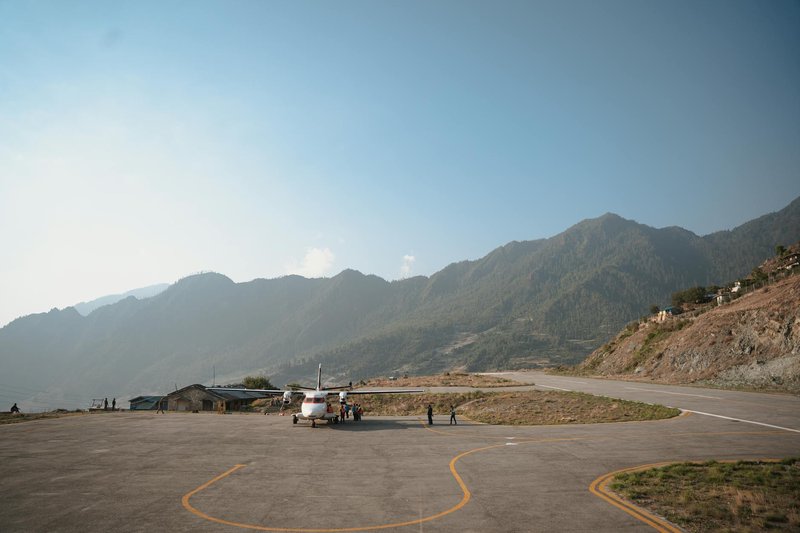
Tenzing-Hillary Airport in Lukla (IATA: LUA) is the one people have heard of, usually because of a documentary or a viral landing video. The reputation is earned. The runway is about 527 m long — a fraction of a normal commercial runway — and it’s pitched on a roughly 12% gradient, sloping uphill. There’s a mountainside at the top end of the runway and a sheer drop into the valley at the bottom. Planes land going uphill (to brake faster) and take off going downhill (to gain speed faster). There is no second attempt: pilots commit to the landing or they go around well before reaching the threshold.
Lukla sits at about 2,860 m (9,380 ft), named for Tenzing Norgay and Edmund Hillary, the first confirmed climbers to summit Everest. It exists for one reason — it’s the trailhead for the Everest Base Camp trek. Land here in the morning, and you’re walking toward Namche Bazaar by lunchtime.
The practical problem with Lukla isn’t the runway. It’s the weather. The strip has no instrument landing system, so flights run on visual rules, which means clouds, wind, or rain shut it down completely. In peak trekking seasons (October–November and March–May), multi-day backlogs happen. Smart trekkers build two or three buffer days into the back end of an EBC itinerary specifically for Lukla delays, and during the worst stretches some flights shift to Manthali (Ramechhap) — a four-to-five-hour pre-dawn drive east of Kathmandu — to dodge Kathmandu’s congestion.
Key Domestic Airports
Beyond Lukla, a handful of domestic airports do the real work of moving people across a country where roads are slow and mountainous. These are the ones worth knowing.
Nepalgunj (KEP)
The hub of the far west. Nepalgunj sits in the Terai near the Indian border and acts as the connecting point for remote western destinations — Simikot (for Humla and the Limi Valley), Jumla (for Rara Lake), and Dolpo. If your trek is in Nepal’s wild, less-trafficked west, you’ll likely overnight in Nepalgunj and catch a small onward flight from here.
Biratnagar (BIR)
The main airport of the eastern Terai and Nepal’s second-busiest domestic airport after Kathmandu. It serves the industrial city of Biratnagar and connects the east of the country. Trekkers headed to the Kanchenjunga region or eastern hills often route through here.
Bharatpur (BHR)
The airport for Chitwan National Park. Bharatpur is a short flight from Kathmandu (around 20–25 minutes) and saves you a winding five-to-six-hour drive to one of Nepal’s best wildlife destinations, where you’ve got a real shot at seeing one-horned rhinos and, if you’re lucky, a Bengal tiger.
Jomsom (JMO)
A high-altitude strip at about 2,700 m in the Mustang region, north of Pokhara along the Kali Gandaki gorge. Flights are short, scenic, and strictly morning-only — the valley wind picks up dramatically by late morning and grounds everything. Jomsom is the entry point for Upper Mustang and the upper Annapurna circuit. Flights here go from Pokhara, not Kathmandu.
Simara (SIF)
A quick hop from Kathmandu serving Birgunj and the central Terai, including access to Parsa National Park. It’s one of the shortest commercial flights in the country, often used by business travelers heading to the border region.
A note on names you’ll find on old lists: Nepal has a long tail of airstrips that are seasonal, charter-only, under construction, or no longer operational. Lists that count “55 airports” are counting these. For trip planning, the dozen or so above are what you’ll actually fly into.
Which Airport for Which Trek or Region
This is the part most guides skip. Here’s the decision layer — where you’re going, and the airport that gets you closest.
| Your destination | Fly into | Notes |
|---|---|---|
| Everest Base Camp / Khumbu | Lukla (LUA) | Connect via Kathmandu; build buffer days for weather |
| Annapurna Circuit / Sanctuary | Pokhara (PKR) | Pokhara is the trailhead city; drive or fly in from KTM |
| Upper Mustang | Jomsom (JMO) | Morning flights only, from Pokhara |
| Langtang | Kathmandu (KTM) | No nearby airport; drive to Syabrubesi trailhead |
| Kanchenjunga (east) | Biratnagar (BIR) | Then onward by road/small flight |
| Rara Lake / Dolpo / Humla (west) | Nepalgunj (KEP) | Connecting flights to remote strips |
| Lumbini (Buddha’s birthplace) | Bhairahawa (BWA) | Or drive from Kathmandu |
| Chitwan National Park | Bharatpur (BHR) | 25-min flight beats the long drive |
| Kathmandu Valley sightseeing | Kathmandu (KTM) | The international gateway itself |
The pattern: almost everything routes through Kathmandu first. Pokhara is the secondary hub, mainly for the Annapurna side and Jomsom. Plan your domestic legs as connections out of one of those two.
Flying on Nepal’s Mountain Planes: What to Know
The aircraft that fly into Lukla, Jomsom, and the remote western strips are small — typically 14-to-19-seat turboprops like the Twin Otter or Dornier. That changes the rules in ways that surprise first-timers.
Baggage is tight. Expect a limit around 10 kg of checked bag plus roughly 5 kg of carry-on on mountain flights — far below international allowances. Overweight gear gets left behind or charged. Pack your trek into a duffel that hits the weight, and store the rest at your Kathmandu hotel (most hold luggage free for returning guests).
Weight matters for the plane, not just your wallet. On high-altitude strips, airlines sometimes restrict total load, so a full passenger manifest can mean reduced cargo. This is one more reason gear gets bumped.
Morning flights win. Mountain weather is calmest at dawn and deteriorates through the day. The earliest slots have the best odds of actually flying. Afternoon flights to places like Lukla and Jomsom are the first to get cancelled.
Delays are normal, not exceptional. Treat a cancelled mountain flight as part of the experience, not a disaster. Travel insurance that covers trip interruption is genuinely worth it here — the kind of policy backed by a real underwriter, and worth reading the fine print on what counts as a covered delay. For the bigger picture on aviation safety standards, Nepal’s carriers have faced restrictions; the European Union’s air safety list has historically included Nepalese airlines, which is worth knowing when you choose operators and buy coverage.
The Short Version
Nepal’s airport map looks complicated until you reduce it to the question that matters: where are you going? Tribhuvan in Kathmandu is the gateway for almost every traveler and the connecting point for nearly every domestic flight. Pokhara is your hub for the Annapurnas and Jomsom. Lukla is the legendary, weather-dependent door to Everest. The three international airports give Nepal more entry options on paper, but in practice Kathmandu still does most of the heavy lifting.
Get the international leg into KTM, know your domestic connection, pack to the weight limit, and build in buffer days for the mountain strips. Do that, and the airports in Nepal become a non-event — which, on a trip built around mountains, is exactly what you want them to be.
Frequently Asked Questions
How many airports does Nepal have? Official lists count around 50–55 airfields, but that number includes seasonal airstrips, charter-only fields, and non-operational sites. For travel purposes, roughly a dozen airports handle the flights you’d actually take, with three classed as international.
What is the main international airport in Nepal? Tribhuvan International Airport (KTM) in Kathmandu. It’s the country’s busiest airport and the connecting point for nearly all domestic flights, including those to Lukla.
Which airport do I fly into for Everest Base Camp? Lukla’s Tenzing-Hillary Airport (LUA), reached via a short flight from Kathmandu. Lukla is the standard trailhead for the Everest Base Camp trek. Weather delays are common, so leave buffer days.
Is Lukla really the most dangerous airport in the world? It’s widely cited as such. The combination of a very short (527 m), steeply sloped runway, high elevation, no instrument landing system, and surrounding terrain makes it one of the most demanding commercial landings anywhere. Pilots flying it require specific qualifications.
What’s the closest airport to Pokhara? Pokhara International Airport (PKR), which opened in 2023 and replaced the old domestic strip. It now handles both domestic mountain flights and limited international service.
Can I fly internationally into Lumbini? Gautam Buddha International Airport (BWA) near Bhairahawa serves Lumbini and has limited regional international flights. Service is inconsistent, so many travelers still arrive into Kathmandu and travel onward.
What’s the baggage limit on domestic mountain flights? Typically around 10 kg checked plus about 5 kg carry-on, well below international allowances. Store extra luggage in Kathmandu and pack your trek to the weight limit.