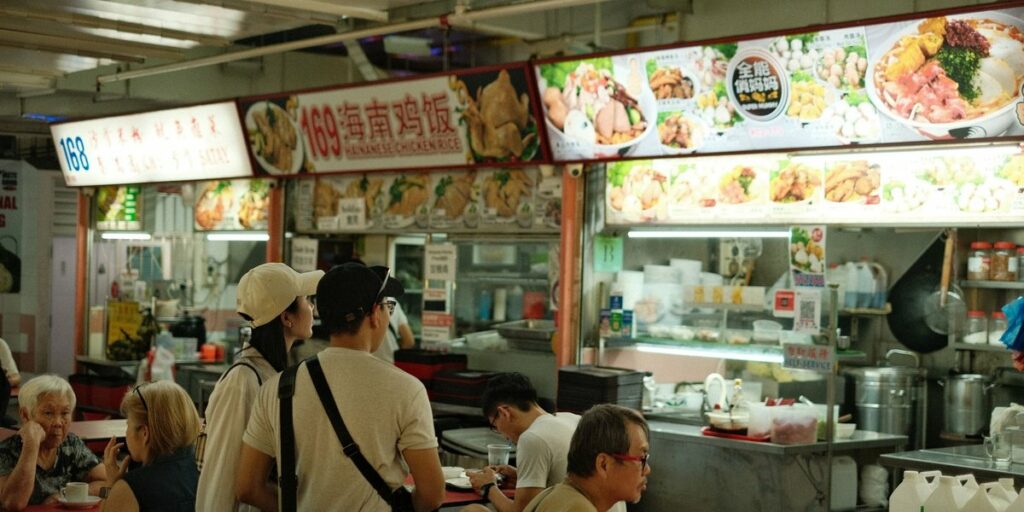
Order “kopi peng” at a hawker stall in Singapore and you’re already speaking a dialect, whether you meant to or not. “Kopi” is Hokkien for coffee, “peng” is Hokkien for ice. Nobody teaches this in school anymore — it survives because it’s stapled to the menu.
That’s the paradox at the center of Singapore’s dialect story. The government spent four decades trying to phase Hokkien, Teochew, Cantonese, Hakka, and Hainanese out of daily life, and largely succeeded. But the dialects didn’t disappear so much as they dissolved into everything else: the food names, the swear words, the way your grandmother answers the phone. Here’s the actual breakdown — where each dialect came from, why they’re vanishing, and where you can still hear them spoken properly.
Table of Contents
- Singapore’s Five Chinese Dialect Groups
- The Speak Mandarin Campaign
- Why the Dialects Kept Fading
- Singlish Is Basically a Dialect Museum
- How Dialects Are Being Kept Alive
- Where to Actually Learn One
- The Takeaway
Singapore’s Five Chinese Dialect Groups
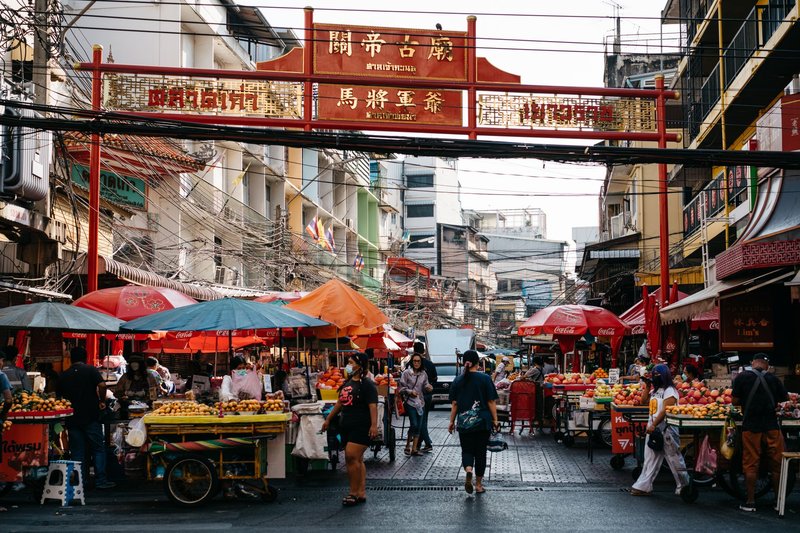
Chinese Singaporeans didn’t arrive as one group speaking one language. They came from different provinces of southern China across a century of migration, and each group brought a dialect mutually unintelligible with the others — a Hokkien speaker and a Cantonese speaker in 1920s Singapore couldn’t understand each other any more than a Portuguese speaker understands Romanian. Mandarin wasn’t the common ground; it was barely spoken by anyone outside the scholar class.
Hokkien
Hokkien speakers trace back to the Minnan region of southern Fujian, mostly around Zhangzhou and Xiamen, and they arrived earliest and in the greatest numbers. For most of the 20th century, Hokkien was the largest dialect group in Singapore by a wide margin, which is why it became the default street language among Chinese Singaporeans regardless of their own dialect background. Thian Hock Keng Temple on Telok Ayer Street, built in the 1840s by the Hokkien community as a thank-you to the sea goddess Mazu for safe voyages, still anchors the old Hokkien merchant district today.
Hokkien did more damage to standard English in Singapore than any other dialect. “Kiasu” (afraid to lose out), “shiok” (delicious, satisfying), and “buay tahan” (can’t stand it) all came through Hokkien and are now just Singlish.
Teochew
Teochew speakers came from the Chaoshan region of eastern Guangdong — Chaozhou, Shantou, Jieyang. They leaned heavily into fishing, agriculture, and later the rubber and gambier trades, and their food left the bigger mark: Teochew porridge (muay) served with a dozen small plain-cooked dishes, braised duck, and the fish-based version of steamboat all trace back to Teochew kitchens. Teochew clan associations, particularly the Ngee Ann Kongsi, became some of the wealthiest and most influential in Singapore’s Chinese community.
Cantonese
Cantonese speakers from the Pearl River Delta around Guangzhou settled thickly around the Kreta Ayer and Upper Chin Chew Street area — what’s now the core of Chinatown. They dominated skilled trades: tailoring, goldsmithing, and traditional medicine halls, many of which still operate under Cantonese-founded family names. Cantonese opera, or wayang, used to draw street crowds in this district on festival nights, performed on temporary stages that went up and came down within days.
Hakka
“Hakka” literally means “guest people” — a name that reflects their history as a group that migrated repeatedly across China before some branches reached Singapore. They didn’t cluster in one enclave the way Hokkien and Cantonese speakers did, and they often ended up in trades other groups hadn’t claimed yet: pawnbroking, leatherwork, herbal medicine. Aw Boon Haw and Aw Boon Par, the Hakka brothers behind Tiger Balm and the old Haw Par Villa, are probably the most famous Hakka Singaporeans in the city’s history.
Hainanese
Hainanese speakers from Hainan island arrived later than the other groups, and by the time they got to Singapore, the better trades were already spoken for. Many ended up as domestic cooks in colonial European households, which is precisely how Hainanese chicken rice was born — an adaptation of Wenchang chicken made with ingredients available locally, refined into Singapore’s unofficial national dish. That same cooking background fed straight into the kopitiam trade; a lot of Singapore’s old-school coffee shop culture has Hainanese roots.
The Speak Mandarin Campaign
None of this dialect diversity was an accident the government was comfortable with. In 1979, Prime Minister Lee Kuan Yew launched the Speak Mandarin Campaign, a deliberate push to get Chinese Singaporeans speaking one language instead of five-plus. The logic was practical: a Chinese community split across mutually unintelligible dialects was harder to educate, harder to unify, and harder to govern than one that spoke a single mother tongue alongside English.
The policy wasn’t just encouragement — it had teeth. Dialect programming was phased off radio and television. Schools taught Mandarin as the mandatory “mother tongue” subject for ethnic Chinese students, regardless of what was spoken at home. Within a generation, a household that had spoken Hokkien or Teochew for decades often had children fluent in Mandarin and English but only passively understanding their grandparents’ dialect.
Why the Dialects Kept Fading
The campaign gets most of the credit, or blame, but it wasn’t acting alone. Singapore’s public housing program moved entire communities out of dialect-concentrated kampongs and shophouse districts into planned HDB estates where neighbors came from every dialect background at once — English or Mandarin became the only language everyone in the block actually shared. Intermarriage across dialect groups did the same thing at the family level. And once dialect media effectively stopped existing, an entire generation grew up without dialect television, radio, or pop music to keep the vocabulary alive outside the home.
By the 2020 census, only around 7.8% of Chinese resident households reported a Chinese dialect as the language spoken most often at home, according to figures from Singapore’s Department of Statistics — down from the overwhelming majority just two generations earlier. That’s not decline. That’s near-collapse in one lifetime.
Singlish Is Basically a Dialect Museum
Here’s the part most guides to Singapore’s dialects skip: the dialects didn’t vanish, they migrated into Singlish. Ask a linguist and they’ll tell you Singlish’s grammar leans heavily on Chinese sentence structures, but its texture — the actual words that make it sound like nothing else — comes almost entirely from dialect, not Mandarin.
| Language | Where you’ll actually hear it | Example | What it feels like |
|---|---|---|---|
| Mandarin | Schools, government, national media | 你好吗 (nǐ hǎo ma) | Formal, learned, “official” Chinese |
| Chinese dialects | Grandparents, hawker stalls, clan associations | 食饱未 (jiak ba buay – Hokkien) | Intimate, generational, food-coded |
| Singlish | Everywhere, all ages, all races | “Wah, shiok leh, this laksa” | Shared, playful, unmistakably local |
Notice that Singlish is the one column with no ethnic gatekeeping — Malay and Indian Singaporeans use “shiok” and “kiasu” as fluently as anyone. The dialects lost their standing as formal languages, but they won something else: they became the vocabulary everyone in Singapore shares, regardless of race.
How Dialects Are Being Kept Alive

The decline hasn’t gone unanswered. Clan associations — the same organizations that built temples and schools for their communities a century ago — now run some of the most active dialect preservation efforts in the country. The Hokkien Huay Kuan and the Teochew Poit Ip Huay Kuan both offer language classes aimed at younger members who never picked up the dialect at home, treating it explicitly as heritage rather than daily necessity.
Food culture has become an unlikely ally here too. When Singapore’s hawker culture was inscribed on UNESCO’s Representative List of Intangible Cultural Heritage in December 2020, it dragged dialect vocabulary along with it — you can’t explain char kway teow, bak kut teh, or mee pok without explaining the Hokkien and Teochew words baked into the names. Local filmmakers and theatre companies have leaned into this too, deliberately scripting scenes in Hokkien or Cantonese to capture a texture that Mandarin dialogue can’t reproduce.
Where to Actually Learn One
If you want more than a few hawker-stall phrases, start with the clan associations — most were built for exactly this purpose and welcome members regardless of how fluent (or not) their family background is. Community centers under the People’s Association also run periodic dialect classes, usually aimed at reconnecting older residents with dialects they half-remember. Beyond that, look for informal dialect meetup groups and podcasts that have sprung up specifically because formal instruction is so thin on the ground — a sign of how much this now has to be sought out rather than absorbed.
The Takeaway
Singapore didn’t lose its Chinese dialects to time or globalization — it lost them to policy, on purpose, in under fifty years. What’s left isn’t the dialects as living, everyday languages; that ship sailed with the Speak Mandarin Campaign. What’s left is a layer under everything else: in the name of your kopi order, in a swear word your uncle uses without knowing where it came from, in a clan association hall that still runs classes nobody’s forced to attend. If you’re visiting or reconnecting, that’s where to look — not for fluent conversations, but for the words that outlasted the language.