
Table of Contents
- The Quick Answer
- Why the Count Changes Depending on Who’s Counting
- Southern Europe at a Glance
- What Actually Ties These Countries Together
- The Countries That Get Added Under Broader Definitions
- FAQ
The Quick Answer
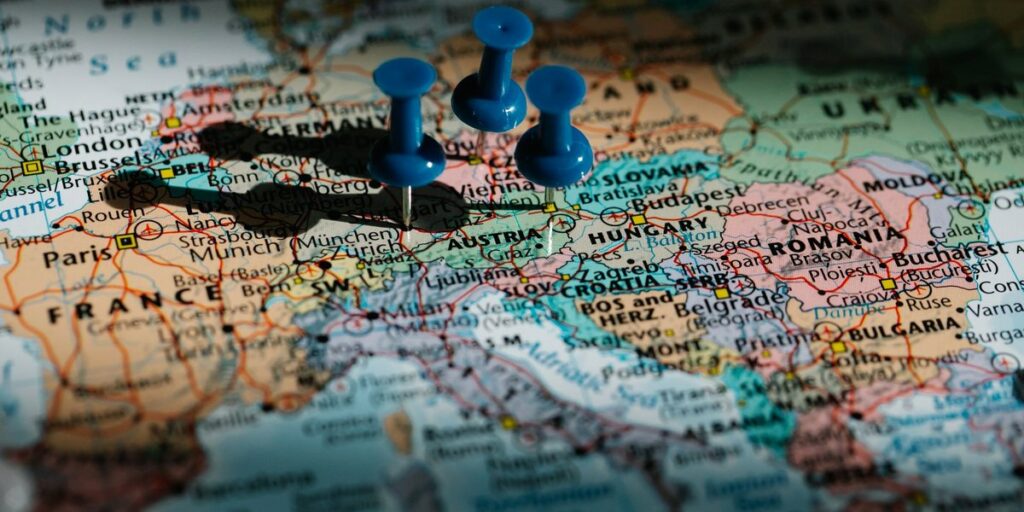
By the United Nations geoscheme — the classification most atlases, statistics agencies, and geography courses default to — Southern Europe has 15 fully recognized sovereign countries: Portugal, Spain, Andorra, Italy, San Marino, Vatican City, Malta, Greece, Slovenia, Croatia, Bosnia and Herzegovina, Serbia, Montenegro, North Macedonia, and Albania. Add Kosovo, which functions as an independent state but isn’t recognized by all UN members (including several EU countries), and you get to 16.
That’s the number you’ll see cited most often. It’s also the number that starts falling apart the second you look at a different source.
Why the Count Changes Depending on Who’s Counting
Southern Europe isn’t a legal entity like the EU or a physical one like a peninsula — it’s a regional label, and different institutions draw the line differently.
The UN Statistics Division’s M49 geoscheme groups countries by continuous landmass and political geography, which is why it lumps the Iberian Peninsula, the Italian Peninsula, and the entire Balkan Peninsula into one region — Vatican City included, despite being a city-state you could walk across in twenty minutes.
Climate-based definitions work differently. They follow the Mediterranean climate belt — hot, dry summers and mild, wet winters — which pulls in Cyprus and coastal Turkey but gets fuzzier inland, where Balkan countries like Serbia and North Macedonia have a more continental climate than a Mediterranean one.
Cultural and linguistic definitions add a third layer: Romance-language countries (Italy, Spain, Portugal, Romania) plus the historically Byzantine and Ottoman-influenced Balkans, which is how Romania and Bulgaria end up in some “Southern Europe” lists even though the UN geoscheme puts them in Eastern Europe.
None of these are wrong. They’re answering slightly different questions — geographic contiguity, climate, or shared history — and a searcher usually wants the first one unless they say otherwise.
Southern Europe at a Glance
Here’s the core 15 (16 with Kosovo), with the basics you’d actually want for a trip or a trivia night.
| Country | Capital | Population | Official Language | Currency | EU Member |
|---|---|---|---|---|---|
| Portugal | Lisbon | ~10.3 million | Portuguese | Euro | Yes |
| Spain | Madrid | ~47.6 million | Spanish | Euro | Yes |
| Andorra | Andorra la Vella | ~80,000 | Catalan | Euro | No |
| Italy | Rome | ~59 million | Italian | Euro | Yes |
| San Marino | City of San Marino | ~34,000 | Italian | Euro | No |
| Vatican City | Vatican City | ~800 | Italian, Latin | Euro | No |
| Malta | Valletta | ~540,000 | Maltese, English | Euro | Yes |
| Greece | Athens | ~10.4 million | Greek | Euro | Yes |
| Slovenia | Ljubljana | ~2.1 million | Slovenian | Euro | Yes |
| Croatia | Zagreb | ~3.85 million | Croatian | Euro | Yes |
| Bosnia and Herzegovina | Sarajevo | ~3.2 million | Bosnian, Croatian, Serbian | Convertible Mark | No (candidate) |
| Serbia | Belgrade | ~6.6 million | Serbian | Serbian Dinar | No (candidate) |
| Montenegro | Podgorica | ~620,000 | Montenegrin | Euro (unilateral) | No (candidate) |
| North Macedonia | Skopje | ~1.83 million | Macedonian | Denar | No (candidate) |
| Albania | Tirana | ~2.8 million | Albanian | Lek | No (candidate) |
| Kosovo | Pristina | ~1.8 million | Albanian, Serbian | Euro (unilateral) | No (not recognized by all EU states) |
A pattern worth noticing: every EU member in this list joined either at founding-era waves (Italy) or in the big 1980s–2000s expansions (Spain, Portugal, Greece, Malta, Slovenia), while Croatia — the most recent addition, in 2013 — is also the only Balkan country to make it in so far. The rest of the Balkans are candidate countries, some of them for over a decade, which tells you more about the accession process than about their fitness to join.
What Actually Ties These Countries Together
Strip away the borders and three things actually unify this region.
Climate. Most of Southern Europe sits inside or near the Mediterranean climate zone — the reason olive trees, not conifers, define the landscape from Portugal’s Algarve to Greece’s Peloponnese. Even Balkan countries without a coastline, like North Macedonia, feel this influence in their agriculture and architecture.
Language roots. Two families dominate: Romance languages (Portuguese, Spanish, Catalan, Italian) descended from Latin, and South Slavic languages (Croatian, Serbian, Slovenian, Macedonian, Bosnian, Montenegrin) that split apart more from political history than linguistic distance — a Croatian and Serbian speaker can generally understand each other without much effort.
Historical layering. This is the region where the Roman Empire, the Byzantine Empire, and the Ottoman Empire all left the deepest marks in Europe. It shows up in food, in religious geography — Catholic in the west, Orthodox and Muslim-influenced in parts of the Balkans — and in why a city like Sarajevo has a mosque, a Catholic cathedral, and an Orthodox church within a few blocks of each other.
The Countries That Get Added Under Broader Definitions
If you’ve seen a “Southern Europe” list with more than 16 entries, it’s almost certainly using a climate or cultural definition rather than the UN geoscheme. The usual additions:
Romania and Bulgaria. The UN geoscheme places both in Eastern Europe, but their Black Sea coastlines, Romance-language roots (Romania) and Ottoman-era history (both) put them in Southern or Mediterranean-adjacent groupings often enough that they show up on non-geoscheme lists.
Turkey. Almost entirely in Asia by landmass, but Istanbul straddles the Bosphorus, and Turkey’s EU accession talks and NATO membership have historically linked it with Southern European politics and culture more than with its Asian neighbors. Most geographic classifications, including the UN’s, place Turkey in Western Asia — but it’s the country people ask about most.
Cyprus. Geographically closer to Turkey and Syria than to mainland Europe, Cyprus is politically and culturally European — EU member, uses the euro, plays in UEFA competitions — which is why some sources group it with Southern Europe despite its geoscheme classification as Western Asia.
None of these are “wrong” additions. They’re just answering a different, broader question than the strict geoscheme does.
FAQ
Is Turkey part of Southern Europe? Not by the UN geoscheme, which places Turkey in Western Asia. A small percentage of Turkish territory — the area around Istanbul — is geographically in Europe, which is why the country gets included in broader cultural or political lists even though strict geography puts it in Asia.
Is Romania in Southern or Eastern Europe? The UN geoscheme classifies Romania as Eastern Europe. It appears on some Southern or “Balkan” lists because of its Black Sea coast and shared Ottoman-era history with the region, but that’s a cultural grouping, not the standard geographic one.
Is Cyprus a Southern European country? Geographically, no — the UN geoscheme places Cyprus in Western Asia. Politically and culturally, it’s treated as European: it’s an EU member state and uses the euro.
How many countries are officially in Southern Europe? 15 fully UN-recognized sovereign states, or 16 if you count Kosovo, which isn’t universally recognized but functions as an independent country.
Which Southern European countries use the euro? Portugal, Spain, Andorra, Italy, San Marino, Vatican City, Malta, Greece, Slovenia, and Croatia use the euro as an official currency through EU or bilateral monetary agreements. Montenegro and Kosovo also use the euro, but unilaterally — without EU membership or a formal currency agreement.