
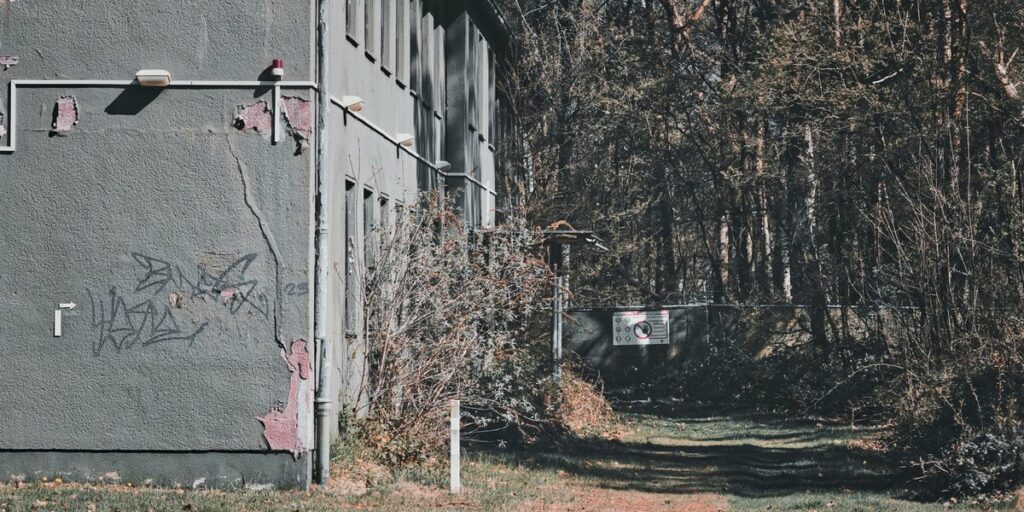
Delaware doesn’t get the ghost-town reputation that Nevada or Arizona does — there was never a gold rush here, no mining boom that went bust overnight. What Delaware has instead is quieter and, in some ways, stranger: towns that lost their reason to exist gradually, over decades, as mills closed, railroads rerouted, and hurricanes rewrote the coastline. A few never really had a “boom” at all — just a name on a map that outlasted the buildings.
This list pulls together the state’s genuine ghost towns — places that were once incorporated or at least functioning communities and are now largely gone — alongside a handful of abandoned sites that, while not technically towns, tell the same story of decline. Each entry covers what happened, what’s left, and what you’ll actually find if you go looking.
A note before you start driving around Sussex or Kent County with a camera: most of these sites sit on private land or in areas where structures are unstable. Treat “abandoned” as a description, not an invitation. Public roads and cemeteries are generally fair game; walking into collapsing barns or fenced foundations is not, regardless of what the last person’s Instagram geotag implied.
Table of Contents
- Zwaanendael
- Owens Station
- Woodland
- Woodland Beach
- Saint Johnstown
- New Market
- Glenville
- Banning
- The Airville Airfield Ruins
- Visiting Responsibly
Zwaanendael
Zwaanendael has the distinction of being Delaware’s first ghost town, and it earned the title fast. Dutch colonists founded it in 1631 near present-day Lewes as a whaling and trading outpost — the name means “valley of swans.” A year later, every colonist was dead, killed in a conflict with the local Lenape that started, according to the most widely cited account, over a misunderstood tin coat of arms nailed to a post.
There’s effectively nothing left on the original site to see; it was absorbed into what became Lewes. What survives is the Zwaanendael Museum, built in 1931 for the settlement’s 300th anniversary and modeled on the town hall in Hoorn, Netherlands, where the original colonists shipped out from. It’s less a ghost town visit than a memorial to one — but it’s the only place in the state where you can stand in front of a building built specifically to commemorate a town that failed within its first winter.
Owens Station
Owens Station sat along the Delaware Railroad line in Kent County, one of a string of small depot communities that sprang up wherever the railroad decided to put a water stop or freight platform in the mid-1800s. Its entire economic reason for existing was the railroad — a general store, a few houses, a grain depot serving the surrounding farms.
When trucking replaced rail freight for local agriculture in the mid-20th century, there was no reason for a farmer to route grain through a depot instead of driving it straight to market. Owens Station didn’t burn down or get demolished; it just stopped being used, building by building, until the name persisted only as a road marker and a line on old county maps. This is the most common death Delaware ghost towns share: not disaster, but obsolescence.
Woodland
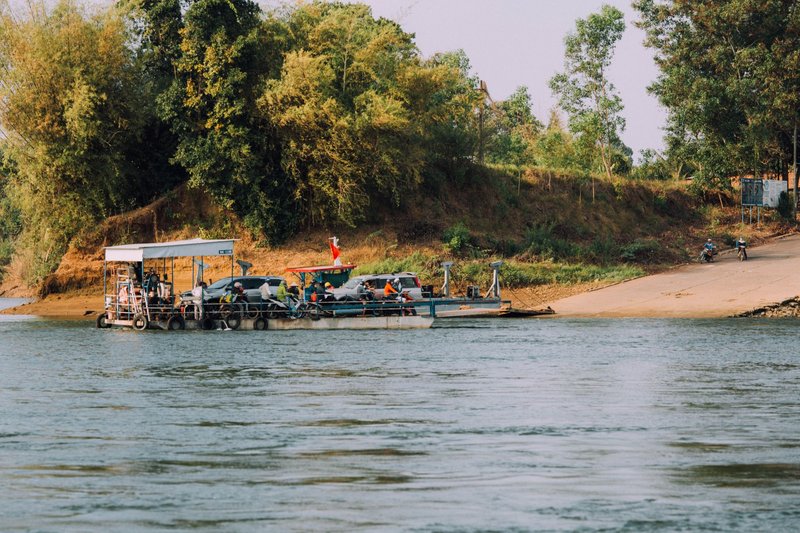
Woodland, in Sussex County near the Nanticoke River, grew up around a ferry crossing and a sawmill economy tied to the cypress swamps along the river. The Woodland Ferry — still running today as one of the few remaining cable ferries on the East Coast — is actually the town’s most enduring feature, older than most of what was ever built around it.
The settlement itself thinned out as the timber industry that supported it declined through the 20th century; cypress logging along the Nanticoke had largely exhausted the easily accessible stands by the 1930s. What’s left is scattered — a few older homes, the ferry landing, and the name attached to a crossroads rather than a town center. If you want to see one piece of Woodland still doing exactly what it did a century ago, Delaware’s DelDOT still operates the ferry seasonally, and it’s free.
Woodland Beach
Not to be confused with Woodland, Woodland Beach is a Delaware Bay shoreline community in Kent County that peaked as a small fishing and summer-cottage settlement in the early-to-mid 1900s. Its decline is a coastal story rather than an agricultural one: repeated storm damage, most severely from the Ash Wednesday Storm of March 1962 — a nor’easter that reshaped much of the mid-Atlantic coastline and destroyed or badly damaged cottages up and down Delaware Bay.
Some structures were rebuilt; others simply weren’t, as owners decided a bay-front cottage on eroding land wasn’t worth reinvesting in. Today Woodland Beach exists in a strange in-between state — part working community, part scattered remnants of what didn’t get rebuilt, bordered by the Woodland Beach Wildlife Area, which absorbed a good chunk of the land that used to hold houses.
Saint Johnstown
Saint Johnstown is one of the least-documented entries on any Delaware ghost town list, including Wikipedia’s own reference table — which tells you something about how thoroughly it’s faded. What’s known places it in Kent County, another small agricultural crossroads community that never grew past a handful of structures and lost even those over the course of the 20th century as farming consolidated into larger operations that didn’t need a village center nearby.
There’s no dedicated marker or preserved structure associated with the site today. It’s included here less as a destination and more as a reminder that not every ghost town leaves a museum or a ferry behind — some just leave a name in a county history compiled by rootsweb genealogists and local historians, and nothing else.
New Market
New Market, also in Kent County, followed the same arc as Owens Station: a small trading and milling community that made sense when local farmers needed a nearby place to grind grain, buy supplies, and ship produce before better roads and motor vehicles made longer trips practical. As the surrounding towns of Dover and Smyrna grew and absorbed the commercial activity that used to happen at crossroads settlements, New Market had less and less to offer that wasn’t available a short drive away.
Like most of the small mill-and-crossroads towns on this list, its disappearance wasn’t dramatic. Buildings weren’t torn down so much as left standing until they weren’t standing anymore.
Glenville
Glenville sits in Sussex County and shares the mill-town profile common to this part of the state: a small operation built around processing local timber or grain, supporting a cluster of homes and a store, dependent entirely on that single economic activity continuing to be profitable. When it stopped being profitable — outcompeted by larger, more mechanized mills elsewhere, or simply running out of accessible timber — there was nothing to replace it.
Sussex County has more of these small vanished mill communities than any other county in the state, a byproduct of how thoroughly the region’s economy once depended on its cypress swamps and pine stands. Glenville is one of the better-documented examples, appearing consistently across historical county surveys even though almost nothing of the original settlement remains visible from the road today.
Banning
Banning rounds out the cluster of small Sussex County settlements that Wikipedia’s ghost town list documents with little more than a name and a county. What can be pieced together from local histories points to the same pattern seen throughout this list: an agricultural or milling community tied to a single industry, populated by families whose livelihoods depended on that industry staying viable, and abandoned gradually once it wasn’t.
The scarcity of documentation on places like Banning is itself worth noting. Delaware’s ghost towns didn’t get the kind of chronicling that Western mining-boom ghost towns did, partly because their decline wasn’t dramatic enough to make news at the time. A town losing its mill over ten years doesn’t generate the same paper trail as one abandoned overnight.
The Airville Airfield Ruins
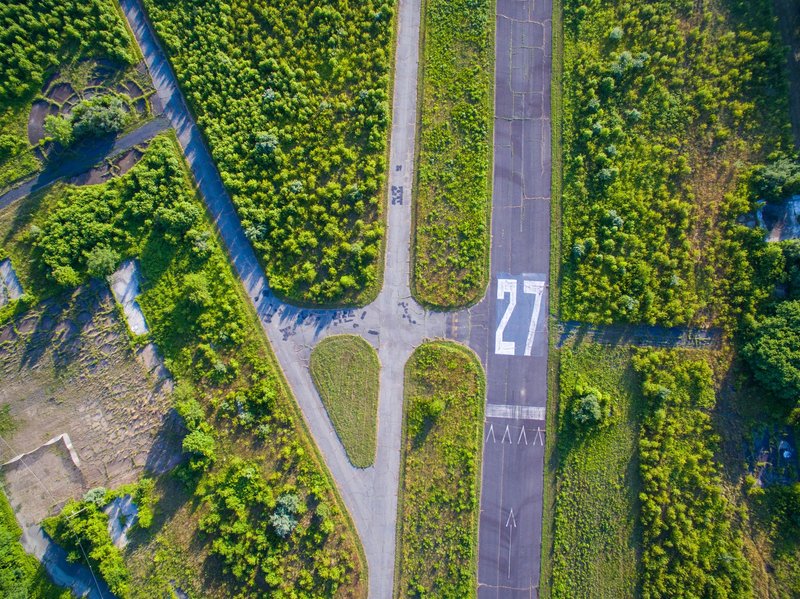
Not on the Wikipedia list, but a frequent stop on Delaware “abandoned places” roundups: the remains of a small World War II-era auxiliary airfield in Sussex County, one of several built to support pilot training out of larger bases like Dover Army Air Field. Auxiliary fields like this were built fast and cheap — a runway, a few support structures, minimal infrastructure — because they were only ever meant to serve the war effort.
When the war ended, the Army had no further use for a satellite training strip, and most of these auxiliary fields were either sold off, repurposed for agriculture, or simply left to erode. What remains at sites like this is typically cracked runway pavement being slowly reclaimed by grass and tree roots, and occasionally a foundation slab from a support building. It’s a different flavor of abandonment than the mill towns — deliberate and government-built rather than organically grown, and gone for the opposite reason: not decline, but a war ending.
Visiting Responsibly
Almost everything on this list sits on private property, in a wildlife management area with its own access rules, or on land whose ownership isn’t clearly marked. Delaware doesn’t have the wide-open public ghost towns you’d find on BLM land out West — nearly all of it is surrounded, at minimum, by someone’s farm.
Roads, cemeteries, and the two sites with public infrastructure attached — the Zwaanendael Museum and the Woodland Ferry — are the safest and most legal way to engage with this history without a landowner conversation. If you’re chasing the Airville ruins or one of the Sussex County mill sites, check current land ownership before you go; a lot of “abandoned” structures in Delaware are on posted hunting land, and trespassing citations aren’t a great souvenir. The Delaware Division of Historical and Cultural Affairs is a reliable starting point for verifying what’s publicly accessible before you plan a trip around it.