Most “historic New Zealand” lists hand you the same five spots and call it a day: Waitangi, Te Papa, maybe Akaroa if they’re feeling generous. Fine sites, all of them. But New Zealand’s history is stranger and deeper than a North Island highlight reel — there are pā sites where you can still trace the trench lines, mission stations older than most American states, and rock art in limestone shelters that predates European contact by centuries.
This list runs 18 sites, grouped by region so you can plan around an actual road trip instead of crisscrossing the country. Each one comes with the story of what happened there, plus the practical stuff: where it is, what it costs, when it’s open. Māori heritage and colonial history both, because you can’t understand one without the other here.
Table of Contents
- Northland & Bay of Islands
- Auckland Region
- Wellington & Lower North Island
- Canterbury & the South Island
- How to Plan a History-Focused NZ Trip
- FAQ
Northland & Bay of Islands
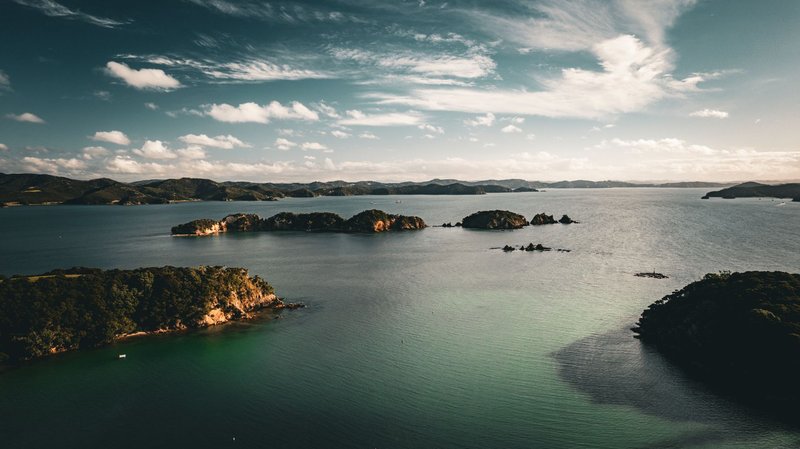
This is where New Zealand’s documented history starts — first sustained Māori-European contact, the first mission stations, and the country’s founding document. If you only have time for one history region, make it this one — and the Bay of Islands rewards slowing down, since some of the best bays in the country line the coast you’ll be driving between sites anyway.
1. Waitangi Treaty Grounds
On 6 February 1840, more than 40 Māori chiefs signed the Treaty of Waitangi with the British Crown here — the document that still defines the relationship between Māori and the New Zealand government today. The grounds aren’t a dusty monument. You get the Treaty House (1834, one of the country’s oldest buildings), a carved meeting house representing all iwi, and a 35-metre ceremonial war canoe, Ngātokimatawhaorua, that takes 76 paddlers to launch.
Come for the cultural performance and the guided tour — the guides are often descendants of signatories, and the framing is honest about how contested the Treaty’s two language versions remain. The Waitangi Treaty Grounds sit just north of Paihia.
- Location: Waitangi, Bay of Islands
- Nearest town: Paihia (5 min drive)
- Hours: 9am–5pm daily
- Cost: ~NZD $60 adult (international), includes tour and performance; cheaper for NZ residents
- Why visit: This is the single most important historical site in the country, and it’s well-told.
2. Kerikeri Mission Station
Two of New Zealand’s oldest surviving European buildings stand side by side here. The Stone Store (1832–36) is the country’s oldest stone building and still operates as a shop downstairs. Next door, Kemp House (1822) is the oldest wooden building in New Zealand. They sit on land gifted by Ngāpuhi chief Hongi Hika, under the shadow of Kororipo Pā — Hika’s fortified base, from which he launched the Musket Wars campaigns that reshaped the North Island in the 1820s.
The juxtaposition is the whole point: gentle mission-era architecture next to a war pā, with the Kerikeri River basin tying them together.
- Location: Kerikeri Basin
- Nearest town: Kerikeri (5 min)
- Hours: Stone Store 10am–4pm; grounds open daily
- Cost: Kemp House guided tour ~NZD $10; grounds free
- Why visit: Oldest stone and wooden buildings in NZ, in one walkable basin.
3. Ruapekapeka Pā
Barely on the tourist radar, and that’s exactly why you go. Ruapekapeka (“the bat’s nest”) was the final stronghold of the Northern War of 1845–46, an engineering marvel of Māori fortification — trenches, underground bunkers, and palisades designed specifically to absorb British artillery. The British took it in January 1846, but the design was studied by military engineers for decades afterward as a model of trench warfare, arguably anticipating WWI tactics by 70 years.
The site is a grassed-over hilltop now, with interpretive panels, and you can still walk the earthworks. It’s free, quiet, and managed in partnership with local hapū.
- Location: Off SH1, south of Kawakawa
- Nearest town: Kawakawa (20 min)
- Hours: Open daily, daylight
- Cost: Free
- Why visit: A genuinely globally significant fortification almost nobody visits.
4. Pompallier Mission, Russell
In Russell — once the lawless whaling port nicknamed “the Hellhole of the Pacific” — this 1842 rammed-earth building is the oldest surviving industrial building in the country. It housed a Catholic mission printery that produced tens of thousands of religious texts in te reo Māori. You can watch demonstrations of the original tanning and printing processes that still run on-site.
- Location: The Strand, Russell
- Nearest town: Russell (walkable); ferry from Paihia
- Hours: 10am–4pm daily
- Cost: ~NZD $15 adult
- Why visit: Working demonstrations of 1840s printing and bookbinding in te reo.
Auckland Region
Auckland buries its history under motorways and apartment towers, but it’s there — volcanic pā sites you can climb in an afternoon, and a colonial village rebuilt house by house.
5. Howick Historical Village
A living-history village of more than 30 original and replica buildings from the 1840s–80s, recreating a Fencible settlement — retired British soldiers settled here to defend Auckland’s southern flank. On “live days” you get costumed interpreters working forges, cooking over open fires, and running the schoolhouse. It’s hokey in the best way and genuinely informative about daily colonial life.
- Location: Lloyd Elsmore Park, Pakuranga
- Nearest town: East Auckland
- Hours: 10am–4pm daily
- Cost: ~NZD $20 adult; more on live days
- Why visit: The most immersive colonial-life experience in the upper North Island.
6. Maungawhau / Mount Eden
Auckland’s highest volcanic cone was one of the largest and most important Māori pā in the region, home to thousands before European arrival. The terracing carved into the slopes for defense and kūmara gardens is still vividly visible — run your eye around the crater rim and you can read the old fortification lines. The summit gives you a 360-degree view over the isthmus and its 50-odd volcanoes.
- Location: Mount Eden, central Auckland
- Nearest town: Auckland CBD (10 min)
- Hours: Open daily; summit access on foot
- Cost: Free
- Why visit: Read a major pā’s defensive terracing right inside the city.
7. Ōtuataua Stonefields
Out near the airport, this 100-hectare reserve preserves Māori stone garden walls and house sites going back 700-plus years — one of the last surviving stonefield landscapes in Auckland, where early Māori cleared volcanic rock to grow kūmara. It’s a stark, windswept walk with the Manukau Harbour on one side, and it almost never appears on tourist itineraries.
- Location: Ihumātao, Māngere
- Nearest town: Auckland Airport area
- Hours: Open daily, daylight
- Cost: Free
- Why visit: Pre-European agricultural landscape most visitors never hear about.
Wellington & Lower North Island
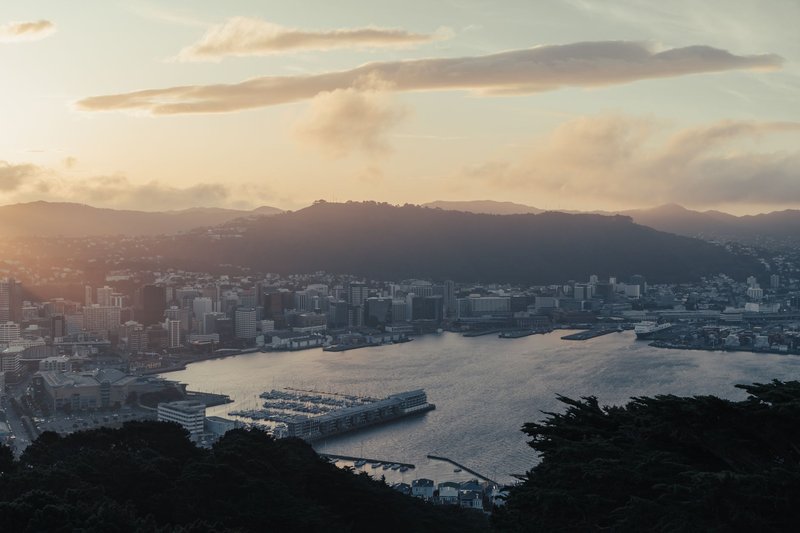
The capital region packs the national museum, a colonial-Gothic landmark, and a battlefield from the New Zealand Wars within easy reach.
8. Te Papa Tongarewa
The national museum is free, enormous, and the best single place to get the long view of New Zealand — geological, Māori, colonial, and contemporary. The standout is the marae and the Treaty of Waitangi exhibition, plus Te Marae, a contemporary meeting house open to all visitors. Give it half a day minimum.
- Location: Cable Street, Wellington waterfront
- Nearest town: Wellington CBD
- Hours: 10am–6pm daily
- Cost: Free (some special exhibitions ticketed)
- Why visit: The country’s history under one roof, at no charge.
9. Old St Paul’s
A near-perfect example of Gothic Revival architecture built entirely from native timber — rimu, mataī, tōtara — in 1866. The interior glows when the sun hits the stained glass, and American Marines stationed in Wellington during WWII left memorial plaques and flags that still hang inside. Small, free, and easy to fold into a city walk.
- Location: Mulgrave Street, Thorndon
- Nearest town: Wellington CBD (10 min walk)
- Hours: 10am–5pm daily
- Cost: Free (donation appreciated)
- Why visit: All-native-timber Gothic interior, an architectural one-off.
10. Ōrākau Battle Site
About two hours north toward Te Awamutu, Ōrākau was the final battle of the Waikato campaign in 1864 — where roughly 300 Māori defenders held out against 1,400 British troops, and where the defiant reply “Ka whawhai tonu mātou, āke, āke, āke” (we will fight on, forever) entered national memory. The site is a roadside memorial and field now, but it’s foundational to understanding the New Zealand Wars and the land confiscations that followed.
- Location: Near Kihikihi, Waikato
- Nearest town: Te Awamutu (15 min)
- Hours: Open daily, daylight
- Cost: Free
- Why visit: One of the most emotionally weighted battlefields of the NZ Wars.
11. Old Government Buildings, Wellington
One of the largest wooden buildings in the Southern Hemisphere, finished in 1876 and built to look like stone — Italianate styling, all in timber. It housed the public service for over a century and now belongs to the law faculty of Victoria University. Worth a look for the sheer audacity of faking masonry at that scale in wood.
- Location: Lambton Quay, Wellington
- Nearest town: Wellington CBD
- Hours: Foyer open business hours
- Cost: Free
- Why visit: A “stone” building that’s entirely wood — one of the largest on Earth.
Canterbury & the South Island
The South Island gets short-changed on most history lists, which is a mistake. It holds the country’s oldest rock art, a French settlement, and gold-rush ghost towns that froze in the 1860s.
12. Akaroa
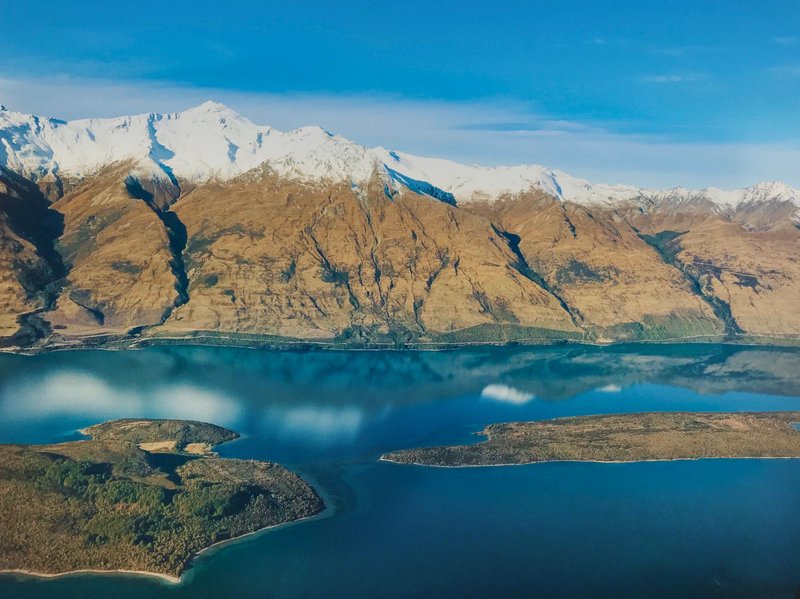
A French and British settlement attempt from 1840 left a town that still leans into its French identity — street names like Rue Lavaud and Rue Jolie, a few original cottages, and the descendants’ story of arriving just weeks after Britain claimed sovereignty. The Akaroa Museum (small entry fee) covers the Ngāi Tahu history of the harbour and the Onawe Peninsula pā nearby. Set on a drowned volcanic crater, it’s also just beautiful.
- Location: Banks Peninsula
- Nearest town: Christchurch (90 min)
- Hours: Town always open; museum 10:30am–4:30pm
- Cost: Town free; museum ~NZD $10
- Why visit: The only French-flavoured town in the country, on a stunning harbour.
13. Onawe Peninsula Pā
Jutting into Akaroa Harbour, this narrow peninsula was a Ngāi Tahu pā and the site of an 1830s siege by the Ngāti Toa chief Te Rauparaha during the inter-iwi conflicts of that era. You can walk out at low tide across the tombolo — check tide times carefully, because it floods. It’s a sombre, exposed spot with the defensive logic of the site obvious the moment you stand on it.
- Location: Head of Akaroa Harbour
- Nearest town: Akaroa (10 min drive + walk)
- Hours: Tide-dependent; daylight only
- Cost: Free
- Why visit: Walk out to a siege site across a tidal land bridge.
14. Takiroa Rock Art Shelter
In the Waitaki Valley, limestone overhangs shelter Māori rock drawings — charcoal and red-ochre figures of birds, taniwha, and, intriguingly, a sailing ship added after European contact. Some of the art is centuries old. This is one of the most accessible of the South Island rock art sites, right off SH83, with an easy short walk and interpretive signage developed with Ngāi Tahu.
- Location: Waitaki Valley, near Duntroon
- Nearest town: Duntroon (5 min)
- Hours: Open daily, daylight
- Cost: Free
- Why visit: Centuries-old Māori rock art, including a post-contact ship drawing.
15. Arrowtown & the Chinese Settlement
A gold-rush town near Queenstown that kept its 1860s main street largely intact — schist-stone and timber shopfronts now full of cafés, but the bones are real. The standout is the restored Chinese miners’ settlement along Bush Creek, where stone-and-sod huts recall the Cantonese miners who came in the 1860s–80s and faced a poll tax and open discrimination. The interpretive panels don’t soften it.
- Location: Arrowtown, Otago
- Nearest town: Queenstown (20 min)
- Hours: Town always open
- Cost: Free; Lakes District Museum ~NZD $12
- Why visit: Intact gold-rush streetscape plus an honest Chinese-immigrant history.
16. Hokitika & the West Coast Goldfields
The West Coast gold rush of the 1860s turned Hokitika into one of New Zealand’s busiest ports almost overnight, with dozens of pubs and ships wrecking regularly on the river bar. Today the heritage area and nearby Ross goldfield trace that boom-and-bust. Ross is where the country’s largest gold nugget, the 3-kilogram “Honourable Roddy,” was found in 1909.
- Location: Hokitika / Ross, West Coast
- Nearest town: Hokitika
- Hours: Town always open; Ross heritage area daylight
- Cost: Free; small museum fees
- Why visit: A vanished gold port and the site of NZ’s biggest nugget.
17. Larnach Castle, Dunedin
New Zealand’s only castle, built by banker and politician William Larnach in the 1870s on the Otago Peninsula, with a story soaked in money and tragedy — Larnach’s wives died young, and he shot himself in Parliament in 1898. The interiors show off carved ceilings imported from Europe and a Georgian hanging staircase, and the gardens are rated among the country’s finest.
- Location: Otago Peninsula
- Nearest town: Dunedin (25 min)
- Hours: 9am–5pm daily
- Cost: ~NZD $40 castle and grounds
- Why visit: The country’s only castle, with a genuinely Gothic family backstory.
18. Ōamaru Victorian Precinct
A whole district of grand 1880s limestone buildings — banks, grain stores, warehouses — built when Ōamaru was a wealthy port. It went broke, the buildings sat untouched for a century, and now it’s the most complete Victorian commercial streetscape in the country, full of bookbinders, a whisky distillery, and steampunk eccentrics. The local Ōamaru “whitestone” limestone gives it a uniform pale glow.
- Location: Harbour-Tyne Historic Precinct, Ōamaru
- Nearest town: Ōamaru (walkable)
- Hours: Streets always open; shops vary
- Cost: Free to wander
- Why visit: The most intact Victorian commercial district in New Zealand.
How to Plan a History-Focused NZ Trip
A few things that make this kind of trip work:
Group by region, not by ranking. Driving from Waitangi to Larnach Castle is roughly 1,500 km plus a ferry crossing. Pick a region — Northland for first-contact and Treaty history, the South Island for rock art and gold rushes — and go deep rather than skimming both islands. Whichever you choose, the heritage stops slot easily alongside the other things New Zealand is known for — fjords, wildlife, and the adventure detours that fill the gaps between sites.
Check Heritage New Zealand listings before you go. Many of these sites are managed by Heritage New Zealand Pouhere Taonga, which lists current hours and any access restrictions, since some smaller sites close seasonally.
The free sites are often the best. Ruapekapeka, Maungawhau, Takiroa, Ōrākau — no entry fee, no crowds, and frequently more affecting than the ticketed attractions. Bring good shoes and check tide times for anything coastal.
Mind the tides and the weather. Onawe Peninsula and several coastal pā sites are only accessible at low tide. A tide chart is non-negotiable for those.
Quick Comparison
| Site | Region | Era | Cost |
|---|---|---|---|
| Waitangi Treaty Grounds | Northland | 1840 | ~$60 |
| Ruapekapeka Pā | Northland | 1845 | Free |
| Howick Historical Village | Auckland | 1840s–80s | ~$20 |
| Maungawhau / Mt Eden | Auckland | Pre-1800 | Free |
| Te Papa | Wellington | All | Free |
| Ōrākau Battle Site | Waikato | 1864 | Free |
| Akaroa | Canterbury | 1840 | Free |
| Takiroa Rock Art | Waitaki | Pre-contact | Free |
| Arrowtown | Otago | 1860s | Free |
| Larnach Castle | Otago | 1870s | ~$40 |
FAQ
What is the most historically important site in New Zealand? The Waitangi Treaty Grounds, where the Treaty of Waitangi was signed in 1840. It’s the founding document of the modern nation and still shapes Māori-Crown relations today.
Where can I see Māori historical sites? Pā (fortified settlements) are scattered across the country — Maungawhau in Auckland, Ruapekapeka in Northland, and Onawe in Canterbury are all accessible. For rock art, head to the Waitaki Valley in the South Island. Waitangi and Te Papa give the fullest cultural context.
Which historical places are free to visit? Plenty: Te Papa, Old St Paul’s, Maungawhau, Ōtuataua Stonefields, Ruapekapeka Pā, Ōrākau, Takiroa rock art, Onawe Peninsula, and the streets of Akaroa, Arrowtown, and Ōamaru.
How old is the oldest building in New Zealand? Kemp House at Kerikeri (1822) is the oldest surviving wooden building, and the nearby Stone Store (1832–36) is the oldest stone building. Both are in the Bay of Islands.
Is the South Island worth it for history? Very much so, and it’s underrated. The South Island holds the country’s oldest accessible rock art, French-settled Akaroa, gold-rush towns like Arrowtown and Ōamaru’s Victorian precinct, and Larnach Castle — most of it far less crowded than the North Island headliners.