Table of Contents
- English Was Never the Only One
- Welsh: The Success Story
- Scottish Gaelic: The Comeback
- Scots: The Language Nobody Agrees Is a Language
- Irish: Now Official in Northern Ireland
- Cornish: Back From Official Extinction
- Manx: Declared Dead, Then Un-Declared
- British Sign Language: Recognized, Finally
- Angloromani and Shelta: The Travellers’ Tongues
- Polari: The One That Actually Died
- Where the Money and the Policy Actually Go
- Where You Can Still Hear Them
English Was Never the Only One
Ask most people outside Britain what language the UK speaks and you’ll get one answer. Ask most people inside Britain and you’ll often get the same answer, which is stranger, because it’s wrong. The UK is home to at least eight living indigenous languages beyond English, plus a signed language with its own grammar and history, plus a couple of in-group codes that linguists still argue about how to classify.
Some of these are doing better than they have in a century. Welsh is taught in schools across Wales and shows up on road signs by law. Scottish Gaelic just posted its first speaker growth since records began. Others are down to a few thousand speakers, kept alive by deliberate, sometimes stubborn revival work rather than by any natural continuity. And one, Cornish, was formally declared extinct by UNESCO in 2009, which turned out to be premature.
This isn’t a Wikipedia-style catalogue. It’s the current state of each language, as of the most recent census and legal record, plus the part most articles skip: why these languages nearly disappeared, what’s actually being done about it, and where you can go hear one spoken today.
Welsh: The Success Story
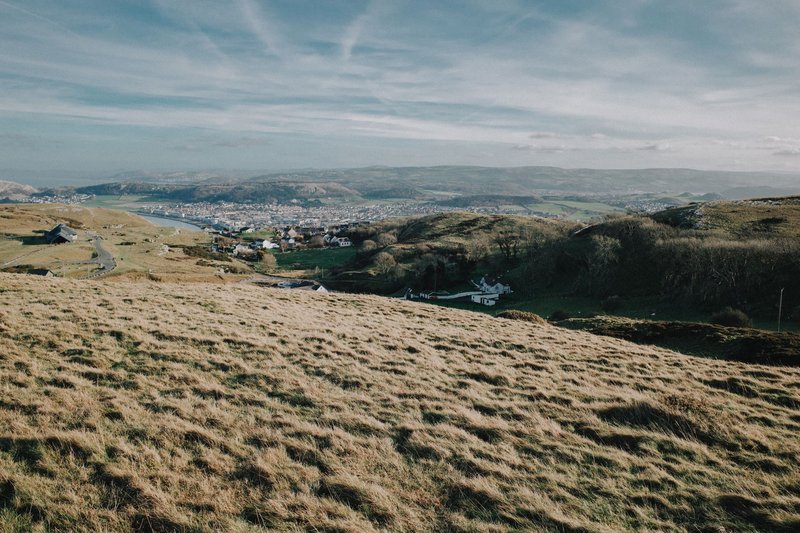
Welsh (Cymraeg) is the healthiest indigenous language in Britain by a wide margin, and it’s the only one with genuine legal parity with English inside its own nation. The Welsh Language Measure 2011 gives Welsh official status in Wales, meaning public bodies have a legal duty to offer services in both languages, not as a courtesy but as a requirement.
The 2021 census recorded 538,300 people in Wales, 17.8% of the population, who can speak Welsh — the lowest percentage ever logged, down 1.2 points from 2011. That sounds like decline, and in raw census terms it is. But the picture is more complicated than the headline number: the Annual Population Survey, using a different methodology, puts the figure at 884,000 speakers, 29.2% of the population, and Welsh-medium education has expanded steadily over the same period the census figure dropped. The Welsh government’s target is a million speakers by 2050, and the gap between the two survey methods is itself part of the current political argument about how to measure a revival in progress.
Geography matters here. In Gwynedd, in the northwest, 64.4% of people aged three and over can speak Welsh. In Anglesey it’s 55.8%. Drive south and east toward Cardiff and the number drops into single digits in places — Welsh in Wales isn’t one uniform fact, it’s a gradient.
Scottish Gaelic: The Comeback
Scottish Gaelic (Gàidhlig) has spent two centuries in freefall — from 254,415 speakers in 1891 to just 57,602 by the 2011 census — and it just posted its first increase in recorded history. Scotland’s 2022 census counted 69,701 people who can speak Gaelic, up from 57,602 in 2011, alongside another 46,404 who understand it without speaking it. That’s a 50% jump in the share of the population reporting any Gaelic skill at all, from 1.7% to 2.5%.
The growth is concentrated exactly where you’d want to see it if the revival is going to stick: school-age children. There was an 11,200 increase in Gaelic ability among those aged three to fifteen, driven by the expansion of Gaelic-medium education, which returned to Scottish schools in 1985 after being absent for more than a hundred years. BBC Alba and Gaelic-language broadcasting from the 1980s and 90s onward gave the language a public presence it had lacked since before the Highland Clearances scattered its speaker base.
Scots: The Language Nobody Agrees Is a Language
Scots occupies an odd position: linguists debate whether it’s a separate West Germanic language or a set of dialects of English, and the answer genuinely depends on which linguist you ask. Politically and culturally, Scotland treats it as a language in its own right, with its own literary tradition running from Robert Burns’s poetry through to contemporary Scots-language broadcasting. Ulster Scots, its cousin dialect spoken in parts of Northern Ireland, gets separate recognition under the same UK framework that covers Welsh, Gaelic, and Irish.
Irish: Now Official in Northern Ireland
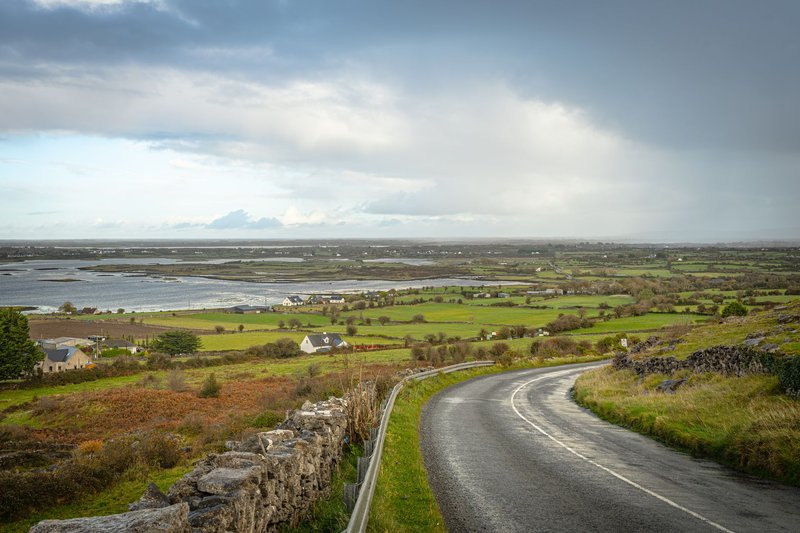
Irish just went through the single biggest legal change of any language on this list. The Identity and Language (Northern Ireland) Act 2022 received royal assent on December 6, 2022, giving Irish official recognition in Northern Ireland for the first time in its history — including the right to use it in courts, repealing a 1737 law that had banned it there.
The census numbers explain why this landed as such a milestone. Northern Ireland’s 2021 census recorded 228,600 people, 12.4% of the population, with some ability in Irish, up from 184,898 in 2011 — a jump of nearly 44,000 people in a decade. Of those, 43,557 said they speak it daily. The Act also created an Irish language commissioner and an Ulster Scots commissioner in parallel, plus an Office of Identity and Cultural Expression to hold public bodies to their obligations. In the Republic, Irish already holds status as the first official language, but its position in the North had been a live political fault line for over a century until this law passed.
Cornish: Back From Official Extinction
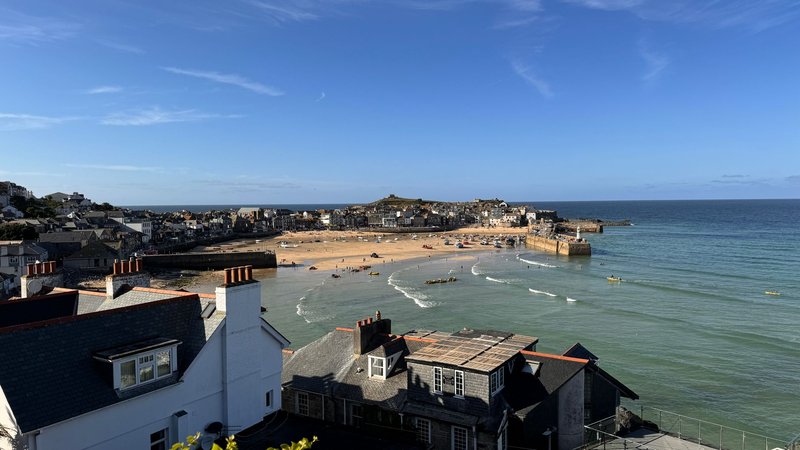
Cornish is the language on this list with the strangest resume line: UNESCO declared it extinct. The last speaker with Cornish as a first language from the traditional line, generally reckoned to be Dolly Pentreath, died in the 18th century, and the language went quiet for roughly two hundred years. A 20th-century revival movement reconstructed it from historical documents, and it’s been growing in small but real numbers ever since — enough that UNESCO’s “extinct” classification was outdated and later corrected to “critically endangered.”
The 2021 census didn’t ask a direct Cornish-language question, so the official number is soft: 471 people wrote in Cornish as their main language during a campaign encouraging exactly that, which undercounts actual ability by a wide margin since fluency estimates run into the thousands. What’s changed recently is the legal footing. Cornish was first recognized under the European Charter for Regional or Minority Languages in 2002, and in 2025 the UK government upgraded that recognition to Part III status — the Charter’s stronger protection tier, previously reserved for Welsh, Gaelic, and Irish. That’s a meaningful jump: Part III comes with specific commitments around education, media, and public administration that Part II doesn’t require.
Manx: Declared Dead, Then Un-Declared
Manx has the most dramatic near-death experience of any language here. Ned Maddrell, widely considered the last native speaker, died in 1974 on the Isle of Man. UNESCO listed Manx as extinct in 2009. Schoolchildren from Bunscoill Ghaelgagh, the island’s Manx-medium primary school, wrote in to contest the classification — and won. It was downgraded to “critically endangered” instead.
That school is the engine of the current revival. Fluent children are, in a genuine reversal of the usual direction of language transmission, teaching Manx back to their parents. The 2021 figures put roughly 2,023 people at some level of conversational ability, out of a total population of the Isle of Man around 84,000 — small, but up from a population of essentially zero fluent native speakers fifty years earlier. Learn Manx and other online platforms now offer free courses and archived recordings of the last generation of native speakers, which are the closest thing the revival has to a sound reference for pronunciation nobody living learned firsthand.
British Sign Language: Recognized, Finally
British Sign Language isn’t derived from English — it has its own grammar, syntax, and word order, closer in structure to some spoken languages than to the language it shares a name with. An estimated 87,000 people in the UK use it as their first or preferred language, with many more using it as a second language, including hearing family members of Deaf people.
Legal recognition came late: the British Sign Language Act 2022 received royal assent in April 2022, formally recognizing BSL as a language of England, Scotland, and Wales. It doesn’t cover Northern Ireland, where equality law is devolved separately and Irish Sign Language is also in use. The Act requires government departments to report periodically on how they’re promoting BSL, with the first report published in 2023 — a slower, more bureaucratic form of progress than a speaker-count graph, but progress all the same.
Angloromani and Shelta: The Travellers’ Tongues
These two get skipped by almost every “languages of the UK” list, which is a real gap given the number of speakers involved. Shelta, spoken by Irish Traveller communities, is built from Irish, Hiberno-English, and Scots vocabulary layered under English-like grammar — sometimes described as a cant or in-group code rather than a fully independent language, though its speakers and many linguists treat it as its own thing. Estimates put UK speakers around 36,000, out of roughly 90,000 worldwide.
Angloromani developed differently: it started as a dialect of Romani, the language of Romani Gypsy communities, and over generations picked up English grammar while holding on to a Romani-derived vocabulary layered into English sentence structure. Also roughly 90,000 UK speakers by common estimates. Neither language shows up in mainstream census language questions, which is part of why both are undercounted and underfunded relative to Welsh, Gaelic, or Irish — there’s no dedicated government commissioner or statutory duty attached to either.
Polari: The One That Actually Died
Polari didn’t get a revival. It’s the cautionary example on this list, the language that shows what happens without one. Built from backslang, rhyming slang, Italian, Lingua Franca, and theatrical and carnival cant, Polari became the coded vocabulary of Britain’s gay subculture through the mid-20th century, at a time when homosexuality was criminalized and a private lexicon served an obvious protective function. Words like “camp,” “drag,” “naff,” and “butch” entered mainstream English straight out of Polari.
Once homosexuality was decriminalized in England and Wales in 1967 and gay culture could exist more openly, the practical need for a coded in-group language faded, and so did active use of Polari. Cambridge University formally classified it as endangered in 2010. Unlike Cornish or Manx, there’s been no organized school-based revival — Polari survives mostly in academic study, drag performance references, and the handful of loanwords still in everyday slang.
Where the Money and the Policy Actually Go
The pattern across every revived language here is the same: government status precedes real growth, not the other way around. Welsh got statutory equality in 2011, and Welsh-medium education expanded on the back of it. Gaelic-medium schooling returned in 1985, and the 2022 census growth is concentrated exactly in the age group that’s been through it. Cornish’s 2025 upgrade to Part III Charter status obligates specific funding and institutional commitments that didn’t exist under Part II. Irish’s 2022 Act created two paid commissioner roles specifically to hold public bodies accountable.
Angloromani and Shelta are the visible counterexample: no equivalent statutory framework, no commissioner, no dedicated education stream, and correspondingly, no census data anyone can point to with confidence. Legal status isn’t a symbolic afterthought for a minority language. It’s the mechanism that funds the school, which produces the child speakers, who are the only thing that keeps a language from becoming Polari.
Where You Can Still Hear Them
If you want to hear more than a museum recording, the geography is specific. For Welsh, north and west Wales — Gwynedd and Anglesey — is where you’ll hear it as a genuine daily first language in shops and on the street, not just on signage. For Scottish Gaelic, the Outer Hebrides, particularly Lewis and Harris, remain the stronghold, alongside Gaelic-medium schools now spreading into Glasgow and Edinburgh. For Irish, west Belfast and the Donegal Gaeltacht just across the border are the reliable spots. Cornish is thinner on the ground as a spoken-in-public language, but Cornish language groups (Yeth an Werin) meet regularly in towns across Cornwall, and Cornish-medium nursery provision exists for anyone planning a longer stay. On the Isle of Man, Bunscoill Ghaelgagh and the associated youth clubs are, quite literally, where the next generation of Manx speakers is being made.
None of these are museum pieces. They’re languages with living classrooms, contested census questions, and, in Irish’s and Cornish’s case, legislation passed within the last few years. English got there first in Britain, but it was never alone.