
Search “lakes in Cambodia” and you get two kinds of results: a Wikipedia stub that names about two of them, and a dozen breathless write-ups about Tonle Sap that forget the country has any other water. Cambodia has more than one lake worth your time. It has a volcanic crater you can swim in, thousand-year-old temple reservoirs built by Khmer kings, and yes, the floating-village giant everyone photographs.
This guide covers the lakes that are actually worth the detour, with the part the other articles skip: how to get there, what it costs, and which month to show up.
Table of Contents
- Quick Comparison
- Tonle Sap: The Heart of Cambodia
- Yeak Laom: The Volcanic Crater Lake
- Srah Srang and Neak Pean: The Angkor Reservoirs
- Tonle Bati and the Secret Lake
- Which Lake Should You Visit?
Quick Comparison {#quick-comparison}
| Lake | Region | Best for | Best season | Getting there |
|---|---|---|---|---|
| Tonle Sap | Siem Reap | Floating villages, birdlife | Sep–Jan (high water) | 30–60 min from Siem Reap |
| Yeak Laom | Ratanakiri | Swimming, quiet nature | Nov–Apr (dry) | 5 km from Banlung |
| Srah Srang | Angkor, Siem Reap | Sunrise, temple history | Year-round | Inside Angkor park |
| Neak Pean | Angkor, Siem Reap | Architecture, reflection | Aug–Nov (full) | Inside Angkor park |
| Tonle Bati | Takeo | Local picnic spot, temples | Nov–Apr | 35 km south of Phnom Penh |
Tonle Sap: The Heart of Cambodia {#tonle-sap}
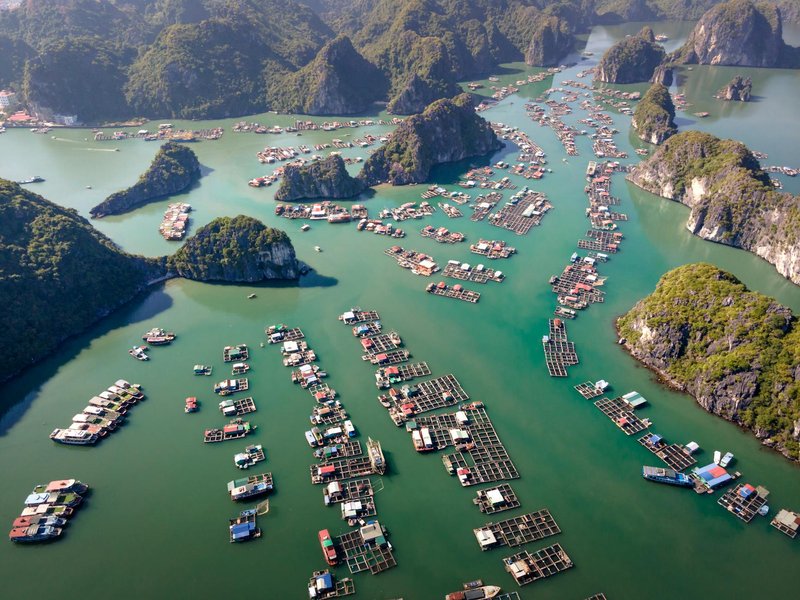
Tonle Sap is the largest freshwater lake in Southeast Asia, and it does something almost no other lake on earth does: it runs backward. During the monsoon, so much water pours down the Mekong that the Tonle Sap River reverses direction and floods the lake, which swells from roughly 2,500 square kilometers in the dry season to around 15,000 at its peak. The lake more or less quadruples in size, then drains back out when the rains stop. This pulse is what makes the Tonle Sap a UNESCO Biosphere Reserve and one of the most productive inland fisheries on the planet — it feeds a huge share of Cambodia’s protein.
What you come to see is the floating villages. Whole communities live on the water: houses on stilts that tower 6 to 8 meters above the dry-season mud, plus genuinely floating homes, schools, churches, and shops that rise and fall with the lake. The catch is that the most-touristed village, Chong Khneas, has earned a reputation for pushy boat operators and “orphanage” scams. Skip it.
Go to Kampong Phluk instead — stilt-house village, about 30 km from Siem Reap, where in high water you can paddle a small boat through a flooded mangrove forest. Or commit to Kampong Khleang, the largest of the villages and the least staged, about an hour out. For wildlife, the Prek Toal bird sanctuary on the northwest edge is one of the most important waterbird breeding grounds in Southeast Asia — pelicans, storks, and rare adjutants. Birders should aim for December to February.
Logistics. A boat tour from Siem Reap to Kampong Phluk runs roughly $18–$30 per person on a shared trip, more for a private boat. Tuk-tuk to the dock and back is another $15–$20. The single most important thing: water level dictates everything. From September through January the lake is full and the flooded forest is navigable. Come in the dry months (March–May) and the “lake tour” can mean a long boat ride down a brown channel to water that’s receded kilometers away. Plan around the season, not the calendar deal.
One sober note: Tonle Sap’s flood pulse has been weakening, partly because of upstream dams on the Mekong altering the river’s natural flow. The lake still floods — but the rhythm that sustains the fisheries is under pressure, which is one reason seeing it now, the right way, matters.
Yeak Laom: The Volcanic Crater Lake {#yeak-laom}
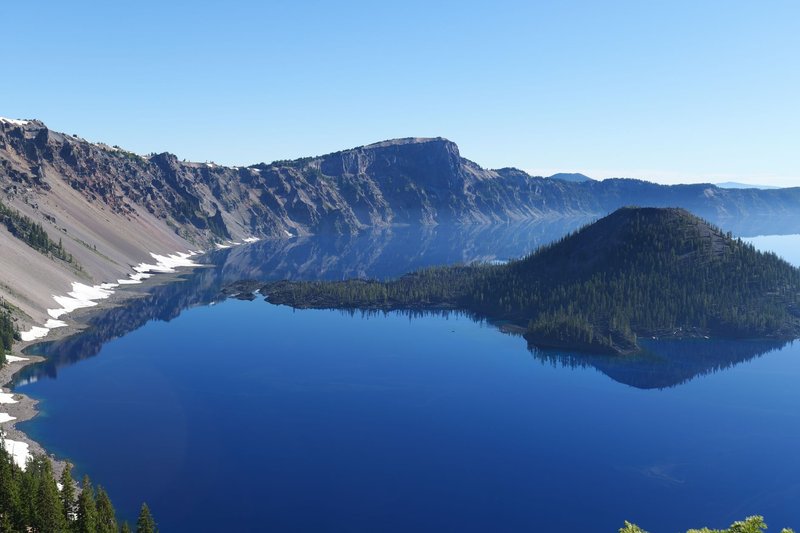
If Tonle Sap is the lake everyone photographs, Yeak Laom is the one almost nobody outside Cambodia has heard of — and it might be the most beautiful body of water in the country. It sits in Ratanakiri, the remote northeast, about 5 km from the provincial capital Banlung. The lake fills a volcanic crater roughly 700 meters across and around 50 meters deep, formed by an eruption estimated at 700,000 years ago. The water is startlingly clear and a deep emerald green, ringed by dense forest.
This is a swimming lake. There are wooden platforms and ladders built along the shoreline, the water is clean and cool, and a 2.5 km nature trail circles the rim if you’d rather walk it. The area is sacred to the Tampuan indigenous people, who manage the site, so it carries a quiet you don’t get at the temple crowds. There’s a small ethnographic museum near the entrance worth ten minutes.
Logistics. Entry is about 10,000 riel (roughly $2.50) for foreign visitors. The catch with Yeak Laom is just getting to Ratanakiri — it’s a long way from anywhere. From Phnom Penh it’s a 9-to-11-hour bus or a short domestic flight to nearby Stung Treng, then road. From Banlung itself, a tuk-tuk or motorbike covers the last 5 km easily. Come in the dry season, November to April, when the roads are passable and the swimming is best; the rainy months turn the red-dirt roads of Ratanakiri into a genuine ordeal.
Srah Srang and Neak Pean: The Angkor Reservoirs {#angkor-reservoirs}
Not every lake in Cambodia is natural. The Khmer Empire were master hydraulic engineers, and around the temples of Angkor they built enormous reservoirs — barays — that still hold water a thousand years later.
Srah Srang (“Royal Bathing Pool”) sits across the road from Banteay Kdei, a 700-by-350-meter reservoir lined with a sandstone landing platform flanked by carved lions and a naga balustrade. It dates to the 10th century and was reworked in the 12th. Most visitors mob Angkor Wat for sunrise; Srah Srang offers a quieter one, with the sun coming up over the water and far fewer tripods. It’s inside the main Angkor Archaeological Park, so an Angkor Pass covers it ($37 for one day, $62 for three).
Neak Pean is stranger and more memorable. It’s an artificial island temple set in the middle of a large square baray, with four smaller pools radiating off a central one — a hydraulic mandala meant to represent a mythical Himalayan lake believed to cure illness. You reach it on a wooden walkway across the water. When the baray is full, the reflection of the central tower in the surrounding pool is the photo. Timing matters here too: the pools are most likely to be full from roughly August through November, after the rains. Come in deep dry season and you may find them low or empty.
Tonle Bati and the Secret Lake {#tonle-bati}
For travelers based in Phnom Penh rather than Siem Reap, the lake options are closer and more local-flavored. Tonle Bati, about 35 km south in Takeo province, is a long, narrow lake that doubles as a weekend picnic spot for Cambodian families — thatched platforms over the water where you rent a spot, eat grilled fish, and laze the afternoon. Two laterite temples from the Angkor period, Ta Prohm (not the famous one) and Yeay Peau, sit right beside it, so you get history and a swim in one short trip. It’s an easy half-day by tuk-tuk or motorbike from the capital.
The “Secret Lake” (Boeng Yeak Lom is the crater above; this is a different spot near Siem Reap, properly the Western Baray area and the Kampong Kdei reservoir region) is the name local guides give to quieter man-made reservoirs that see almost no foreign traffic. They’re not destinations in their own right so much as a calm, un-touristed contrast if you’ve overdosed on temple crowds — bring your own snacks and don’t expect signage.
Which Lake Should You Visit? {#which-lake}
If you have one stop and you’re already in Siem Reap for Angkor, Tonle Sap via Kampong Phluk or Kampong Khleang is the obvious call — just go in high-water season (September–January) and skip Chong Khneas. If you want to actually swim and you’re the kind of traveler who’ll trade a long bus ride for somewhere genuinely off the trail, Yeak Laom is the best lake in the country and worth the haul to Ratanakiri. And if you’re temple-focused, Srah Srang and Neak Pean fold into your Angkor day for free.
The mistake most visitors make is assuming “lakes in Cambodia” means one lake and one boat tour. It doesn’t. Plan around water levels, pick the lake that matches what you actually want to do — float, swim, or photograph history — and you’ll see a side of the country most itineraries miss entirely.