No — Oceania has zero landlocked countries. Not one.
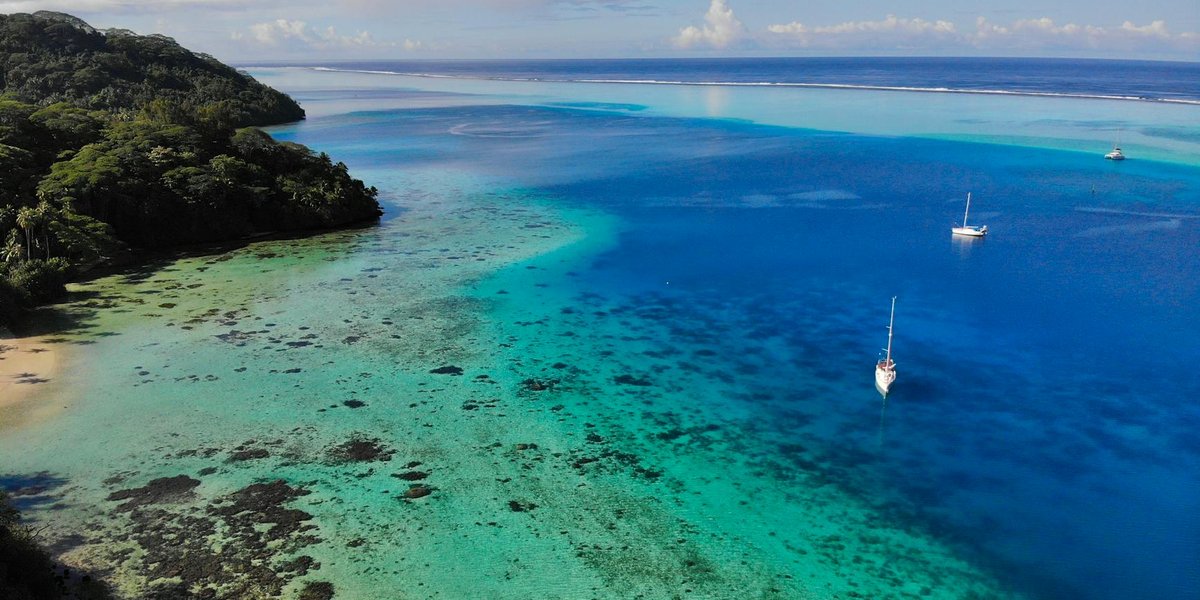
If you came here for a quick answer to settle a quiz or a bet, that’s it. Every nation in Oceania touches the sea, because Oceania is made of islands and archipelagos scattered across the Pacific. A country can’t be cut off from the ocean when it is surrounded by ocean.
But the short answer hides a more interesting question, and a couple of edge cases that trip people up. Let’s get into why this is true, where the near-misses are, and how Oceania compares to the rest of the world.
Quick answer box
- Landlocked countries in Oceania: 0
- Why: Oceania is a region of islands; every member nation has a coastline.
- Closest thing to an exception: Australia’s Capital Territory — a landlocked subnational territory, not a country.
- Continents that also have zero landlocked countries: North America and Antarctica (depending on how you count).
Table of contents
- What “landlocked” actually means
- Why Oceania can’t have a landlocked country
- The near-misses everyone asks about
- Oceania vs. Australia vs. a continent
- Which continents do have landlocked countries
- FAQ
What “landlocked” actually means
A landlocked country is a sovereign state with no direct access to the ocean. Its entire border is shared with other countries. To reach open sea, its goods and people have to cross at least one neighbor’s territory.
Two qualifiers matter here, and they’re exactly why Oceania scores a zero:
- It has to be a country — a sovereign state, not a province, region, or island within a larger nation.
- It has to have no coastline at all. A short coast still counts as having sea access. The United Nations recognizes 44 landlocked developing and developed states, and every single one of them sits inside a continental landmass with land borders on all sides.
That second point is the killer for any Pacific nation. Islands don’t have all-land borders. They have shorelines.
Why Oceania can’t have a landlocked country
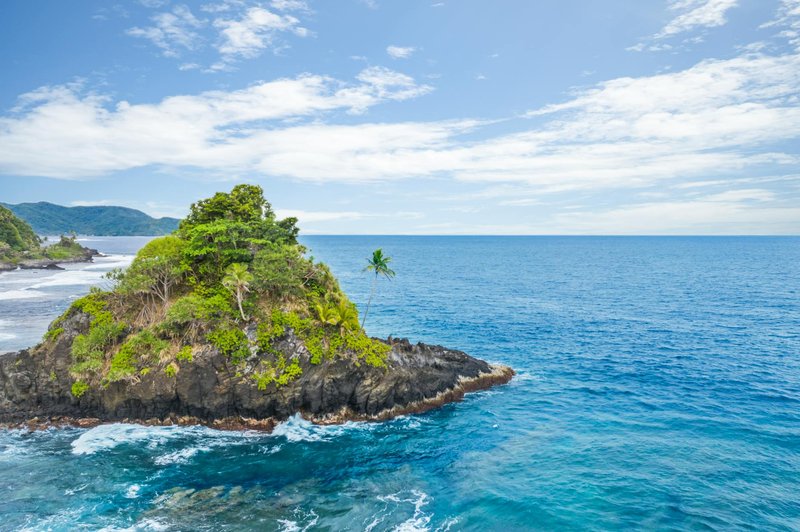
Oceania is the only major world region defined primarily by water rather than land. It covers roughly a third of the Earth’s surface, almost all of it ocean. The 14 sovereign nations in it — Australia, New Zealand, Papua New Guinea, Fiji, the Solomon Islands, Vanuatu, Samoa, Tonga, Kiribati, Tuvalu, Nauru, Palau, the Marshall Islands, and the Federated States of Micronesia — are either continental Australia or island groups.
For a landlocked country to exist, you need a country fully enclosed by other countries’ land. In Oceania, the “land” between nations isn’t land at all. It’s the Pacific. Sail from Fiji toward Tonga and you don’t cross another country’s soil — you cross open water. There’s no geographic arrangement where one Pacific state could wall off another from the sea.
Even the smallest, most isolated nations prove the rule. Nauru is a single raised coral island of about 8 square miles — the third-smallest country on Earth — and it has a coastline running its entire perimeter. Tuvalu is nine low-lying atolls, all coast, no interior to speak of. Coastline isn’t a feature these places have. It’s the whole thing. In fact, if you look at the smallest countries by area on each continent, Oceania’s tiny island nations stand out precisely because being so small leaves them nothing but coast.
The near-misses everyone asks about
Here’s where the question gets genuinely interesting, because a few things feel landlocked without being landlocked countries.
Interior Australia. Alice Springs sits roughly in the dead center of the continent, about 750 miles from the nearest coast in any direction. Stand in the Red Centre and the ocean is days away. But Australia the country has more than 16,000 miles of coastline. Being far from the sea isn’t the same as having no access to it.
The Australian Capital Territory (ACT). This is the real answer to “is anything in Oceania landlocked?” Canberra and the ACT are completely surrounded by the state of New South Wales, with no coastal access whatsoever. It is, genuinely, landlocked — but it’s a territory inside Australia, not a sovereign country. So it counts in trivia about landlocked subnational regions, never in a list of landlocked nations. (Australia did once carve out the tiny Jervis Bay Territory specifically to give the national capital a slice of coast, which tells you the landlocked status was a deliberate design quirk, not an accident.)
Fully internal Pacific nations. People sometimes assume an inland atoll or a lake-bound state must be landlocked. It isn’t. Even Kiribati, whose territory is spread across an enormous swath of ocean, is the opposite of landlocked — it’s almost entirely water, with one of the largest exclusive economic zones on the planet.
So the closest Oceania gets to “landlocked” is a national capital territory, not a country. Good enough to win a pub quiz, not enough to change the count.
Oceania vs. Australia vs. a continent
Part of the confusion comes from the messy way we label this part of the world.
“Australia” can mean the country or the continent. “Oceania” is the broader geographic region that includes the Australian continent plus the island groups of Melanesia, Micronesia, and Polynesia. And depending on which model you learned in school, you might have been taught seven continents, six, or even five — some systems use “Oceania” as a continent, others use “Australia.”
None of it changes the answer. Whether you treat Oceania as a region or a continent, the landlocked count stays at zero, because the underlying geography doesn’t move. Islands have coasts. Continental Australia has 16,000-plus miles of them. There’s no labeling convention that conjures a sea-less nation out of the Pacific.
Which continents do have landlocked countries
To put Oceania’s zero in context, here’s how the rest of the world breaks down. Of the roughly 44 landlocked states recognized worldwide, they cluster heavily in a few regions:
| Region | Landlocked countries | Examples |
|---|---|---|
| Africa | 16 | Chad, Mali, Ethiopia, Zambia, Uganda |
| Europe | 16 | Switzerland, Austria, Hungary, Serbia, Belarus |
| Asia | 12 | Mongolia, Nepal, Kazakhstan, Laos, Bhutan |
| South America | 2 | Bolivia, Paraguay |
| North America | 0 | — |
| Oceania | 0 | — |
| Antarctica | 0* | — |
*Antarctica has no countries at all, so it can’t have landlocked ones either.
Two countries earn a special footnote: there are only two doubly landlocked nations on Earth — countries surrounded entirely by other landlocked countries. Those are Liechtenstein in Europe and Uzbekistan in Central Asia. Oceania, predictably, has neither the geography nor the neighbors to ever produce one.
The pattern is clear. Landlocked countries are a feature of big continental interiors — Eurasia and Africa especially, where land stretches far enough that nations get boxed in. Regions defined by water, or by a single coast-heavy landmass, simply don’t generate them. That’s why North America (just three large, coast-having countries plus Central American and Caribbean states, all with sea access) and Oceania both sit at zero.
FAQ
Is Australia landlocked? No. Australia has one of the longest coastlines of any country in the world. Its interior is remote, but the nation has full ocean access on every side.
What’s the most landlocked place in Oceania? The Australian Capital Territory, which surrounds Canberra. It has no coastline and is enclosed entirely by New South Wales — but it’s a territory within a country, not a country itself.
Why doesn’t Oceania have any landlocked countries? Because Oceania is made of islands and one coast-heavy continent. A landlocked country needs all-land borders with other countries, and there’s no land between Pacific nations — just ocean.
Which continents have no landlocked countries? North America and Oceania. Antarctica has none because it has no countries at all.
How many landlocked countries are there in total? Around 44 worldwide, the bulk of them in Africa, Europe, and Asia. Only two — Bolivia and Paraguay — are in the Americas.