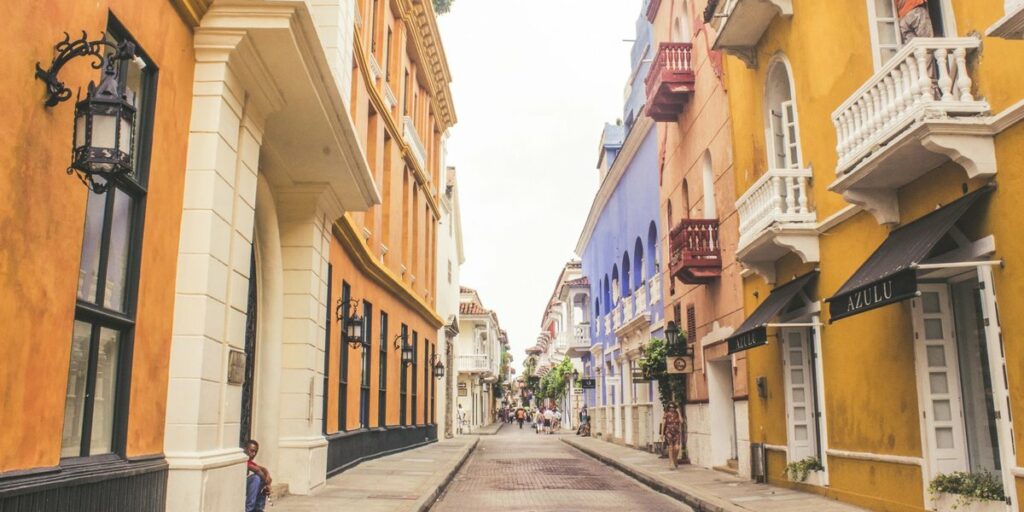
Table of Contents
- The Quick Answer
- What “Official” Actually Means Under Colombian Law
- The San Andrés Exception: English and Creole
- How Many Languages Does Colombia Actually Speak?
- Colombia’s Indigenous Languages, By the Numbers
- The Two Creole Languages: Palenquero and San Andrés–Providencia Creole
- What Co-Official Status Actually Buys You
- Colombian Spanish Isn’t One Accent
- FAQ
The Quick Answer
Spanish is Colombia’s official national language, full stop — it’s what 99.2% of the population speaks, and it’s the language of government, courts, and schools nationwide.
But it’s not the only official language. The 1991 Constitution, Article 10, also grants co-official status to the languages of ethnic groups within their own territories, and English holds a parallel status on the San Andrés, Providencia, and Santa Catalina archipelago. That’s the part most quick answers skip, and it’s where a Colombia trip — or a translation job, or a term paper — can go sideways if you assume “official” means “everywhere.”
What “Official” Actually Means Under Colombian Law
Article 10 of the constitution says it plainly: Spanish is the official language of Colombia, and the languages and dialects of ethnic groups are also official within their own territories. It’s one sentence doing a lot of work, and the distinction it draws — national versus territorial — is the whole ballgame.
Spanish is official everywhere, no boundaries attached. An indigenous language like Wayuunaiki, spoken across the Guajira peninsula, is official in Guajira and other Wayuu territories, not in Bogotá or Medellín. Step outside that territory and the language loses its official standing, even though speakers can still use it freely under separate protections (more on that below).
That’s the difference between “official” and “co-official” that most articles on this topic blur together. Spanish is official, unconditionally. Everything else — indigenous languages, Palenquero, San Andrés–Providencia Creole, English on the archipelago — is co-official, conditional on location. A third category, “recognized,” covers languages the state acknowledges and protects but doesn’t grant official status to anywhere, including Colombia’s Romani-speaking Rom (Gitano) community.
The San Andrés Exception: English and Creole
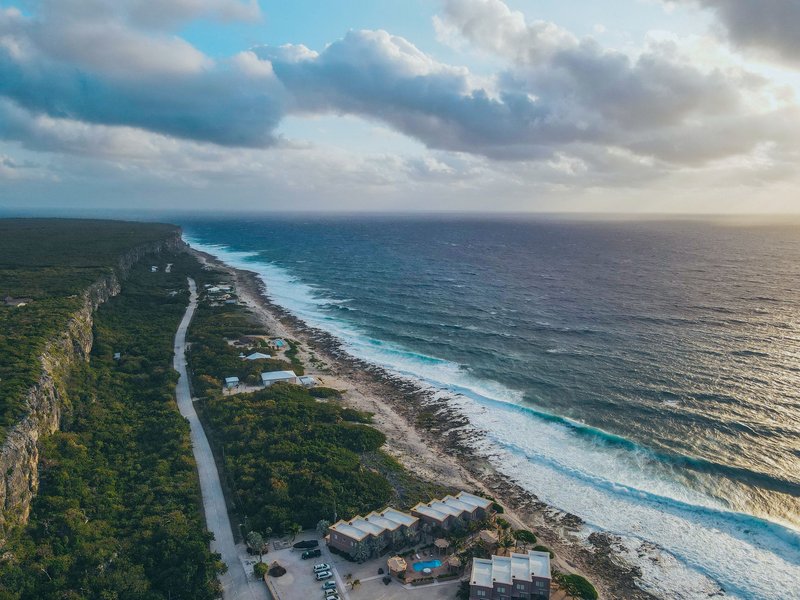
San Andrés, Providencia, and Santa Catalina sit closer to Nicaragua than to mainland Colombia, and the language on the street reflects that geography. English and San Andrés–Providencia Creole function alongside Spanish across the archipelago — a legacy of British colonization, Puritan settlement in the 1600s, and the Raizal community that has called these islands home for centuries.
This status runs through the same ethnic-territory logic as Article 10, reinforced by Article 310, which gives the archipelago department its own special administrative regime distinct from the mainland. The practical result: street signs, church services, and everyday conversation on San Andrés routinely happen in English or Creole, and Raizal schoolchildren are entitled to instruction in their own language before Spanish is layered in.
If you’re planning a trip there expecting the Spanish you picked up in Bogotá, budget for some confusion — plenty of locals will answer you in English before you’ve finished your sentence.
How Many Languages Does Colombia Actually Speak?
Sixty-five living indigenous languages, plus two creoles — Palenquero and San Andrés–Providencia Creole — plus Romani, spoken by Colombia’s Rom community. That’s the count that Colombia’s own language-protection law, Ley 1381 de 2010, works from, and it’s a more precise figure than the vague “dozens of languages” you’ll see thrown around.
More than 30 of those indigenous languages have fewer than 1,000 living speakers. Some are down to a handful of elderly speakers in a single village, which is a different kind of “official” than the numbers suggest — a language can hold full legal co-official status in its territory and still be one generation from disappearing. Colombia’s Instituto Caro y Cuervo, the government’s own linguistic research institute, tracks this decline and runs documentation and revitalization projects specifically because legal status alone doesn’t keep a language alive.
Colombia’s Indigenous Languages, By the Numbers
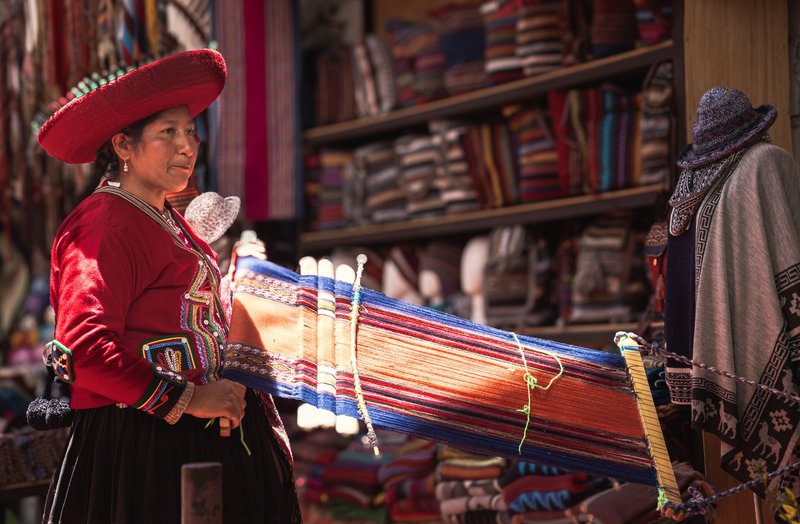
The scale here surprises people who assume “indigenous language” means one thing. It doesn’t — Colombia’s 65 languages come from distinct ethnic groups and fall into roughly a dozen language families, several of them unrelated to each other or to anything outside Colombia.
| Language | Family | Approx. Speakers | Where |
|---|---|---|---|
| Wayuunaiki | Arawakan | ~300,000 | La Guajira peninsula |
| Nasa Yuwe (Páez) | Isolate | ~200,000 | Cauca department |
| Emberá | Chocoan | ~100,000 | Chocó, Antioquia, Panama border |
| Palenquero | Spanish-based creole | ~6,600 | San Basilio de Palenque, Bolívar |
| San Andrés–Providencia Creole | English-based creole | Tens of thousands | San Andrés archipelago |
Wayuunaiki, Nasa Yuwe, and Emberá are the three with over 50,000 speakers each — everything past that top tier drops off fast, into languages spoken by a few thousand people or fewer across the Amazon and Orinoco basins. Nasa Yuwe is a language isolate, meaning linguists haven’t been able to link it conclusively to any other known language family. That alone makes it a research priority, and losing it would mean losing a linguistic lineage with no living relatives anywhere else on earth.
The Two Creole Languages: Palenquero and San Andrés–Providencia Creole
Colombia’s two creole languages didn’t emerge from the same history, and conflating them is a common mistake.
Palenquero grew out of San Basilio de Palenque, a town founded in 1604 by Benkos Biohó and a group of escaped enslaved Africans — the first free African town in the Americas, and it’s still there, about an hour southeast of Cartagena. Palenquero blends Spanish with Kikongo and other Bantu languages carried across the Atlantic, and UNESCO proclaimed the Cultural Space of Palenque de San Basilio a Masterpiece of the Oral and Intangible Heritage of Humanity in 2005. Around 6,600 people still speak it, most of them in Palenque itself and pockets of nearby Barranquilla.
San Andrés–Providencia Creole is a different animal — English-lexified rather than Spanish-lexified, spoken by the Raizal community on the archipelago, and shaped by British and Jamaican influence rather than West African languages directly. Visitors sometimes hear it and assume it’s just accented English; it’s its own language, with its own grammar, and Raizal speakers will tell you as much.
What Co-Official Status Actually Buys You
This is the part almost nobody covers, and it’s arguably more useful than the constitutional trivia. Ley 1381 de 2010 turns Article 10’s broad principle into specific, enforceable rights.
Speakers of a native language can use it in public and private without restriction, anywhere in the country — not just within their territory. Anyone who has to appear before Colombia’s judicial system has the right to do so in their own language, with a free interpreter provided by the state. Schools in communities with their own linguistic tradition are required to teach that language, not just tolerate it. And no one can be discriminated against for using, teaching, or passing on a native language.
In practice, enforcement is uneven — a right on paper and a functioning interpreter in a rural courtroom are two different things — but the legal framework is more developed than most countries manage for minority languages, and it’s a genuine point of national pride for the communities it covers.
Colombian Spanish Isn’t One Accent
Even within the 99.2% who speak Spanish, “Colombian Spanish” isn’t a single, uniform thing. Bogotá’s rolo accent is famously clear and slow, which is why language schools market the capital as an ideal place to study Spanish. Coastal Spanish around Cartagena and Barranquilla drops final consonants and moves faster, closer in rhythm to Caribbean Spanish than to the interior. Paisa Spanish, spoken around Medellín, has its own sing-song cadence and slang (parcero, qué más) that shows up constantly in Colombian music and TV. Travel from the Andes to the coast and the “same” official language can sound like two different ones.
FAQ
Is English an official language in Colombia? Not nationally. English holds co-official status specifically on the San Andrés, Providencia, and Santa Catalina archipelago, alongside Spanish and San Andrés–Providencia Creole. Outside that department, English has no official standing.
What does Article 10 of the Colombian Constitution say? That Spanish is Colombia’s official language, that the languages of ethnic groups are also official within their own territories, and that education in communities with their own linguistic tradition must be bilingual.
How many indigenous languages does Colombia have? Sixty-five living indigenous languages, according to Colombia’s Ley 1381 de 2010, plus two creole languages and Romani.
Are Palenquero and San Andrés Creole the same language? No. Palenquero is Spanish-based, spoken in San Basilio de Palenque near Cartagena. San Andrés–Providencia Creole is English-based, spoken on the San Andrés archipelago by the Raizal community. Different histories, different grammars, different roots.
Do Colombian schools teach in indigenous languages? By law, yes, in communities with their own linguistic tradition — bilingual education is a constitutional requirement, not just a policy preference, reinforced by Ley 1381 de 2010.