
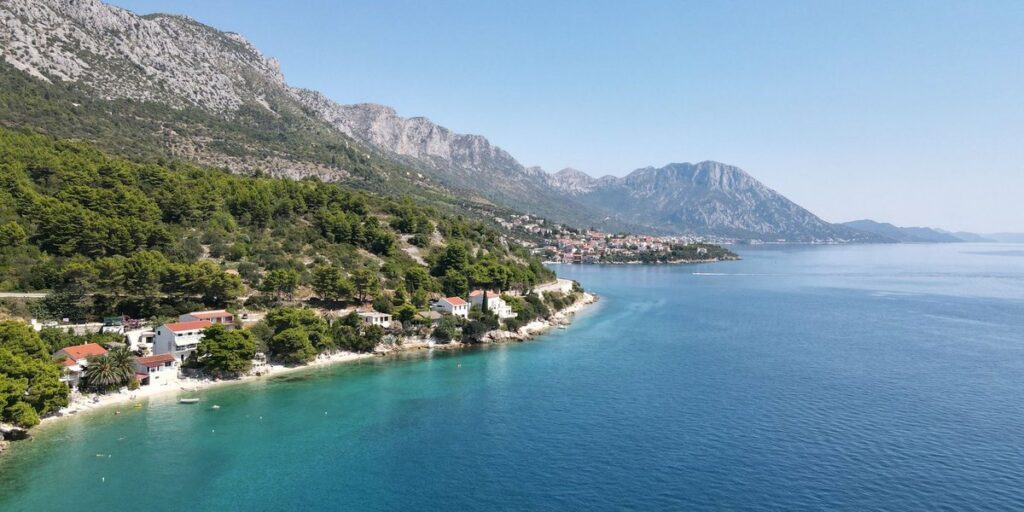
Ask “which is the richest city in Croatia” and you’ll get two completely different answers depending on what you mean by rich. If you mean which city produces the most money, it’s Zagreb, no contest — the capital alone generates around a third of the entire country’s GDP. If you mean where the wealthiest Croatians actually live and how much money sits in the average pocket, you have to leave Zagreb and head for the coast, where a handful of small Istrian and island towns quietly out-earn everyone.
Most lists pick one definition and ignore the other. The reference-style pieces dump county GDP tables on you. The real-estate listicles sell you Dubrovnik’s yacht harbor. Neither tells you that Mali Lošinj, an island town of about 6,000 people, ranks among the highest-income municipalities in the country while barely registering on a national GDP chart.
So here’s both. Each city below leads with the wealth data — GDP contribution, per-capita income, the industries behind the money — then the lifestyle texture: property prices, why the money concentrates there, what the place is actually like. The figures are in euros (Croatia dropped the kuna on January 1, 2023, so anything you read quoting kuna is at least a few years stale).
Table of Contents
- TLDR: The Short Answer
- First, a Quick Methodology Note
- 1. Zagreb — The GDP Heavyweight
- 2. Mali Lošinj — The Per-Capita Champion
- 3. Medulin — Istria’s Quiet Money
- 4. Rovinj — Istria’s Crown Jewel
- 5. Dubrovnik — The Luxury Brand
- 6. Pula — Industry Meets Tourism
- 7. Opatija — The Old-Money Riviera
- 8. Split — Dalmatia’s Engine
- 9. Poreč — Tourism Density Done Right
- 10. Umag — The Border Earner
- City vs. Municipality: Why the Rankings Confuse People
TLDR: The Short Answer
- Richest by total economic output: Zagreb. The capital produces roughly 31% of Croatia’s GDP and dwarfs every other city in raw size.
- Richest by per-capita income: small coastal and island municipalities — Mali Lošinj, Medulin, and a cluster of Istrian towns — where tourism revenue is spread across tiny populations.
- Richest in luxury and prestige: Dubrovnik and the Istrian resort towns (Rovinj, Opatija), where coastal property routinely tops €5,000–€8,000 per square meter.
The pattern is simple once you see it: Croatia’s wealth runs along the Adriatic. Tourism is the engine, and the smaller the town’s population relative to its visitor numbers, the higher its per-capita wealth climbs.
First, a Quick Methodology Note
“Richest” hides a measurement choice, and the choice changes the winner.
Total GDP measures the whole economic pie a place produces. By this metric, big cities win automatically because they have more people, more businesses, more output. Zagreb wins. This tells you where economic activity concentrates, not where rich people live.
GDP per capita and average income divide that pie by the number of residents. This is where the coast takes over. A town of 6,000 that hosts hundreds of thousands of tourists a year racks up enormous revenue per resident. By this metric, the heavy hitters are coastal Istria, the Kvarner islands, and a few Dalmatian standouts.
Both numbers are real. They just answer different questions. This list leans on per-capita wealth and income for ranking the genuinely affluent places, but Zagreb earns the top spot precisely because its sheer scale makes it impossible to leave off. The figures draw on data from Croatia’s tax authority and the Institute of Public Finance and county-level GDP from the Croatian Bureau of Statistics.
1. Zagreb — The GDP Heavyweight
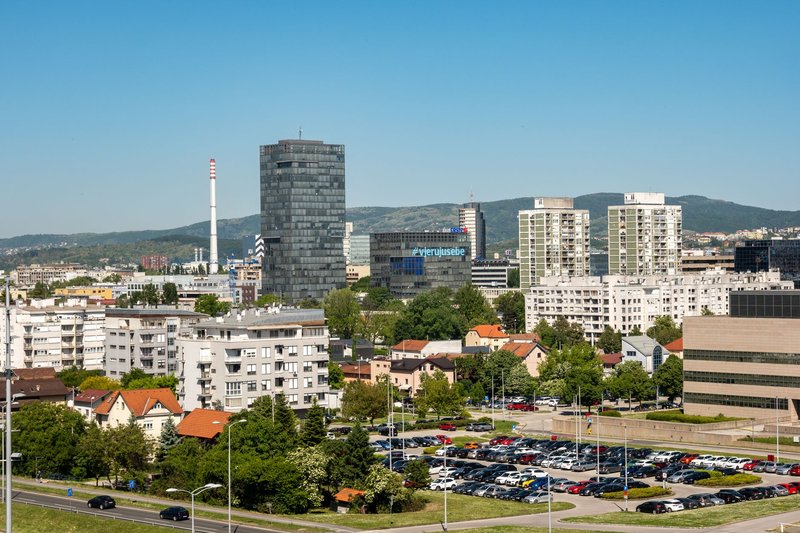
Zagreb is the richest city in Croatia by every measure that scales with size. The capital and its surrounding region generate close to a third of national GDP, and the City of Zagreb consistently posts a GDP per capita well above the national average — roughly 1.7 times the country mean in recent statistical years.
The money here isn’t tourism. It’s everything else: banking and finance headquarters, government, pharmaceuticals (Pliva, the company behind the antibiotic azithromycin, is a Zagreb institution), tech, telecoms, and the headquarters of nearly every large Croatian firm. Average net salaries in Zagreb run consistently higher than anywhere else in the country, and the city holds a disproportionate share of the nation’s highest earners.
Real estate reflects it. Prime central neighborhoods — the Lower Town, the leafy streets below Tuškanac — command prices that rival the coast, often €3,500–€5,000 per square meter and higher for renovated period apartments. Zagreb’s wealth is the boring, durable kind: salaries, corporate profit, and institutional concentration rather than seasonal tourist surges. It’s the only place on this list that’s rich in winter.
2. Mali Lošinj — The Per-Capita Champion
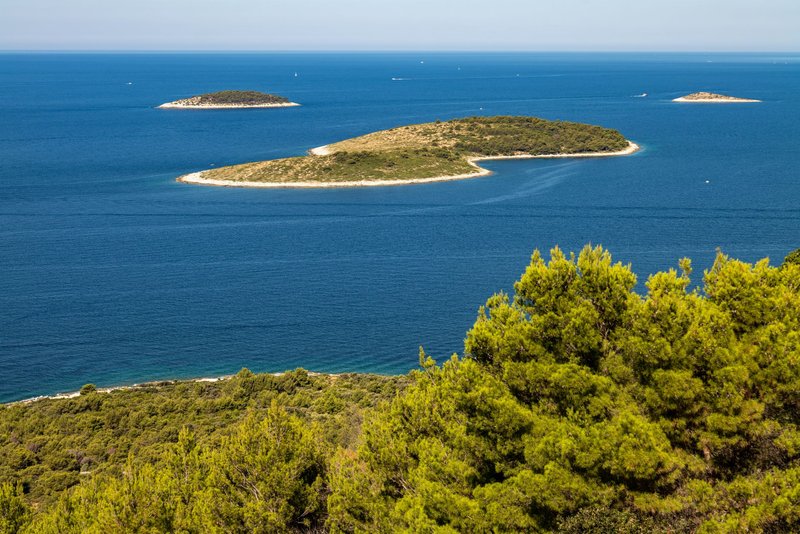
Here’s the entry that surprises people. Mali Lošinj, a town of around 6,000 on a Kvarner island, repeatedly ranks at or near the top of Croatia’s municipalities by per-capita income and tax revenue. On a national GDP chart it’s a rounding error. On a per-resident basis it’s one of the wealthiest places in the country.
The math is the whole story. Lošinj built a high-end wellness and nautical tourism economy — historic island known since Habsburg times as a “health island” for its mild climate and aromatic pine air — and layered luxury hotels and a busy marina on top. When a few thousand permanent residents capture the revenue from a season that brings vastly more visitors, the per-capita figures go vertical.
Property prices follow. Waterfront and view properties on Lošinj reach coastal-premium levels, and the island’s reputation as an exclusive, less-crowded alternative to the Dalmatian hotspots keeps demand high among Croatian and foreign buyers alike. If you define rich as “money per person,” Mali Lošinj is arguably the real answer to which is the wealthiest place in Croatia.
3. Medulin — Istria’s Quiet Money
Medulin sits at Istria’s southern tip, just below Pula, and it’s another per-capita standout that never makes the glossy listicles. The municipality has long appeared among Croatia’s highest-income local units, driven by one of the densest concentrations of tourism infrastructure in the country — campsites, resorts, and a long stretch of indented coastline packed with accommodation.
What separates Medulin is volume relative to size. The permanent population is small, but the area absorbs an enormous summer influx along its beaches and bays. That revenue, spread thin across residents, produces income figures that outpace far more famous places. There’s no single glamorous brand here, no UNESCO old town — just a highly efficient tourism machine that quietly makes its locals comparatively well-off.
For expats and buyers, Medulin offers Istria’s wealth and beach access without Rovinj’s price tag or Dubrovnik’s crowds. It’s the unglamorous, undervalued corner of the rich list.
4. Rovinj — Istria’s Crown Jewel
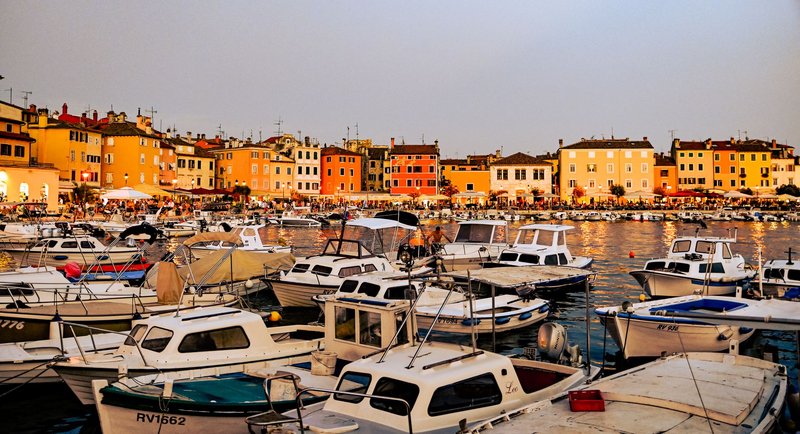
Rovinj is what people picture when they imagine luxury Croatia that isn’t Dubrovnik: a pastel old town spilling down a peninsula into the Adriatic, topped by the St. Euphemia bell tower. It’s also one of Istria’s genuine wealth centers, combining strong per-capita tourism income with the highest-end property market on the western coast.
The town anchors Croatia’s luxury hotel scene — the Maistra group’s high-end resorts here helped define five-star tourism in the country. Property prices in and around the old town are among the steepest outside Dubrovnik, with prime waterfront and historic-core apartments regularly exceeding €6,000–€8,000 per square meter.
Rovinj’s wealth is more visible than Medulin’s because it’s branded. This is where Istria’s tourism revenue meets design hotels, marina berths, and a buyer pool that includes a heavy share of Italian, Austrian, and German money — Italy is, after all, just across the water. The result is a small city that punches far above its population in both income and prestige.
5. Dubrovnik — The Luxury Brand
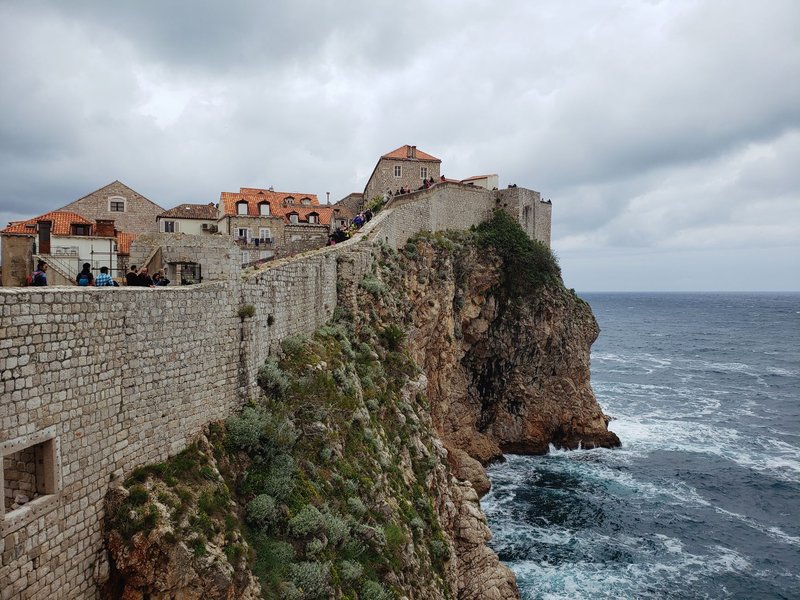
Dubrovnik is the city most foreigners assume is Croatia’s richest, and the assumption isn’t crazy — it’s just incomplete. The walled city is Croatia’s premier luxury destination and commands the country’s most expensive real estate, with old-town and sea-view properties reaching well past €8,000 per square meter and trophy villas going much higher.
The wealth is real but concentrated and seasonal. Dubrovnik’s economy is almost entirely tourism — cruise ships, luxury hotels, the Game of Thrones effect that turned the walls into a global pilgrimage site. That brings in serious money and serious property values. It also brings extreme seasonality and a high cost of living that squeezes ordinary residents, which is part of why Dubrovnik’s per-capita income, while strong, doesn’t top the smaller, more efficient coastal municipalities.
So Dubrovnik wins on prestige and property prices and loses, narrowly, on per-resident income to places you’ve never heard of. It’s the richest-looking city in Croatia, which is a different thing from the richest.
6. Pula — Industry Meets Tourism
Pula is Istria’s largest city and the rare coastal wealth center that doesn’t run on tourism alone. The city pairs a solid visitor economy with a real industrial base — its shipyard, Uljanik, was one of the oldest in the world, and despite the yard’s well-documented financial troubles in recent years, Pula retains manufacturing, a port, and a diversified economy that most resort towns lack.
That diversification matters. Pula’s per-capita figures sit below the tiny tourism-dense municipalities around it, but its economy is broader and more resilient, with year-round employment that the seasonal towns can’t match. The Roman amphitheater — one of the best-preserved in the world and still used for concerts — anchors a tourism sector that complements rather than dominates.
For someone weighing where to actually live in Istria rather than where the per-capita chart peaks, Pula offers the strongest balance: city amenities, a working economy, and coastal access, with property prices noticeably gentler than Rovinj’s.
7. Opatija — The Old-Money Riviera
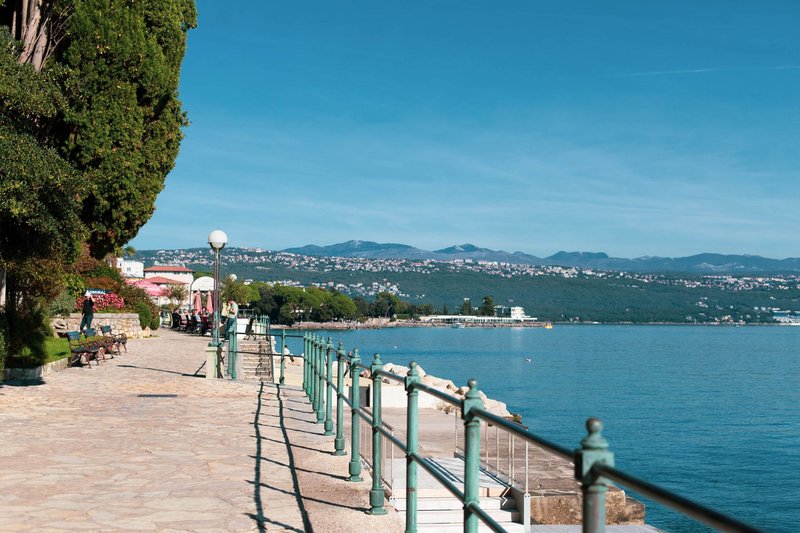
Opatija is Croatia’s original luxury resort, and it has the old-money character to prove it. Developed as an aristocratic spa town in the late 19th century under Austro-Hungarian patronage, it filled with grand Habsburg-era villas and hotels that still line the Lungomare seaside promenade. That heritage gives Opatija a kind of established wealth most of the Adriatic coast lacks.
The modern economy is high-end tourism and wellness, plus a real-estate market built on those villas. Restored period properties and sea-view apartments command premium prices, and the town’s proximity to Rijeka and the Slovenian and Italian borders keeps it within easy reach of wealthy regional buyers. Opatija’s per-capita income reflects an affluent resident base layered on top of luxury tourism revenue.
It’s not flashy in the Dubrovnik sense. The wealth here is quieter, older, and more residential — closer to a Mediterranean riviera town than a cruise-ship destination.
8. Split — Dalmatia’s Engine
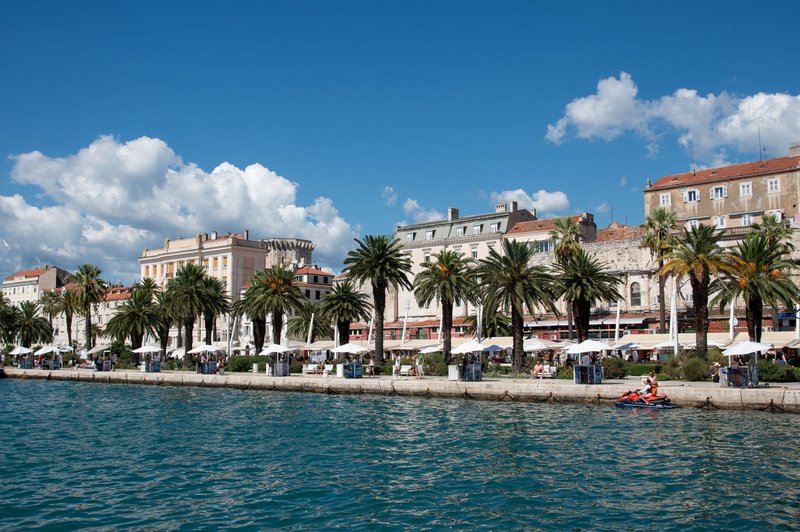
Split is Croatia’s second-largest city and the economic engine of Dalmatia, which puts it on this list for the same reason Zagreb tops it: scale. Split generates a large share of southern Croatia’s economic output through a mix of tourism, the country’s busiest passenger port, shipbuilding, and a growing service and tech sector.
On a per-capita basis Split won’t beat the small coastal municipalities — large cities rarely do, because their populations dilute the tourism revenue. But Split’s total economic weight is substantial, its salaries are among the higher coastal averages, and Diocletian’s Palace anchors a tourism economy that’s exploded over the past decade. The city has become a genuine year-round hub rather than a summer-only destination.
Property prices have risen sharply, especially near the historic core and along the Žnjan and Bačvice waterfronts, though they remain below Dubrovnik’s stratosphere. Split is rich the way a regional capital is rich: broad, diversified, and durable.
9. Poreč — Tourism Density Done Right
Poreč is one of Istria’s tourism powerhouses, regularly recording some of the highest overnight-stay numbers in all of Croatia. That density translates directly into municipal wealth — a moderate permanent population capturing the revenue from millions of annual overnight stays produces strong per-capita income figures.
The town’s UNESCO-listed Euphrasian Basilica draws cultural tourists, but Poreč’s real economic story is volume: a long, developed coastline of resorts and apartments running an efficient, large-scale operation through the warm months. It’s less exclusive than Rovinj and less famous than Dubrovnik, but its sheer tourism throughput keeps it firmly among Istria’s wealthier municipalities.
For buyers, Poreč represents the accessible end of rich Istria — coastal, prosperous, and well-served, without the luxury markups of the marquee towns.
10. Umag — The Border Earner
Umag rounds out the list as Istria’s northernmost coastal town, sitting right against the Slovenian border. Its wealth comes from a combination most of Croatia can’t replicate: heavy tourism plus an unusually strong flow of cross-border traffic and spending from nearby Slovenia, Italy, and Austria. Wealthy regional visitors and second-home owners drive both the visitor economy and the property market.
Umag is best known internationally for its ATP tennis tournament, which gives it a sporting-tourism profile beyond the standard beach economy. Its per-capita income benefits from the same structural advantage as the rest of the list — significant revenue spread across a modest resident population — with the bonus of being the first prosperous coastal town travelers from Central Europe reach when they cross into Croatia.
It’s not the richest or the most glamorous, but Umag’s position and steady cross-border money make it a consistent member of Istria’s affluent cluster.
City vs. Municipality: Why the Rankings Confuse People
If you’ve read other lists and come away confused, this is usually why. Croatia’s wealth data gets reported at two different administrative levels, and they don’t line up.
Counties (županije) are the large regional units. County-level GDP per capita is where you’ll see the City of Zagreb dominate, followed by Istria — the two consistently lead the country. This is the level Wikipedia and most GDP tables use.
Municipalities and towns (općine and gradovi) are the small local units. This is where the per-capita surprises live — where a 6,000-person island town outranks major cities, because the measurement is granular enough to isolate a single tourism-saturated place from its surroundings.
A list that says “Zagreb is richest” is talking about total output or county GDP. A list that says “Mali Lošinj is richest” is talking about municipal per-capita income. Both are correct within their frame. The mistake is treating them as the same question — they’re not, and that single distinction explains nearly every contradiction you’ll find across the articles on this topic.
The throughline holds regardless of which lens you use: outside of Zagreb’s corporate gravity, Croatian wealth is a coastal, tourism-driven phenomenon, and it concentrates most intensely in the small towns of Istria and the Kvarner islands. The richest cities in Croatia, in other words, are mostly not cities at all.