
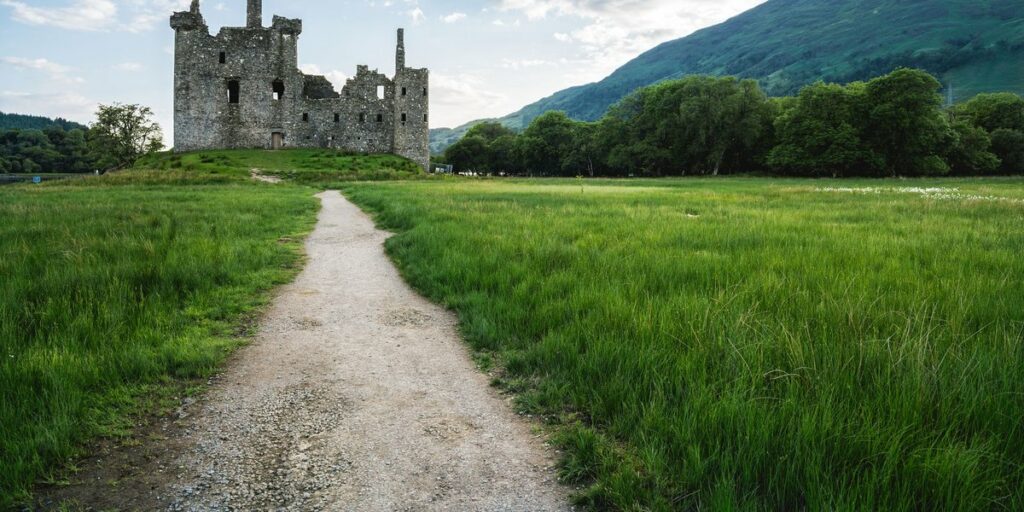
Most lists of Hungarian ruins stop at Budapest and call it a day. Aquincum, maybe the old synagogue stones, and out. But Hungary’s broken places are scattered the length of the country — Roman amphitheaters under apartment blocks, castles that the Habsburgs blew up on purpose, abbey walls standing roofless in a wheat field after eight centuries.
This is the version that gets you out of the capital. Thirteen ruins, organized roughly by era, each with the history that makes it worth the drive and the practical stuff: where it is, what it costs, whether you’ll be hiking up a hill to reach it.
Table of Contents
- The quick verdict
- Roman ruins
- Medieval castle ruins
- Religious ruins: churches and abbeys
- How to plan a ruins road trip
The quick verdict
Short on time and only want the highlights? Here’s the bottom line.
- Best near Budapest: Aquincum — a whole Roman city, reachable by suburban train (HÉV).
- Most dramatic to look at: Füzér, a castle on a volcanic crag in the far northeast.
- Most underrated: Zsámbék, a half-collapsed monastery church that an earthquake split down the middle in 1763.
- Best for a sunset photo: Sümeg or Csesznek, both hilltop castles that catch the evening light.
- Best free option: Most abbey and church ruins (Zsámbék, Somogyvár) are open-air and cost little or nothing.
Now the full list.
Roman ruins
Before Hungary was Hungary, the western half was the Roman province of Pannonia. The Danube was the empire’s northern frontier, so the Romans built fortified towns and military camps along it. Their stonework is the oldest you’ll find standing here.
1. Aquincum (Budapest)
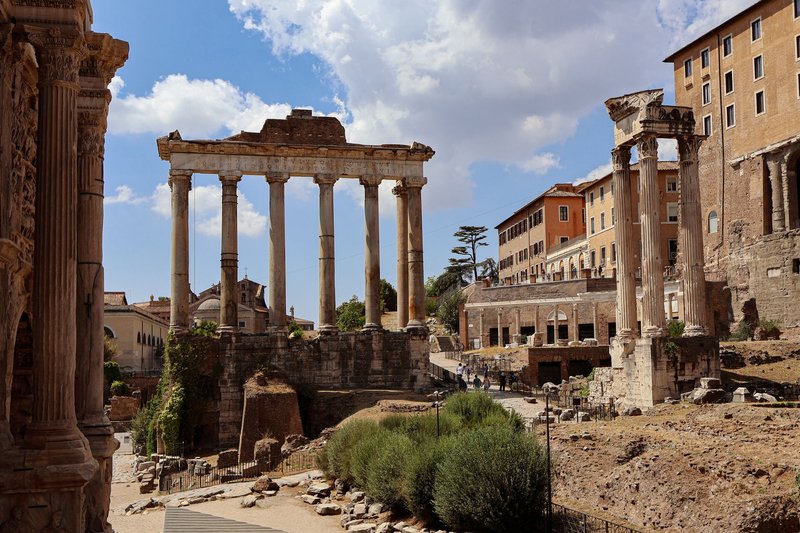
The big one. Aquincum was the capital of Pannonia Inferior, a city of around 30,000 people by the 2nd century AD, sitting in what’s now the Óbuda district of Budapest. You walk among the foundations of a forum, public baths, a marketplace, and dozens of houses, with the street grid still legible underfoot.
The standout artifact is a reconstructed Roman water organ (a hydraulis) — the museum holds the bronze remains of a real one found on site, one of the most complete ever recovered. There’s also a separate military amphitheater a couple of stops away that’s free to wander.
Location: Óbuda, northern Budapest. Getting there: Take the HÉV suburban train (H5 line) from Batthyány tér to the Aquincum stop — the entrance is right there. Hours & cost: Open-air ruins and museum, modest entry fee; closed Mondays and over winter. Budget two hours.
2. Savaria (Szombathely)
Savaria, in the western city of Szombathely near the Austrian border, was founded under Emperor Claudius and became one of Pannonia’s most important towns. The Iseum — a reconstructed sanctuary to the Egyptian goddess Isis — is the showpiece, but the ruin garden also preserves a stretch of the original Roman road, the Amber Road that ran from the Baltic to the Adriatic.
The stones you see are genuine; the rebuilt temple facade above them is modern reconstruction, which is worth knowing so you can tell old from new. Szombathely also claims to be the birthplace of Saint Martin of Tours, born here in 316 AD.
Location: Szombathely city center. Getting there: Direct trains from Budapest (around 2.5 hours) and easy from Vienna or Graz. Hours & cost: The Iseum is a ticketed museum; the open ruin garden nearby is free.
3. Gorsium (Tác)
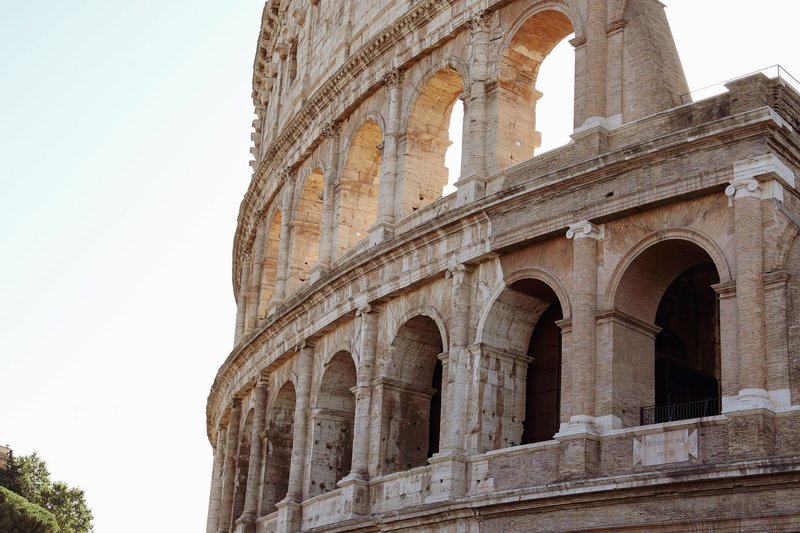
Quieter and far less visited, Gorsium sits in the open countryside near Tác in Fejér County. It was a religious and administrative center, and because no modern town was ever built on top of it, the archaeological park sprawls freely — you get a sense of scale that’s impossible in a city like Budapest. Foundations of basilicas, an early Christian cemetery, and the forum spread across a green field.
It’s the place to go if you want ruins without crowds. Time your visit for one of the summer Roman festivals, when reenactors stage legionary drills on the original ground.
Location: Tác, about 80 km southwest of Budapest. Getting there: Easiest by car; the site is rural and public transport is sparse. Hours & cost: Open-air park, low entry fee, seasonal hours.
Medieval castle ruins
Hungary was once dense with stone castles. Then came the Ottomans, sieges, and — the final blow — the Habsburgs, who systematically demolished hilltop fortresses in the late 1600s and early 1700s so rebel nobles couldn’t use them. That’s why so many Hungarian castles are ruins rather than intact palaces. The demolition was policy, not neglect.
4. Füzér
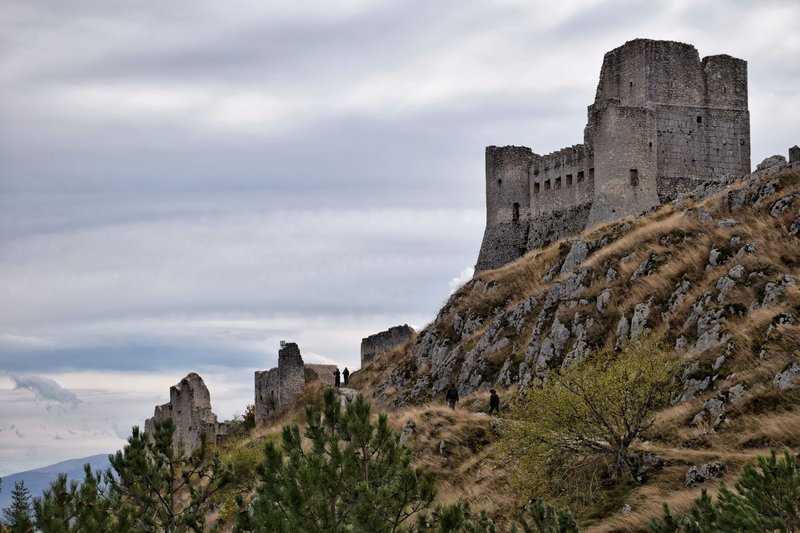
Füzér is the postcard. It crowns a lone volcanic plug in the Zemplén hills of the far northeast, the walls following the contours of the rock so closely that castle and crag look like one object. It’s famous for a specific reason: after the Battle of Mohács in 1526, the Holy Crown of Hungary — the actual coronation crown — was hidden here for safekeeping. There’s a chapel built into the summit rock and reconstructed timber buildings that show how the place functioned.
The climb from the village is short but steep, maybe 20 minutes on a marked path. The view over the Zemplén forest from the top is the payoff.
Location: Füzér village, Borsod-Abaúj-Zemplén County, near the Slovak border. Getting there: Car strongly recommended; it’s about 3.5 hours from Budapest. Hours & cost: Ticketed, seasonal opening, closed in deep winter.
5. Sümeg
Sümeg, near Lake Balaton’s western end, is one of the best-preserved castle ruins in the country — preserved enough that it hosts costumed medieval tournaments and horse shows in the courtyard through summer. It sits on a white limestone hill that’s visible for miles. Unlike the Habsburg-demolished fortresses, Sümeg survived largely because it surrendered without a destructive siege.
Go for the views back toward Balaton and time it for sunset if you can; the limestone glows.
Location: Sümeg, Veszprém County. Getting there: Reachable by train and bus from the Balaton resort towns; car is simpler. Hours & cost: Ticketed, with extra charges for the tournament shows.
6. Csesznek
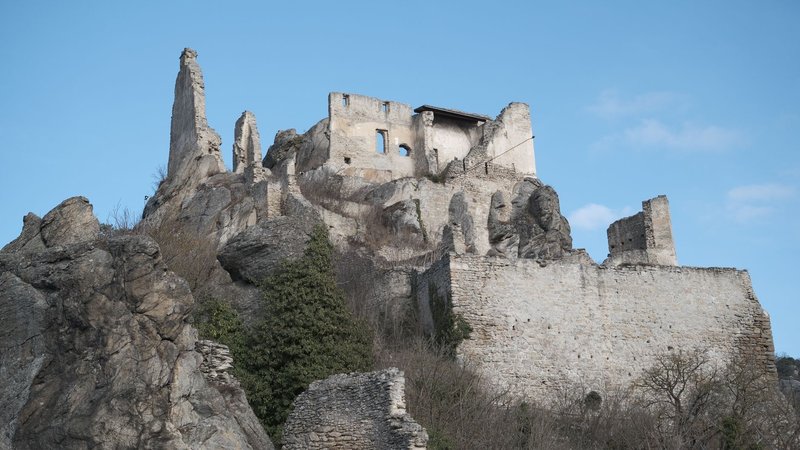
Csesznek perches on a cliff in the Bakony forest, a romantic shell of a castle that earthquakes and fire reduced over the centuries. It’s smaller and rawer than Sümeg — fewer reconstructions, more genuine ruin — which is exactly the appeal for some visitors. The Bakony hills around it are laced with hiking trails, so it doubles as a trailhead.
Location: Csesznek village, Veszprém County, in the Bakony. Getting there: Best by car; the village is small. Hours & cost: Low entry fee, open-air, seasonal.
7. Boldogkő
Boldogkő (the name means “happy stone”) sits on a rocky ridge in the Zemplén region, not far from Füzér. The poet Sándor Petőfi reportedly wrote here, and the castle’s narrow profile along the rock spine gives it one of the more photogenic silhouettes in northern Hungary. The interior has been restored enough to walk through comfortably, with exhibits on castle life.
Location: Boldogkőváralja, Borsod-Abaúj-Zemplén County. Getting there: Car recommended; combine with Füzér on a Zemplén loop. Hours & cost: Ticketed, seasonal.
8. Buják
Buják is the small, off-the-radar option — a modest hilltop castle ruin in Nógrád County, north of Budapest, in the Cserhát hills. It won’t take you long to explore, and that’s the point: it’s the kind of place you have largely to yourself, with a view over a quiet rural valley. Pair it with the nearby Hollókő, a UNESCO-listed traditional village, for a full day.
Location: Buják, Nógrád County. Getting there: Car; the Cserhát is rural. Hours & cost: Free or very low cost, open-air.
9. Visegrád
Visegrád guards a dramatic bend in the Danube an hour north of Budapest, and it’s really two things: the lower Solomon’s Tower and the citadel high on the hill above. In the 14th century this was a royal seat, and the Renaissance palace below the hill was one of the grandest in Europe. The upper citadel is a partial ruin with some of the best river views in the country — you can see the Danube curve toward the Danube Bend region, with Slovakia on the far bank.
Location: Visegrád, Pest County, on the Danube Bend. Getting there: Easy day trip from Budapest by bus, or boat in summer. A road and a steep trail both reach the citadel. Hours & cost: Ticketed; the citadel and the palace below are separate sites.
Religious ruins: churches and abbeys
These are the most haunting ruins in Hungary — roofless naves, broken arches, monastery walls open to the sky. Most were wrecked during the Ottoman wars or abandoned afterward, and many are free to visit.
10. Zsámbék
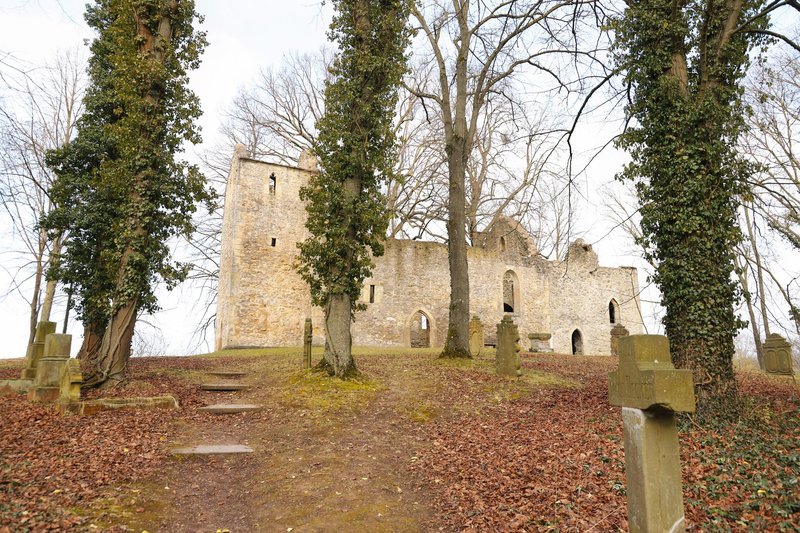
If you see one ruin on this list, make it Zsámbék. The Premonstratensian monastery church, built in the early 1200s, stands just west of Budapest as a tall skeleton of pale stone — twin towers, a rose window, and a nave open to the weather. A major earthquake in 1763 split the structure, and rather than rebuild it, locals left it standing as it fell. The result is one of the most striking Romanesque-Gothic ruins in Central Europe, and it photographs beautifully against an evening sky.
Location: Zsámbék, about 33 km west of Budapest. Getting there: Buses run from Budapest’s Széll Kálmán tér; under an hour by car. Hours & cost: Small entry fee, open-air, seasonal hours.
11. Somogyvár Abbey (Saint Aegidius)
Somogyvár, southwest of Lake Balaton, holds the foundation ruins of the Benedictine Abbey of Saint Aegidius, founded by King Saint Ladislaus around 1091. This was a pilgrimage center with French monks, and Ladislaus was originally buried here before his remains were moved. Today it’s a tranquil archaeological park on a hill — low walls, the abbey’s footprint, and a strong sense of how old Hungarian Christianity really is.
Location: Somogyvár, Somogy County. Getting there: Car; it’s rural, south of Balaton. Hours & cost: Low cost or free, open-air.
12. Pilis Abbey (Pilisszentkereszt)
Hidden in the forested Pilis hills north of Budapest are the excavated ruins of a Cistercian abbey founded in 1184. It was once one of the most important monasteries in the kingdom, and a queen of Hungary, Gertrude of Merania, was buried here after her assassination in 1213 — a murder that later became the subject of one of Hungary’s most famous plays. The site is low ruins in a clearing, best reached on foot, which makes it as much a forest walk as a historical visit.
Location: Pilisszentkereszt, in the Pilis hills. Getting there: Bus from Budapest plus a walk, or car and a short hike. Hours & cost: Free, open-air.
13. Pauline Monastery, Budapest (Gellért Hill / cave church area)
To end back where most lists start, but with the road less traveled: the ruins and remnants of medieval monastic and church sites scattered across Buda. The Pauline order — the only religious order Hungary itself founded — left traces around the capital, and fragments of medieval Buda’s churches survive among later buildings. It’s a reminder that Budapest’s ruins aren’t only Roman; the medieval layer is here too, if you know where to look. If you want to keep exploring that medieval layer, it’s worth digging into the country’s wider historical places in Hungary beyond Budapest’s castle, where the same broken stones tell the story outside the capital.
Location: Buda side of Budapest. Getting there: On foot within the city. Hours & cost: Varies; many fragments are free and outdoors.
How to plan a ruins road trip
A car changes everything for this list. Aquincum, Visegrád, and Zsámbék are all doable by public transport from Budapest, but the best castle ruins — Füzér, Boldogkő, Sümeg, Csesznek — sit on hilltops in rural counties where buses run a few times a day, if at all.
Two loops make geographic sense. A northeast loop through the Zemplén hills links Füzér and Boldogkő with the wine town of Tokaj. A Transdanubian loop west and south of Lake Balaton strings together Sümeg, Csesznek, Somogyvár, and Savaria in Szombathely.
A few practical notes. Most castle and abbey ruins are seasonal — many close or cut hours from November through March, and the hilltop ones are genuinely unpleasant in ice. Wear real shoes; “ruin” here often means an uneven climb up volcanic rock. And check festival calendars before you go: Sümeg’s tournaments and Gorsium’s Roman reenactments turn a quiet ruin into a full afternoon. For opening times and any closures, the Hungarian tourism board’s official site is the place to confirm before you drive three hours into the Zemplén.
The ruins reward the effort. A roofless abbey in a wheat field tells you more about a thousand years of Hungarian history than any intact palace — because you can see exactly where the story broke.