Everyone tells you to see Petra. They’re right. But Petra is one ruin in a country stacked with them, and most “ruins in Jordan” lists stop at the Treasury and call it a day.
Jordan sits on a crossroads that Nabataeans, Romans, Byzantines, and Umayyad caliphs all fought to control, and each left buildings behind. Some of those buildings are still standing in fields where you’ll be the only person there. This is a guide to the eleven sites worth the detour, with what each one costs, how long to give it, and whether the Jordan Pass actually saves you money (spoiler: it almost certainly does).
Table of Contents
- Is the Jordan Pass worth it?
- How much time do you need?
- Comparison table
- 1. Petra
- 2. Jerash
- 3. Amman Citadel
- 4. Roman Theater, Amman
- 5. Umm Qais (Gadara)
- 6. Pella
- 7. Umm er-Rasas
- 8. Qasr Al-Abd (Iraq Al-Amir)
- 9. The Desert Castles
- 10. Ajloun Castle
- 11. Madaba and Mount Nebo
Is the Jordan Pass worth it?
Buy it before you go. The math isn’t close.
The Jordan Pass waives the 40 JOD tourist visa fee and bundles entry to over 40 sites, including Petra. The cheapest tier (the Jordan Wanderer, 70 JOD) covers a single day at Petra. Petra alone is 50 JOD for a one-day ticket if you buy it separately, and the visa is another 40. So before you’ve entered a single other site, the pass has paid for itself by 20 JOD.
One catch that trips people up: to get the visa waiver, you have to stay in Jordan at least three nights. Buy the pass, screenshot the QR code, and you’ll skip the visa line at the airport and the ticket window at every site it covers. Jerash, Umm Qais, the Amman Citadel, the desert castles, Ajloun — all included. The handful of sites below that aren’t covered are cheap or free anyway.
How much time do you need?
- 3 days: Petra (a full day), Jerash, and the Amman Citadel plus the Roman Theater. That’s the greatest-hits version and it’s genuinely great.
- 5 days: Add Umm Qais and the desert castle loop east of Amman. Now you’ve seen a Decapolis city with a view into three countries and some of the strangest art in the Middle East.
- 7 days: Add Pella, Umm er-Rasas, Madaba and Mount Nebo, and Ajloun. At this point you’ve covered Nabataean, Roman, Byzantine, and Umayyad Jordan, and you’ve earned the right to be smug about it.
Comparison table
| Site | Era | Entry fee | On Jordan Pass? | Time needed | Crowds |
|---|---|---|---|---|---|
| Petra | Nabataean | 50 JOD | Yes | Full day | Heavy |
| Jerash | Roman | 12 JOD | Yes | Half day | Moderate |
| Amman Citadel | Roman/Umayyad | 3 JOD | Yes | 1–2 hrs | Moderate |
| Roman Theater | Roman | 2 JOD | Yes | 1 hr | Light |
| Umm Qais | Roman | 5 JOD | Yes | 2–3 hrs | Light |
| Pella | Roman/Byzantine | 3 JOD | Yes | 1–2 hrs | Very light |
| Umm er-Rasas | Byzantine | 1 JOD | Yes | 1 hr | Very light |
| Qasr Al-Abd | Hellenistic | Free | n/a | 45 min | Very light |
| Desert castles | Umayyad | 0.5–3 JOD each | Yes | Half day loop | Light |
| Ajloun Castle | Ayyubid | 3 JOD | Yes | 1 hr | Light |
| Mount Nebo | Byzantine | 2 JOD | No | 1 hr | Moderate |
1. Petra
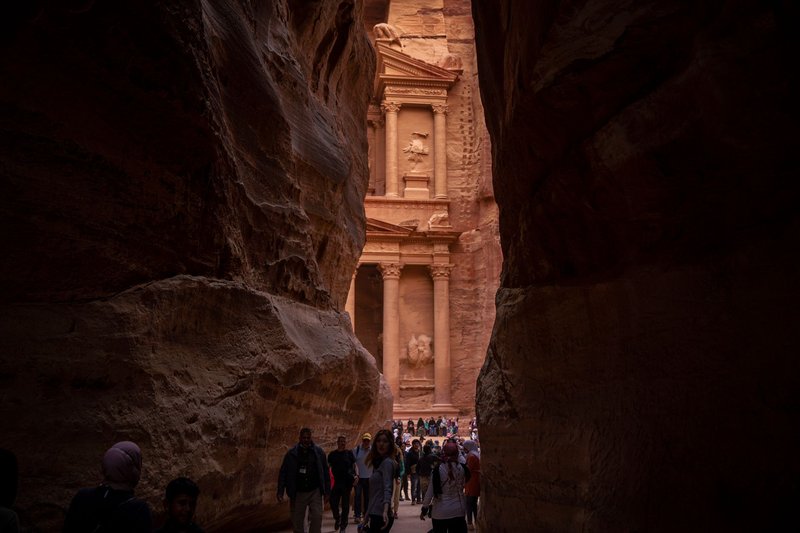
Yes, it’s on every list. It earns it.
The thing nobody tells you is that the Treasury — the rose-colored facade you’ve seen a thousand times — is the first major monument, about a 1.2-kilometer walk through the Siq. People take their photo there and turn around. Don’t. The Monastery (Ad-Deir) is another hour’s climb, 800-odd steps up, and it’s bigger than the Treasury with a fraction of the crowd. The Nabataeans carved all of this from sandstone around the first century BCE, when Petra was the caravan capital controlling the incense trade between Arabia and the Mediterranean. It was Jordan’s first UNESCO World Heritage Site, and it’s far from the only one — the country has seven inscribed sites, several of which turn up further down this list.
Go at opening (6 a.m.) or you’ll fight the tour-bus wave that hits around 9. Give it the full day. Wear real shoes — the “trail” to the High Place of Sacrifice is a rocky scramble, not a stroll. It’s roughly a three-hour drive south of Amman, so most people base in Wadi Musa, the town at the gate.
2. Jerash
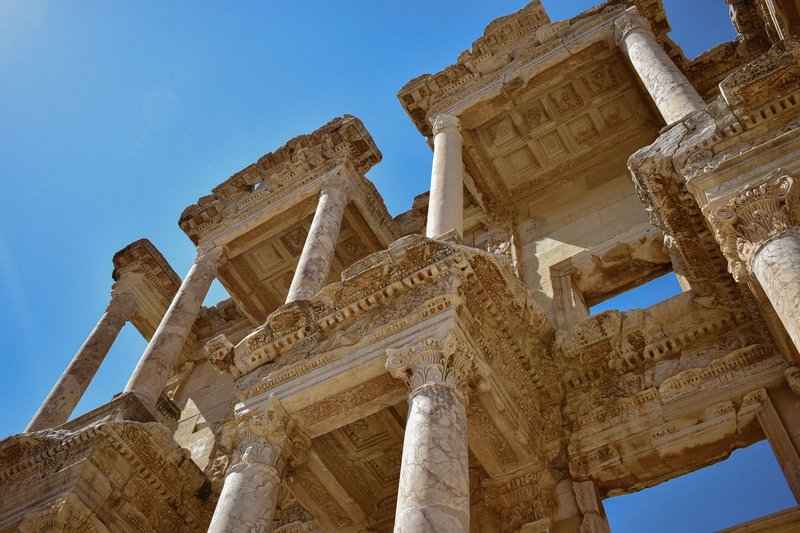
If you only have time for one Roman site, make it this one. Jerash is one of the best-preserved provincial Roman cities anywhere, and “provincial” undersells it.
You enter through Hadrian’s Arch, built for the emperor’s visit in 129 CE, and then hit the Oval Plaza — a wide colonnaded forum ringed by 56 Ionic columns, shaped like a stretched oval that’s genuinely unusual in Roman planning. Walk the Cardo Maximus, the main street, and you can still see the ruts cut by chariot wheels in the paving stones. The South Theater seats 3,000 and the acoustics are so sharp that a coin dropped at the center stage is audible in the back row; there’s usually a bagpipe-playing local who’ll demonstrate (Jordan’s bagpipe tradition is a leftover from the British Mandate, which is its own rabbit hole).
It’s about 50 km north of Amman, an hour by car or service taxi. Give it a half day, and go in the morning before the heat settles into the open stone.
3. Amman Citadel
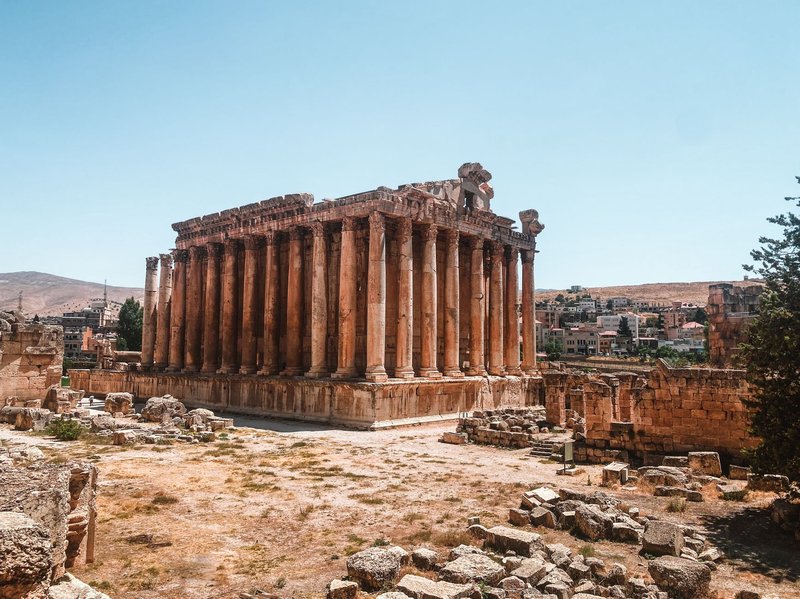
The Citadel (Jabal al-Qal’a) sits on the highest hill in downtown Amman, and it’s a layer cake of empires on a single site. Bronze Age walls, a Roman Temple of Hercules, a Byzantine church, and an Umayyad palace complex all share the same plateau.
The standout is the Temple of Hercules. Only a few columns and a partial podium survive, but next to them lie the remains of a colossal marble statue — a hand and an elbow are all that’s left, and from their scale archaeologists estimate the full figure stood over 12 meters. The Umayyad Palace behind it has a reconstructed domed audience hall that gives you a real sense of eighth-century Islamic architecture.
Best of all is the view: you’re looking straight down into the Roman Theater carved into the opposite hillside, with the white city sprawling in every direction. Come late afternoon for the light. Entry is 3 JOD, an hour or two is plenty.
4. Roman Theater, Amman
Down the hill from the Citadel, the Roman Theater is cut into the north side of a hill so it stays shaded in the afternoon — deliberate, on the part of second-century engineers who knew exactly what they were doing with the sun. It seats 6,000 and still hosts concerts and events.
Two small museums flank the stage: the Jordan Folklore Museum and the Museum of Popular Traditions, both worth the ten minutes if you want costumes, mosaics, and old Bedouin jewelry. Climb to the top row for the photo back toward the Citadel. It’s 2 JOD, an hour, and it’s a five-minute walk from the downtown souks, so pair it with lunch.
5. Umm Qais (Gadara)
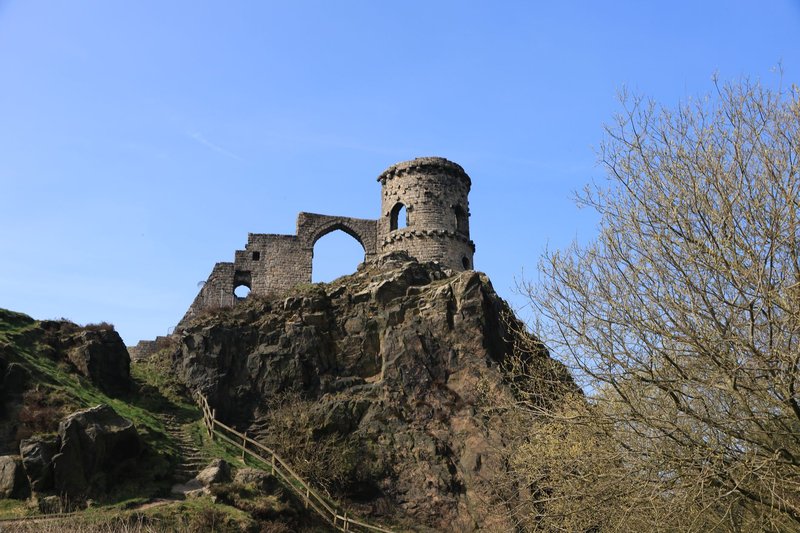
This is the one to add the moment you have more than three days. Umm Qais is the ancient Decapolis city of Gadara, perched on a plateau in Jordan’s far northwest, and from the edge you can see the Sea of Galilee, the Golan Heights, and on a clear day the hills of southern Lebanon. Three borders in one panorama. The land across the water is just as layered — Israel’s own roster of World Heritage ruins begins not far from that shoreline.
The ruins themselves are built from black basalt instead of the usual pale limestone, which gives the place a moody, almost gothic look — a colonnaded street, a basilica terrace, and a theater all in dark stone. Gadara was a center of Greco-Roman philosophy; the satirist Menippus and the poet Meleager both came from here, which is why locals sometimes call it the “city of poets.”
There’s an Ottoman-era village layered on top, and the old rest house terrace is one of the great sunset spots in Jordan. It’s about a two-hour drive north of Amman, near the town of Umm Qais. Give it two to three hours, and time it for late afternoon.
6. Pella
You will likely have Pella (Tabaqat Fahl) almost to yourself, which is the appeal. It’s another Decapolis city, down in the Jordan Valley, and it’s one of the longest continuously occupied sites in the country — there’s evidence of settlement stretching back more than 6,000 years, through Bronze Age, Greek, Roman, Byzantine, and early Islamic phases.
Don’t expect Jerash-level reconstruction. Pella is rawer: a Byzantine basilica, a small Roman odeon, Bronze Age temple foundations, and tells (occupation mounds) scattered across a green valley with a spring still running through it. It rewards people who like to read a landscape rather than be handed one. It’s roughly 1.5 to 2 hours from Amman, often combined with Umm Qais since they’re in the same corner of the country. An hour or two does it.
7. Umm er-Rasas
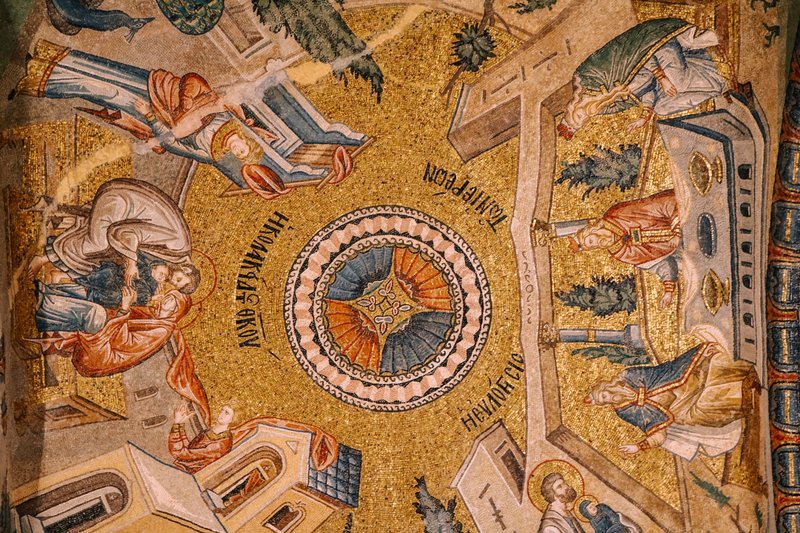
A UNESCO World Heritage Site that most visitors never reach, Umm er-Rasas is about an hour south of Amman off the King’s Highway. The draw is the floor of the Church of Saint Stephen, a Byzantine mosaic completed in 785 CE that’s one of the largest and best-preserved in Jordan.
What makes it special is the border: a frame of detailed vignettes depicting fifteen major cities of the Holy Land — Jerusalem, Madaba, Gaza, and others — each labeled, making the floor a kind of geographic record as much as a decoration. Next to it stands a 15-meter stone tower with no door and no internal stairs, believed to be a stylite tower where a hermit monk lived on top in isolation. There’s not much signage and few crowds, so it helps to read up first. Entry is a single dinar; give it an hour.
8. Qasr Al-Abd (Iraq Al-Amir)
This one’s a curiosity, and it’s free. Qasr Al-Abd (“Castle of the Servant”) sits in a green valley about 25 km west of Amman, and it’s a rare survivor: a Hellenistic palace from around 200 BCE, built by a member of the powerful Tobiad family.
The blocks are enormous — some of the largest stones used in any structure in the Levant — and the facade still carries carved lions and an eagle. It was likely never finished, possibly abandoned after its builder’s death, which is why it has a slightly unresolved, what-if quality. It’s small, you’ll spend 45 minutes, but the drive through the village of Iraq Al-Amir and its old caves is half the reason to go.
9. The Desert Castles
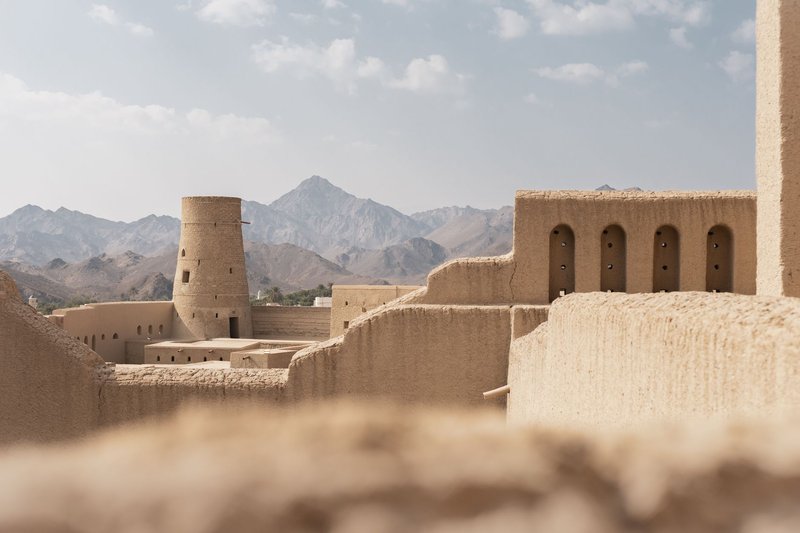
East of Amman, out toward the Saudi and Iraqi borders, a scatter of eighth-century Umayyad complexes sit in the basalt desert. You can loop the main three in a half day by car. They’re often called “castles,” but they were really hunting lodges, caravan stops, and pleasure retreats for the early Islamic elite.
The highlight is Qusayr Amra, a UNESCO site and a small bathhouse covered floor-to-ceiling in frescoes — dancing figures, hunting scenes, a domed ceiling painted with the zodiac that’s one of the earliest known representations of the night sky on a solid surface. It’s startling, because figurative painting like this is rare in early Islamic art. Nearby, Qasr Kharana looks like a fortress but has no defensive purpose anyone can agree on, and Qasr Azraq is the black basalt fort where T. E. Lawrence (Lawrence of Arabia) wintered in 1917 during the Arab Revolt. Rent a car or hire a driver for the day; there’s no practical public transport out here.
10. Ajloun Castle
A change of era and a change of side. Ajloun (Qal’at ar-Rabad) is a Muslim castle, built in 1184 by a commander of Saladin’s army to guard the region against the Crusaders and control the iron mines and trade routes of northern Jordan.
It crowns a hill in green, forested country that doesn’t fit the desert-kingdom image of Jordan at all, and from the towers you can see across the Jordan Valley. The vaulted chambers, arrow slits, and a partial moat make it the most “castle-like” site on this list — good for travelers (and kids) who want corridors to explore rather than foundations to imagine. It’s about an hour and a half north of Amman and pairs naturally with Jerash, which is close by. An hour inside is enough.
11. Madaba and Mount Nebo
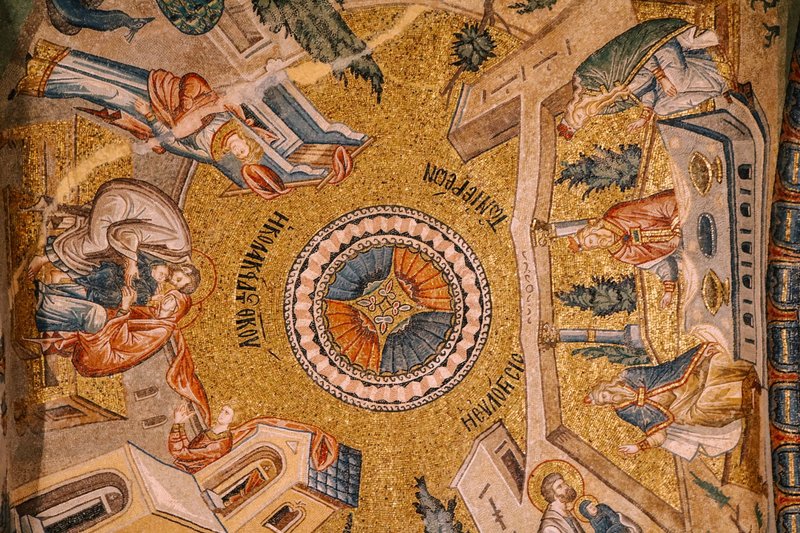
Madaba is the “City of Mosaics,” and the headline is the Madaba Map — a sixth-century mosaic on the floor of the Church of Saint George showing the Holy Land, with the oldest surviving cartographic depiction of Jerusalem. It’s fragmentary, but you can pick out the city’s colonnaded main street and gates. The town is dense with other mosaic floors in churches and the archaeological park, so it’s worth a slow wander.
Ten minutes away is Mount Nebo, the ridge where, by tradition, Moses looked out over the Promised Land he’d never enter. On a clear day the view stretches across the Dead Sea to Jericho and the hills of Jerusalem. The Byzantine memorial church on the summit shelters more fine mosaics. Note that Mount Nebo isn’t on the Jordan Pass — it’s run separately — but it’s only 2 JOD. Madaba sits about 30 km southwest of Amman, an easy half-day trip and a logical stop on the way down toward the Dead Sea or Petra.
Petra will be the photo you frame when you get home. But the moment you’ll actually tell people about is more likely to be the empty basalt theater at Umm Qais with three countries laid out below you, or the painted ceiling at Qusayr Amra that no one warned you about. Build the trip around Petra, then give yourself the days to go past it.