
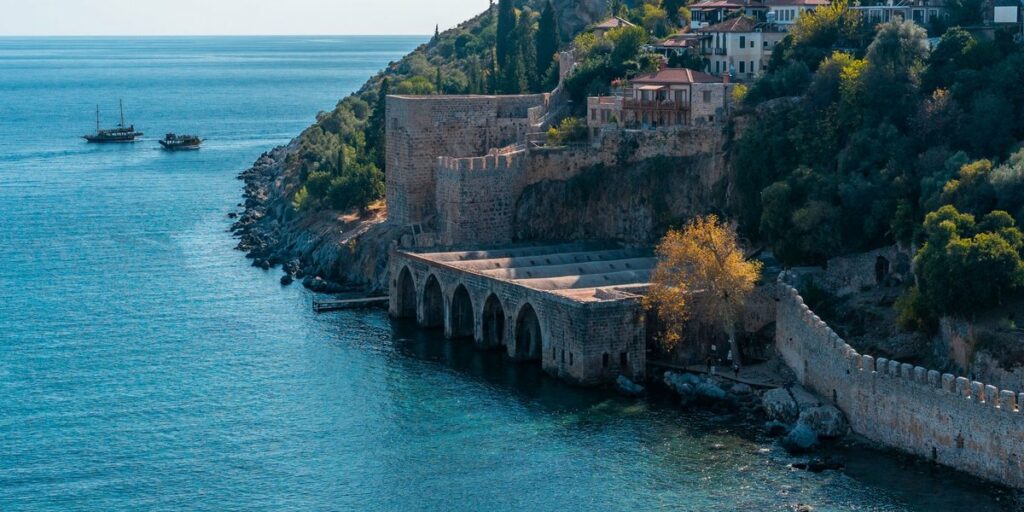
Turkey is one of the safer countries you’ll travel in, and the numbers back that up more than the headlines suggest. The catch is that “safe” means three different things here: petty crime (low almost everywhere), terrorism risk (concentrated in a few border provinces you won’t visit anyway), and earthquake risk (real, geographic, and ignored by nearly every other list you’ll read).
This guide ranks the safest cities in Turkey using all three lenses, plus a candid read on solo-female and family travel. No throat-clearing, no “exotic land of contrasts.” Just where to go, why it’s safe, and what to actually watch for.
Table of Contents
- The quick answer: safest cities ranked
- How we judged “safe”
- 1. Antalya
- 2. Izmir
- 3. Cappadocia (Göreme)
- 4. Fethiye
- 5. Bodrum
- 6. Trabzon
- 7. Ankara
- 8. Istanbul
- 9. Eskişehir
- Solo female travelers: the honest version
- Cities and areas to avoid
- FAQ
The Quick Answer: Safest Cities in Turkey, Ranked
If you just want the shortlist, here it is. Scores are relative (within Turkey), 1–5, higher is safer.
| City | Petty crime | Terrorism risk | Seismic risk | Solo-female friendly |
|---|---|---|---|---|
| Antalya | 4 | 5 | 4 | 4 |
| Izmir | 4 | 5 | 2 | 4 |
| Cappadocia | 5 | 5 | 5 | 5 |
| Fethiye | 5 | 5 | 4 | 5 |
| Bodrum | 4 | 5 | 3 | 4 |
| Trabzon | 4 | 4 | 5 | 3 |
| Ankara | 4 | 4 | 5 | 4 |
| Istanbul | 3 | 4 | 2 | 3 |
| Eskişehir | 5 | 5 | 3 | 5 |
The headline: Cappadocia, Fethiye, and Eskişehir are the closest things to “set it and forget it” — low crime, far from any border tension, and (for Cappadocia and Eskişehir) relatively calm geology. Big coastal resorts like Antalya and Bodrum are excellent on crime but sit in seismically active zones. Istanbul is safe for tourists day to day but ranks lower because of pickpocketing density and its position near the North Anatolian Fault.
How We Judged “Safe”
Most safety lists stop at “I walked around at night and felt fine.” That’s a data point, not an analysis. We weighted four things:
- Petty crime — pickpocketing, scams, bag-snatching. This is the risk you’re statistically most likely to actually encounter as a tourist.
- Terrorism / political risk — almost entirely a function of geography. Turkey’s travel advisory flags specific provinces near the Syrian and Iraqi borders, not the country as a whole.
- Seismic risk — Turkey sits on the North and East Anatolian fault systems. The 2023 quakes near the southeast killed tens of thousands. The US Geological Survey maps the active zones, and they matter for where you sleep, not just where you walk.
- Solo-female experience — harassment and comfort, which don’t track neatly with crime stats.
Turkey scores well on the global stage, but the Global Peace Index places it mid-table, dragged down almost entirely by regional conflict spillover rather than street-level danger. Once you’re away from the border provinces, the day-to-day picture is much calmer than the country-level number implies.
1. Antalya
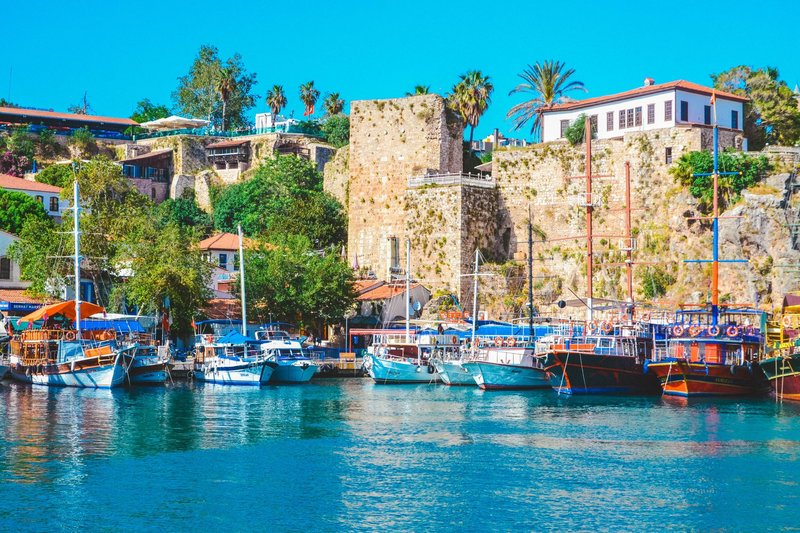
Antalya is the default answer for “safest city in Turkey for tourists,” and it earns it. This is a resort economy of roughly 2.5 million people on the Mediterranean coast, and the local infrastructure is built around keeping visitors comfortable and spending. Tourist police patrol Kaleiçi, the old town, and violent crime against foreigners is rare to the point of being a non-story.
What to actually watch for: taxi meter games and the occasional overpriced “where are you from, my friend” carpet pitch. Keep your phone out of your back pocket in the crowded harbor area and you’ve handled 90% of the real risk.
The asterisk is seismic. Antalya itself wasn’t hit by the 2023 quakes, but the wider region is tectonically active. It’s a solid 4, not a 5, because of geology, not crime.
2. Izmir
Turkey’s third-largest city has a reputation among Turks themselves as the country’s most relaxed, secular, and easygoing major metro. The seafront promenade (the Kordon) is the kind of place where families, students, and grandmothers all walk after dark without a second thought.
For solo travelers and women specifically, Izmir is one of the most comfortable cities in the country — less staring, fewer hassles, more of a “nobody cares what you’re doing” energy. Petty theft exists in the Konak and Basmane areas, same as any transit hub, but it’s manageable.
The honest downside: Izmir took real damage in the 2020 Aegean earthquake, which collapsed buildings and killed over a hundred people. The seismic score (2) reflects that. Day to day you’ll feel completely safe; it’s a where-you-sleep concern, not a walk-around concern.
3. Cappadocia (Göreme)
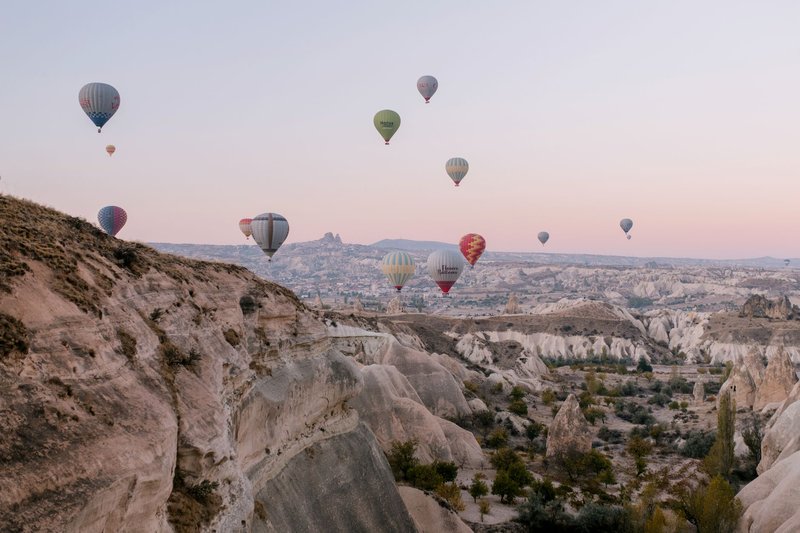
Cappadocia is the safest region on this list, and Göreme is its tourist heart. You’ve seen the photos: hot-air balloons over fairy chimneys at dawn. What the photos don’t tell you is that it’s also about as low-risk as travel in Turkey gets.
It’s a small, tourism-dependent area in central Anatolia, far from any border, with a community whose entire livelihood depends on visitors leaving happy and intact. Crime is minimal. The terrain is calm geologically compared to the coasts and the North Anatolian fault.
The one genuine hazard is the balloons themselves — ballooning carries inherent risk, and you should book operators with strong safety records rather than the cheapest sunrise flight. On the ground, the biggest danger is a twisted ankle on the hiking trails through the valleys.
4. Fethiye
Fethiye, on the southwest coast, is where a lot of long-term expats and repeat visitors quietly settle. That’s a signal. People who’ve stress-tested a place over years tend to vote with their feet, and a sizable British and European community has done exactly that here.
It’s relaxed, walkable, and low-crime. The marina, the Tuesday market, the paragliding launches off Babadağ above Ölüdeniz — none of it carries the big-city wariness you’d bring to Istanbul. For families and solo women, it’s one of the easiest places in the country to feel settled fast.
Seismic risk is moderate (it’s still coastal Turkey), but Fethiye’s combination of small size, expat track record, and genuinely low street crime makes it a top-tier pick.
5. Bodrum
Bodrum is Turkey’s upmarket resort town, and money tends to come with a baseline of order and policing. The peninsula is dotted with quieter villages — Gümüşlük, Yalıkavak — that are calmer and safer-feeling than the main Bodrum nightlife strip.
The crime you’ll encounter is the resort kind: inflated prices, the odd club scam, drinks that cost more than they should. Actual danger to visitors is low. Where Bodrum loses a point is the standard coastal seismic exposure plus summer crowds that make pickpocketing easier in the packed bazaar.
Go in shoulder season (May, September) and it’s close to perfect.
6. Trabzon
Trabzon, on the Black Sea coast, is the wildcard pick — and it’s here because of geography that works in its favor. It sits far from the southeastern fault zones that caused the 2023 disaster, giving it one of the better seismic profiles of any sizable Turkish city.
It’s greener, cooler, and less touristed than the Mediterranean, which means fewer tourist-targeting scams but also less English. Crime against visitors is low. The cultural register is more conservative than Izmir or the coasts, which is why the solo-female score sits at 3 rather than 4 — not because of danger, but because the staring and attention can wear on you.
The Sumela Monastery clinging to the cliff outside town is the headline sight, and the drive up is the main practical risk: mountain roads, aggressive local driving.
7. Ankara
Turkey’s capital is orderly, spread out, and built around government and universities rather than tourism. That gives it a calm, businesslike feel and a strong seismic position well away from the most dangerous fault segments.
Ankara doesn’t get the love Istanbul does because it’s frankly less exciting to look at. But for safety specifically, that’s a feature. Lower tourist density means fewer scams, the metro is clean and easy, and the university districts have an active, normal street life after dark. Petty crime exists in the older Ulus area; the modern Çankaya and Kızılay districts are easy.
8. Istanbul
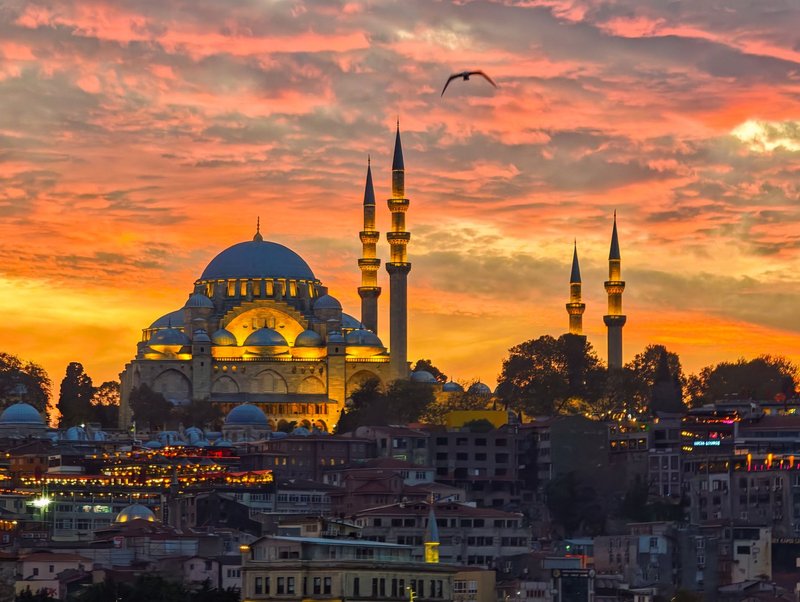
Istanbul ranks lower than its reputation, and that needs explaining, because it is genuinely safe for tourists in the ways that matter most. Violent crime against visitors is rare. Millions of people travel here every year without incident.
So why an 8? Two reasons. First, it’s a megacity of 16 million, and pickpocketing density in Sultanahmet, on the tram, and around the Grand Bazaar is the highest in the country. The classic scams — the shoeshine “dropped brush,” the friendly guy who walks you to a bar where the bill is astronomical — are concentrated here. Second, Istanbul straddles the North Anatolian Fault, and seismologists have flagged it for years as overdue for a major quake.
None of this should stop you from going. Keep your valuables zipped and front-facing, decline the over-friendly stranger steering you somewhere, and you’ll have a brilliant, safe trip. Just know the math is different than in Fethiye.
9. Eskişehir
Eskişehir is the one most foreign travelers have never heard of, and it’s a quiet stunner on the safety front. It’s a university city in central Anatolia — young, liberal, walkable, with canals you can take a Venetian-style boat down through the center of town.
The student population sets the tone: relaxed, progressive, used to outsiders. Street crime is low, harassment is minimal, and the solo-female experience is among the best in the country. It’s far from the borders and the worst of the fault lines.
It’s not on the coast and it’s not flashy, which is exactly why it stays this calm. If you want a Turkish city where safety is basically a non-issue, this is the deep cut.
Solo Female Travelers: The Honest Version
Turkey is very doable solo as a woman, and tens of thousands do it every year. But “safe” and “hassle-free” aren’t the same thing, and pretending otherwise helps nobody.
The pattern: the secular, coastal, and university cities — Izmir, Fethiye, Eskişehir, Cappadocia — are the easiest, with the least staring and the most normalized solo-woman presence. The more conservative areas (parts of the Black Sea coast, central and eastern Anatolia, older neighborhoods anywhere) bring more attention. It’s rarely threatening; it’s tiring.
Practical moves that work: dress on the modest side in non-resort areas (covered shoulders and knees defuses a lot), book licensed taxis or use the BiTaksi app instead of street-hailing late at night, and carry a scarf for mosque visits. The “say you’re meeting your husband” line still ends most unwanted persistence faster than honesty does. None of this is fear — it’s just the friction tax, and knowing it upfront makes the trip smoother.
Cities and Areas to Avoid
The dangerous parts of Turkey are geographically concentrated, which is good news — you can route around all of them easily.
- The Syrian border provinces — Hatay, Kilis, Gaziantep’s southern edge, Şanlıurfa, Mardin, Şırnak. Government advisories specifically flag these for terrorism and conflict spillover. Kilis in particular routinely tops “most dangerous city in Turkey” lists.
- The southeast more broadly — Diyarbakır, Hakkâri, and the far east near the Iraqi border carry elevated risk and were also the epicenter zone of the 2023 earthquakes. Beautiful, historically rich, and not where a first-timer should head.
- Specific neighborhoods, not whole cities — in Istanbul, the run-down stretches around Tarlabaşı and parts of Beyoğlu late at night warrant normal big-city caution. This isn’t “avoid Istanbul”; it’s “don’t wander empty alleys at 3am,” same as any metropolis.
The tourist Turkey — the coast, Cappadocia, the western cities — is nowhere near any of this. The dangerous map and the travel map barely overlap.
FAQ
Is Turkey safe to visit in 2026? Yes, for the overwhelming majority of travelers visiting the standard destinations. The country’s safety concerns are concentrated in a handful of southeastern border provinces that tourists don’t visit. The coast, Cappadocia, Istanbul, and the western cities are safe day to day, with petty theft being the most realistic risk.
What is the single safest city in Turkey for tourists? For an all-around pick, Cappadocia (Göreme) or Fethiye — both combine very low crime, distance from any border tension, and a tourism-dependent local economy. Eskişehir is the safest lesser-known option.
Is Istanbul safe? For tourists, yes. Violent crime against visitors is rare. The real risks are pickpocketing in crowded tourist zones and a long-term earthquake threat. Standard city-smarts handle the first; the second is a structural concern, not a daily one.
Which Turkish cities have the lowest earthquake risk? Inland and northeastern cities away from the most active southeastern faults fare better — Trabzon, Ankara, and Cappadocia rank well. The coastal resort cities and Istanbul sit in more active zones, so prioritize newer, well-built accommodation there.
Is Turkey safe for solo female travelers? Yes, with awareness. The secular coastal and university cities (Izmir, Fethiye, Eskişehir) are the most comfortable. Expect more attention in conservative regions. It’s manageable harassment, not violent danger, for the vast majority of solo women.
Last updated: June 2026.