
Tuvalu has fewer residents than a single decent-sized high school. So does Nauru. So, once you get past the flags-and-capitals trivia, does most of Oceania — a region that’s usually pictured as one blob of “Pacific islands” but is actually fourteen sovereign countries with wildly different populations, plus a handful of territories that get lumped in by habit.
That mixing is the first problem worth clearing up. Most “smallest countries in Oceania” lists quietly average Niue’s 1,800 people into the same bucket as Tuvalu’s 9,600, even though Niue isn’t a UN member state and Tuvalu is. Different category, different number, different story. We’re separating the two before we rank anything.
TLDR: The 5 smallest sovereign countries in Oceania
- Tuvalu — ~9,600 people, the least populous sovereign nation in Oceania (and third-least populous on Earth)
- Nauru — ~12,000 people, the world’s smallest island nation and the only country with no official capital
- Palau — ~18,000 people, spread across roughly 340 islands
- Marshall Islands — ~35,000 people, still dealing with the fallout of Cold War nuclear testing
- Micronesia (FSM) — ~114,000 people, a federation of four states spread over 2,700 km of open ocean
Everything below Tuvalu, population-wise, is a territory — not a country. Keep reading for why that distinction matters and where places like Niue and the Cook Islands actually fit.
Table of Contents
- Sovereign nation or territory? Why the numbers don’t match
- The 9 smallest sovereign countries in Oceania
- The territories people mistake for countries
- Full comparison table
- Why are Pacific nations so small?
Sovereign nation or territory? Why the numbers don’t match {#sovereign-nation-or-territory}
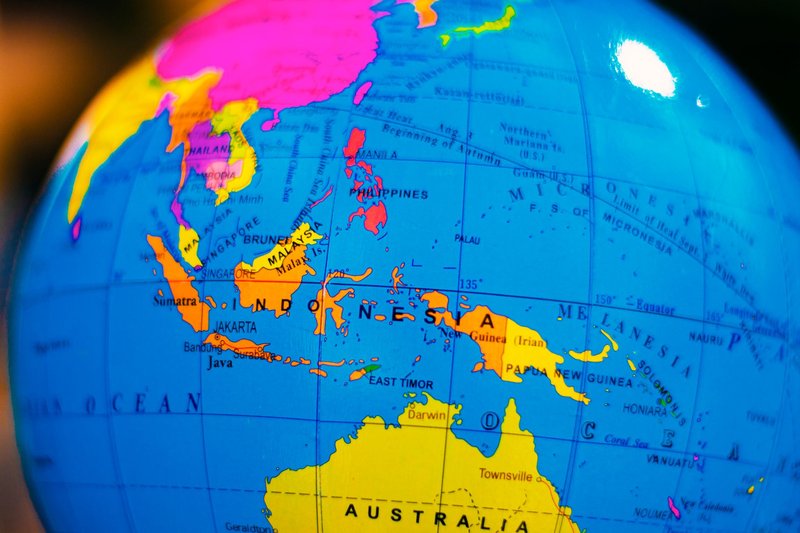
A “country” in the strict sense means a UN member state with its own government, borders, and seat at the table — each operating from its own capital city. Oceania has fourteen of those, running from Tuvalu at the bottom up through Australia at the top.
Niue, Tokelau, and the Cook Islands are not on that list, no matter how often they show up in “smallest countries” roundups. Niue and the Cook Islands are self-governing in free association with New Zealand — they run their own domestic affairs and hold membership in regional bodies like the Pacific Islands Forum, but New Zealand handles their defense and most of their foreign affairs, and their residents carry New Zealand citizenship. Tokelau goes further: it’s a straightforward New Zealand dependency with no separate sovereignty claim at all.
That’s not pedantry. It’s the difference between a place that could, in theory, apply for UN membership tomorrow and a place that structurally can’t. We’ve broken the two categories apart below instead of blending them into one confusing list.
The 9 smallest sovereign countries in Oceania {#the-ranking}
Ranked from smallest to largest population, using current UN estimates.
1. Tuvalu — population ~9,600
Capital: Funafuti · Land area: 26 km²
Tuvalu is the least populous sovereign country in Oceania and one of the three smallest on the planet. Its nine atolls and reef islands sit so low — the highest natural point is about 4.6 meters above sea level — that the government has started digitally archiving the entire country, from government records to cultural heritage, in case rising seas eventually force a full relocation. It also earns real money from something most countries would never think twice about: leasing out its “.tv” internet domain, which now brings in a meaningful slice of national revenue from streaming platforms worldwide.
2. Nauru — population ~12,000
Capital: none officially designated (government offices sit in the Yaren district) · Land area: 21 km²
Nauru is the smallest island nation in the world and, according to the CIA World Factbook, the only sovereign country with no formally designated capital. It’s a single raised coral island that spent most of the 20th century getting mined for phosphate — bird guano, essentially, compressed over millennia — until the deposits ran out and left much of the interior a moonscape of limestone pinnacles. More recently, Nauru became better known for hosting one of Australia’s offshore asylum-processing centers, a controversial arrangement that’s been a major source of national income in the phosphate era’s absence.
3. Palau — population ~18,000
Capital: Ngerulmud · Land area: 459 km²
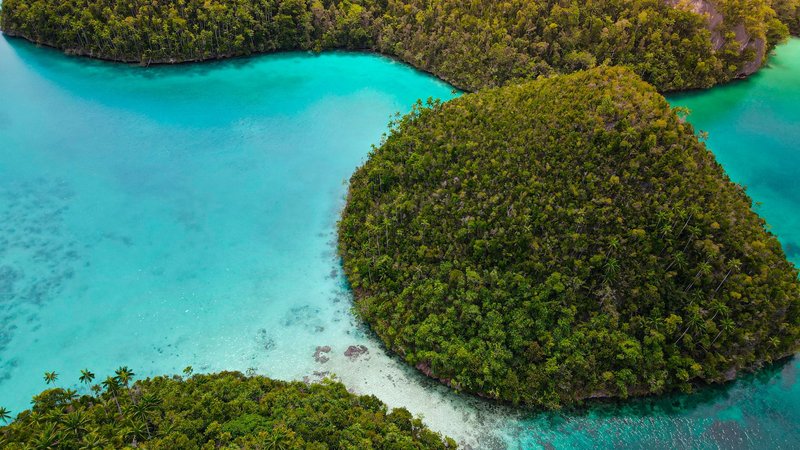
Palau spreads its small population across roughly 340 islands in the western Pacific, though almost everyone lives on just a few of them. It’s most famous for Jellyfish Lake, a marine lake where the resident jellyfish lost their sting after evolving in isolation from predators, and for the Rock Islands Southern Lagoon, a UNESCO World Heritage site of mushroom-shaped limestone islets. Palau was also the first country in the world to ban reef-toxic sunscreen ingredients, requiring visitors to swap out their SPF at customs.
4. Marshall Islands — population ~35,000
Capital: Majuro · Land area: 181 km²
The Marshall Islands is a chain of atolls and islands roughly halfway between Hawaii and Australia, and it’s still living with a specific piece of history: the United States detonated 67 nuclear weapons on and around Bikini and Enewetak Atolls between 1946 and 1958, including the Castle Bravo test, the largest US nuclear detonation ever conducted. Displaced Bikini residents and their descendants remain unable to safely resettle the atoll. The country operates under a Compact of Free Association with the US, trading defense access for financial support and the right for Marshallese citizens to live and work in the United States without a visa.
5. Micronesia (Federated States of) — population ~114,000
Capital: Palikir · Land area: 700 km²
Not to be confused with the broader Micronesia subregion, the Federated States of Micronesia is a single country made up of four semi-autonomous states — Yap, Chuuk, Pohnpei, and Kosrae — scattered across roughly 2,700 kilometers of open Pacific. Each state runs its own government and, in Yap’s case, still uses traditional stone money — giant carved limestone disks, some over two meters across — for certain ceremonial transactions alongside the US dollar.
6. Kiribati — population ~138,000
Capital: South Tarawa · Land area: 810 km²
Kiribati (pronounced “kiribas”) straddles all four hemispheres — it’s the only country on Earth in the northern, southern, eastern, and western hemispheres simultaneously, a quirk of owning islands on both sides of the International Date Line and the equator. In 2019, the government moved the Date Line itself so the whole country could share the same calendar day, meaning Kiribati is also the first place on Earth to see each new year.
7. Tonga — population ~103,000
Capital: Nukuʻalofa · Land area: 720 km²
Tonga is the last Pacific monarchy still standing, ruled by a king rather than a president or prime minister as head of state. It’s also the only Pacific nation never formally colonized by a European power, which locals will mention with some pride. In January 2022, the underwater Hunga Tonga–Hunga Haʻapai volcano produced the largest atmospheric explosion recorded by modern instruments, triggering tsunamis that reached the capital and briefly cutting the country off from the outside world when its single undersea internet cable was severed.
8. Samoa — population ~221,000
Capital: Apia · Land area: 2,830 km²
Samoa sits on the western side of the Samoan archipelago (American Samoa, a US territory, takes up the eastern half — a split that dates to an 1899 treaty carving the island chain between competing colonial powers). Samoa jumped forward a full day in December 2011, crossing the International Date Line to align its business week with Australia and New Zealand, its main trading partners, instead of the US.
9. Vanuatu — population ~343,000
Capital: Port Vila · Land area: 12,190 km²
Vanuatu is routinely ranked among the world’s happiest countries by lifestyle and wellbeing surveys, despite sitting on the Pacific Ring of Fire with some of the planet’s most active volcanoes, including Mount Yasur, which tourists can walk right up to the crater rim of. The country was jointly governed by Britain and France until 1980 under an unusual arrangement called the New Hebrides Condominium, which left it with two official colonial languages, English and French, on top of Bislama and more than 100 local languages.
Beyond this group, population climbs quickly: Solomon Islands (~858,000), Fiji (~937,000), Papua New Guinea (nearly 11 million), New Zealand (around 5.3 million), and Australia (over 27 million) round out Oceania’s fourteen sovereign states, none of them “small” by any reasonable measure.
The territories people mistake for countries {#the-territories}
These places show up in nearly every “smallest countries” list online, which is exactly the confusion worth untangling. None of them are sovereign nations.
- Niue — ~1,800 residents, self-governing in free association with New Zealand. More Niueans live in New Zealand itself (tens of thousands) than on Niue.
- Tokelau — ~2,700 residents, a direct New Zealand dependency spread across three atolls with no airstrip; the only way in is by boat.
- Cook Islands — ~13,000 residents, self-governing in free association with New Zealand, with its own currency-adjacent coinage and full Pacific Islands Forum membership.
- American Samoa — an unincorporated US territory of around 43,000 people, distinct from independent Samoa next door.
- Guam and the Northern Mariana Islands — US territories in the western Pacific, both larger in population than several sovereign countries on this list.
- French Polynesia and New Caledonia — French overseas collectivities, home to Tahiti and Nouméa respectively, each with populations in the hundreds of thousands.
Notice that Guam alone (roughly 170,000 people) outpopulates Tuvalu, Nauru, Palau, and the Marshall Islands combined. Population size has nothing to do with sovereignty — it’s entirely a legal and political status.
Full comparison table {#comparison-table}
| Country | Population | Capital | Land area | Status |
|---|---|---|---|---|
| Tuvalu | ~9,600 | Funafuti | 26 km² | Sovereign |
| Nauru | ~12,000 | Yaren (de facto) | 21 km² | Sovereign |
| Palau | ~18,000 | Ngerulmud | 459 km² | Sovereign |
| Marshall Islands | ~35,000 | Majuro | 181 km² | Sovereign |
| Micronesia (FSM) | ~114,000 | Palikir | 700 km² | Sovereign |
| Kiribati | ~138,000 | South Tarawa | 810 km² | Sovereign |
| Tonga | ~103,000 | Nukuʻalofa | 720 km² | Sovereign |
| Samoa | ~221,000 | Apia | 2,830 km² | Sovereign |
| Vanuatu | ~343,000 | Port Vila | 12,190 km² | Sovereign |
| Solomon Islands | ~858,000 | Honiara | 27,990 km² | Sovereign |
| Fiji | ~937,000 | Suva | 18,270 km² | Sovereign |
| Cook Islands | ~13,000 | Avarua | 236 km² | Territory (free association) |
| American Samoa | ~43,000 | Pago Pago | 199 km² | Territory (US) |
| Tokelau | ~2,700 | — | 12 km² | Territory (dependency) |
| Niue | ~1,800 | Alofi | 260 km² | Territory (free association) |
Why are Pacific nations so small? {#why-so-small}
Three forces explain most of it, and they compound each other.
Geography set a hard ceiling first. Atoll nations like Tuvalu, Kiribati, and the Marshall Islands are among the smallest countries by area, built on coral rings around long-vanished volcanic peaks — there’s simply no landmass to hold a large population no matter how the economy performs. Nauru and Palau formed differently but hit the same wall: limited fresh water, thin soil, and no room to expand outward except into open ocean.
Colonial-era borders then split populations that might have consolidated. The Samoan islands got divided between Germany and the US in 1899. The New Hebrides became Vanuatu only after 74 years of joint British-French rule ended in 1980. Micronesia’s scattered island groups, once administered together under a single US trusteeship after World War II, split into four separate sovereign entities — Palau, the Marshall Islands, the FSM, and the Northern Mariana Islands stayed a US territory — rather than uniting into one larger country.
Emigration does the rest, continuously. Compact of Free Association agreements let citizens of Palau, the Marshall Islands, and Micronesia live and work in the US without a visa, and a large share do — Marshallese communities in Springdale, Arkansas, and Enewetak descendants elsewhere in the US now number in the thousands. Niueans and Cook Islanders hold New Zealand citizenship outright, and most of both populations now live in Auckland rather than on their home islands. The World Bank’s Pacific labor mobility research has tracked this pattern for years: for several of these nations, the diaspora population abroad now outnumbers the population at home.
None of that makes these places footnotes. Tuvalu holds a UN seat exactly like France does. Nauru sets its own laws. What’s actually happening is a set of full sovereign governments running national institutions — courts, currencies, foreign ministries — for populations smaller than a single New York apartment building. That’s the real story the population figures are pointing at.