Northern Ireland has two UNESCO World Heritage Sites. Most people know about one of them. Almost nobody talks about the other — even though it was just inscribed in 2023 and tells a completely different story about what “heritage” can mean.
One is a 60-million-year-old volcanic coastline that draws over a million visitors a year. The other is a quiet 18th-century village in County Antrim that has been continuously inhabited since 1759 and looks nearly identical to the day it was built. Together, they’re about as contrasting a pair as you could find in one small country.
UNESCO designates World Heritage Sites based on “outstanding universal value” — places that belong to all of humanity, not just the country that happens to contain them. The bar is high. Northern Ireland has cleared it twice.
Table of Contents
Giant’s Causeway {#giants-causeway}
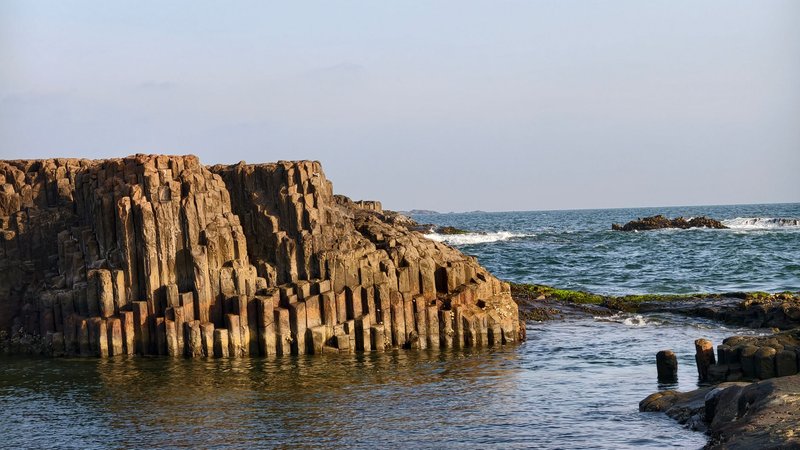
The Giant’s Causeway earned its UNESCO designation in 1986, making it one of the earliest World Heritage Sites in the British Isles. The listing recognized its geology: roughly 40,000 interlocking basalt columns, most of them hexagonal, formed when a massive lava flow cooled and contracted around 60 million years ago. The math on that is almost impossible to hold in your head while you’re standing on them.
The columns range from a few inches to nearly 40 feet tall, packed together so tightly that locals centuries ago decided the only explanation was giants. The legend of Finn McCool — who supposedly built the causeway to walk to Scotland — is everywhere in the surrounding area, which is fine. The real story is strange enough on its own.
What to see
The main causeway itself sits at the bottom of a short walk from the visitor centre. Most people spend 20–40 minutes here and call it done, which is a shame. Walk further along the coastal path east toward the Amphitheatre and Chimney Stacks headland and the crowds thin out fast. The formations get more dramatic the further you go — the Giant’s Organ (a vertical cluster of columns resembling a pipe organ) and the Chimney Stacks are genuinely less photographed and more impressive.
The Shepherd’s Steps — a steep staircase carved into the cliff — loops you back up to the clifftop path. It’s a short scramble but worth it. From the top, you see the full sweep of the causeway from above, which is its own kind of view.
Visitor logistics
The site is managed by the National Trust, who charge for parking and entry to the visitor centre. The causeway itself is public land and technically free to access on foot, though the car park fee effectively functions as an entry fee for most visitors.
Getting there from Belfast takes about 1.5 hours by car along the Causeway Coastal Route. Public transport runs (the Causeway Rambler bus runs seasonally from Coleraine), but the coastal route itself is something you want to drive. The road between Ballycastle and Bushmills is one of the better coastal drives in Northern Ireland.
Best time to visit: early morning in spring or autumn. Midday in July and August, the causeway is shoulder-to-shoulder. The geological formations don’t benefit from crowds.
Nearby
Bushmills Distillery (the world’s oldest licensed whiskey distillery, dating to 1608) is three miles from the causeway. Dunluce Castle — a medieval ruin perched on a cliff edge over the Atlantic — is five miles west. Both are worth the detour. If you’re building out a broader Irish itinerary, the historical places in Ireland guide covers many of the other landmarks worth adding to your route.
Gracehill Moravian Settlement {#gracehill-moravian-settlement}
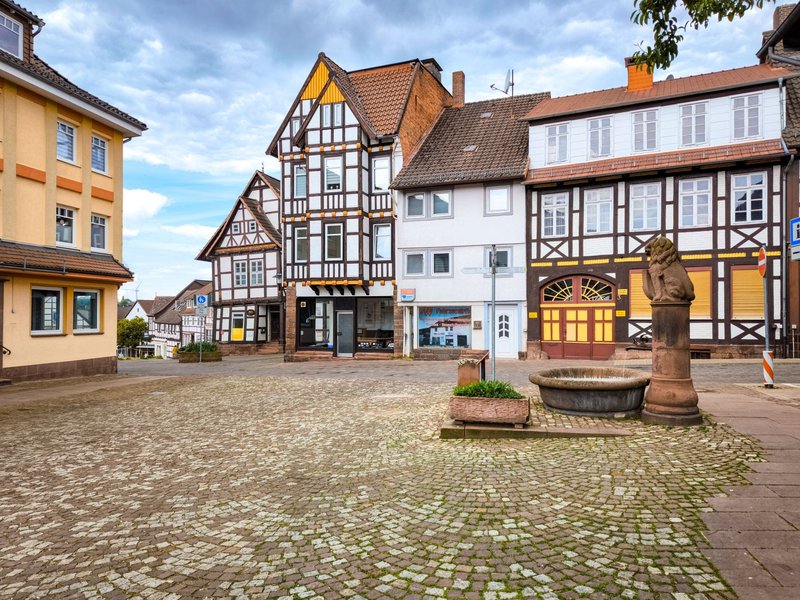
Most travel guides haven’t caught up to this one yet. Gracehill was inscribed as part of a transnational UNESCO World Heritage Site in 2023, joining 13 other Moravian settlements across Europe and North America under a single designation called “Moravian Church Settlements.” It is the only site in the group located in Ireland.
The Moravian Church was a Protestant denomination that originated in 15th-century Bohemia (modern Czech Republic), and their settlements had a very specific design philosophy: houses, church, school, and communal buildings arranged around a central green, with separate sections of the village for men and women (including separate burial grounds for each). Gracehill, founded in 1759, follows this plan almost perfectly. The village plan hasn’t changed substantially in over 260 years.
This is not a reconstructed heritage village. People live here. The houses are occupied. The church still holds services. That’s what makes it genuinely unusual — it’s a living settlement that happens to be a UNESCO site, not a museum of itself.
What to see
The central square is the obvious starting point. The Moravian church (built 1765) dominates one end, flanked by the former Sisters’ House and Brothers’ House — the original communal buildings for unmarried women and men respectively, now private residences. The symmetry is deliberate and still readable today.
The burial ground behind the church is one of the most distinctive features of Moravian settlements: flat, uniform grave markers laid in the ground rather than standing headstones, arranged in rows by the date of death rather than by family. The intention was theological — all souls equal before God — but the visual effect is stark and memorable.
A heritage trail around the village is self-guided and takes around 45 minutes. Information panels have been added at key points, but the village is small enough that you don’t need them.
Visitor logistics
Gracehill is a 10-minute drive from Ballymena, and about 45 minutes from Belfast. There’s no entry fee. No ticket office. You park on the street near the square and walk.
This is exactly the kind of place that gets overlooked on a Northern Ireland itinerary because it doesn’t announce itself — no visitor centre, no souvenir shops, no queues. Plan an hour and a half, which gives you time to walk the full trail, sit on the green for a few minutes, and read the church’s history at your own pace.
The nearest town with accommodation is Ballymena, which has standard options. Antrim town (20 minutes south) works too if you’re pairing Gracehill with a broader County Antrim itinerary.
Best time to visit
Any time of year, honestly. The village is quiet in all seasons and that’s rather the point. Summer gives you longer daylight for the walk; autumn gives you better light for photographs of the burial ground.
Visiting Both Sites {#visiting-both-sites}
The two sites sit about 35 miles apart — Giant’s Causeway on the north coast, Gracehill just inland in mid-Antrim. They don’t make an obvious day trip together, but they work well as part of a two-day County Antrim itinerary: Gracehill in the afternoon of day one (when the light is good for the village), Giant’s Causeway early morning on day two before the tour buses arrive.
If you’re basing yourself in Belfast, both are driveable as day trips independently. The coastal route to Giant’s Causeway has enough stops (Carrick-a-Rede rope bridge, Ballintoy Harbour) to justify its own full day. Gracehill pairs naturally with Ballymena or a stop at the Braid River valley.
Northern Ireland’s two UNESCO sites don’t look like each other, don’t attract the same type of visitor, and don’t tell the same kind of story. One took 60 million years to form. The other was designed by a committee in 1759 and has barely changed since. Both earned the designation. Both are worth your time. For a broader picture of what Ireland’s designated sites cover, the full list of World Heritage Sites in Ireland puts Northern Ireland’s entries in the wider context of the island.