Armenia packs an absurd variety of lakes into a country smaller than Maryland. You’ve got one inland sea that supplies most of the country’s beach culture, a scatter of glacial pools you have to hike for, and a couple of volcanic crater lakes sitting near 3,200 meters that freeze most of the year. Most “lakes in Armenia” lists hand you the same ten names in a slightly different order and call it a guide.
This one ranks them by a question that actually matters when you’re staring at a map in Yerevan with one free day: is the drive worth it? Some of these are 90 minutes on smooth asphalt. One requires a 10-kilometer hike or a stomach for off-road suspension abuse. We’ll tell you which is which.
Table of Contents
- Quick verdict
- How Armenia got so many lakes
- Comparison table
- 1. Lake Sevan
- 2. Lake Parz
- 3. Lake Kari
- 4. Lake Akna
- 5. Lake Gosh
- 6. Lake Arpi
- 7. Lake Sev (Black Lake)
- 8. Lake Umroi
- 9. Lake Tsover (Vishapalich)
- 10. Lake Al
- 11. Lake Lessing
- 12. Lake Kaputan
- Best time to visit
Quick verdict
If you have one day from Yerevan and want water you can swim in, go to Lake Sevan — it’s the easy pick and it earns it. If you’d rather walk to your lake through a forest, Lake Parz near Dilijan is the move. And if you’re the kind of traveler who hears “10-kilometer hike to an alpine crater” and grins, Lake Akna is your prize. Everything else on this list is a worthwhile detour if you’re already in the neighborhood, but those three are the ones worth building a day around.
How Armenia got so many lakes
Four different forces built the lakes here, and knowing which is which tells you what to expect before you arrive.
Tectonic lakes sit in basins formed by the earth pulling apart. Sevan is the giant example — a true inland sea covering over 1,200 square kilometers.
Volcanic crater lakes fill old craters high on dormant volcanoes. Kari and Akna sit on the slopes of Mount Aragats, Armenia’s tallest peak, both above 3,000 meters. They’re small, cold, and frozen for much of the year.
Glacial lakes were carved or dammed by ice during past glaciations, usually tucked into high mountain bowls.
Landslide lakes formed when a slope collapsed and dammed a valley. Parz and Gosh near Dilijan are the classic pair — which is why both sit in lush forest rather than bare alpine rock.
That diversity is the real story of lakes in Armenia. A 30-kilometer move can take you from a forested landslide pond to a volcanic crater with snow on its banks in July.
Comparison table
| Lake | Type | Elevation | Distance from Yerevan | Access | Swimming |
|---|---|---|---|---|---|
| Sevan | Tectonic | 1,900 m | ~65 km | Easy (paved) | Yes |
| Parz | Landslide | 1,400 m | ~110 km | Easy (short walk) | Not really |
| Kari | Crater | 3,200 m | ~60 km | Medium (mountain road) | No (too cold) |
| Akna | Crater | 3,030 m | ~70 km | Hard (10 km hike) | Brave only |
| Gosh | Landslide | 1,300 m | ~120 km | Easy (short walk) | No |
| Arpi | Tectonic/reservoir | 2,025 m | ~165 km | Medium (remote) | No |
| Sev (Black) | Glacial | 2,666 m | ~250 km | Hard (remote south) | No |
| Umroi | Reservoir | 1,500 m | ~120 km | Medium | Locals do |
| Tsover | Mountain | 2,700 m | ~130 km | Hard (hike) | No |
| Al | High mountain | 3,000 m | ~80 km | Hard (Aragats) | No |
| Lessing | Crater | 3,250 m | ~75 km | Hard (Aragats) | No |
| Kaputan | Mountain | 2,000 m | ~140 km | Medium | No |
Distances are approximate driving distances and round up the last stretch of rough road, which is often the slow part.
1. Lake Sevan
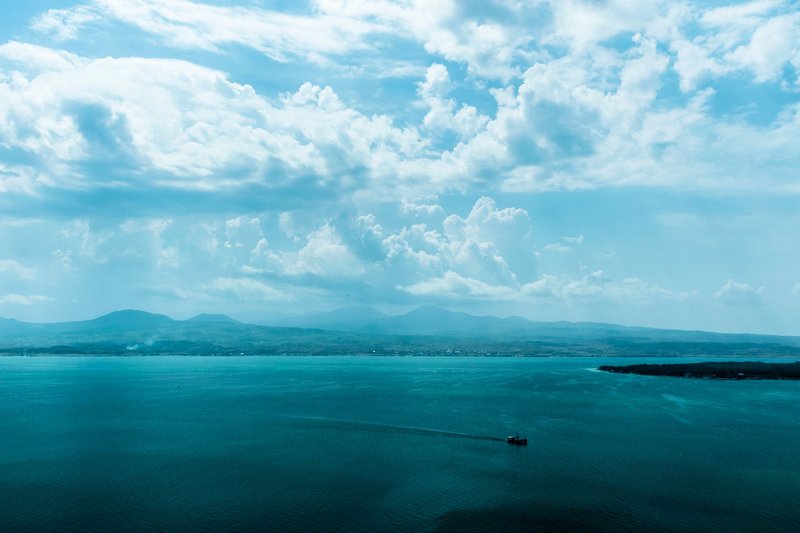
Sevan is the one everyone means when they say “the lake.” It’s one of the largest high-altitude freshwater lakes in the world, sitting at 1,900 meters and holding the overwhelming majority of Armenia’s standing fresh water. On a clear day the water turns a genuine alpine blue, and the surrounding mountains drop straight into it. It doesn’t quite crack the ranks of the deepest lakes in Asia, but at this altitude it doesn’t need to — its sheer surface area is the headline.
This is where Armenians go to the beach. The northwest shore around Sevan town has resorts, rentable jet skis, and grilled ishkhan (Sevan trout) stalls. The water warms enough for swimming from roughly July through early September — colder than the Mediterranean, plenty fine after a hot drive.
Don’t skip the Sevanavank monastery on the peninsula at the northwest corner. Two 9th-century churches sit on a hill with the whole lake spread out below. The climb is a few hundred steps and worth every one.
How to visit: 65 km from Yerevan on the M4 highway, under an hour and a half. Easiest lake on this list by a wide margin. Go on a weekday in summer to dodge the Yerevan crowds.
2. Lake Parz
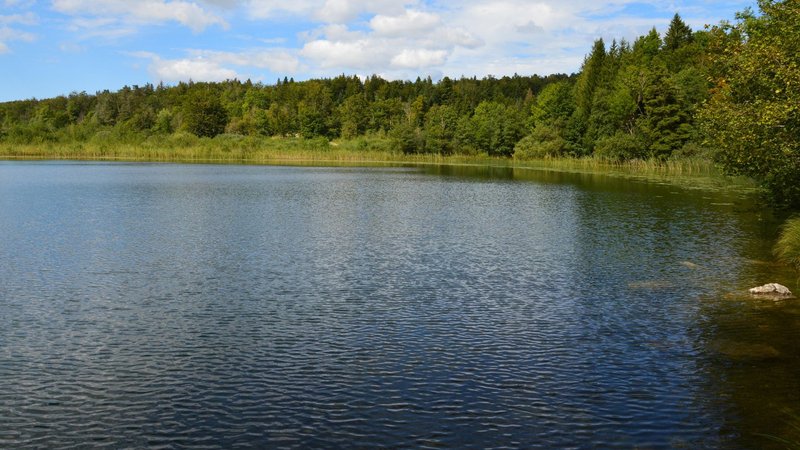
Parz means “clear” in Armenian, and the lake delivers. It’s a small landslide lake sitting in the thick forest of Dilijan National Park, the green northern region that locals nicknamed “Little Switzerland.” After the bare browns of central Armenia, the contrast is startling.
You won’t really swim here — it’s small, shaded, and built for a different kind of day. There’s a lakeside cafe, rowboats and pedal boats for rent, and a zipline for the kids. The real draw is the Transcaucasian Trail segment that connects Parz to Gosh Lake: a 7-kilometer forest walk that’s one of the most pleasant easy hikes in the country.
How to visit: About 110 km from Yerevan, roughly two hours. The final approach is a paved road off the Dilijan area, then a short walk to the water. Pair it with Gosh and Goshavank monastery for a full day.
3. Lake Kari
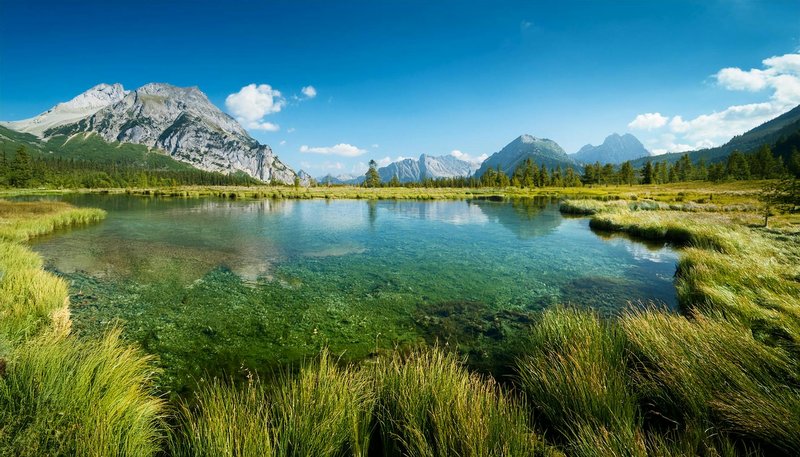
Kari (“stone lake”) sits at 3,200 meters on the slopes of Mount Aragats, and it’s the most accessible high-alpine lake in Armenia because a road runs almost all the way to it. There’s a research station and a small cafe at the shore. The lake is fed by snowmelt and stays partly frozen well into June.
Most people come here not just for the lake but as the launch point for hiking Aragats. The southern of the volcano’s four peaks starts from Kari and is the doable one for fit day-hikers. Even if you don’t climb, standing at 3,200 meters next to a half-frozen crater lake in midsummer is a strange, memorable thing.
How to visit: Around 60 km from Yerevan but the mountain road is slow, so budget two hours plus. The road typically clears of snow by late June and closes again with the first heavy autumn snowfall. Don’t attempt it in a low-clearance car early in the season.
4. Lake Akna
Akna is the reward lake. It’s a crater lake at just over 3,000 meters on the eastern side of Aragats, and there’s no road to it. You earn it on foot: roughly a 10-kilometer hike each way from the nearest trailhead, or a teeth-rattling off-road drive in a serious 4×4 if you’ve hired one.
The payoff is a near-perfect circular crater lake ringed by alpine meadow, with almost nobody else around. In July the wildflowers come in and the snow patches linger on the north-facing slopes. The brave swim. The water is snowmelt cold, so “swim” mostly means a shrieking 30-second plunge.
This is the lake the listicles mention and then quietly skip the logistics on. Be honest with yourself about your fitness and the altitude before you commit.
How to visit: About 70 km from Yerevan to the trailhead, then the hike. Go only in July or August, start early, carry layers — weather at 3,000 meters turns fast — and tell someone your plan. This is the one genuinely demanding trip on the list.
5. Lake Gosh
Gosh is Parz’s quieter sibling, a few kilometers away in the same Dilijan forest. Smaller, less developed, and often nearly empty. There’s no cafe or boat rental — just a still green pool surrounded by trees and the occasional fisherman.
Most visitors reach it via the forest trail from Parz, which is the right way to do it. The walk through the beech and oak forest is the experience; the lake is the turnaround point and the snack spot. Nearby Goshavank, a 12th-13th century monastery complex, is one of the better-preserved medieval sites in the region and named for the same scholar, Mkhitar Gosh.
How to visit: About 120 km from Yerevan. Combine with Parz and Goshavank for an efficient Dilijan loop. No swimming, no facilities — bring your own water.
6. Lake Arpi
Arpi is way up in the northwest, near the Georgian and Turkish borders, at just over 2,000 meters on the Ashotsk plateau. It was originally a natural lake, then enlarged into a reservoir, and now anchors Lake Arpi National Park.
This is a birdwatcher’s lake, not a swimmer’s. The park is a major nesting ground for Armenian gulls and Dalmatian pelicans, and the open steppe landscape around it feels closer to Central Asia than to the forested north. If you don’t care about birds, you can skip it. If you do, it’s one of the best wetland habitats in the Caucasus.
How to visit: About 165 km from Yerevan, so realistically an overnight or a long single day. The plateau is bleak and beautiful and gets brutally cold and windy outside high summer.
7. Lake Sev (Black Lake)
Sev Lich, “Black Lake,” sits at 2,666 meters in the far southern Syunik region, right near the Azerbaijani border — which means the access situation can change and you should check current conditions before going. It’s a glacial lake, dark and deep-looking, ringed by high grassland that fills with grazing herds in summer.
The remoteness is the whole point. You’re a long way from anywhere, the air is thin, and on a still day the lake genuinely does read as black where the sky reflects in it. This is a lake for people already road-tripping through Syunik to Tatev and the south, not a standalone destination from Yerevan.
How to visit: Roughly 250 km south of Yerevan, deep in the mountains near the border. Confirm the security and road situation locally before committing. High summer only.
8. Lake Umroi
Umroi is a reservoir near the Lori region in the north, less famous than the marquee lakes and better for it if you want quiet. The shoreline is undeveloped, the water is calm, and locals fish and occasionally swim here without a tourist in sight.
There’s not a lot of infrastructure — no monastery overlooking it, no boat rental — which is exactly why it stays empty. Treat it as a peaceful stop if you’re already exploring Lori’s monasteries like Haghpat and Sanahin, both nearby and both UNESCO-listed.
How to visit: About 120 km from Yerevan in the northern Lori province. Pair with the Lori monasteries rather than driving out for the lake alone.
9. Lake Tsover (Vishapalich)
Tsover, also called Vishapalich — “lake of the dragons,” after the ancient vishap dragon-stone carvings found in the region — sits around 2,700 meters in the mountains. It’s a high pasture lake reached on foot, surrounded by summer grazing land and the occasional shepherd’s camp.
The name is the hook here. Vishap stones are prehistoric carved monoliths scattered across Armenia’s highlands, some thousands of years old, and the lake takes its name from that mythology — the kind of deep-rooted folklore that still threads through many Armenian traditions today. The lake itself is modest; the high-mountain setting and the legend are what make the trip.
How to visit: About 130 km from Yerevan plus a hike to the water. Summer only, and a guide or solid offline map helps — these high pastures aren’t well signposted.
10. Lake Al
Lake Al is another of Aragats’s high lakes, sitting near 3,000 meters on the massif. Like Akna, it’s a hike-to lake with no easy road, smaller and less visited than its famous neighbor. The terrain is classic Aragats: alpine meadow, scattered snow patches into midsummer, and big open views back across the volcano’s flanks.
This one is for completists working their way around Aragats, or hikers who want an Akna-style experience with even fewer people. There’s nothing built here — it’s just water, grass, and altitude.
How to visit: About 80 km from Yerevan to the Aragats trailheads, then a hike. July and August only. Same altitude precautions as Akna apply.
11. Lake Lessing
Lessing sits at roughly 3,250 meters on Aragats, the highest lake on this list, a small crater pool that holds snow and ice around its edges deep into summer. It’s named after the German naturalist who studied the area, and it’s strictly a destination for hikers tackling the upper reaches of the mountain.
You go here because you’re already high on Aragats and want to stand beside a lake that’s frozen in July. The setting is stark — bare volcanic rock, thin air, enormous silence. Not a casual outing.
How to visit: Around 75 km from Yerevan to the trailhead, then a demanding climb. For experienced, acclimatized hikers in peak summer only.
12. Lake Kaputan
Kaputan rounds out the list as a mountain lake in the Gegharkunik region, the same province that holds Sevan. It’s quieter and far less known than its giant neighbor, a small body of water in the highlands that mostly draws local visitors and the occasional fisherman.
There’s no tourism setup here, which makes it a fine stop if you want a few minutes of stillness on a longer drive through the region. It won’t anchor a day on its own, but as a roadside pause between bigger sights it does the job.
How to visit: About 140 km from Yerevan in Gegharkunik province. A side stop rather than a destination.
Best time to visit
The season splits hard by elevation, and getting this wrong is the most common mistake visitors make.
Low-elevation lakes (Sevan, Parz, Gosh, the northern reservoirs): visitable roughly May through October. Sevan’s swimming window is July to early September, when the water finally warms up enough to be pleasant rather than bracing.
High-alpine and crater lakes (Kari, Akna, Al, Lessing, and the high mountain pools): July and August, full stop. The mountain roads to Kari typically clear of snow by late June and shut again with the first serious autumn snowfall, and the hike-in crater lakes are only safe and snow-free in those two peak months. Show up in May expecting Akna and you’ll find a frozen bowl and an impassable trail.
Pack layers for anything above 2,500 meters even in midsummer — a warm valley morning in Yerevan can become a 5°C wind at the lakeshore by afternoon. That single fact catches more day-trippers off guard than any other on the trip.