Here’s the thing nobody tells you before you land in Nouakchott: the Arabic you studied on a language app is barely spoken here. People in Mauritania speak Hassaniya, a Bedouin dialect of Arabic that drifted far enough from the textbook version that even fluent Egyptian or Levantine speakers stumble. So if you’ve been practicing “shukran” and “marhaba,” you’re not wrong — but you’re not quite right either.
This is a phrasebook built around how you’ll actually move through a day in Mauritania: stepping off a bus, haggling over a length of cloth in the market, getting handed your third glass of tea, asking where the shared taxi to Atar leaves from. The useful phrases for tourists in Mauritania aren’t the ones in a generic Arabic guide. They’re the ones that make a shopkeeper grin because a foreigner bothered to learn them.
Table of Contents
- The language situation, decoded
- How to pronounce Hassaniya without embarrassing yourself
- Arrival and greetings
- The tea ritual (and why it matters)
- Markets and bargaining
- Transport and getting around
- Eating and dining etiquette
- Hotels and accommodation
- Emergencies and help
- Phrases for the south: Pular, Soninke, Wolof
- A few etiquette rules worth more than any phrase
The language situation, decoded
Three layers, and they don’t overlap the way you’d expect.
Hassaniya Arabic is the mother tongue of the Moors (Bidhan and Haratin), who make up the majority. It’s what you’ll hear in the street, the market, the taxi, the tent. It uses some sounds and a fair amount of vocabulary you won’t find in Modern Standard Arabic, including borrowings from Berber and even a few from French.
French is the practical lingua franca of the cities. Mauritania was a French colony until 1960, and in Nouakchott or Nouadhibou you can get through a hotel check-in, a bank, or a pharmacy in French without trouble. Educated Mauritanians often switch between Hassaniya and French mid-sentence. If your French is decent, lean on it in urban settings.
Modern Standard Arabic is the official language — it’s on the signs, in the newspapers, in formal speeches and government offices. People understand it, but nobody chats in it. Think of it the way an English speaker treats the language of legal contracts: real, respected, not conversational.
Then there’s the south. Along the Senegal River, you’re in different territory entirely — communities speaking Pular, Soninke, and Wolof, where a Hassaniya greeting lands as politely foreign rather than local. More on that below.
The move for a traveler: learn a handful of Hassaniya phrases for warmth and respect, keep French ready for logistics, and don’t bother memorizing Standard Arabic small talk.
How to pronounce Hassaniya without embarrassing yourself
A few sounds trip up English speakers every time. Get these and your transliterations will actually be understood.
- gh — like a French “r,” a gargle at the back of the throat. The word for “expensive,” ghali, starts here.
- q / g — Hassaniya famously turns the classical Arabic “q” into a hard g. The classical qultu (“I said”) becomes gult. So when you see “g” in these phrases, say a hard English g.
- kh — the rasp in the Scottish “loch” or German “Bach.” Shows up in khimsa and other words.
- ‘ (the apostrophe) — a glottal stop, the catch in the middle of “uh-oh.” Just pause.
- double letters — hold them. Shukran is fine, but lots of words double a consonant, and skipping it changes the meaning.
Stress usually falls on the first or second syllable. When in doubt, say it slowly and let your face do half the work. A smile and an attempt cover a multitude of pronunciation sins here.
Arrival and greetings
Greetings in Mauritania aren’t a quick “hi.” They’re a small ritual, sometimes a volley of questions about your health, your family, and your journey, where the content matters less than the back-and-forth. Don’t rush it.
| English | Hassaniya (transliteration) | Arabic script |
|---|---|---|
| Peace be upon you (the standard greeting) | as-salaamu alaykum | السلام عليكم |
| And upon you peace (the reply) | wa alaykum as-salaam | وعليكم السلام |
| How are you? | ash haalek? | اش حالك؟ |
| Fine, good (response) | labaas / bikhayr | لاباس / بخير |
| Good, thank God | al-hamdu lillah | الحمد لله |
| Hello / welcome | marhaba | مرحبا |
| Welcome (to a guest) | marhaba bik | مرحبا بك |
| Goodbye | beslaama | بالسلامة |
| Yes | iyeh / na’am | إيه / نعم |
| No | laa | لا |
That “al-hamdu lillah” — “thank God” — is the answer to almost any “how are you.” Say it even if your bus was four hours late and you’ve eaten nothing but dates. It’s the rhythm of the exchange, not a literal status report.
The tea ritual (and why it matters)
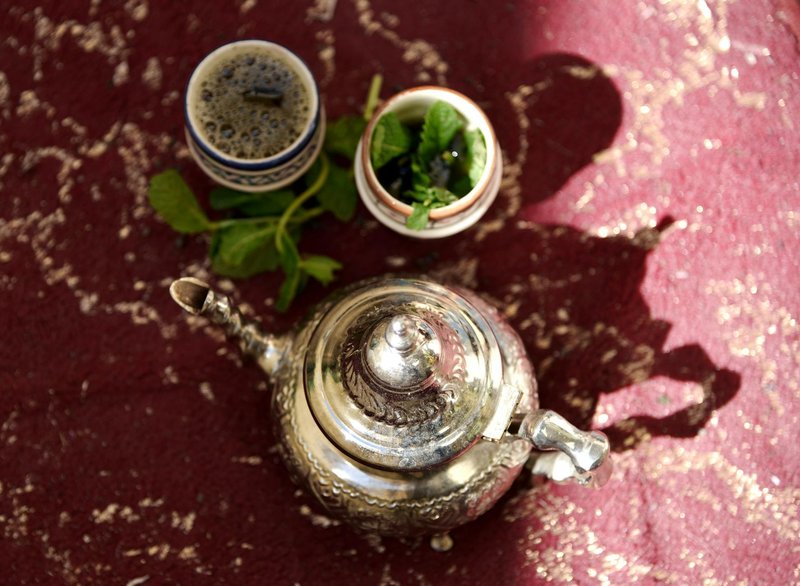
If a Mauritanian invites you for tea, clear your schedule. The green tea ceremony — strong, sugary, poured from height to make foam, served in three small glasses — is the social heart of the country. The three glasses even have a saying attached: the first bitter like life, the second sweet like love, the third gentle like death. Refusing outright is rude. Accepting at least one glass is how you say “I respect your hospitality.”
| English | Hassaniya (transliteration) | Arabic script |
|---|---|---|
| Tea | atay | أتاي |
| Thank you (for the invitation) | shukran | شكرا |
| It’s delicious / good | zayn / ladhidh | زين / لذيذ |
| Just a little, please | shwayya bes | شوية بس |
| I’ve had enough, thank you | kafaani, shukran | كفاني شكرا |
| God bless you / your hands (after being served) | baarak allaahu fiik | بارك الله فيك |
A practical note: take the glass with your right hand. Always the right hand, for tea, food, money, handshakes. The left is reserved for bathroom hygiene, and using it to hand someone something reads as an insult, even if unintended.
Markets and bargaining
Haggling isn’t optional in the souk — it’s the expected social transaction. Prices for tourists start high. Stay friendly, name a number well below the asking price, and meet somewhere in the middle. Walking away slowly is itself a bargaining move; you’ll often be called back.
| English | Hassaniya (transliteration) | Arabic script |
|---|---|---|
| How much? | bikam? / shhaal? | بكم؟ / شحال؟ |
| That’s expensive | ghaali | غالي |
| Too expensive! | ghaali bezzaf | غالي بزاف |
| Lower the price | nazzel ash-shay | نزل الشي |
| I’ll give you… (your offer) | na’tiik… | نعطيك |
| I don’t want it | ma nbghii-h | ما نبغيه |
| Do you have…? | ‘andek…? | عندك؟ |
| Good, okay (agreeing) | zayn / mlih | زين / مليح |
| Money | flous | فلوس |
The currency is the ouguiya (MRU), one of the few currencies in the world not divisible by ten — it splits into five khoums. You’ll rarely need that detail in practice, but it’s the kind of thing a vendor will be delighted you know.
Transport and getting around
Long-distance travel runs on shared taxis and bush taxis (battered Mercedes and pickups) that leave when full, not on a schedule. City transport in Nouakchott is mostly shared taxis and minibuses. French gets you a long way here, but a little Hassaniya smooths the negotiation.
| English | Hassaniya (transliteration) | Arabic script |
|---|---|---|
| Where is…? | feyn…? | فين؟ |
| Taxi / car | taxi / sayyaara | تاكسي / سيارة |
| I want to go to… | nbghii nimshi… | نبغي نمشي |
| Atar / Nouakchott / Chinguetti | Atar / Nouakchott / Shinqiit | أطار / نواكشوط / شنقيط |
| When does it leave? | wuqtaash yimshi? | وقتاش يمشي؟ |
| Stop here | waggef hna | وقف هنا |
| Far | b’iid | بعيد |
| Near | qariib / hdaa | قريب |
| Slow down | shwayya shwayya | شوية شوية |
If you’re aiming for the desert towns — Chinguetti, Ouadane, the UNESCO-listed ancient ksour — note the local name Shinqiit for Chinguetti. Pronouncing it the Mauritanian way instead of the French spelling marks you as someone who’s paid attention.
Eating and dining etiquette
Meals are often communal, eaten from a shared platter — frequently thieboudienne-style rice and fish on the coast, or mechoui (roast meat) and couscous inland. You eat from the section of the platter directly in front of you, with your right hand, and you don’t reach across.
| English | Hassaniya (transliteration) | Arabic script |
|---|---|---|
| I’m hungry | jii’aan | جيعان |
| Water | l-maa | الما |
| Bread | khubz | خبز |
| Meat | l-laham | اللحم |
| Fish | l-hout | الحوت |
| I don’t eat… | maa naakul… | ما ناكل |
| It’s very good | zayn bezzaf | زين بزاف |
| I’m full, thank you | shba’at, shukran | شبعت شكرا |
| In the name of God (said before eating) | bismillah | بسم الله |
Say “bismillah” before you start eating and you’ll get approving nods. Finish what’s in front of you when you can; leaving a clean spot signals satisfaction. And resist the reflex to thank people excessively for food — a single warm “al-hamdu lillah” at the end does more than ten “thank yous.”
Hotels and accommodation
In Nouakchott and Nouadhibou, hotel staff usually handle French comfortably, so this is one area where you can relax on the Hassaniya. Still, the basics help in smaller-town auberges and desert camps.
| English | Hassaniya (transliteration) / French | Arabic script |
|---|---|---|
| Do you have a room? | ‘andek beit? / Vous avez une chambre? | عندك بيت؟ |
| How much per night? | bikam fil-leyla? | بكم في الليلة؟ |
| Room / bed | beit / fraash | بيت / فراش |
| Water (for washing) | l-maa | الما |
| Hot / cold | skhoun / baared | سخون / بارد |
| Key | muftaah | مفتاح |
| Is there electricity? | kayn kahraba? | كاين كهربا؟ |
| Wi-Fi | wi-fi | واي فاي |
Outside the two big cities, expect electricity and water to be intermittent. Asking “kayn kahraba?” before you commit to a room is a genuinely useful question, not a formality.
Emergencies and help
Worth memorizing before you need them. In a real emergency in a city, French will likely be faster, but these can summon help anywhere.
| English | Hassaniya (transliteration) | Arabic script |
|---|---|---|
| Help! | ‘aawenni! / najda! | عاوني! / نجدة! |
| I’m sick | mariidh ana | مريض أنا |
| Doctor | tabiib | طبيب |
| Hospital | sbitaar / mustashfa | سبيطار / مستشفى |
| Police | shurta | شرطة |
| I’m lost | dheyya’t | ضيعت |
| I need… | nahtaaj… | نحتاج |
| Pharmacy | farmasiyya / saydaliyya | فرماسية / صيدلية |
Before traveling, check current health and safety guidance — the U.S. State Department’s Mauritania page and the UK Foreign Office travel advice both flag regions to avoid and entry requirements that change. Carry your passport and visa documentation; checkpoints are routine on intercity roads.
Phrases for the south: Pular, Soninke, Wolof
Cross toward the Senegal River and the linguistic map shifts. The Halpulaar speak Pular (Fula), and there are sizable Soninke and Wolof communities. A Hassaniya greeting here is understood but reads as coming from the north; the local greeting lands warmer.
| English | Pular | Wolof | Soninke |
|---|---|---|---|
| Hello / peace | No mbaɗaa? (How are you?) | Na nga def? (How are you?) | An wa? (How are you?) |
| Reply: I’m fine | Jam tan (Peace only) | Maa ngi fi (I’m here) | N wa jamu |
| Thank you | A jaaraama | Jërëjëf | On nawaari |
Even one phrase in the right language at the right latitude tells a southern Mauritanian you see the difference between their community and the Moorish north — a distinction that matters more here than most travel guides admit.
A few etiquette rules worth more than any phrase
Language gets you partway. These habits carry the rest.
- Right hand only for eating, giving, receiving, and greeting. This is the single rule most likely to cause accidental offense.
- Dress modestly. Mauritania is a conservative Islamic republic. Men do fine in long trousers and a shirt; women are far more comfortable with arms, legs, and ideally hair loosely covered, especially outside the capital. A scarf doubles as sun and dust protection.
- Accept the tea. It’s not just a drink, it’s the relationship. Sit for at least one glass.
- Ask before photographing people, particularly women and at military or government sites. Photography near checkpoints can get you in genuine trouble.
- Friday is the holy day, and Ramadan reshapes daily rhythms — many places close midday or eat only after sunset. Plan logistics around it.
You don’t need fluency. You need a dozen phrases said with a smile, the right hand, and the patience to sit through three glasses of tea. Master those, and the useful phrases for tourists in Mauritania stop being a checklist and start being the thing that turns a transaction into a welcome.