Table of Contents
- How Mexico’s history stacks up
- Pre-Columbian Ruins
- Teotihuacan — Central Mexico
- Chichen Itza — Yucatán Peninsula
- Palenque — Chiapas
- Uxmal — Yucatán Peninsula
- Monte Albán — Oaxaca
- Tula — Hidalgo
- Cholula — Puebla
- Calakmul — Campeche
- El Tajín — Veracruz
- Colonial Cities
- Mexico City Historic Centre
- Oaxaca City
- Guanajuato
- Puebla
- Mérida
- San Cristóbal de las Casas — Chiapas
- Standalone UNESCO Sites
- Camino Real de Tierra Adentro
- Prehistoric Rock Paintings of Baja California
- Quick-Reference Comparison Table
- Planning by Region
How Mexico’s history stacks up
Most countries have one ancient civilization to show off. Mexico has dozens. The Maya built cities in the jungle while Europe was still in the Dark Ages. The Aztecs ran a tribute empire of millions before Spanish boots ever touched the continent. The Zapotecs, Olmecs, Totonacs, Toltecs — all of them left stone behind, and a lot of it is still standing.
UNESCO has designated 35 World Heritage Sites in Mexico, making it the country with the most in the Americas. That’s a meaningful number: it means the historical places in Mexico aren’t just regionally significant — they’re held up globally as irreplaceable.
This post covers 17 sites across three tiers: pre-Columbian ruins, Spanish colonial cities, and a couple of UNESCO-recognized sites that don’t fit either box. They’re organized by region so you can actually build an itinerary rather than just a wishlist.
Pre-Columbian Ruins
Teotihuacan — Central Mexico
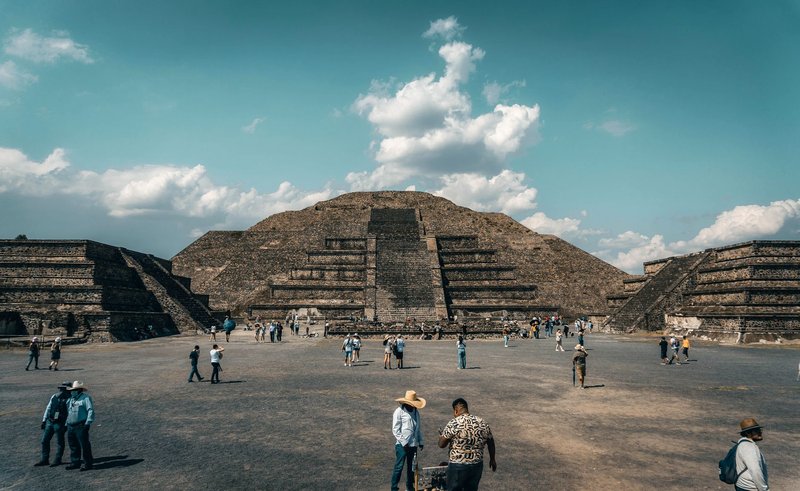
Teotihuacan was the largest city in the pre-Columbian Americas at its peak — home to an estimated 125,000 people around 400–500 CE — and nobody knows who built it. The civilization that raised the Pyramid of the Sun and the Pyramid of the Moon left no written record of their name. The Aztecs arrived centuries after the city had been abandoned, found it already ancient, and named it “the place where the gods were created.”
The Avenue of the Dead runs 4 km through the site. Walk it early — by 10am the tour buses arrive and the main pyramids become a crowd management exercise.
Practical tip: Base yourself in Mexico City (50 km away). Go on a weekday, arrive at opening (9am), and head straight for the Pyramid of the Moon first — it has the better view and fewer people than the Sun pyramid.
Chichen Itza — Yucatán Peninsula
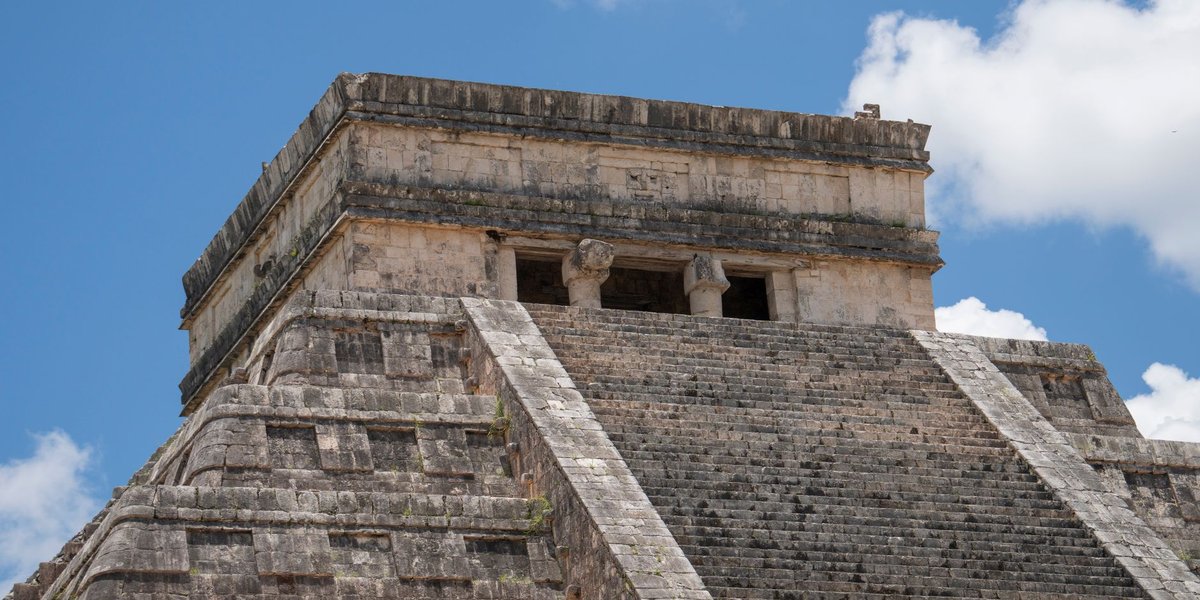
Chichen Itza dominated the northern Yucatán from roughly 600 to 1200 CE, a Maya city that absorbed influences from central Mexico and became something architecturally unlike anything else the Maya built. El Castillo — the stepped pyramid at the center — was engineered so that at the spring and autumn equinoxes, a shadow slithers down the staircase in the shape of a serpent. That’s not mythology; it’s a solar calendar cut in stone.
It’s the most-visited archaeological site in Mexico, and it shows. The crowds and the souvenir vendors right up against the ruins can be jarring.
Practical tip: Stay in Valladolid (40 km east) rather than Cancún. It’s closer, cheaper, and the town itself has a good colonial center worth half a day. If you do fly into Cancún, there are plenty of things to do in Cancún beyond the beach to fill an extra day before heading inland. Get to Chichen Itza at opening (8am) before the tour groups from the coast arrive.
Palenque — Chiapas
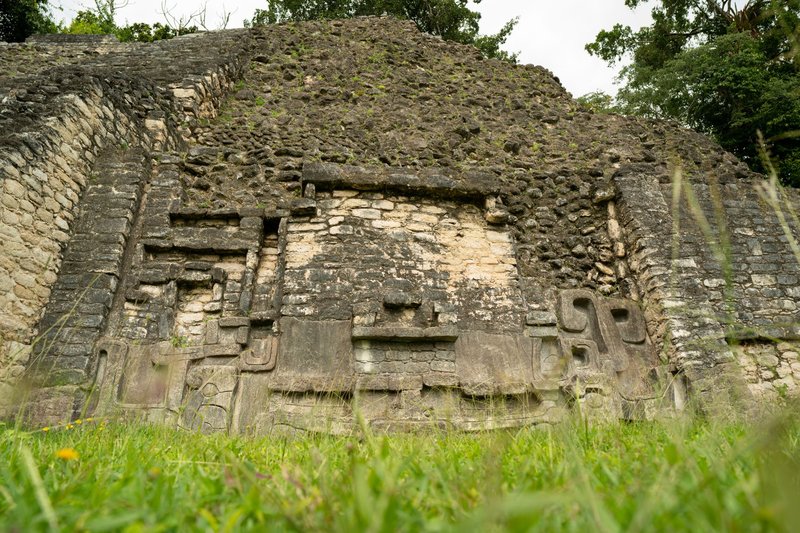
Palenque is what happens when a Maya city grows in dense rainforest instead of flat scrubland — the ruins emerge from the trees, and large portions of the site are still unexcavated. The Temple of the Inscriptions contains one of the longest hieroglyphic texts ever found in the Maya world, carved across three stone tablets. It also holds the intact burial tomb of King Pakal, discovered in 1952, which remains one of the most significant archaeological finds in Mexican history.
Only a fraction of the estimated 1,400 structures at Palenque have been cleared. You’re walking through an active dig.
Practical tip: The town of Palenque is functional but not charming. Consider staying in the jungle lodges just outside the ruins zone — some are steps from the site entrance and give you access early, before the day-trippers arrive.
Uxmal — Yucatán Peninsula
Uxmal is the Yucatán site for people who find Chichen Itza too crowded. The architecture here is Puuc style — characterized by mosaic stonework facades covered in geometric patterns and masks of the rain god Chaac, assembled from thousands of precisely cut pieces. The Pyramid of the Magician has a rounded base unlike anything else in Mesoamerican architecture. Uxmal was occupied from roughly 700 to 1000 CE and was one of the most powerful cities in the northern Yucatán.
Practical tip: Combine Uxmal with the Ruta Puuc — a circuit of four smaller ruins (Kabah, Sayil, Labná, Xlapak) all within 30 km. A single day by car covers all of them at your own pace.
Monte Albán — Oaxaca
Monte Albán sits on a flattened mountaintop above Oaxaca City, and the first thing that hits you is the scale of the earthworks. The Zapotecs leveled the top of a mountain to build their capital here around 500 BCE, and the city remained occupied for over a thousand years. The ball court, the observatory building (aligned astronomically), and the carved stone slabs called danzantes — figures in contorted poses that are now believed to represent sacrificed captives — make it one of the most archaeologically layered sites in Mexico.
Practical tip: It’s 9 km from Oaxaca City center. Colectivos run regularly from the second-class bus station. Go in the afternoon — the morning light hits the main plaza flat; late afternoon gives you better shadows and fewer large groups.
Tula — Hidalgo
Tula was the Toltec capital, the civilization that the Aztecs claimed as their legendary ancestors. The site’s most iconic feature — four 4.6-meter stone warrior columns called the Atlantes, which once held up a temple roof — were the direct inspiration for similar figures at Chichen Itza, 1,500 km away. The connection between Tula and the Yucatán is one of Mesoamerican archaeology’s more interesting open questions.
Practical tip: Tula is 85 km north of Mexico City, easy as a half-day trip. It gets far fewer visitors than Teotihuacan, so you can take your time with the Atlantes at close range — something the crowds at bigger sites rarely allow.
Cholula — Puebla
The Great Pyramid of Cholula is the largest pyramid by volume ever built — bigger than the Great Pyramid of Giza, though you wouldn’t know it by looking at it. It was built up in layers over centuries, with new structures encasing older ones, until the Spanish arrived, dismantled the top layer, and built a Catholic church directly on the summit. The church is still there. You can walk through 8 km of tunnels excavated through the pyramid’s interior.
Practical tip: Cholula is a 15-minute drive from Puebla city center. Visit on a clear day — the view from the church atop the pyramid includes Popocatépetl volcano when the sky cooperates.
Calakmul — Campeche
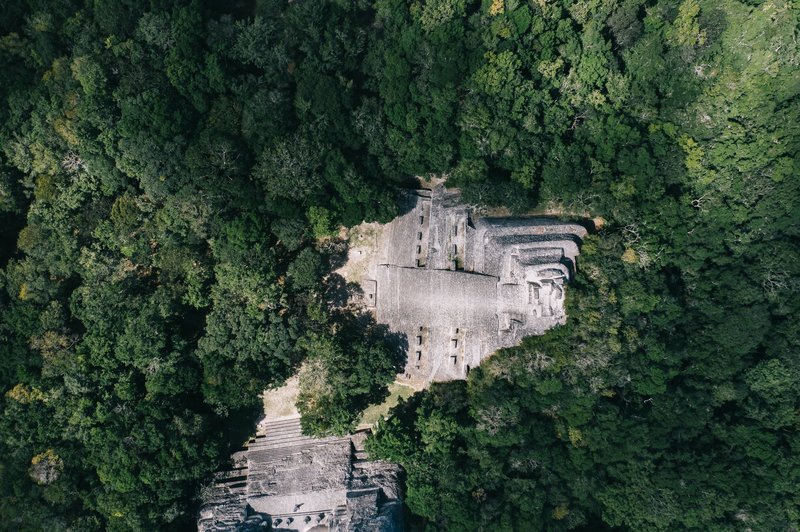
Calakmul was Tikal’s great rival — the two cities fought a centuries-long proxy war across the Maya lowlands, and Calakmul won more rounds than it lost. At its peak it may have housed 50,000 people. It’s now deep inside a UNESCO-designated biosphere reserve, surrounded by the largest tropical forest in Mexico. Getting there requires a 60 km dirt road drive into the jungle.
The difficulty is the point. The site sees a fraction of Chichen Itza’s visitors, and the Pyramid I here is the tallest Maya structure in Mexico at 45 meters.
Practical tip: Stay in Xpujil town the night before, leave early, and arrive at the ruins by 8am. The jungle is full of howler monkeys, toucans, and the occasional coati. Bring bug spray — serious bug spray.
El Tajín — Veracruz
El Tajín was the major city of the Totonac civilization on the Gulf Coast, reaching its peak between 600 and 1200 CE. Its signature structure, the Pyramid of the Niches, has 365 square recesses built into its seven stepped tiers — widely interpreted as a solar calendar. The city also contains 17 ball courts, more than any other known Mesoamerican site, suggesting that the ritual ball game had unusual ceremonial importance here.
Practical tip: El Tajín is near Papantla, Veracruz. If you visit in March, the Cumbre Tajín festival turns the site into a massive cultural event. The rest of the year, it’s one of Mexico’s most undervisited major ruins.
Colonial Cities
Mexico City Historic Centre
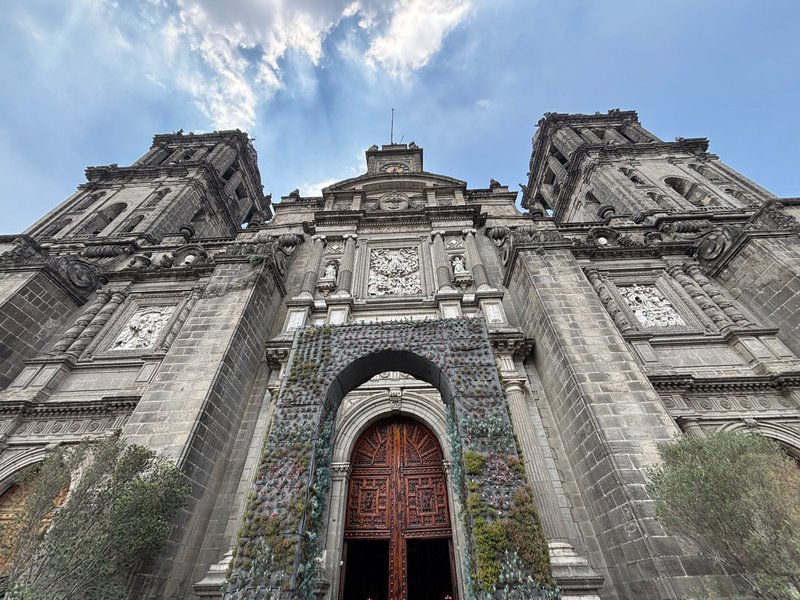
The Aztec capital Tenochtitlán was built on a lake island and connected to the mainland by causeways. The Spanish demolished it and built their capital directly on top — the cathedral in the Zócalo sits on the exact spot of the Templo Mayor, the Aztec empire’s most sacred shrine. That temple has since been partially excavated and sits right next to the cathedral, open to visitors.
The Historic Centre holds 1,400 colonial-era buildings across 9 square km. It’s a living city, not a museum zone — vendors, offices, markets, and traffic fill every block.
Practical tip: Don’t try to “do” the Historic Centre in an afternoon. Spend two days minimum: one for the Zócalo area (Cathedral, Templo Mayor, National Palace murals by Diego Rivera), one for the surrounding neighborhoods and markets. It’s also worth knowing which neighborhoods to avoid in Mexico City before you head out to explore beyond the historic core.
Oaxaca City
Oaxaca’s colonial center was built by the Spanish using green volcanic stone — cantera verde — quarried locally, which gives the buildings a color you won’t see in any other Mexican city. The city was founded in 1529 and has barely been touched architecturally since the 18th century. The Santo Domingo Church complex, completed in 1608, has a ceiling covered in gilded stucco bas-relief — one of the most impressive interiors in colonial Mexico.
Practical tip: Oaxaca is also the base for Monte Albán (see above). Budget at least three days: one for the city, one for the ruins, and one for the valley villages (Mitla, Tlacolula market, the Tule tree).
Guanajuato
Guanajuato made its money from silver. By the 18th century it was producing a third of the world’s silver supply, and the wealth went straight into the architecture. The city was built in a ravine and expanded underground — there’s a network of subterranean roads running below street level that were originally riverbed tunnels. You can drive through them today. The city also hosted the opening battle of Mexico’s War of Independence in 1810 at the Alhóndiga de Granaditas.
Practical tip: Guanajuato has no logical street grid — it’s a maze of alleys and stairways built around a ravine. Get deliberately lost on foot the first day. Take the funicular to the Pípila statue for orientation.
Puebla
Puebla was founded in 1531 specifically to be a Spanish city — designed on a grid, staffed by Spanish settlers, and used as a waypoint on the road between Veracruz and Mexico City. The result is one of the best-preserved colonial centers in Mexico, with 2,619 buildings officially catalogued as historic monuments. The tile-covered facades and church domes are distinctively Poblano — nowhere else in Mexico looks quite like this.
Practical tip: The Amparo Museum in Puebla has one of the best pre-Columbian collections in the country, and it’s far less crowded than Mexico City’s National Anthropology Museum.
Mérida
Mérida was built on top of the Maya city of T’ho, and the Spanish recycled the Maya stonework directly into their colonial buildings. It became the wealthiest city in Mexico during the henequen boom of the late 19th century, when sisal fiber from the Yucatán supplied most of the world’s rope and twine. The Paseo de Montejo, modeled on the Champs-Élysées, is lined with the mansions built during that era.
Practical tip: Mérida is the best base for exploring Yucatán ruins — Chichen Itza, Uxmal, and Ek’ Balam are all within two hours. The city itself is best experienced on Sunday when the main streets close to cars and fill with food, music, and dancers.
San Cristóbal de las Casas — Chiapas
San Cristóbal was founded in 1528 in the Chiapas highlands, in the traditional territory of the Tzotzil and Tzeltal Maya, who are still the majority population in the surrounding villages. The city has always been contested — it was the flashpoint for the Zapatista uprising in 1994, which began on January 1st, the day NAFTA took effect. The colonial architecture is Spanish; the culture is Maya; the coffee is from the highlands and it’s excellent.
Practical tip: San Cristóbal sits at 2,200 meters. If you’re coming from sea level, give yourself a day to acclimatize before hiking to the surrounding indigenous villages like San Juan Chamula, where the local Catholic church traditions bear little resemblance to anything practiced in Rome.
Standalone UNESCO Sites
Camino Real de Tierra Adentro
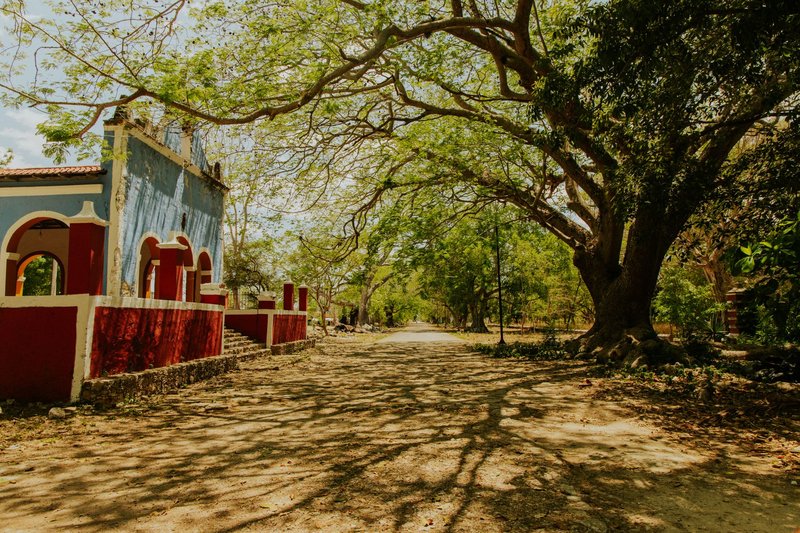
The Camino Real de Tierra Adentro was the 2,600 km trade route connecting Mexico City to Santa Fe, New Mexico — used from the 16th through 19th centuries to move silver north and European goods south. It’s a UNESCO World Heritage Route (designated 2010), not a single site, but several towns along it — Querétaro, Zacatecas, San Luis Potosí — preserve the colonial infrastructure built to service it. Many of these stopovers are also recognized as pueblos mágicos, Mexico’s official designation for towns of exceptional cultural and historical character.
Practical tip: Zacatecas is the best single stop on the route: a silver-mining city with a dramatically beautiful pink-stone cathedral and a functioning cable car. It’s often overlooked compared to Guanajuato, which means far fewer tourists.
Prehistoric Rock Paintings of Baja California
In the Sierra de San Francisco mountains of Baja California, thousands of rock paintings cover cave walls and overhangs — human figures, deer, whales, mountain lions, painted in red, black, yellow, and white. The oldest estimates put some paintings at 7,500 years old. They were created by the Cochimí people, and the techniques and subjects remained consistent across millennia. The site was designated a UNESCO World Heritage Site in 1993.
Practical tip: These aren’t roadside stops. Reaching the main sites requires a multi-day mule trek from the town of San Ignacio, arranged through local guides. The remoteness is what preserved them.
Quick-Reference Comparison Table
| Site | Civilization / Period | Region | UNESCO? | Best For |
|---|---|---|---|---|
| Teotihuacan | Unknown / 100 BCE–550 CE | Central Mexico | Yes | Scale, pyramids, day trip from CDMX |
| Chichen Itza | Maya / 600–1200 CE | Yucatán | Yes | Iconic architecture, equinox phenomenon |
| Palenque | Maya / 100–800 CE | Chiapas | Yes | Jungle setting, hieroglyphics, tomb |
| Uxmal | Maya / 700–1000 CE | Yucatán | Yes | Puuc architecture, fewer crowds |
| Monte Albán | Zapotec / 500 BCE–700 CE | Oaxaca | Yes | Mountaintop location, Zapotec history |
| Tula | Toltec / 700–1150 CE | Hidalgo | No | Atlante warriors, Toltec-Maya connection |
| Cholula | Various / 300 BCE–1500 CE | Puebla | No | Largest pyramid by volume, church on top |
| Calakmul | Maya / 200 BCE–900 CE | Campeche | Yes | Remote, tallest Maya pyramid in Mexico |
| El Tajín | Totonac / 600–1200 CE | Veracruz | Yes | Pyramid of Niches, 17 ball courts |
| Mexico City Centre | Aztec + Colonial / 1325–1821 | Central Mexico | Yes | Templo Mayor, Rivera murals, living history |
| Oaxaca City | Colonial / 1529– | Oaxaca | Yes | Cantera verde architecture, Santo Domingo |
| Guanajuato | Colonial / 1548– | Bajío | Yes | Silver wealth, underground roads, independence history |
| Puebla | Colonial / 1531– | Central Mexico | Yes | Tilework, colonial grid, Amparo Museum |
| Mérida | Colonial on Maya / 1542– | Yucatán | No | Yucatán base, henequen mansions |
| San Cristóbal | Colonial / 1528– | Chiapas | No | Highland Maya culture, 1994 Zapatista history |
| Camino Real | Colonial route / 1598– | North-Central | Yes | Silver route, Zacatecas, Querétaro |
| Baja Rock Paintings | Cochimí / 7,500 BCE– | Baja California | Yes | Oldest art in Mexico, mule-trek remoteness |
Planning by Region
Mexico is large and the historical sites are spread across it. Flying between regions saves days; trying to connect Chiapas to the Yucatán by bus is a commitment. Here’s how the sites cluster:
Central Mexico (Mexico City base): Teotihuacan, Cholula/Puebla, Tula. Three to five days covers all of them plus the capital.
Oaxaca: Monte Albán, Oaxaca City, Mitla. Fly into Oaxaca — it’s connected to Mexico City with multiple daily flights. Give it four days minimum.
Yucatán Peninsula: Chichen Itza, Uxmal, Calakmul, Mérida. This is the classic Mayan ruins circuit. Fly into Mérida or Cancún. Two weeks does it properly; one week means skipping Calakmul (which you shouldn’t).
Chiapas: Palenque, San Cristóbal. These two are connected by a five-hour mountain road. Fly into Tuxtla Gutiérrez or take a night bus from Oaxaca.
Gulf Coast: El Tajín, near Veracruz. Works best as an add-on to a broader central Mexico trip.
North: Camino Real towns (Zacatecas, Querétaro), Baja rock paintings. These require separate planning — the Baja paintings especially need advance booking with local guides in San Ignacio.
Mexico rewards travelers who pick a region and go deep over those who try to check every box in a single trip. The sites listed here represent roughly three separate two-week itineraries. Start with one.