Table of Contents
- The Short Answer
- Palauan: The Native Tongue
- English: The Colonial Inheritance
- Japanese in Angaur: A Living Relic
- Who Actually Speaks What
- Official Languages by Region
- For Travelers: What You Need to Know
The Short Answer {#the-short-answer}
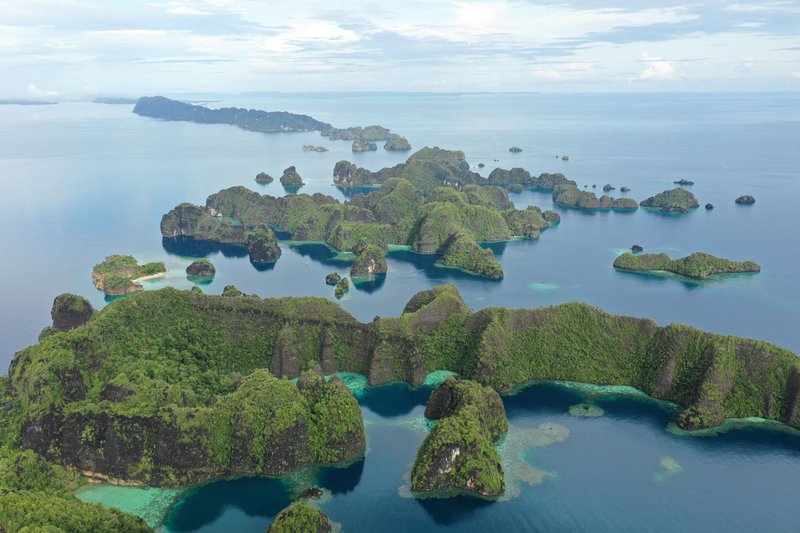
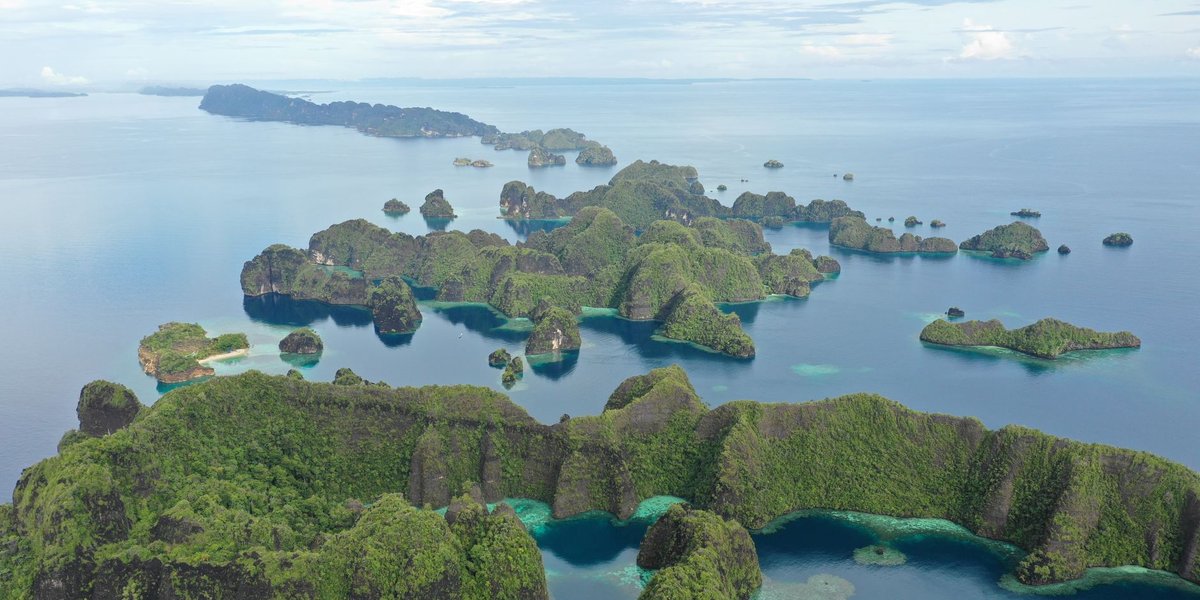
Palau has two national official languages: Palauan and English. In the state of Angaur, Japanese holds additional official status — making it the only place in the Pacific where Japanese is legally recognized as an official language.
That’s the factual core. But it doesn’t explain much. Why is English official in a Micronesian island nation of 18,000 people? Why is Japanese still on the books in a single tiny state 80 years after WWII? That history is worth knowing.
Palauan: The Native Tongue {#palauan-the-native-tongue}
Palauan is an Austronesian language — part of the same family that includes Tagalog, Malay, Hawaiian, and Malagasy, with roots stretching back to Taiwan’s prehistoric migrations across the Pacific and Indian Oceans. But within Austronesian, Palauan is an outlier. Most linguists classify it in its own branch (Palauan branch of the Malayo-Polynesian subgroup), meaning it doesn’t share close mutual intelligibility with its geographic neighbors.
The language uses a subject-verb-object word order, features complex verb morphology, and has a system of noun classifiers that marks it as distinctly non-Western in structure. There’s no real shortcut to picking it up — it sounds nothing like English, nothing like Japanese, and only superficially like Tagalog.
About 17,000 people speak Palauan as a first language. It’s the everyday language in homes, markets, and community gatherings. Around 81% of Palauans speak Palauan at home, according to census data.
English: The Colonial Inheritance {#english-the-colonial-inheritance}
English didn’t arrive in Palau organically. It arrived because the United States administered the islands.
After Japan’s defeat in 1945, the United Nations designated the former Japanese-held islands of Micronesia — including Palau — as a Trust Territory under U.S. administration. That trusteeship lasted from 1947 to 1994, nearly five decades. The U.S. ran schools, courts, and civil services in English. An entire generation of Palauans received English-language education.
When Palau became fully independent in 1994 under the Compact of Free Association with the United States, it kept English as a co-official language alongside Palauan. The practical reasons were hard to argue with: English was already embedded in law, education, and commerce. Discarding it would have meant rebuilding institutions from scratch.
Today, English is widely spoken across Palau — particularly in government, business, and tourism. About 9.4% of Palauans speak English as a native language.
Japanese in Angaur: A Living Relic {#japanese-in-angaur-a-living-relic}
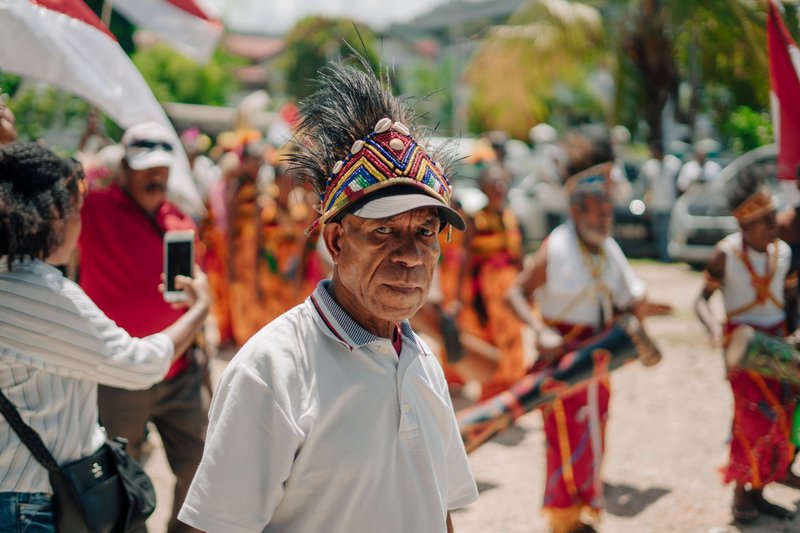
Angaur is a small island in southern Palau — roughly 8 square kilometers, population around 100 people. It’s also the only state in Palau where Japanese is an official language, a status it has held since the Palauan constitution was adopted in 1981.
Japan controlled Palau from 1914 to 1945, first under a League of Nations mandate and then as a wartime territory. Japanese colonial rule fundamentally reshaped the islands: Japanese settlers outnumbered Palauans by several times by the 1930s, and Japanese language and education were embedded in daily life.
After the war, Japanese settlers left. But in Angaur — which had a particularly large Japanese presence — the linguistic and cultural traces ran deep. Some older Palauans educated during the Japanese period grew up speaking Japanese alongside Palauan. The official status in Angaur is partly a nod to that history, partly a legal preservation of that generation’s linguistic heritage.
In practice, Japanese is rarely spoken as a daily language in Angaur today. The community is small, the original Japanese-era speakers are elderly or gone, and the practical need has faded. The official designation persists more as a statement of historical memory than as a living administrative reality. That said, Japanese tourists do visit Palau in significant numbers — the WWII history, especially the Battle of Peleliu, draws them — and Japanese-language signage is not uncommon in tourist areas.
Who Actually Speaks What {#who-actually-speaks-what}
The official language list and the on-the-ground reality don’t map onto each other neatly. Here’s a clearer picture:
Palauan is the dominant home language. It’s what people use with family, friends, and in community settings. It’s culturally central, not ceremonial.
English is the working language of government, courts, and business. It’s also the medium of instruction in Palauan schools, which means younger generations speak it fluently. In tourist areas like Koror, you can get through daily life entirely in English.
Filipino is widely spoken informally. The Philippines is Palau’s largest source of foreign workers, and Tagalog is a common second language in workplaces and service industries — even though it holds no official status.
Japanese remains on the books in Angaur but isn’t a practical daily language anywhere in Palau.
Official Languages by Region {#official-languages-by-region}
| Location | Official Languages |
|---|---|
| Palau (national) | Palauan, English |
| Angaur State | Palauan, English, Japanese |
| Sonsorol State | Sonsorolese, Palauan, English |
| Tobi State (Hatohobei) | Tobian, Palauan, English |
Sonsorol and Tobi are outliers in a different direction: they’re remote outer islands with their own distinct languages — Sonsorolese and Tobian, both Austronesian but separate from Palauan — that are officially recognized at the state level.
For Travelers: What You Need to Know {#for-travelers-what-you-need-to-know}
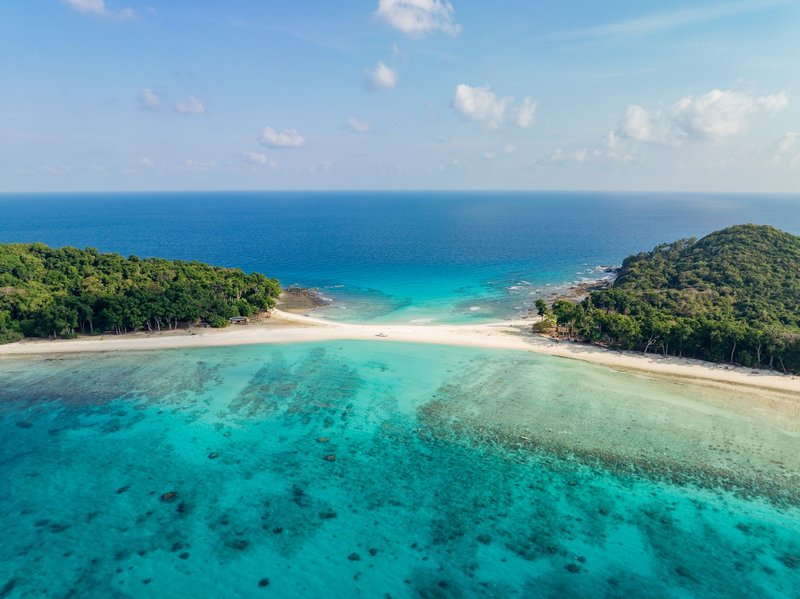
English gets you everywhere you need to go in Palau. Koror, the main commercial hub, runs almost entirely on English in hotels, dive shops, restaurants, and tour operators. Signs are bilingual. Staff at tourist-facing businesses almost universally speak it.
A handful of Palauan phrases will get you genuine warmth, though. Palauans aren’t used to visitors making the effort, and even a clumsy attempt lands well.
A few basics:
- Alii (ah-LEE) — Hello / Greetings (the most common greeting)
- Sulang — Thank you
- Ke kmal mesaul — Thank you very much
- Ng diak — No
- Ng ungil — It’s good / it’s fine
One thing worth knowing: Palau has a strong oral tradition, and Palauan names for places and landmarks often differ significantly from their English equivalents on tourist maps. If you’re asking locals for directions or talking about specific sites, you may encounter both names for the same place. The Jellyfish Lake (one of Palau’s signature snorkeling spots) is Ongeim’l Tketau in Palauan — not a name any map will help you pronounce, but the locals will appreciate the fact that you tried.
Palau’s multilingual makeup isn’t a footnote. It’s a compressed record of the twentieth century’s imperial history — Spanish, German, Japanese, American — layered onto a culture that’s been here for 3,000 years. The fact that three official languages still share the books in 2024 is, in its way, a testament to how much history a place this small managed to absorb.