Table of Contents
- TLDR: The Quick Breakdown
- The Khalkha: The Dominant Majority
- The Kazakhs of Bayan-Ölgii
- The Buryat: Shamanism and the Russian Border
- Other Turkic Groups: Tuvans, Khotons, and Tsaatans
- The Smaller Mongolian Subgroups
- Quick Reference: Mongolia’s Major Ethnic Groups
- Ethnic Identity and the Nomadic Life
- Language Endangerment and Cultural Preservation
- What This Means for Travelers
TLDR: The Quick Breakdown {#tldr}
Mongolia has around 3.4 million people and roughly 20 recognized ethnic groups. About 82% are Khalkha Mongols — the dominant group, the one that defines what most outsiders picture as “Mongolian.” The remaining 18% includes Kazakhs (concentrated in the far west), Buryat (near the Russian border), Dörvöd, Bayad, Tuvans, and a cluster of smaller groups that most travel articles never get to.
Each group has its own language or dialect, its own religious traditions, and a distinct relationship with the steppe. The Kazakhs hunt with eagles. The Tsaatans herd reindeer in taiga forests. The Buryat have deep shamanist roots that survived Soviet-era suppression. This isn’t a monolithic culture — it’s a patchwork, and the differences matter.
The Khalkha: The Dominant Majority {#khalkha}
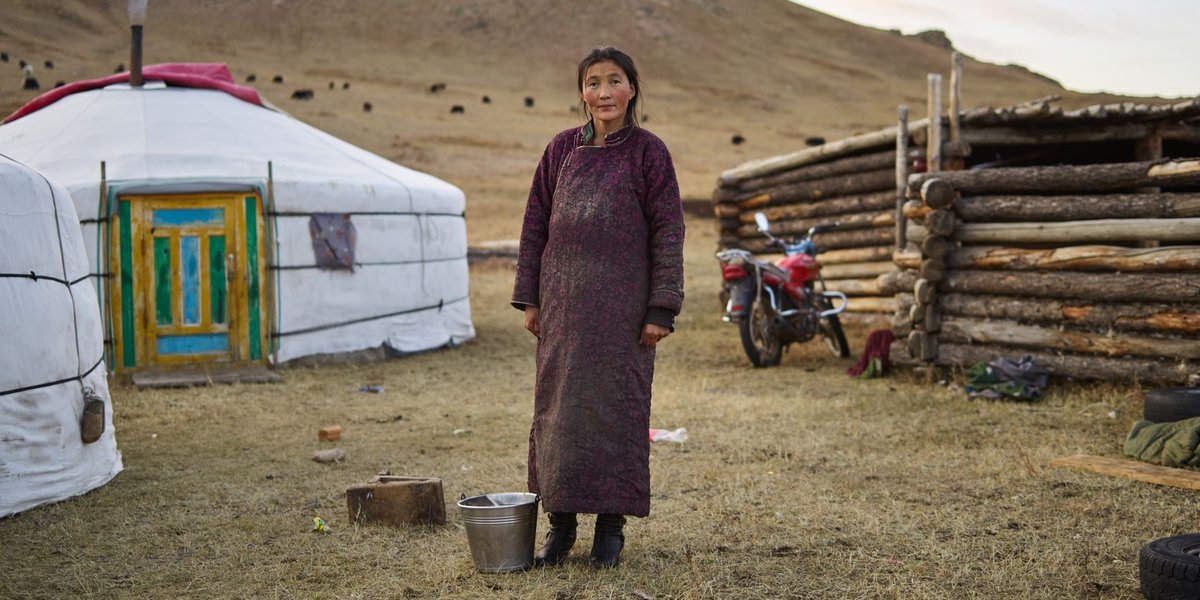
The Khalkha make up roughly 82% of Mongolia’s population. They’re the group that gave the country its language (Khalkha Mongolian is the official tongue), its Buddhist traditions, and the cultural reference points that show up in every travel brochure — the ger, the del robe, Naadam festival, fermented mare’s milk.
They’re spread across the central and eastern steppe, concentrated around Ulaanbaatar and the Khangai mountains. The Khalkha were the core of Chinggis Khan’s unified Mongol state in the 13th century, and that historical weight still shapes national identity. In everyday Mongolian discourse, “Mongol” often defaults to Khalkha, which is part of why minority groups push back on how identity gets defined.
Religiously, the Khalkha are predominantly Tibetan Buddhist — a tradition that was nearly destroyed during the Soviet period (most monasteries were demolished in the 1930s, thousands of monks executed) and has been rebuilding since 1990. The mix of Buddhist ceremony and older shamanist practice is still common in rural areas, and several of these rebuilt monasteries rank among the most significant historical places in Mongolia.
The Kazakhs of Bayan-Ölgii {#kazakhs}
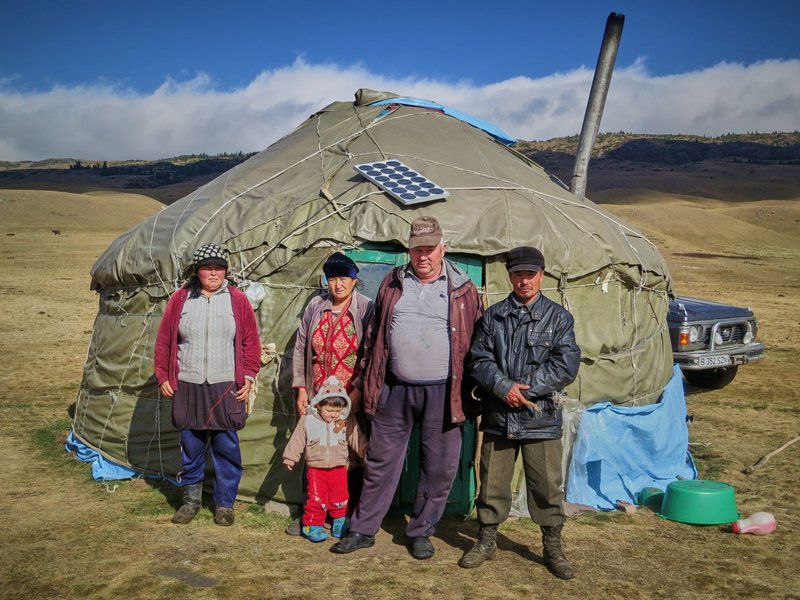
The Kazakhs are Mongolia’s largest ethnic minority, making up roughly 4–5% of the population. Almost all of them live in Bayan-Ölgii, a province in the far west that borders Russia and China — close enough to Kazakhstan that many families maintain ties across the border.
They’re Turkic-speaking, not Mongolian-speaking, and predominantly Sunni Muslim in a country that’s otherwise Buddhist or secular. The visual markers are distinct: mosques appear in Ölgii town, women wear headscarves, and the script used in traditional contexts is Arabic-derived rather than Mongolian Cyrillic.
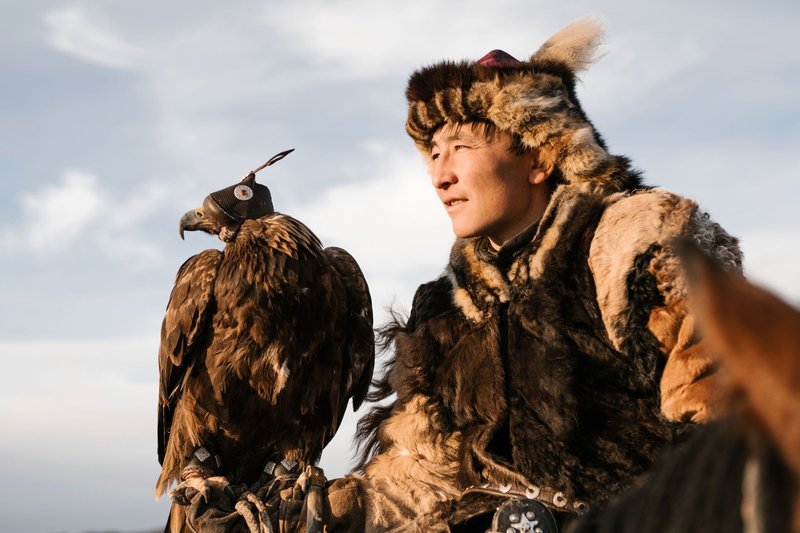
The eagle hunters — the burkitshi — are Kazakh. The tradition of training golden eagles to hunt foxes and rabbits is specific to this community, practiced in the Altai mountains each winter. It’s become a draw for photographers and tour operators, but it’s not performance: it’s a real practice passed down through families, with birds trained from eaglets and released back into the wild after several years of partnership.
Bayan-Ölgii has its own Kazakh-language schools and local government, though Mongolian is required for national communication. The tension between cultural autonomy and state integration is a live issue, particularly for younger Kazakhs who have to decide whether to stay or emigrate to Kazakhstan proper.
The Buryat: Shamanism and the Russian Border {#buryat}
The Buryat are a Mongolian subgroup who live primarily in the northeastern provinces of Khentii, Dornod, and Khövsgöl — near the Russian border, because a much larger Buryat population exists across the border in the Republic of Buryatia. Mongolia’s Buryat population is roughly 45,000–50,000.
Their dialect is distinct enough from Khalkha to be considered a separate language by linguists. Culturally, the Buryat are notable for maintaining shamanist traditions more visibly than other Mongolian groups — partly because Soviet influence in Mongolia, while destructive, hit Buddhist institutions harder than shamanism (which was harder to institutionalize and therefore harder to eradicate).
Buryat shamans (zaarin) perform rituals tied to ancestral spirits and nature, and this practice has seen a revival since the 1990s. The Buryat also have strong traditions in metalworking and embroidery, and their ger interiors tend to be decorated differently from Khalkha ones.
Other Turkic Groups: Tuvans, Khotons, and Tsaatans {#other-turkic}
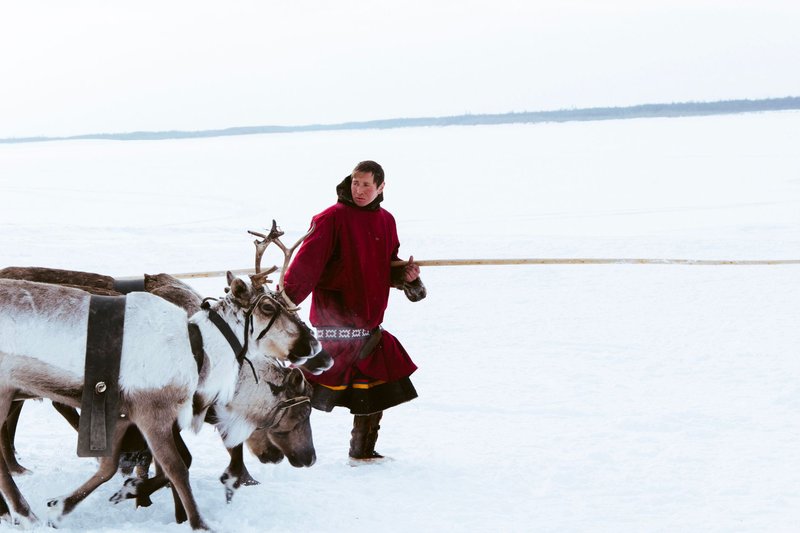
Mongolia has several small Turkic-speaking communities that don’t fit neatly into the Kazakh category.
Tuvans live in the Tsagaan-Nuur area of Khövsgöl and the Mongolian Altai. They’re related to the Tuvans of Russia’s Tuva Republic and speak a Turkic language. Throat singing (khoomii) is associated with Tuvan musical tradition across both countries, though it’s been widely adopted in Mongolian culture generally.
Tsaatans (also called Dukha) are a tiny community — fewer than 500 people — who live in the taiga forests of northern Khövsgöl and herd reindeer rather than horses or cattle. They’re the only reindeer-herding community in Mongolia. Their way of life is fragile: the younger generation is moving toward Tsagaan-Nuur town, reindeer numbers have declined, and the traditional teepee camps (urts) are increasingly visited by tourists, which brings cash but also disrupts the seasonal migration patterns the herds depend on.
Khotons are a small Muslim group in the Uvs and Khovd provinces, possibly of Oirat origin but having converted to Islam centuries ago. They speak a Mongolian dialect rather than a Turkic language — one of the few Muslim communities in Mongolia that isn’t Kazakh.
The Smaller Mongolian Subgroups {#smaller-groups}
The Khalkha aren’t the only Mongolian ethnic group — they’re just the largest. Several other groups identify as ethnically Mongol but have distinct histories, dialects, and regional identities.
Dörvöd are the second-largest Mongolian subgroup, about 2.7% of the population, concentrated in the Uvs province near the Russian border. They’re descended from the Oirat confederation that fought the Khalkha for centuries before Chinggis Khan’s unification — and that history still inflects how they understand their own identity.
Bayad live in Uvs province as well, around Uvs Lake. They’re Buddhist, speak a Mongolian dialect, and maintain distinct oral traditions.
Khalkha Torguud, Zakhchin, Myangad, and several other small groups each occupy specific valleys and basins in western Mongolia. The distinctions between them are meaningful to the communities themselves even if they’re invisible to outsiders.
Quick Reference: Mongolia’s Major Ethnic Groups {#table}
| Group | Share of Population | Region | Language | Religion |
|---|---|---|---|---|
| Khalkha | ~82% | Central, east, Ulaanbaatar | Khalkha Mongolian | Tibetan Buddhism |
| Kazakh | ~4–5% | Bayan-Ölgii (far west) | Kazakh (Turkic) | Sunni Islam |
| Dörvöd | ~2.7% | Uvs province | Dörvöd dialect | Tibetan Buddhism |
| Bayad | ~2.1% | Uvs province | Bayad dialect | Tibetan Buddhism |
| Buryat | ~1.7% | Northeast (Khentii, Dornod) | Buryat (Mongolian) | Shamanism / Buddhism |
| Zakhchin | ~1.3% | Khovd province | Zakhchin dialect | Tibetan Buddhism |
| Tuvan | ~0.5% | Khövsgöl, Altai | Tuvan (Turkic) | Shamanism / Buddhism |
| Khoton | <0.5% | Uvs, Khovd | Mongolian dialect | Sunni Islam |
| Tsaatan (Dukha) | <0.1% | Northern Khövsgöl taiga | Dukha (Turkic) | Shamanism |
Ethnic Identity and the Nomadic Life {#nomadic-identity}
One thing that cuts across nearly all of Mongolia’s ethnic groups is nomadic pastoralism — or at least its memory. The ger (yurt), the seasonal migration between summer and winter pastures, the relationship with horses: these aren’t Khalkha inventions. They’re a shared framework that different groups have adapted to their own landscapes and needs.
The Kazakhs move between summer pastures in the Altai highlands and lower winter camps. The Tsaatans migrate with their reindeer through spruce forests rather than open steppe. The Buryat in the northeast work territory that’s more forested and less arid than the central steppe. The animals change (horses, cattle, camels, yaks, reindeer depending on altitude and region), but the logic of the nomadic cycle is recognizable across all of them.
This shared framework is also why ethnicity in Mongolia has historically been more about clan lineage and region than about the kind of sharp ethnic boundaries that defined conflicts in other parts of the world. The Mongolian Empire was, structurally, a coalition of clans under a single military authority — not an ethnic homogenization project. That history shapes how Mongolians talk about group identity today: clan (ovog) often matters more in daily life than the ethnic label.
Urbanization is changing this. About half of Mongolia’s population now lives in Ulaanbaatar, where clan affiliation is harder to maintain and ethnic identity becomes more abstract. The question of what it means to be Khalkha or Kazakh or Buryat in a capital city apartment is genuinely open.
Language Endangerment and Cultural Preservation {#preservation}
Mongolia’s minority languages are under real pressure. The national education system uses Khalkha Mongolian, and most professional advancement requires fluency in it. For Kazakh children in Bayan-Ölgii, this means learning effectively in a second language. For Tsaatan children, the pull toward Mongolian schooling competes directly with the knowledge transmission that sustains their way of life.
According to UNESCO’s Atlas of the World’s Languages in Danger, several of Mongolia’s minority languages are classified as vulnerable or endangered, including Tuvan dialects spoken in Mongolia and the Dukha language of the Tsaatans. For a fuller picture of what’s at stake, the complete list of indigenous languages in Mongolia covers each language’s speaker count, geographic range, and preservation status.
The Mongolian government has made some accommodations — Bayan-Ölgii has Kazakh-language schools and a Kazakh-language state newspaper — but critics argue these are underfunded and inconsistent. There’s no comprehensive minority language policy, and the default assumption in national institutions is Khalkha Mongolian.
The cultural preservation challenges are sharper for nomadic practices than for language. Young people who move to Ulaanbaatar don’t just lose their dialect; they lose the ecological knowledge that goes with a nomadic life — how to read weather in the Altai, how to train a horse, which plants are edible at which altitude. That knowledge doesn’t exist in books.
NGOs and community organizations have tried to document oral traditions, support traditional crafts, and create economic incentives for staying in rural areas (tourism being the most common mechanism), but the structural pull toward the capital is strong. It’s a problem without an easy fix, and most travel writing ignores it entirely.
What This Means for Travelers {#travelers}
Mongolia’s ethnic diversity isn’t evenly distributed, so where you go determines what you see.
Ulaanbaatar is mostly Khalkha, with the western immigrant communities (Kazakhs, Dörvöd) concentrated in specific districts. The central steppe — Övörkhangai, Arkhangai, the Gobi — is Khalkha territory. Head northwest toward Uvs and Khovd and you’re in Dörvöd and Bayad country. Go to Bayan-Ölgii and you’ve crossed into what is effectively a Kazakh cultural region with Mongolian sovereignty. Go to northern Khövsgöl and you can arrange visits to Tsaatan camps through local guides.
A few practical notes: in Bayan-Ölgii, basic Kazakh phrases will get you further than Mongolian ones. The eagle hunting festival (Golden Eagle Festival) runs every October in Ölgii and is the most accessible entry point to Kazakh culture for visitors. Tsaatan visits should be arranged through operators who work directly with the communities — the tourism pressure on those camps is real, and the difference between a respectful visit and an extractive one matters.
The Naadam festival in July, held across Mongolia, draws on Khalkha tradition primarily, but regional Naadams in Bayan-Ölgii and other provinces include Kazakh sports and music that don’t appear in the Ulaanbaatar version.
Mongolia rewards travelers who look past the Genghis Khan narrative. The country has been a crossroads for Turkic, Mongolian, and Russian cultural currents for centuries, and that complexity is still visible — if you know where to look. For those ready to experience it firsthand, there’s no shortage of adventurous things to do in Mongolia that bring you directly into contact with these distinct communities and landscapes.