Table of Contents
- A Brief History Before You Visit
- Ha’amonga ‘a Maui Trilithon
- Langi Royal Tombs at Lapaha (Mu’a)
- The Ancient Capital Site at Heketa
- The Royal Palace, Nuku’alofa
- Pangai Si’i Gardens and Royal Tombs
- Abel Tasman Landing Site, Ha’atafu
- Ha’atafu Beach Petroglyphs
- Velata Mound Fortress, Ha’apai
- Houmale’eia Fortified Village, Vava’u
- Lapita Archaeological Sites
- Practical Tips for Visiting
Most Pacific island countries get reduced to beach content — and Tonga certainly has the beaches. But Tonga also has a royal lineage stretching back roughly 1,000 years, a prehistoric trilithon that nobody has fully explained, and burial mounds for kings that predate European contact by centuries. The historical sites here are not replicas or reconstructions. They’re the real thing, most of them unguarded, some of them barely signed.
This post covers the ten most important historical places in Tonga, organized by island group. Each entry includes what you’re actually looking at, why it matters, and whether you need a guide or can manage on your own.
A Brief History Before You Visit
To appreciate the sites, a little context helps.
Tonga was first settled by Lapita people around 3,000 years ago — the same ancestral Polynesian culture that later spread to Samoa, Hawaii, and New Zealand. Around 950 CE, the Tu’i Tonga lineage began, a royal dynasty that would become the most powerful political force in the central Pacific for over 400 years. At its peak, the Tu’i Tonga empire collected tribute from Samoa, Fiji, Niue, and parts of Micronesia.
The Ha’apai Group is where the Dutch explorer Abel Tasman first made European contact in 1643. William Bligh passed through after the Bounty mutiny in 1789. By the 19th century, Tonga had unified under King Taufa’ahau Tupou I and is the only Pacific nation to have never been formally colonized — a fact that still shapes national identity.
That long, unbroken history is exactly why the archaeological record here is worth your time.
Ha’amonga ‘a Maui Trilithon
Location: Eastern Tongatapu, about 35 km from Nuku’alofa Getting there: Rental car or organized day tour
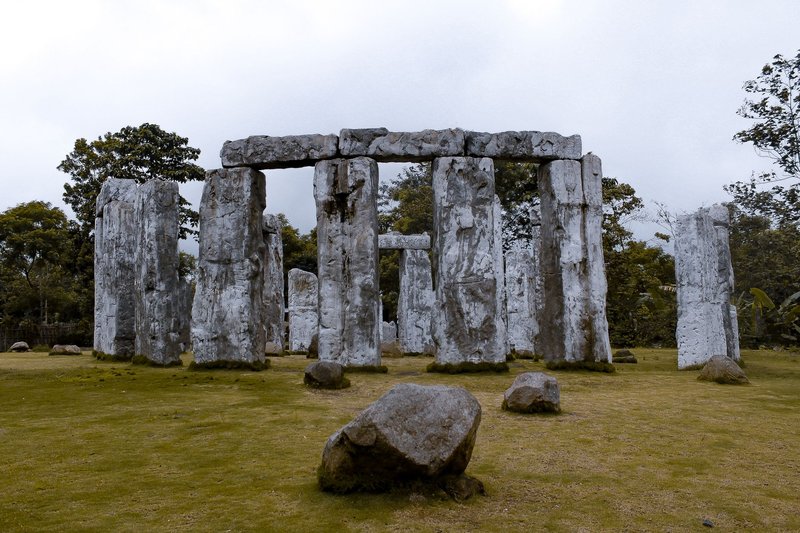
This is Tonga’s most iconic historical structure and, by most accounts, the most mysterious monument in the Pacific. Three coral limestone slabs — two upright, one laid horizontally across the top — form an arch standing about six meters tall. Each upright pillar weighs roughly 40 tonnes. The lintel alone is estimated at 9 tonnes.
It was built around 1200 CE, attributed to the 11th Tu’i Tonga, Taufa’ahau, supposedly to serve as a gateway marking the boundary between royal and commoner land. Later research by King Taufa’ahau Tupou IV himself led to the theory that the notch carved into the lintel aligns with the rising sun at the summer and winter solstices — suggesting an astronomical function as well.
Nobody is fully certain. Theories range from ceremonial gateway to solstice calendar to royal tomb marker. The Tongans who built it left no written record.
What you’ll find on-site: the monument itself is accessible in an open field with a small interpretive panel. A guide isn’t required, but the site makes considerably more sense with one — several tour operators in Nuku’alofa combine it with other eastern Tongatapu sites.
Langi Royal Tombs at Lapaha (Mu’a)
Location: Mu’a, eastern Tongatapu Getting there: 30-minute drive from Nuku’alofa; often combined with Ha’amonga
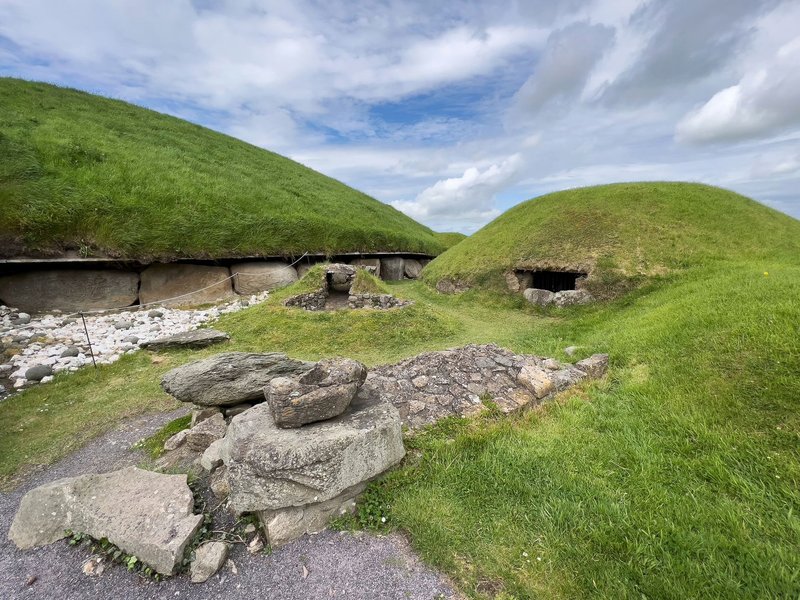
The Langi are terraced burial mounds built for Tu’i Tonga kings and their immediate families, concentrated at Lapaha near the village of Mu’a. There are more than 20 of them, ranging from small raised platforms to massive stepped pyramids constructed from hand-cut coral limestone blocks.
The largest, Paepae o Tele’a, was built for the 29th Tu’i Tonga and contains coral slabs weighing up to 30 tonnes — material that would have been quarried from the reef and transported by canoe. The engineering precision is striking: the slabs are fitted tightly without mortar, and the corners are geometric.
The Mu’a complex, along with Ha’amonga and the Heketa site, forms part of the Ancient Capitals of Tonga tentative UNESCO World Heritage nomination — a listing that would put these sites on the same footing as Angkor Wat or Machu Picchu for international recognition. That nomination has been pending since 2009 and the sites deserve the attention regardless of official status.
Local guides can point out which mounds correspond to specific kings in the royal genealogy, which makes the visit substantially more meaningful than reading the panels alone.
The Ancient Capital Site at Heketa
Location: Near the village of Heketa, northeast Tongatapu Getting there: Within the same eastern Tongatapu circuit as Ha’amonga
Heketa served as a royal residence and ceremonial center connected to the Tu’i Tonga empire. The site features remnants of earthworks, fortifications, and an earthen mound system that predates the Mu’a concentration of power.
It’s the least-visited leg of the eastern Tongatapu circuit, which means you’ll often have it to yourself. The earthworks are subtle — if you’re not looking carefully, you might walk past them. A local guide is essential here. Without context, it looks like a field.
The Royal Palace, Nuku’alofa
Location: Waterfront, central Nuku’alofa Viewing: Exterior only; the palace is still an active royal residence
Built in 1867 and made entirely of New Zealand timber, the Royal Palace is the oldest surviving wooden building in Tonga and one of the few 19th-century colonial-era structures still in use in the Pacific. The white Victorian architecture looks slightly out of place against the harbor — which is the point. King Taufa’ahau Tupou I commissioned it as a deliberate statement of modernity and sovereignty at a time when other Pacific kingdoms were losing theirs.
You cannot enter, but the exterior and surrounding grounds are open for viewing. The nearby Chapel Royal is also 19th-century and can sometimes be visited. The palace grounds are particularly significant during royal events and Constitution Day celebrations in November.
Pangai Si’i Gardens and Royal Tombs
Location: Central Nuku’alofa, adjacent to the Royal Palace
The royal burial grounds next to the palace contain tombs of modern Tongan monarchs — including King Taufa’ahau Tupou IV, who ruled for 41 years until 2006. The grounds are peaceful and open to visitors during daylight hours.
This is not ancient archaeology, but it’s continuous history: the same royal lineage that built the Langi mounds at Mu’a is buried here, 800 years later. That continuity is unusual anywhere on earth.
Abel Tasman Landing Site, Ha’atafu
Location: Ha’atafu area, western Tongatapu Getting there: Approximately 30 km from Nuku’alofa
In January 1643, the Dutch explorer Abel Tasman became the first European to make contact with the Tongan Islands, landing somewhere in the Ha’apai Group. A commemorative marker in the Ha’atafu area of Tongatapu acknowledges this contact, though the precise location of the original landing is on the island of Nomuka in Ha’apai.
Most Tonga travel guides conflate the two or skip the details. The actual first landing site — Nomuka — is a separate island in Ha’apai, accessible by domestic flight or ferry, and carries a small marker. For anyone seriously interested in Pacific exploration history, Nomuka is worth the detour.
Ha’atafu Beach Petroglyphs
Location: Near Ha’atafu Beach, western Tongatapu
These are among the least-publicized historical sites in Tonga, and finding them requires knowing where to look. The petroglyphs — carved figures and abstract symbols cut into coastal rock — date to the pre-European period and represent some of the only rock art found in Tonga.
Their precise cultural function is debated. Similar petroglyphs appear on other Polynesian islands and are generally associated with ritual or territorial marking. No Tongan oral tradition definitively explains these specific carvings.
Ask at a local guesthouse in Ha’atafu, or hire a guide in Nuku’alofa who covers western Tongatapu. The site isn’t signed.
Velata Mound Fortress, Ha’apai
Location: Lifuka Island, Ha’apai Group Getting there: Domestic flight or ferry to Ha’apai; the mound is accessible from Pangai town
Ha’apai is where most visitors go for snorkeling and humpback whales, but Lifuka Island contains one of Tonga’s more interesting defensive structures: the Velata Mound, a raised earthwork fortress used during the civil wars of the early 19th century. The Tongan civil wars were brutal, running from roughly 1799 to 1852 and involving shifting alliances between the three royal lineages — the Tu’i Tonga, Tu’i Ha’atakalaua, and Tu’i Kanokupolu. Velata was a fortified position during this conflict.
The earthworks are visible and the site is walkable. Context helps considerably — the civil war period is not well-documented in English, and a local guide can explain why the location and construction made strategic sense.
Houmale’eia Fortified Village, Vava’u
Location: Vava’u island group, accessible from Neiafu
Vava’u is typically marketed for sailing and diving, but the main island contains remnants of a fortified pre-contact village at Houmale’eia. The site features earthwork banks and ditches consistent with defensive village construction common across Polynesia before European contact.
Getting there requires effort — local knowledge or a guide from Neiafu. The reward is a site with almost no tourism infrastructure, in one of the more scenic parts of Tonga. Few visitors to Vava’u know it exists.
Lapita Archaeological Sites
The Lapita people, the founding culture of Polynesia, were present in Tonga for centuries before the Tu’i Tonga dynasty. Their signature pottery — geometric-patterned ceramics now used to trace Pacific migration — has been found at several sites across Tongatapu and the Ha’apai Group.
Most Lapita sites in Tonga are not open to casual visitors; they’re active or dormant archaeological excavation zones. The University of Auckland’s archaeology program has been involved in Tongan excavations, and some findings are summarized in academic publications if you want to go deep on the prehistory. The Tonga National Museum in Nuku’alofa has a small collection of artifacts from these sites and is the best accessible introduction.
Practical Tips for Visiting
Tongatapu is the starting point. Ha’amonga, Mu’a, and the Royal Palace can all be covered in a single long day with a rental car or guided tour. The eastern circuit (Ha’amonga + Mu’a + Heketa) and the western circuit (Ha’atafu petroglyphs) are usually done on separate days.
Ha’apai and Vava’u require planning. Domestic flights on Real Tonga operate to both island groups, but schedules are limited. If you want to visit Velata or Houmale’eia, build a dedicated night or two into your itinerary — these aren’t day trips from Nuku’alofa.
Guides add real value. The historical sites in Tonga are mostly unmarked or minimally signed. A local guide doesn’t just navigate — they provide the oral history context that no interpretive panel has. Several operators in Nuku’alofa offer half-day and full-day eastern Tongatapu tours.
Respect applies broadly. The Langi tombs and royal sites are sacred ground. Don’t climb on the mounds. Some sites are adjacent to active villages — ask before wandering.
Best time to visit: April to October, outside the cyclone season. The eastern Tongatapu sites are best in the morning before midday heat peaks.
The Tonga Tourism Authority maintains a site with current entry information, though it’s worth confirming individual site access locally — some areas have seasonal or ceremony-related restrictions that don’t always make it online.