
Table of Contents
- The Short Answer
- Salvadoran Spanish: What Makes It Different
- Caliche: The Slang You Won’t Find in a Textbook
- Nawat and Indigenous Languages
- English in El Salvador: The Honest Assessment
- How U.S. Immigration Shaped the Language
- Quick Language Reference
The Short Answer
Spanish. Almost everyone in El Salvador speaks Spanish, and it’s the official language of the country. If you know Spanish — any Spanish — you’ll get around fine.
But Salvadoran Spanish is its own thing. The dialect carries a distinct rhythm, a pronoun you won’t hear in most Spanish-language textbooks, and a slang vocabulary that’s specific enough to trip up even fluent speakers who’ve never spent time in Central America. That’s where it gets interesting.
Salvadoran Spanish: What Makes It Different
The most noticeable feature for anyone who learned Castilian or Latin American Spanish elsewhere is voseo. Instead of “tú” for the informal second person, Salvadorans use “vos” — and conjugate it differently. “Tú hablas” becomes “vos hablás.” “Tú eres” becomes “vos sos.”
Voseo is common across Central America and parts of South America (Argentina being the most well-known case), but it still catches people off guard if they learned Spanish in Spain or Mexico. There’s nothing wrong with using “tú” — locals will understand you completely — but if someone calls you “vos,” they’re being friendly, not grammatically sloppy.
Pronunciation-wise, Salvadoran Spanish sits in the “yeísmo” camp (no distinction between “ll” and “y”), and the “s” at the end of syllables often weakens or disappears entirely in casual speech. “¿Cómo estás?” can sound more like “¿Cómo ehtá?” The speed of casual conversation can be quick, especially in San Salvador.
Regional variation exists within the country. People from the western highlands — closer to Guatemala — speak with slightly different cadence than those along the Pacific coast or in the capital. The differences are subtle to an outsider, but Salvadorans can usually place each other by accent. El Salvador is one of the Spanish-speaking countries in Central America where these regional distinctions run surprisingly deep despite the country’s small size.
Caliche: The Slang You Won’t Find in a Textbook
Caliche is the colloquial slang of El Salvador, and it’s thick. Some of it is shared across Central America; a lot of it is distinctly Salvadoran. A few terms that come up constantly:
- Bicho/Bicha — kid or young person (not an insult; entirely neutral)
- Cipote/Cipota — same as bicho, slightly more rural feel
- Chivo — cool, good, excellent (“¡Qué chivo!”)
- Bayunco/Bayunca — someone acting ridiculous or clowning around
- Chumpe — turkey, but also used as slang for a fool
- Ahuevado — zoned out, clueless, acting slow
Caliche also includes words pulled from Nawat (the indigenous language discussed below), from African-derived speech patterns, and from plain Salvadoran creativity. It’s a living vocabulary that shifts by generation and neighborhood. Don’t expect a dictionary to keep up with it.
If you’re traveling and want to connect with locals, learning a handful of Caliche expressions goes a long way. Salvadorans tend to be warm and genuinely pleased when a visitor makes the effort.
Nawat and Indigenous Languages
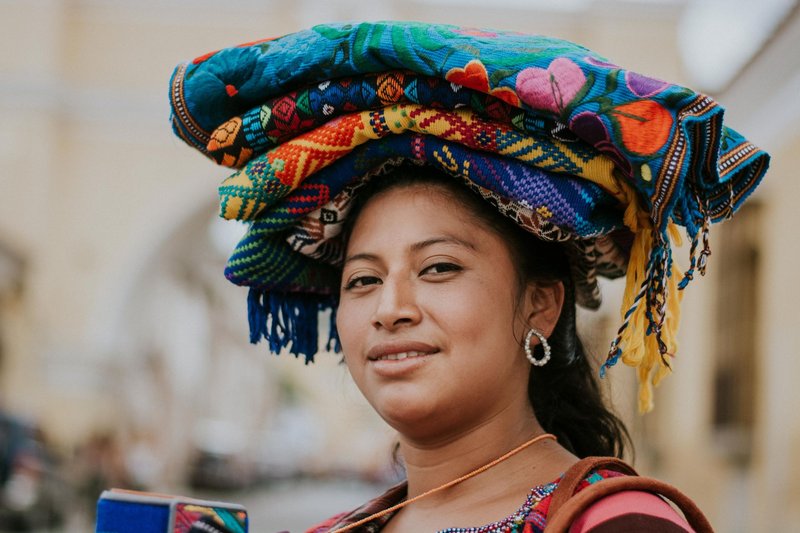
Before Spanish colonization, much of El Salvador was home to the Pipil people, who spoke Nawat (also called Pipil or Nahuat). It’s a Uto-Aztecan language related to but distinct from Nahuatl, the language of the Aztecs in central Mexico.
Today, Nawat is critically endangered. UNESCO classifies it as “critically endangered,” with estimates placing the number of fluent native speakers at fewer than 200 — most of them elderly, concentrated in the Nahuizalco area of Sonsonate department in western El Salvador.
What makes the Nawat situation different from a simple language-death story is the active revitalization effort underway. The Nahua-Pipil community and Salvadoran academics have been working to document the language and reintroduce it through community programs. The Universidad Don Bosco has produced teaching materials, and there are grassroots efforts to teach Nawat to younger generations who grew up speaking only Spanish. For a closer look at each surviving and extinct tongue, the list of indigenous languages in El Salvador covers language family, estimated speakers, and regional distribution in detail.
The language has also left a heavy imprint on Salvadoran Spanish, particularly in place names and everyday vocabulary. Words like ayote (a type of squash), izote (the national flower), milpa (a cornfield), and dozens of others in daily Salvadoran speech are Nawat in origin. El Salvador’s toponymy is saturated with Nawat-derived names — Apaneca, Izalco, Cojutepeque, Metapán.
Other indigenous languages that once existed in El Salvador — Lenca, Cacaopera (Matagalpa), and Poton — are effectively extinct. Nawat is the only one with any remaining speakers and any organized preservation effort.
English in El Salvador: The Honest Assessment
English is not widely spoken in El Salvador, and you shouldn’t count on it outside a narrow range of contexts.
In San Salvador, you’ll find English speakers at upscale hotels, international restaurants, airport staff, and businesses that cater specifically to foreign visitors or multinationals. In beach towns popular with surfers — El Tunco, El Zonte, El Cuco — you’ll encounter more English because those places have built tourism infrastructure around international visitors, including a growing community of remote workers and crypto enthusiasts drawn to the Bitcoin Beach experiment in El Zonte.
Step outside those contexts — smaller towns, markets, local comedores (lunch spots), bus rides — and Spanish is what you need. Basic Spanish will get you through most situations; even a few phrases make a real difference. Salvadorans are patient with visitors making an effort.
If your Spanish is nonexistent and you’re planning to travel beyond the capital, either take a Spanish class first, travel with someone bilingual, or accept that communication will be slow and mostly gestural in rural areas.
How U.S. Immigration Shaped the Language
El Salvador has one of the highest rates of emigration in the Americas, relative to population size. According to the Pew Research Center, there are roughly 1.4 million Salvadoran immigrants in the United States, with a much larger U.S.-born Salvadoran population on top of that. The remittance economy from the U.S. has long been a pillar of Salvadoran household income.
The result: English words and American cultural references have seeped into Salvadoran Spanish in ways that are visible and ongoing. Terms like marqueta (market), lonche (lunch), troca (truck), and chatear (to chat online) are in common use, especially among younger Salvadorans. Deportees who grew up in the U.S. have brought back slang and code-switching patterns that blend Caliche with American English in a hybrid register sometimes called “Spanglish salvadoreño.”
In communities with a high concentration of returned migrants, you’ll sometimes encounter people who speak English more fluently than you’d expect — not because El Salvador has English infrastructure, but because they lived in Los Angeles or Houston for ten years.
Quick Language Reference
| Language | Status | Speakers |
|---|---|---|
| Spanish | Official, near-universal | ~6.5 million |
| Nawat (Pipil) | Critically endangered | Fewer than 200 fluent speakers |
| Lenca | Extinct | — |
| Cacaopera | Extinct | — |
| English | Limited; tourism/business contexts | Small minority |
Spanish is the language of El Salvador in every practical sense. But the Spanish spoken there — voseo conjugations, Caliche vocabulary, Nawat loanwords mixed in — tells a more layered story than the simple one-word answer suggests. For travelers, that’s worth knowing before you arrive.