Kenya has two official languages: English and Kiswahili (Swahili). Kiswahili also holds a second title as the national language. That’s the short version, and it’s written into the constitution.
But the two-language answer hides what actually happens on the ground. Kenya is home to roughly 68 living languages spread across three language families. The constitution even names Kenyan Sign Language and Braille as part of the picture. So if you’re heading to Nairobi, planning a safari in the Mara, or just trying to understand how a country juggles dozens of mother tongues, the official languages are only the entry point.
Here’s how the system works, where each language gets used, and what a traveler actually needs.
Table of Contents
- The quick answer
- What the constitution actually says
- English vs. Kiswahili: who uses what, where
- The other ~68 languages
- Sheng: the language that isn’t official, but rules the streets
- Kenyan Sign Language and Braille
- A traveler’s greetings cheat sheet
- Frequently asked questions
The quick answer
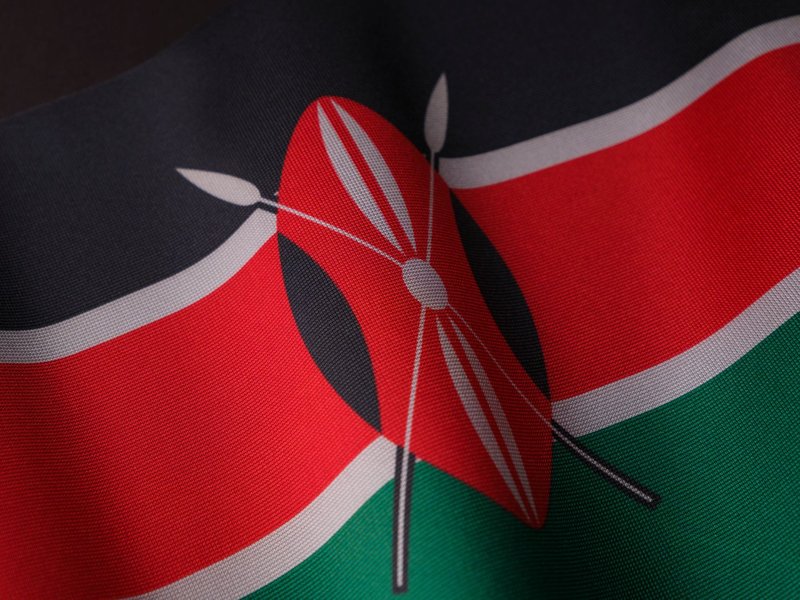
- Official languages: English and Kiswahili (two of them, equal status).
- National language: Kiswahili. It carries an extra cultural role beyond its official status.
- Total languages spoken: around 68, depending on how you count dialects.
- Language families: Bantu, Nilotic, and Cushitic.
- Also recognized: Kenyan Sign Language, Braille, and other communication formats for people with disabilities.
If you only remember one thing: English gets you through paperwork and business, Kiswahili gets you through everyday life, and a few words of Kiswahili will earn you a warmer reception almost everywhere.
What the constitution actually says
The legal basis sits in Article 7 of Kenya’s 2010 Constitution. It does three distinct things, and most travel guides only mention the first.
One: it declares Kiswahili the national language of the republic.
Two: it makes both Kiswahili and English the official languages. National and official aren’t the same thing here. National language is about identity and unity, the shared tongue that lets a Kikuyu speaker and a Luo speaker talk to each other. Official language is about function, the language of legislation, courts, and government records.
Three, and this is the part that gets skipped: the constitution obligates the state to promote and protect the diversity of Kenya’s indigenous languages, and to promote the development and use of Kenyan Sign Language, Braille, and other accessible formats. The framers didn’t just pick two winners and ignore the rest. They wrote in a duty to keep the smaller languages alive.
That’s a deliberate stance. Plenty of countries with this much linguistic diversity let the dominant languages crowd out the rest by default, and even among the countries with the most official languages, few write that kind of protection into law. Kenya put it in the founding document.
English vs. Kiswahili: who uses what, where
This is the practical heart of it, and the distinction is real once you’re on the ground.
English is the language of the formal world. Government documents, the higher courts, university lectures, corporate offices, international business, the bulk of the print press, and most road signs and official notices. Kenyan kids learn it in school from early on, and proficiency is high in cities and among anyone with secondary education. If you fill out a form, sign a contract, or read a menu in a Nairobi restaurant, it’ll likely be in English.
Kiswahili is the language of daily life. It’s the lingua franca that ties the country together across ethnic lines, the language you’ll hear in the matatu (the shared minibus), at the market, in casual conversation, on popular radio, and in the lower courts. A vendor in Mombasa, a guide in Nakuru, a shopkeeper in Kisumu, they may all speak different mother tongues, but they’ll meet in Kiswahili.
The split isn’t rigid. Most urban Kenyans move between both languages constantly, often inside a single sentence. You’ll hear English nouns dropped into Kiswahili grammar, or a conversation that opens in Kiswahili and pivots to English the moment it turns to anything technical or official. Code-switching is the norm, not the exception.
For a traveler, the takeaway is simple. You can get by on English almost everywhere a tourist goes. But Kiswahili greetings open doors. Lead with Jambo or, better, Habari, and watch the temperature of the interaction change.
The other ~68 languages
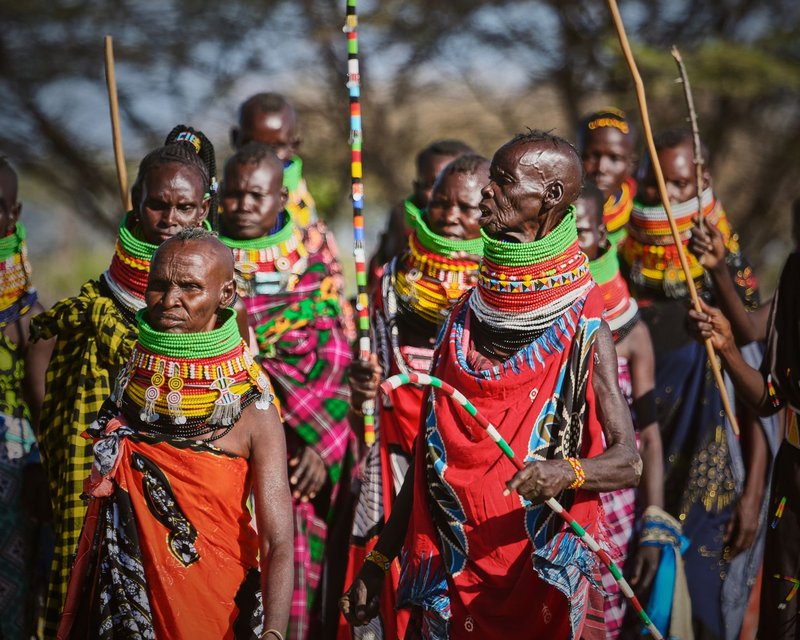
Beyond the two official languages, Kenya counts somewhere around 68 living languages. They sort into three families, and which one a language belongs to tells you a lot about the community that speaks it. If you want the full breakdown by name and family, there’s a complete list of Kenya’s indigenous languages that goes well beyond the headline figures.
Bantu languages are the largest group by speaker count. This family includes Kikuyu (Gikuyu), the most-spoken indigenous language with several million speakers concentrated in the central highlands around Mount Kenya. It also covers Luhya (really a cluster of related tongues in the west), Kamba in the southeast, Kisii in the southwest highlands, and Meru near Mount Kenya. Kiswahili itself is a Bantu language, which is part of why it spread so naturally as a common tongue.
Nilotic languages come from communities historically tied to cattle and the Rift Valley. Dholuo, the language of the Luo people, is spoken by millions around the Lake Victoria basin near Kisumu. Kalenjin (another cluster) dominates the western Rift Valley and is the mother tongue of many of Kenya’s famous distance runners. The Maasai speak Maa, the language most safari travelers will brush against in the Mara and Amboseli.
Cushitic languages are spoken mainly in the arid north and northeast, by communities with roots stretching toward the Horn of Africa. Somali is the big one here, spoken across the northeast and in Nairobi’s Eastleigh neighborhood. Borana and Rendille round out the group in the northern counties.
No single one of these comes close to challenging Kiswahili or English for national reach. Their strength is local and cultural. They’re the languages of home, of elders, of ceremony, and of the specific place a person comes from.
Sheng: the language that isn’t official, but rules the streets
You won’t find Sheng in Article 7, but you’ll hear it the moment you spend time around young people in Nairobi.
Sheng started in the city’s Eastlands estates and grew into an ever-shifting urban slang built mostly on a Kiswahili frame, stuffed with English, Kikuyu, Dholuo, and bits of whatever else is around. It mutates fast. A word that’s current this year can sound dated the next, which is partly the point, since it functions as an in-group code that marks you as young, urban, and plugged in.
It’s not a fringe thing. Sheng dominates Kenyan hip-hop, advertising aimed at the youth market, and a lot of social media. Politicians have learned to sprinkle it into campaign speeches to sound relatable. You don’t need to learn it as a visitor, but knowing it exists explains why a conversation you thought was Kiswahili suddenly stopped making sense.
Kenyan Sign Language and Braille
The constitution’s nod to accessibility isn’t just symbolic. Kenyan Sign Language (KSL) is the language of the country’s deaf community, with its own grammar and structure distinct from spoken Kiswahili or English, and distinct from American or British Sign Language too. Article 7 commits the state to developing and promoting it, and KSL interpreters now appear regularly on national television broadcasts and at major public events.
Braille gets the same constitutional mention, folded into the broader commitment to formats that serve Kenyans with disabilities. It’s a small clause in the founding text, but it puts accessibility into the conversation about official language at the constitutional level, which not every country does.
A traveler’s greetings cheat sheet
A handful of Kiswahili words covers most polite first contact. Pronunciation is forgiving: vowels are clean (a as in “father,” e as in “they,” i as in “machine,” o as in “go,” u as in “rule”), and stress almost always lands on the second-to-last syllable.
| English | Kiswahili | Notes |
|---|---|---|
| Hello (general) | Habari | Literally “news?” — the everyday greeting |
| Hello (touristy) | Jambo | Mostly used with visitors; locals prefer Habari |
| How are you? | Habari yako? | “Your news?” |
| Fine / good | Nzuri | The standard reply to Habari |
| Welcome | Karibu | Also means “you’re welcome” |
| Please | Tafadhali | |
| Thank you | Asante | Add sana for “thank you very much” |
| Yes / No | Ndiyo / Hapana | |
| Goodbye | Kwaheri | |
| No worries / cool | Hakuna matata | Real phrase, not just a movie line |
That last one is genuine Kiswahili, by the way. Hakuna matata means “there are no problems,” and Kenyans do say it, though usually with less singing than you’d expect.
Frequently asked questions
What are the official languages of Kenya? English and Kiswahili. Both have equal official status under Article 7 of the 2010 Constitution. Kiswahili additionally serves as the national language.
Is Swahili the same as Kiswahili? Yes. “Kiswahili” is the name of the language in the language itself (the ki- prefix marks a language in Bantu grammar). “Swahili” is the anglicized version. They refer to the same thing.
How many languages are spoken in Kenya? Around 68 living languages, grouped into Bantu, Nilotic, and Cushitic families. The exact count shifts depending on how linguists separate languages from dialects.
What is the most widely spoken language in Kenya? Kiswahili reaches the most people as a shared second language, since it cuts across ethnic lines nationwide. Among indigenous first languages, Kikuyu has the most native speakers.
Can I get by with only English in Kenya? In tourist areas, cities, hotels, and on safari, yes. English is widely understood. Learning a few Kiswahili greetings still makes a noticeable difference in how you’re received.
Is Sheng an official language? No. Sheng is an urban slang based mainly on Kiswahili and English, popular with young people in Nairobi. It has no official status, but it’s everywhere in Kenyan youth culture and media.
The takeaway
Kenya’s official languages are English and Kiswahili, with Kiswahili carrying the extra weight of national language. Underneath that tidy answer sits a country running on roughly 68 tongues, a constitution that promised to protect them, and a street culture inventing new ones. For a visitor, the formula is easy: English handles the official stuff, Kiswahili handles the human stuff, and a warm Asante sana goes a long way.