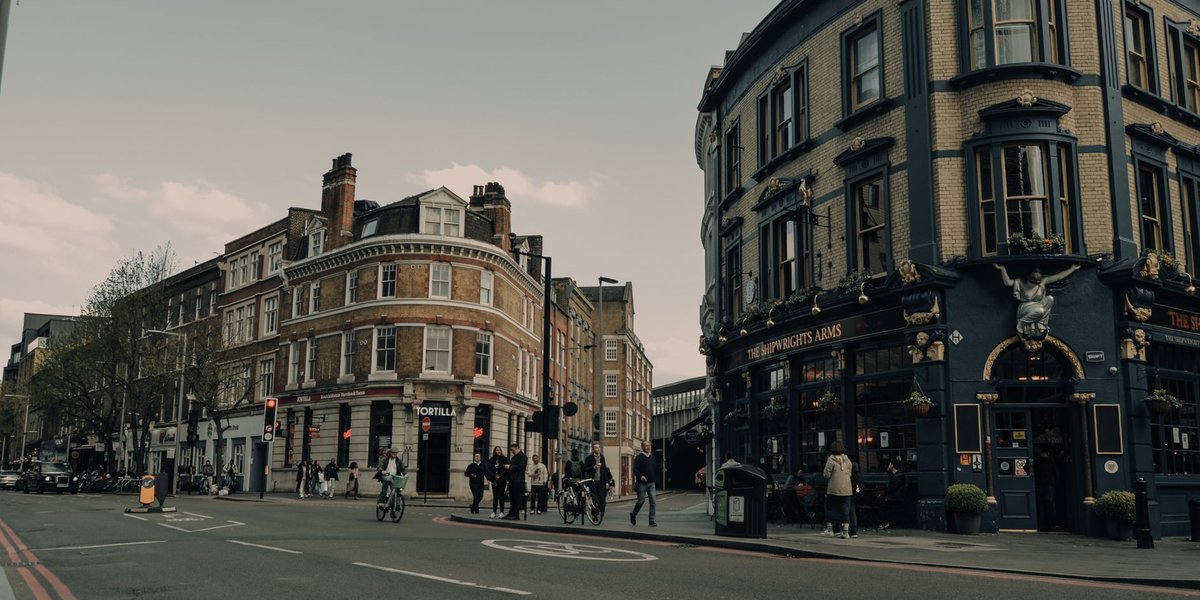
English is the main language for 91.1% of people in England. That’s the short answer. But the longer answer is more interesting, because the remaining 8.9% covers more than 100 languages, and the way they cluster by city and county tells you a lot about modern England.
Most articles on this topic quietly swap “England” for “the UK” or “England and Wales,” which muddies the numbers. England and Wales report together in the census, but the data here focuses on England specifically wherever the figures allow.
Table of Contents
- The Quick Answer
- Top 10 Non-English Languages
- Is English the Official Language?
- Regional and Indigenous Languages
- British Sign Language
- Where the Languages Cluster
- Over 300 Languages in London’s Schools
- FAQ
The Quick Answer
In the 2021 Census, 91.1% of usual residents in England and Wales aged three and over reported English (or English plus Welsh in Wales) as their main language. The figure was 91.4% a decade earlier in 2011, so it ticked down slightly as the population diversified.
The top non-English main languages, in order, are Polish (1.1%), Romanian (0.8%), Panjabi (0.5%), and Urdu (0.5%). After that the percentages get small fast, but the absolute numbers stay meaningful because England’s population is large. One percent of England is roughly half a million people.
A note on what “main language” means: the census asks for the language a person uses most, not every language they can speak. So a fluent bilingual person who mostly speaks English at home counts as an English speaker here. The real number of languages spoken in England is far higher than the number reported as a main language. According to the Office for National Statistics, this is a deliberate design choice to capture primary linguistic identity rather than total multilingualism.
Top 10 Non-English Languages
Here’s the ranked picture from the 2021 Census, by share of usual residents reporting each as their main language across England and Wales.
| Rank | Language | Approx. share of residents |
|---|---|---|
| 1 | Polish | 1.1% |
| 2 | Romanian | 0.8% |
| 3 | Panjabi | 0.5% |
| 4 | Urdu | 0.5% |
| 5 | Portuguese | 0.4% |
| 6 | Spanish | 0.4% |
| 7 | Arabic | 0.4% |
| 8 | Bengali (with Sylheti and Chatgaya) | 0.4% |
| 9 | Gujarati | 0.3% |
| 10 | Italian | 0.3% |
Polish has been the second most common main language since 2011, a legacy of the large wave of migration after Poland joined the EU in 2004. Romanian is the big mover. It barely registered in 2011 and has since climbed into second place among non-English languages, reflecting Romanian migration through the 2010s.
The South Asian languages — Panjabi, Urdu, Bengali, Gujarati — reflect older, more settled communities, many tracing back to migration from the 1950s through the 1970s. These speakers are concentrated differently than the newer European arrivals, which matters when you get to the regional data.
Is English the Official Language?
Short version: England has no language that’s official by statute. English is the de facto national language, used in government, courts, and education, but no law formally crowns it. That surprises people who assume a country’s dominant language must be written into law somewhere.
This is the case across the UK more broadly, with a wrinkle: Welsh has official status in Wales under the Welsh Language (Wales) Measure 2011, and Scottish Gaelic and Irish have recognized standing in Scotland and Northern Ireland respectively. England itself has no equivalent law for any language, including English.
For a traveler or a researcher, the practical upshot is simple. Everything official happens in English, and you’ll never need another language to get through the bureaucracy. But the lack of a statute is a genuine quirk of English law worth knowing.
Regional and Indigenous Languages
England’s only indigenous Celtic language is Cornish, spoken historically in Cornwall. It effectively died out as a community first language in the late 18th to early 19th century, with the traditional “last native speaker” story attached to Dolly Pentreath of Mousehole, who died in 1777. The reality is messier than one final speaker, but the rough timeline holds.
Cornish has since been revived. The UK government recognized it under the European Charter for Regional or Minority Languages in 2002, and you’ll now find Cornish on bilingual signage in parts of Cornwall, in some primary schools, and on the occasional menu. The number of fluent speakers is small, likely in the low thousands, but it’s a living revival rather than a museum piece.
It’s worth being precise here, because this is exactly where “England” and “UK” articles blur together. Welsh, Scottish Gaelic, and Irish are not England’s languages, they belong to Wales, Scotland, and Northern Ireland. England’s indigenous minority language story is essentially Cornish and nothing else.
British Sign Language
British Sign Language is the language of much of England’s deaf community, and it’s a full natural language with its own grammar, not signed English. It was legally recognized in the UK through the British Sign Language Act 2022, which declared BSL a language of England, Wales, and Scotland and placed reporting duties on government departments.
BSL often gets left out of “languages of England” lists because it isn’t captured the same way in the main-language census question. That’s an oversight. It’s one of the country’s significant languages by any reasonable definition, and the 2022 Act formally acknowledged that.
Where the Languages Cluster

National averages hide the real story, which is regional. The share of people reporting English as their main language ranges dramatically depending on where you stand.
London is the outlier. In the 2021 Census, around 78.4% of London residents reported English as their main language, the lowest of any English region by a wide margin. At the other end, the North East sat near 96.5%. So in some northern towns you’d struggle to hear anything but English, while in parts of London a third of your neighbours speak something else at home.
It gets sharper at the local-authority level. Specific languages concentrate in specific places:
- Polish clusters heavily in Boston, Lincolnshire, where it became one of the most-spoken non-English languages after agricultural-sector migration.
- Romanian shows up strongly in London boroughs like Harrow and Brent.
- Panjabi, Urdu, and Gujarati concentrate in parts of the West Midlands, West Yorkshire, and outer London with long-established South Asian communities.
This clustering is why the topic resists a single tidy summary. “Languages spoken in England” looks like one answer at the national level and a completely different answer in Boston versus Newcastle versus Harrow.
Over 300 Languages in London’s Schools
If you want a single statistic that captures England’s linguistic range, look at London’s schools. Research into the capital’s pupils has long put the number of languages spoken by London schoolchildren at over 300, a figure that traces back to the landmark Multilingual Capital study and has been broadly echoed since.
That’s the gap between the census and reality. The census records 100-plus main languages because it asks for one language per person. Count every language a child brings to a London classroom and the total triples. England is far more multilingual than the headline 91.1% English figure suggests, the census question just isn’t built to show it.
For students of geography or culture, that’s the takeaway worth holding onto. The dominant-language number tells you about identity and integration. The schools number tells you about the actual diversity sitting underneath it.
FAQ
How many languages are spoken in England? The 2021 Census recorded over 100 main languages across England and Wales. But “main language” counts only the language each person uses most. Counting every language people can speak pushes the number far higher, over 300 among London schoolchildren alone.
What is the official language of England? England has no statutory official language. English is the de facto national language used in government, courts, and schools, but no law formally designates it.
What are the most spoken languages in England after English? Polish (around 1.1%), Romanian (0.8%), Panjabi (0.5%), and Urdu (0.5%) lead the non-English languages, followed by Portuguese, Spanish, Arabic, Bengali, Gujarati, and Italian.
Does England have any indigenous languages besides English? Yes, Cornish. It died out as a community language around 1800 and has since been revived, with official recognition since 2002. Welsh, Scottish Gaelic, and Irish belong to other UK nations, not England.
Where in England are non-English languages most common? London, where only about 78.4% report English as their main language versus 96.5% in the North East. Specific clusters include Polish in Boston, Lincolnshire, and Romanian in London boroughs like Harrow.