

Norwegian is an official language in exactly one country: Norway. That’s it. No former colonies, no second nation that adopted it, no surprise pocket on another continent. If you came here for the headline number, that’s the number.
But “one country” is the boring half of the answer. The interesting half is that roughly 20 million more people across Scandinavia can read a Norwegian menu, follow a Norwegian news broadcast, and more or less hold a conversation with a Norwegian without either side switching languages. So the honest version is: Norwegian is spoken natively in one country and understood across three.
Here’s the full picture.
Table of Contents
- The Short Answer
- Norwegian Speakers by Country
- Why Norwegian Stayed in Norway
- The Scandinavian Cheat Code: Mutual Intelligibility
- Two Ways to Write the Same Language: Bokmål vs Nynorsk
- The Other Languages of Norway
- Is Norwegian Worth Learning?
The Short Answer
Norwegian (norsk) is the official and majority language of Norway, spoken natively by around 5.3 million people. It holds official status nowhere else on Earth.
You’ll find Norwegian speakers outside Norway, but they fall into two buckets: emigrant communities (mostly older Norwegian-Americans and Norwegian-Canadians) and retirees who relocated to sunnier coasts, the largest cluster being in Spain. None of these turn a country into a “Norwegian-speaking country” in any official sense. They’re diaspora dots on a map, not language policy.
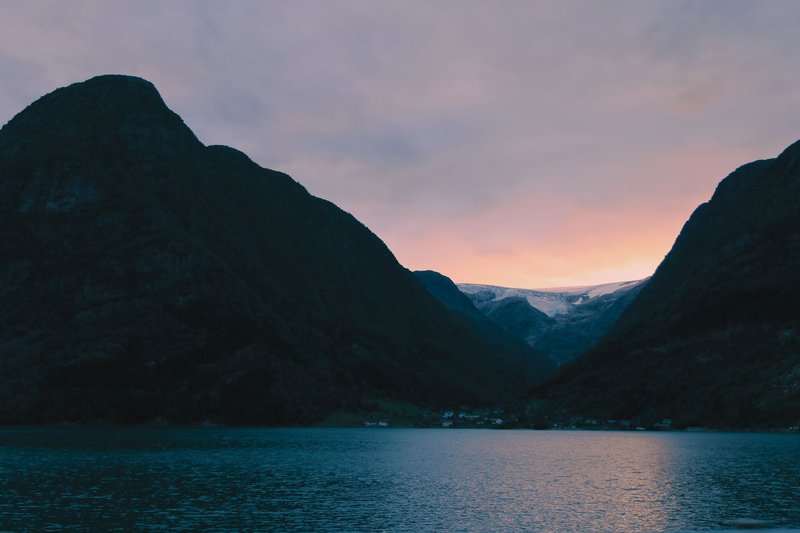
So when a database somewhere lists Norwegian as spoken in “South America” or some other far-flung place, that’s a data error, not a discovery. The language never traveled the way English, Spanish, or Portuguese did, because Norway never ran the kind of empire that exports a language.
Norwegian Speakers by Country
Here’s where Norwegian speakers actually live. These are approximate figures pulled together from language census data and diaspora estimates, and they shift depending on whether you count fluent speakers, heritage speakers, or anyone with some ability.
| Country | Approx. Norwegian Speakers | Notes |
|---|---|---|
| Norway | ~5,300,000 | Native, official language |
| United States | ~40,000–55,000 | Heritage diaspora, mostly Upper Midwest |
| Sweden | ~50,000 | Border communities, workers, expats |
| Spain | ~45,000–50,000 | Retirees on the Costa Blanca and Canary Islands |
| Denmark | ~10,000–15,000 | Expats and cross-border residents |
| Canada | ~7,000–10,000 | Heritage diaspora, Prairie provinces |
A few things jump out. First, the drop-off is steep: after Norway’s 5 million, no single country breaks six figures. Second, the American number is a fossil. It traces back to the wave of roughly 800,000 Norwegians who emigrated to the U.S. between 1825 and 1925, settling heavily in Minnesota, Wisconsin, and North Dakota. The descendants kept uff da and lutefisk dinners; the fluent Norwegian has mostly faded with each generation.
Why Norwegian Stayed in Norway
Languages spread two ways: conquest or migration. Norwegian did neither at scale.
Norway spent centuries as the junior partner in unions with Denmark and then Sweden, and only became fully independent in 1905. A country that’s busy being governed by its neighbors doesn’t go founding overseas colonies. Compare that to Portugal, a nation of similar size that planted its language in Brazil, Angola, Mozambique, and beyond. The difference wasn’t the language. It was the empire, and Norway never built one.
The migration that did happen, the great exodus to North America, spread Norwegian people but not the Norwegian language in any lasting way. Immigrant languages in the U.S. tend to thin out by the third generation, and Norwegian followed that script. The grandchildren of those Minnesota settlers grew up speaking English.
The result: a language with about 5 million native speakers, geographically concentrated in one of the most beautiful and most expensive corners of Europe, and almost nowhere else.
The Scandinavian Cheat Code: Mutual Intelligibility
Here’s the part the speaker-count tables miss entirely.
Norwegian, Swedish, and Danish are close enough that a Norwegian, a Swede, and a Dane can each speak their own language and largely understand one another. Linguists call this mutual intelligibility, and Scandinavia is the textbook example. The three are sometimes treated less like separate languages and more like a dialect continuum that happens to be split by national borders. It’s one thread in the broader story of how the ethnic groups of Northern Europe settled, mixed, and drew the borders that still shape the region’s languages today.
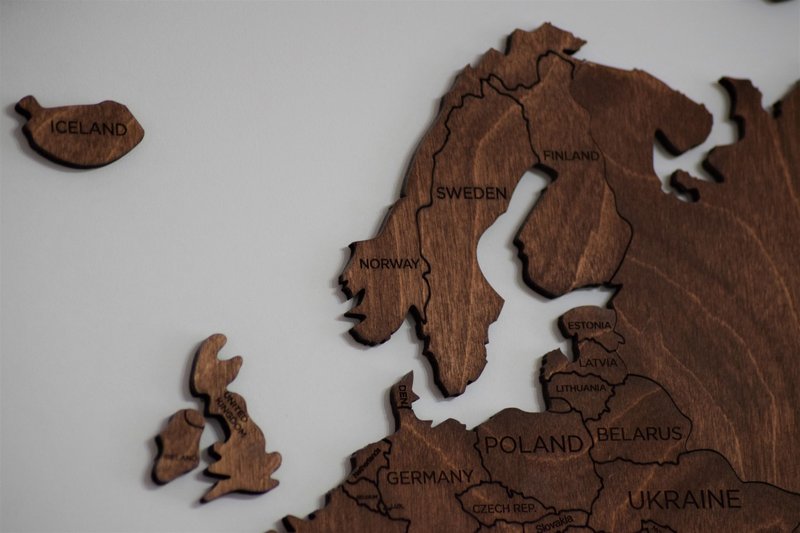
Norwegian sits in the sweet spot. Geographically and linguistically, it’s the bridge: its vocabulary leans toward Danish (a legacy of those centuries of Danish rule) while its pronunciation and melody lean toward Swedish. That puts Norwegian speakers in an enviable position. Studies on inter-Scandinavian comprehension consistently find that Norwegians understand their neighbors better than the neighbors understand each other, partly because Norway’s rich variety of local dialects trains people to decode unfamiliar sounds.
One language this cheat code does not unlock is Icelandic, the odd one out of the Nordic family. Despite sharing Old Norse roots with Norwegian, modern Icelandic has changed so little that Norwegians can’t follow it the way they follow Swedish or Danish, as anyone sorting out the languages spoken in Iceland quickly discovers.
Add it up and a Norwegian speaker can function across a population of roughly 20 million Scandinavians without switching to English. That’s the real footprint of Norwegian, far bigger than the official map suggests.
One caveat worth keeping honest about: spoken Danish trips Norwegians up more than written Danish, thanks to Denmark’s famously swallowed consonants and soft pronunciation. On paper, Norwegian and Danish look like close cousins. Out loud, Danish can sound like Norwegian with a mouthful of porridge.
Two Ways to Write the Same Language: Bokmål vs Nynorsk
Norwegian has a quirk almost no other language shares: it has two official written standards, and neither is “the real one.”
- Bokmål (“book tongue”) grew out of written Danish and is used by roughly 85–90% of the population. It’s what you’ll see in most newspapers, national media, and business.
- Nynorsk (“New Norwegian”) was built in the 19th century by linguist Ivar Aasen, who traveled the countryside collecting rural dialects to construct a written form that owed nothing to Danish. It’s used by 10–15% of Norwegians, concentrated in the western fjords and inland valleys.
Both are official. Norwegian schoolchildren learn to read both, government documents appear in both, and your choice of which to write in carries a faint cultural signal, urban-establishment versus rural-traditional.
The thing to understand: this is a split in writing, not speaking. There’s no spoken “standard Norwegian” the way there’s BBC English. Norwegians speak their local dialect everywhere, including on national TV news, and nobody is expected to flatten their accent. A Bergen accent, an Oslo accent, and a far-north Tromsø accent are all just Norwegian.
The Other Languages of Norway
Norway isn’t linguistically monolithic, even inside its own borders.
The Sámi languages, spoken by the Indigenous Sámi people across the Arctic north, are recognized as official languages in certain northern municipalities. Northern Sámi is the largest, with perhaps 15,000–25,000 speakers. These are not dialects of Norwegian; they belong to an entirely different language family (Uralic, related to Finnish and Hungarian), and they predate Norwegian in the region.
Norway also formally recognizes Kven, Romani, and Romanes as minority languages. None of these have large speaker bases, but they’re part of why “the language of Norway” is a slightly messier question than it first appears.
Is Norwegian Worth Learning?
Depends on what you want from it.
If your goal is reach, Norwegian is a poor return on effort. Five million native speakers, nearly all of whom speak excellent English. Norway consistently ranks near the top of global English proficiency rankings, so you can travel the whole country, order dinner, and read the signs without a word of Norwegian.
But there are real reasons to learn it. It’s one of the easier languages for English speakers to pick up; the grammar is famously forgiving, with simple verb conjugations and word order that feels familiar. Learn Norwegian and you get a head start on reading Swedish and Danish nearly for free, three Scandinavian languages for a little more than the price of one. And if you’re planning to live in Norway rather than just visit, the language opens doors that English politeness keeps politely shut: the workplace banter, the local newspaper, the dialect jokes, the version of the country that doesn’t switch to English the moment you walk in.
So: one official country, one beautiful and concentrated language, and a passport into a 20-million-strong Scandinavian conversation. For a language confined to a single nation, Norwegian punches well above its map.