
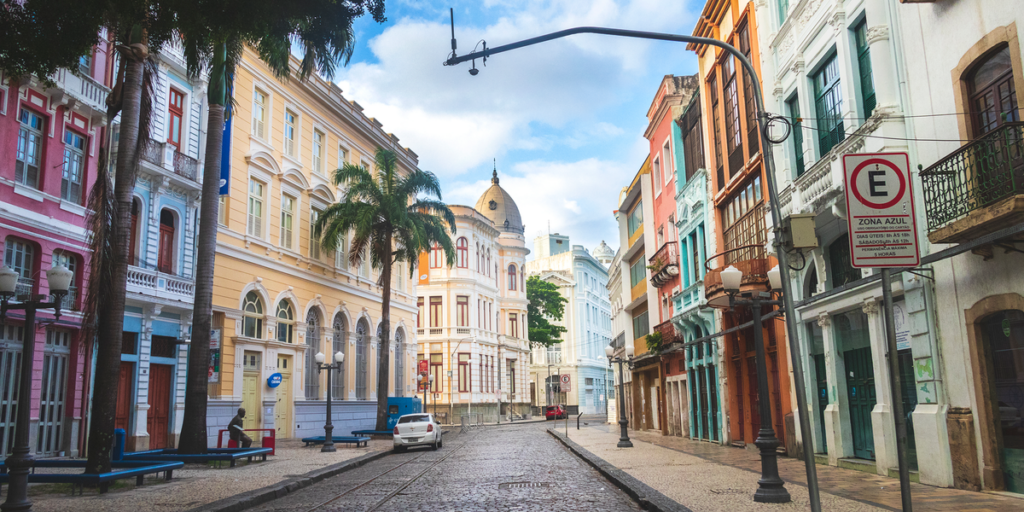
The Portuguese spoken in Rio sounds almost nothing like the Portuguese spoken in São Paulo, and a person from Salvador can usually tell where a stranger grew up within a sentence or two. Brazil is one country with one official language, but the accent map underneath it is a patchwork — and most guides either bury it in phonetic symbols or skip it entirely to count up the country’s 200-plus languages.
This is the guide that names the accents and tells you what they actually sound like. We’ll go region by region through the major dialects of Brazilian Portuguese, then sort out the genuinely separate languages — the German and Venetian dialects of the south, and the indigenous tongues — that often get lumped into the same conversation by mistake.
Table of Contents
- Dialect vs. language: clearing up the confusion
- Carioca (Rio de Janeiro)
- Paulistano and Paulista (São Paulo)
- Caipira (rural interior)
- Nordestino (the Northeast)
- Baiano (Bahia)
- Mineiro (Minas Gerais)
- Gaúcho (Rio Grande do Sul)
- Sertanejo and the backlands
- Quick comparison table
- The languages that aren’t dialects
- Why the accents diverged
Dialect vs. language: clearing up the confusion
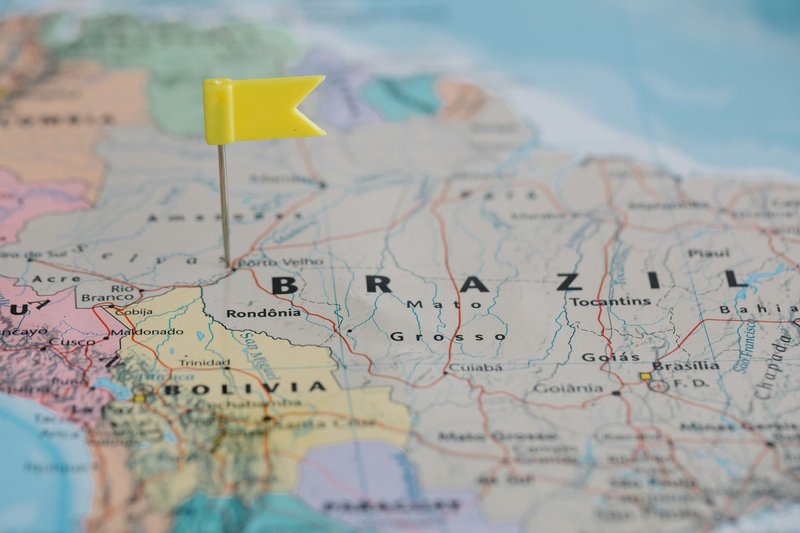
Before the region tour, one distinction does most of the heavy lifting. A dialect here means a regional variety of the same language — Brazilian Portuguese spoken with a particular accent, rhythm, and a handful of local words. Everyone speaking these dialects understands each other; a Carioca and a Gaúcho can argue about football all night without a translator.
A language is something else. When people say Brazil has more than 200 languages, they’re counting indigenous tongues like Nheengatu and immigrant languages like Talian and Hunsrückisch — speech systems that aren’t mutually intelligible with Portuguese at all. Those belong in their own section, and we’ll get to them. The dialects below are all Portuguese.
One more practical note: linguists usually group Brazilian Portuguese into a Northern bloc and a Southern bloc, then subdivide from there. You don’t need the academic taxonomy to travel or to enjoy the differences. You need to know what each one sounds like.
Carioca (Rio de Janeiro)
The Carioca accent is the one most foreigners have heard, because Rio exports so much of Brazil’s music and television. Its signature is the chiado — the “sh” sound. An S at the end of a syllable, where most Brazilians say a clean “s,” a Carioca pushes toward “sh.” Mais becomes closer to “maish,” as portas slides into “ash portash.”
The story behind it is genuinely tied to the city’s history: the sound is often traced to the Portuguese royal court that relocated to Rio in 1808, bringing a Lisbon-flavored pronunciation that the local speech absorbed. The court was an extension of the same Iberian society you can read about in this survey of Portugal’s ethnic groups, and a little of that European inheritance landed in Rio’s vowels and consonants. Whether or not every detail of that origin holds, the chiado is now pure Rio identity. Pair it with the relaxed, sing-song melody and the heavy use of slang, and you have the accent that, for a lot of the world, simply is Brazilian.
Paulistano and Paulista (São Paulo)
Cross into São Paulo and the music changes. The headline feature is the R. The Paulistano (city of São Paulo) accent uses a strong, often retroflex R — the tongue curls back, producing a sound an English speaker would recognize from American English, especially in words like porta or verde. This is sometimes called the “R caipira” influence bleeding into the metropolis, and it’s the fastest way to tell a Paulistano from a Carioca.
There’s a difference worth knowing inside the state, too. Paulistano refers to the capital city’s accent; Paulista covers the broader state, where the speech shades toward the rural Caipira variety the further you get from downtown. The city accent itself carries a heavy immigrant fingerprint — Italian above all — which shows up in intonation and in a brisk, businesslike delivery that matches the city’s reputation.
Caipira (rural interior)
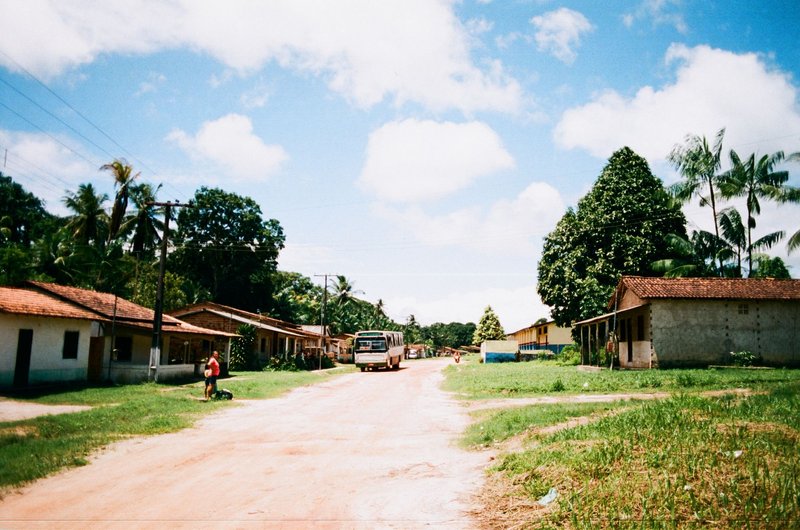
If you want the accent that surprises people, it’s Caipira. Spoken across the rural interior of São Paulo, southern Minas Gerais, Goiás, and parts of Paraná and Mato Grosso, the Caipira dialect — sotaque caipira — is defined by its retroflex R, the famous “R caipira.” It’s so distinct that the word porta comes out sounding remarkably like the English “porta,” R and all.
The dialect has deep roots. It grew out of the contact between Portuguese settlers and the Tupi-speaking population in the colonial interior, and that history left marks beyond the R — simplified plural agreement (saying os menino instead of os meninos) and a vocabulary full of Tupi-derived words. For decades Caipira carried a rural, unsophisticated stereotype. The música sertaneja boom and a wave of cultural pride have done a lot to flip that, and the accent is now worn openly rather than ironed out.
Nordestino (the Northeast)
The Northeast — Pernambuco, Ceará, Paraíba, Rio Grande do Norte and their neighbors — gives you the Nordestino accent, and it’s arguably the most internally varied group on this list. What ties it together is a set of open, full vowels. Where a Paulistano might reduce a vowel, a Nordestino lets it ring: the e and o sounds stay wide and bright.
Listen for the open A in particular, and for a melodic, almost lilting cadence that rises and falls more than southern speech. The vocabulary is rich with regionalisms — oxe and oxente as exclamations of surprise, vixe for dismay. Within the region the accents still split hard: Recife doesn’t sound like Fortaleza, and a sharp ear separates them easily. But to an outsider, the open-voweled, sing-song Nordestino sound is unmistakable, and it’s the soundtrack of forró and a huge share of Brazilian literature.
Baiano (Bahia)
Bahia sits inside the Northeast geographically but earns its own line. The Baiano accent, anchored in Salvador, is slower and more drawn-out — vowels stretched, the rhythm unhurried in a way that locals will happily tell you reflects the Bahian approach to life. There’s a chiado here too, related to Rio’s but with its own coloring, so the S softens toward “sh.”
Bahia was the center of the transatlantic slave trade’s arrival in Brazil, and the African linguistic and cultural influence runs deep in the local speech and vocabulary — much of the terminology of Candomblé and Bahian cuisine comes through that heritage. That African ancestry is one of the largest threads in the country’s makeup, as a breakdown of Brazil’s ethnic groups makes clear. The result is an accent that feels distinct even to other Brazilians: warm, elongated, and tightly bound to the music of the place.
Mineiro (Minas Gerais)
The Mineiro accent, from Minas Gerais, is the master of compression. Where other dialects pronounce things out, Mineiro swallows and shortens. The classic illustration is the way whole phrases collapse: Onde eu vou? gets squeezed toward “Ó’cevô?” and Pode ser becomes “Pó’sê.” Speakers clip the ends off words and merge them, producing a fast, mumbled, almost conspiratorial sound.
It comes with a famously affectionate vocabulary — the suffix -im (a clipped -inho) gets attached to everything, so a small coffee is a cafezim. The accent reads as gentle and a little sly, which fits the Mineiro stereotype of the quietly shrewd negotiator. Once you’ve learned to hear the dropped syllables, Minas is one of the easiest accents to identify.
Gaúcho (Rio Grande do Sul)
Down in the far south, the Gaúcho accent of Rio Grande do Sul carries the stamp of the borderlands. Rio Grande do Sul shares frontiers with Uruguay and Argentina, and the Spanish-speaking neighbors left their print: a more open, clearly articulated set of vowels and an intonation that, to other Brazilians, sounds almost like a Spanish-speaker handling Portuguese.
The pronoun tu gets used in everyday speech here — often, charmingly, without the matching verb conjugation that grammar books demand — where most of Brazil defaults to você. The vocabulary is full of pastoral, cattle-country terms (bah and tchê as all-purpose interjections), reflecting the gaucho cowboy heritage the region wears proudly. It’s a confident, ringing accent that’s easy to spot once you’ve caught a few tchês.
Sertanejo and the backlands
The Sertanejo label covers the speech of the sertão, the semi-arid backlands that stretch across the interior Northeast and into central Brazil. It overlaps with Nordestino and Caipira features rather than standing fully apart — strong vowels, a rural cadence, and vocabulary shaped by cattle ranching and a harsh, dry landscape. If Caipira is the interior accent of the south-central states, Sertanejo is its northern, backland cousin, and the two share that unmistakable rural-Brazil feel that urban speakers can identify instantly.
Quick comparison table
| Dialect | Region | The tell |
|---|---|---|
| Carioca | Rio de Janeiro | “Sh” sound (chiado): mais → “maish” |
| Paulistano | São Paulo city | Strong, retroflex R; Italian-flavored rhythm |
| Caipira | Rural SP, Goiás, MG interior | The “R caipira” — porta sounds like English “porta” |
| Nordestino | Northeast coast | Open, ringing vowels; sing-song melody |
| Baiano | Bahia / Salvador | Slow, drawn-out vowels; African-rooted vocabulary |
| Mineiro | Minas Gerais | Swallowed syllables: pode ser → “pó’sê” |
| Gaúcho | Rio Grande do Sul | Spanish-tinged vowels; everyday tu; tchê |
| Sertanejo | Semi-arid backlands | Rural cadence; ranching vocabulary |
The languages that aren’t dialects
Here’s where the competing articles get muddy. Brazil really is home to a large number of languages — the official statistical agency, the IBGE, and the heritage institute IPHAN both document this — but those are separate tongues, not Portuguese accents.
Talian is the big one in the south. When millions of Italians, mostly from the Veneto, settled in Rio Grande do Sul and Santa Catarina from the 1870s on, they brought their dialects, which fused into a Brazilian Venetian called Talian. It’s still spoken in pockets of the south, has its own radio programming, and was recognized as part of Brazil’s cultural heritage. A Talian speaker isn’t speaking accented Portuguese — they’re speaking a distinct Romance language.
Hunsrückisch (Riograndenser Hunsrückisch) is its German counterpart. German immigrants to the same southern states brought the Hunsrück dialect of German, which evolved in isolation into a local variety that absorbed Portuguese words while keeping its German grammar. Towns in the interior of Rio Grande do Sul and Santa Catarina still use it daily, and several have made it a co-official language.
Then there are the indigenous languages — somewhere around 150 to 180 still spoken, depending on how you count, many of them endangered. The most historically significant is Nheengatu, a Tupi-based língua geral that once served as a common language across the Amazon and is still spoken in the upper Rio Negro region, where it holds co-official status in the municipality of São Gabriel da Cachoeira. The same Amazonian fragility plays out across the border, as a reference list of indigenous languages in Colombia shows for the western half of the basin. UNESCO’s work on endangered languages tracks how fragile many of these tongues have become. None of this is a Portuguese dialect — it’s Brazil’s deeper linguistic layer, older than Portuguese itself.
Why the accents diverged
The pattern behind all of this is colonial history written into sound. Each region absorbed different influences: the royal court’s Lisbon Portuguese in Rio, the Tupi substrate of the interior in Caipira, African languages in Bahia, the Spanish frontier in the south, and waves of Italian and German immigration in São Paulo and the southern states. Geography did the rest — Brazil is continental in scale, and before mass media and highways, regional speech communities developed largely on their own.
What’s striking is that, despite the distance between a Mineiro swallowing his syllables and a Nordestino ringing out his vowels, it all stays mutually intelligible. The dialects are different enough to mark identity and start friendly arguments, never different enough to break the conversation. That balance — strong regional color, one shared language — is the real headline of how Brazilians talk.