
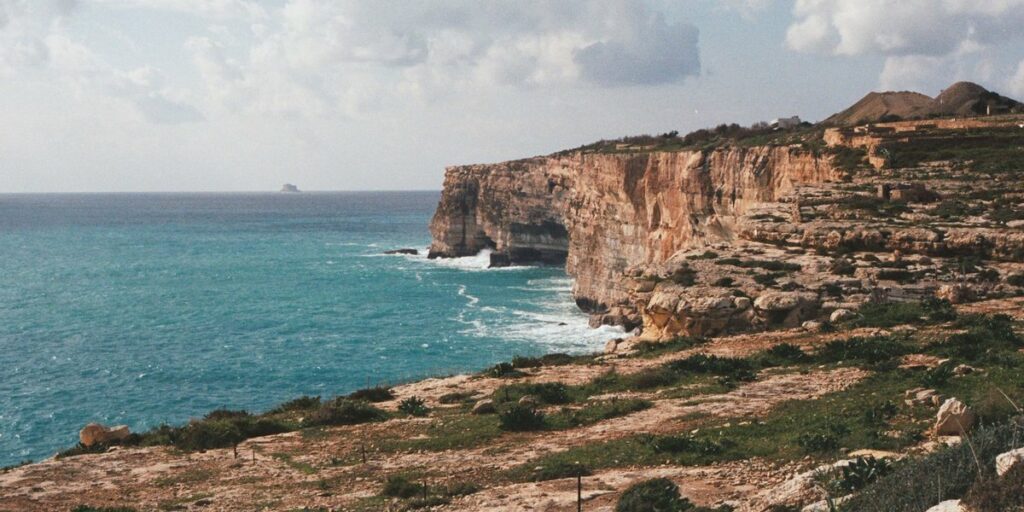
Here’s the honest version: Malta doesn’t really do lakes. The country is a sun-baked limestone slab in the middle of the Mediterranean with no permanent rivers, which means no natural freshwater lakes the way Italy or Switzerland have them. Anyone selling you a “lakes of Malta” listicle is stretching the definition.
But that doesn’t mean there’s nothing to see. There’s a seasonal valley system that floods into a chain of pools, a saltwater cavern the locals call an inland sea, the islands’ only natural freshwater pond, and a famous lagoon that photographs like a swimming pool. Each one is real, each one is worth a trip, and most guides won’t tell you when to go or how to get there without a car.
This is that guide.
Table of Contents
- Does Malta actually have lakes?
- Chadwick Lakes
- The Inland Sea at Dwejra
- Għadira ta’ Sarraflu
- The Blue Lagoon
- Wied Babu
- Getting around without a car
- FAQ
Does Malta actually have lakes? {#does-malta-have-lakes}
No permanent natural lakes. Zero. Malta has no rivers either, and that’s the root of it. The limestone bedrock is porous, rainfall is low and concentrated in winter, and summers are long and bone dry. Water that does collect either evaporates, soaks away, or gets channelled toward the sea.
What you get instead are four different things people loosely call “lakes”:
- Seasonal valley pools that fill after winter rain and shrink to nothing by July (Chadwick Lakes, Wied Babu).
- A flooded coastal cavern connected to the open sea by a tunnel (the Inland Sea at Dwejra).
- One small natural freshwater pond that holds water most of the year (Għadira ta’ Sarraflu on Gozo).
- A sheltered marine lagoon that looks like a lake in photos but is open Mediterranean (the Blue Lagoon on Comino).
So the trick to enjoying Malta’s “lakes” is timing and expectation. Come for the right one in the right season and you’ll get something genuinely good. Come expecting a glassy alpine reservoir in August and you’ll get a dry ditch.
Here’s where to go, in roughly the order most visitors should care about.
Chadwick Lakes {#chadwick-lakes}
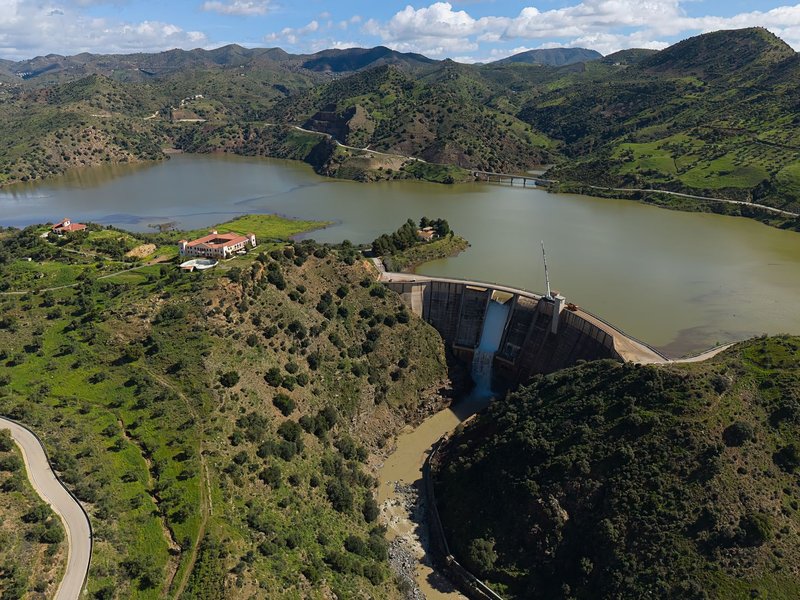
Chadwick Lakes is the closest thing Malta has to a real lake, and it’s not actually a lake. It’s a series of small dams across Wied il-Qlejgħa, a valley near Mtarfa, built by British engineer Osbert Chadwick in the late 1800s to manage water flow and recharge the groundwater. The dams trap winter runoff into a chain of stepped pools that string down the valley floor.
The catch is seasonal, and it’s a big one. From roughly December through April, after decent rain, the pools fill, the valley greens up, frogs and dragonflies show up, and it’s a genuinely pretty walk. By midsummer most of the chain is dry stone and cracked mud. If you go in August expecting water, you’ve made a mistake nobody warned you about. Now you’ve been warned.
The walk itself is easy: a flat, roughly 2 km path along the valley, good for families, with reflections in the upper pools when they’re full. It’s birdwatching territory in spring, and the site sits inside an area Malta has worked to restore as a Natura 2000 protected zone, the EU’s network of conservation sites.
Getting there: It’s near Mtarfa, west of Rabat. By car, there’s roadside parking near the valley access points off the road between Mtarfa and the Chadwick Lakes signposts. By bus, take a route to Rabat or Mtarfa and walk the last stretch. Best season: late winter to spring. Go after a rainy week, not a dry one.
The Inland Sea at Dwejra {#inland-sea-dwejra}
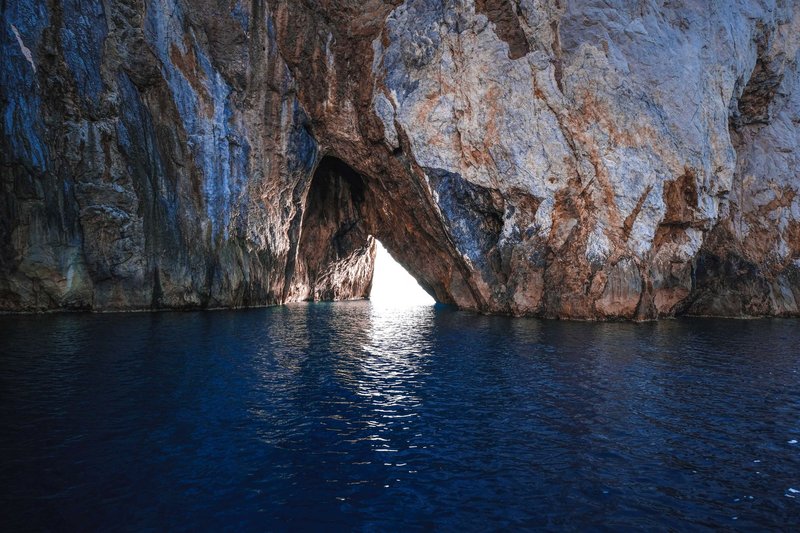
On Gozo’s western coast sits the most “lake-like” body of saltwater you’ll find: the Inland Sea at Dwejra, a shallow lagoon ringed almost entirely by cliffs. Locals call it Qawra. It’s connected to the open Mediterranean by an 80-metre natural tunnel bored through the rock, so the water is salt, the level rises and falls with the sea, and on calm days it sits there flat and green like a hidden pool.
This is the spot where the old fishermen’s boats run trips through the tunnel out to the open cliffs, past where the famous Azure Window arch stood until it collapsed into the sea in 2017. The arch is gone, but the boat ride through the dark tunnel into the open Mediterranean is still one of Gozo’s better small adventures, and cheap.
You can swim in the Inland Sea itself. The water’s calm and shallow near the shore, there’s a small shingle beach, and a couple of seasonal kiosks for a drink. Divers use it as an entry point to reach the offshore reefs.
Getting there: Dwejra is on Gozo’s west coast, near San Lawrenz. You’ll need to get to Gozo first (ferry from Ċirkewwa on the Maltese mainland), then bus or drive across. There’s a parking area at Dwejra. Best season: late spring through early autumn for swimming and boat trips; winter swell can shut the tunnel runs down entirely.
Għadira ta’ Sarraflu {#ghadira-ta-sarraflu}
If you want the single body of water that’s actually closest to a natural freshwater lake, this is it, and almost no tourist guide bothers to send you there. Għadira ta’ Sarraflu is a small natural pond near Kerċem on Gozo, tucked into the countryside in the island’s southwest. It’s modest in size, you can walk its perimeter in a few minutes, but it holds freshwater for most of the year, which on these islands is close to a miracle.
It matters more for wildlife than for swimming. The pond is one of the few permanent freshwater habitats in the Maltese archipelago, which makes it a magnet for dragonflies, frogs, and migrating birds. It’s quiet, shaded in parts, and a nice contrast to the salt and stone everywhere else on Gozo.
Don’t come for a beach day. Come for a short, peaceful detour and a look at the rarest kind of Maltese landscape there is: standing fresh water that doesn’t disappear in summer.
Getting there: Near Kerċem, southwest Gozo, signposted off the local roads. Easiest with a car or scooter; buses get you to Kerċem and you walk. Best season: spring, when the surrounding countryside is green and the birdlife is busiest.
The Blue Lagoon {#blue-lagoon}
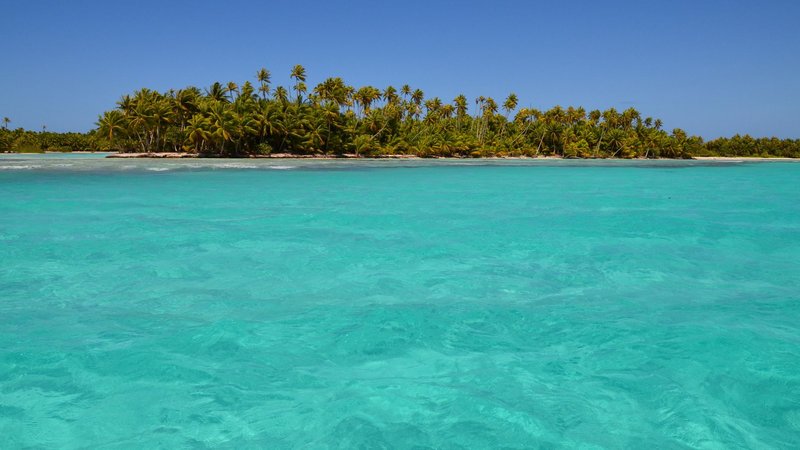
The Blue Lagoon on Comino is what most people picture when they imagine “Malta water,” and it shows up on lake lists because the photos make it look like an enclosed pool. It isn’t. It’s a shallow channel of open Mediterranean between the small island of Comino and the even smaller Cominotto, where a white sand seabed turns the water an unreal electric turquoise.
The colour is genuinely that intense, and that’s also the problem: everyone knows. In peak summer the lagoon is packed, the boats are stacked, and the once-quiet cove now has loud kiosks and crowds. It earned its fame, then got loved half to death.
The fix is timing. Get there early, ideally on the first boat of the morning before the day-trip armada arrives, or visit in the shoulder season (May, late September, October) when the water’s still warm and the crowds have thinned. The swimming and snorkelling, when it’s calm, are excellent. Comino is nearly uninhabited, so once the day boats leave, it empties out.
Getting there: Ferries and tour boats run to Comino from Ċirkewwa (Malta) and Mġarr (Gozo). There’s no driving here, it’s a boat-only island. Best season: late spring and early autumn. Skip peak July and August if you value space.
Wied Babu {#wied-babu}
The last entry is for people who like their water bodies wild and unmarketed. Wied Babu is a dramatic, steep-sided valley near Żurrieq in the south of Malta that, like Chadwick Lakes, runs with seasonal water after winter rain and dries up in summer. It’s not a lake on any map. But the gorge floods into pools and a green ribbon of vegetation in the wet months, and the rugged cliff scenery on the walk down toward the coast at Wied iż-Żurrieq is the real draw.
It connects, loosely, to the Blue Grotto area, so you can pair a valley walk with the famous sea caves and a boat trip in one outing. The path is rougher than Chadwick Lakes, so wear proper shoes, not flip-flops.
Getting there: Near Żurrieq, southern Malta, walkable from the Blue Grotto / Wied iż-Żurrieq area. Buses serve Żurrieq and the Blue Grotto stop. Best season: winter and spring, when there’s actually water and the heat won’t punish you on the exposed sections.
Getting around without a car {#getting-around}
A rental car or scooter makes all of this dramatically easier, especially on Gozo where the best spots (Dwejra, Sarraflu) are spread out. If you’re relying on public transport, a few realities help:
- Buses cover the islands but run on Maltese time and connections to rural spots can be sparse. Check the schedule the night before, not on the platform. Malta’s national operator publishes routes and live times online.
- Gozo needs a plan. Get the ferry from Ċirkewwa, then either rent on the island or build your day around the Gozo bus hub at Victoria (Rabat).
- Comino is boat-only. Buy a Blue Lagoon ferry ticket at Ċirkewwa or Mġarr; the crossing is short.
- Seasonal water means seasonal planning. Chadwick Lakes and Wied Babu are worth it in February, pointless in August. The marine spots (Dwejra, Blue Lagoon) flip the calendar and are best in summer.
Stack them by geography: do Dwejra and Sarraflu together on a Gozo day, and pair Wied Babu with the Blue Grotto in the south.
FAQ {#faq}
Does Malta have any natural lakes? Not in the conventional sense. Malta has no permanent natural freshwater lakes and no rivers. The closest is Għadira ta’ Sarraflu on Gozo, a small natural freshwater pond. Everything else is either a seasonal valley pool (Chadwick Lakes, Wied Babu), a man-made dam system, or a saltwater marine feature (the Inland Sea, the Blue Lagoon).
Is Chadwick Lakes worth visiting in summer? Usually not. The pools fill from winter rain and largely dry up by midsummer. Go between roughly December and April, after a wet spell, for the green valley and full pools.
Can you swim in the Inland Sea at Dwejra? Yes. It’s shallow, calm saltwater connected to the open sea by a tunnel. There’s a small shingle beach, and the boat trips through the tunnel to the open cliffs run in the warmer months.
Is the Blue Lagoon actually a lagoon? Not a closed one. It’s a shallow open-sea channel between Comino and Cominotto with a white sand seabed that turns the water bright turquoise. It looks enclosed in photos but it’s open Mediterranean.
What’s the best season overall for Malta’s “lakes”? It depends on the spot. For the freshwater valleys (Chadwick Lakes, Wied Babu), go in winter and spring. For the marine spots (Inland Sea, Blue Lagoon), go in late spring through early autumn for swimming, and avoid the peak-summer crowds at the Blue Lagoon by arriving early or visiting in the shoulder season.