
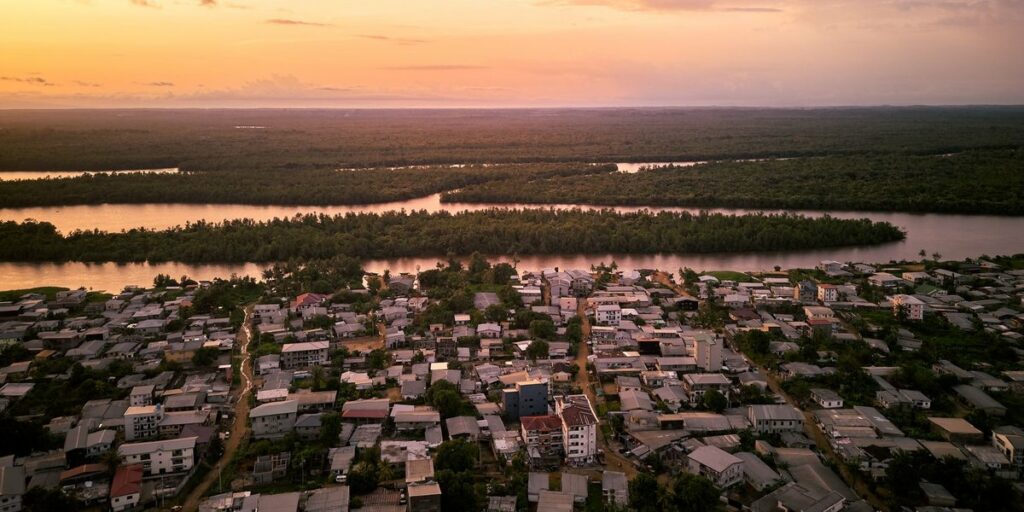
Here’s the strange thing about Gabon: on paper it’s one of the richest countries in Africa, with a GDP per capita above $17,000 and upper-middle-income status. Yet roughly a third of its 2.5 million people live below the poverty line. Search “poorest cities in Gabon” and you’ll get population tables that rank cities by size, or essays about poverty that never name a single place. Neither answers the question.
So this is the page that does. Below are the towns and provinces where Gabon’s economy is weakest, why each one lags, and the oil-money paradox that explains how a wealthy nation ended up with slums in its capital and forgotten towns in its interior.
One thing to get straight first: Gabon is unusually urban. Around 90% of the population lives in cities, and more than a third lives in Libreville alone. So “poorest cities” here mostly means the small provincial capitals and interior towns where the cash economy thins out — plus the poverty hiding inside the big coastal hubs.
Table of Contents
- How poverty is measured in Gabon
- The poorest provinces
- The poorest cities and towns, ranked
- The hidden poverty in Libreville and Port-Gentil
- Why Gabon is rich on paper but poor in reality
- FAQ
TLDR
Gabon’s poorest places are the rural interior towns of its northern and southern provinces — Makokou, Koulamoutou, Mouila, Tchibanga, Oyem, Bitam, and Lambaréné stand out — where logging and subsistence farming have replaced any real wage economy. The single poorest region is Ogooué-Ivindo province in the northeast, where about 39% of people are multidimensionally poor. But the largest number of poor people actually lives in Libreville’s informal settlements. The root cause is the same everywhere: an economy that runs on oil, which employs almost nobody.
How poverty is measured in Gabon
Two numbers matter, and they tell different stories.
The first is the income poverty line — whether a household earns enough to cover basic needs. By that measure, Gabon’s national poverty rate was around 33–38%, and the gap between countryside and city is sharp: roughly 45% of rural residents are poor versus about 30% in urban areas.
The second is the Multidimensional Poverty Index (MPI), which looks at deprivation in health, education, and living standards — no electricity, no clean water, kids out of school, dirt floors. This is the more useful lens for ranking places, because a logging town might have some cash flowing through it while still lacking a paved road, a clinic, or a reliable power line. The Oxford Poverty and Human Development Initiative publishes province-level MPI figures for Gabon, and they’re what the rankings below lean on.
The poorest provinces
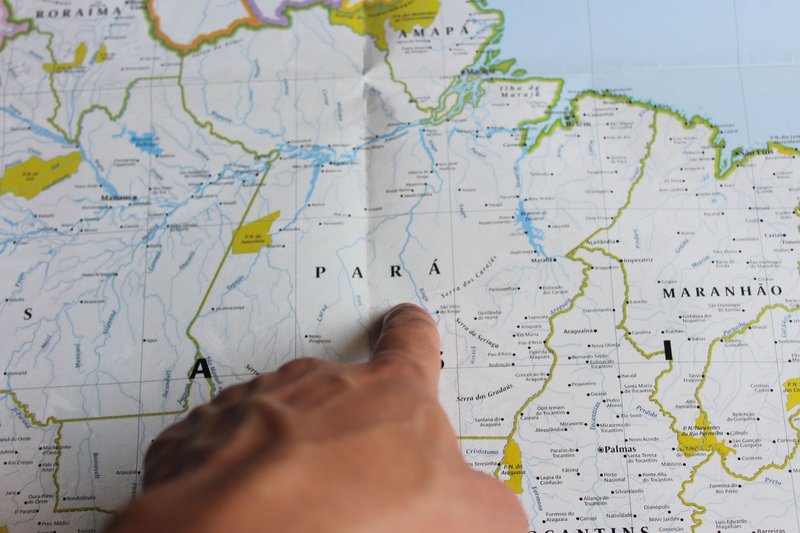
Before the city list, the regional picture, because in Gabon geography is destiny. The interior provinces — far from the oil terminals and the port — are the poor ones. The coastal strip around Libreville and Port-Gentil holds the money.
| Province | Capital | Multidimensional poverty (headcount) | Character |
|---|---|---|---|
| Ogooué-Ivindo | Makokou | ~39% | Remote northeast, forestry and rivers |
| Ngounié | Mouila | high | South-central, logging and farming |
| Nyanga | Tchibanga | high | Southernmost, timber and fishing |
| Ogooué-Lolo | Koulamoutou | high | Central, riverine, agriculture |
| Woleu-Ntem | Oyem | ~13% | Northern, cocoa and cross-border trade |
| Estuaire | Libreville | low (but huge slums) | Coastal capital region |
| Ogooué-Maritime | Port-Gentil | low | Oil capital |
Ogooué-Ivindo is the clearest loser. With an MPI headcount around 39%, it’s roughly three times poorer than Woleu-Ntem next door. It’s the most isolated province, deep in the equatorial forest, with tiny towns connected mostly by river and rough road. Ivindo National Park and Kongou Falls sit here — stunning, but tourism revenue barely touches local pockets.
The southern trio of Ngounié, Nyanga, and Ogooué-Lolo rounds out the poorest tier: low population density, economies built on timber extraction and subsistence agriculture, and infrastructure that thins out fast once you leave the provincial capital.
The poorest cities and towns, ranked
These are ordered by how weak and undiversified the local economy is — combining provincial poverty data with each town’s economic base. Population figures are approximate.
1. Makokou (~25,000) — Ogooué-Ivindo
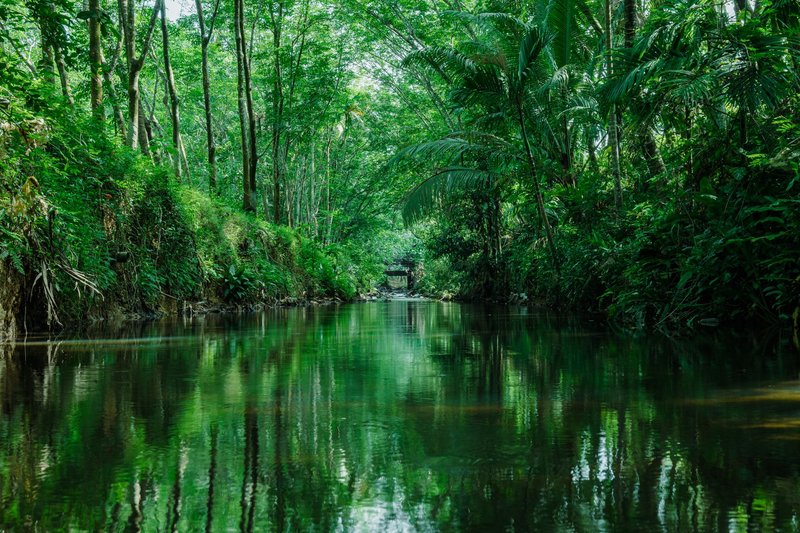
The capital of Gabon’s poorest province and the most cut-off city on this list. Makokou sits where the Ivindo and Liboumba rivers meet, deep in the northeast forest, and for years the only reliable way in was a long drive over unpaved road or a flight. The economy is forestry and river transport, with a thin layer of government jobs because it’s a provincial seat. Outside that, it’s subsistence: cassava, plantains, what the forest provides. Around 39% of the surrounding province lives in multidimensional poverty, and Makokou wears it.
2. Koulamoutou (~31,000) — Ogooué-Lolo
A river town in the center of the country, Koulamoutou’s economy leans on small-scale agriculture and the kind of local commerce that follows a provincial capital. It’s better connected than Makokou but still far from any export hub. There’s no industry to speak of — when the timber slows, the cash slows with it.
3. Tchibanga (~36,000) — Nyanga
The capital of Nyanga, Gabon’s southernmost province near the Congo border. Tchibanga’s economy is timber extraction and fishing in the surrounding communities, with farming in between. It’s remote, sparsely populated, and a long way from Libreville’s money. Classic interior poverty: a town that functions, but with little to build wealth on.
4. Mouila (~43,000) — Ngounié

Mouila, in the southwest, grew up around logging and small-scale trade. The Ngounié River runs through it. Like the others on this list, its problem isn’t that nothing happens — it’s that everything depends on one extractive industry and the public payroll. When a sawmill closes, there’s no second engine.
5. Bitam and Oyem (~73,000 for Oyem) — Woleu-Ntem
Woleu-Ntem is the least poor of the interior provinces (~13% MPI), thanks largely to cocoa farming and brisk cross-border trade with Cameroon and Equatorial Guinea — both borders are close. Oyem, the province capital, is the largest interior city in Gabon and the most economically alive of the inland towns. Bitam, north of it, lives off that same border trade. They land lower on the poverty scale than the river towns, but compared to the coast they’re still poor, with agriculture-dependent incomes and patchy infrastructure.
6. Lambaréné (~38,000) — Moyen-Ogooué
Famous worldwide as the home of Albert Schweitzer’s hospital, Lambaréné straddles an island in the Ogooué River. The hospital and tourism give it a small edge, but the broader economy is fishing, farming, and river trade. It’s a reminder that even a town with a globally known institution can sit in a province with limited economic depth.
A note on these numbers: don’t read the list as “these towns are miserable.” Provincial capitals are actually the better-off spots within their regions. The real deprivation is in the villages around them — places too small to appear on any city ranking, where a household might have no electricity and the nearest clinic is hours away.
The hidden poverty in Libreville and Port-Gentil
Here’s the nuance that the demographic tables miss entirely. Gabon’s two wealthiest cities also contain its largest concentrations of poor people.
Libreville holds over a third of the country’s population, and a big share of them live in matiti — the informal hillside settlements that ring the capital. These neighborhoods are crowded with internal migrants from the interior and with West African migrant workers from Senegal, Nigeria, Cameroon, Benin, and Togo who came chasing oil-economy jobs that mostly don’t exist for them. The result is a city where gleaming ministry buildings sit a short drive from settlements with intermittent water and no formal sewerage.
Port-Gentil, the oil capital, is even starker. It produces the wealth that funds the whole country, yet it’s an island city — no road connection to the capital for most of its history — with high living costs and visible inequality between the expat oil workforce and everyone else.
So if you’re counting where the most poor people are, the answer is Libreville, not Makokou. The interior is poorer per capita; the capital is poorer in raw numbers. Both things are true.
Why Gabon is rich on paper but poor in reality
The whole puzzle comes down to oil, and how few people it employs.
Oil has made up a huge slice of Gabon’s GDP and the majority of its exports for decades. That’s what produces the high GDP-per-capita figure that makes Gabon look like an outlier among its neighbors. But petroleum is capital-intensive, not labor-intensive — it generates enormous revenue with a tiny workforce. So the money flows to the state and to a narrow elite, and according to analysis cited by the Borgen Project, roughly 20% of the population holds around 90% of the wealth.
Three things follow from that:
- No diversification. When you can fund the budget by pumping oil, there’s little pressure to build manufacturing, agriculture, or services that would actually employ people across the country. The interior towns never got their alternative economy.
- Geographic concentration. Investment, jobs, and services cluster on the coast where the oil and the port are. The forest provinces got the leftovers.
- Boom-and-bust exposure. When oil prices fall, the whole system wobbles. There’s no cushion underneath, and the World Bank’s 2025 economic update repeatedly flags the need to convert resource wealth into broader, lasting livelihoods.
Add a young population and high youth unemployment, and you get the modern picture: a country that’s statistically wealthy, deeply unequal, and dotted with towns — interior and coastal alike — where most people see very little of the oil money.
FAQ
What is the poorest city in Gabon? By regional poverty data, Makokou in Ogooué-Ivindo is the poorest provincial capital, sitting in Gabon’s poorest and most isolated province (about 39% multidimensional poverty). By sheer number of poor residents, though, the informal settlements of Libreville hold more.
What is the poorest province or region in Gabon? Ogooué-Ivindo in the northeast, with a multidimensional poverty headcount around 39% — roughly three times higher than the least-poor interior province, Woleu-Ntem.
Is Gabon a rich or poor country? Both, depending on the measure. It has one of the highest GDP-per-capita figures in sub-Saharan Africa thanks to oil, yet about a third of its people live below the poverty line. The wealth is extremely concentrated.
Why is Gabon poor if it has so much oil? Oil is capital-intensive and employs very few people, so the revenue concentrates in the state and a small elite instead of spreading through a diversified job market. The country never built alternative industries to employ people in the interior.
Are Libreville and Port-Gentil poor? On average, no — they’re Gabon’s wealthiest cities. But both contain large, visible pockets of severe poverty, especially Libreville’s informal matiti settlements full of internal and West African migrants.