
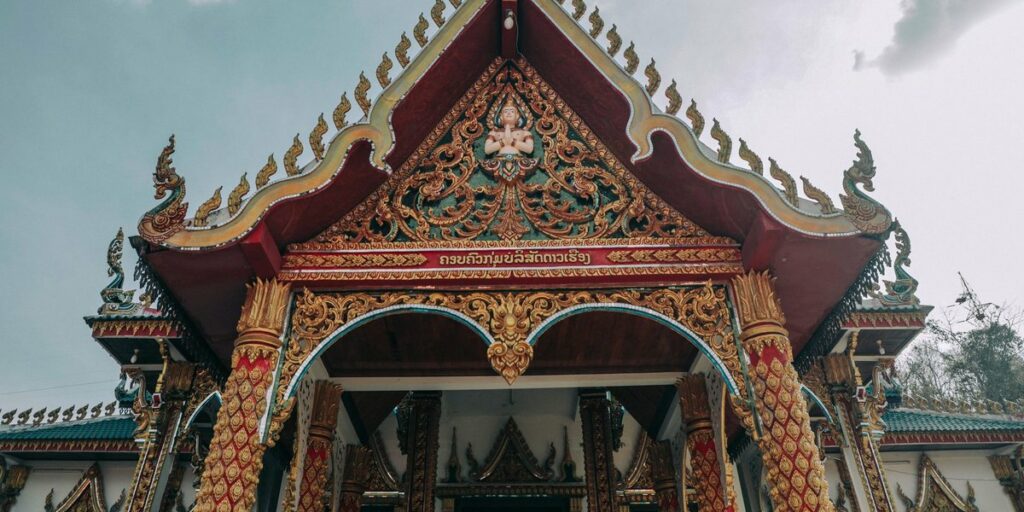
Laos has four UNESCO World Heritage Sites, and that fourth one is new enough that most articles you’ll find still say three. Hin Nam No National Park was inscribed in 2025 — the country’s first natural site, after thirty years of nothing but cultural ones. So if a list hands you Luang Prabang, Vat Phou, and the Plain of Jars and stops there, it’s running on old information.
Here’s the full set, what each one actually is, and how to string them together without backtracking across a country that’s longer than it is wide.
The four sites at a glance
| Site | Inscribed | Type | Province |
|---|---|---|---|
| Town of Luang Prabang | 1995 | Cultural | Luang Prabang |
| Vat Phou & Champasak cultural landscape | 2001 | Cultural | Champasak |
| Megalithic Jar Sites (Plain of Jars) | 2019 | Cultural | Xieng Khouang |
| Hin Nam No National Park | 2025 | Natural | Khammouane |
Three cultural, one natural. They’re spread from the far north (Luang Prabang) to the deep south (Vat Phou), with the Plain of Jars in the central-north highlands and Hin Nam No in the central karst belt near the Vietnamese border. No two are close together, which is the first thing to plan around.
Table of contents
- Town of Luang Prabang
- Vat Phou and the Champasak landscape
- The Plain of Jars
- Hin Nam No National Park
- Laos on the tentative list
- A route that links them
- FAQ
Town of Luang Prabang (1995)
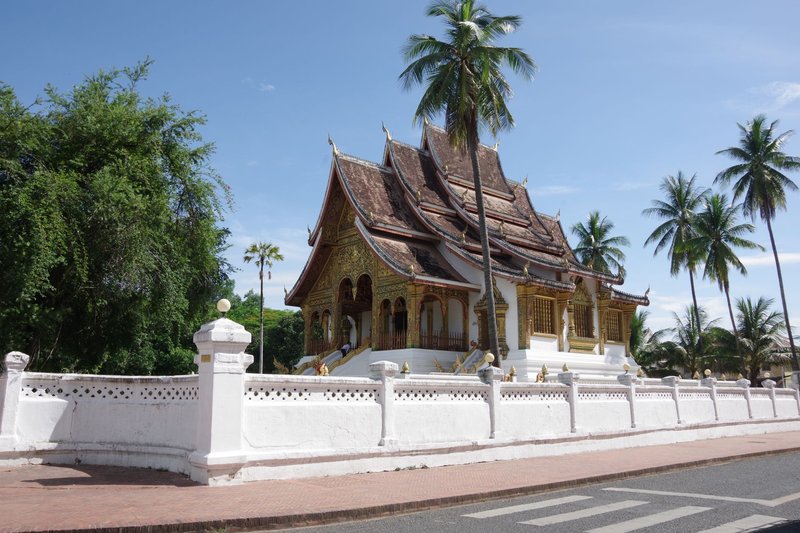
The first thing Laos ever got onto the list, and still the one everyone means when they say “the heritage town.” Luang Prabang sits on a peninsula where the Mekong meets the Nam Khan, and what UNESCO protected isn’t a single monument but the whole urban fabric: gilded wats, French colonial shophouses, and the way the two sit on the same street without arguing. The town was the royal capital until 1975, and the UNESCO inscription specifically cites the fusion of traditional Lao architecture with European colonial building from the 19th and 20th centuries.
What to see. Mount Phousi for the climb and the view over the rooftops. Wat Xieng Thong, the 1560 royal temple with the “tree of life” mosaic on its rear wall. The former Royal Palace, now the national museum. And the dawn alms-giving procession (tak bat), where monks walk the streets at first light collecting offerings — watch it quietly from across the road, don’t crowd the line with a camera, and if you’re not participating with intent, don’t participate at all.
Getting there. Luang Prabang has an international airport with connections from Bangkok, Hanoi, and Vientiane. The Laos-China Railway, open since late 2021, also stops here — Vientiane to Luang Prabang is under two hours by fast train, which has quietly become the easiest way in.
Entrance fees. The town itself is free to wander. Individual sites charge: the Royal Palace Museum runs about 30,000 kip, Wat Xieng Thong around 20,000 kip, Mount Phousi 20,000 kip. Small amounts, paid per site.
Best season. November to February — dry, cool, and clear. March and April bring haze from regional crop burning that can flatten the views for weeks.
Vat Phou and the Champasak landscape (2001)
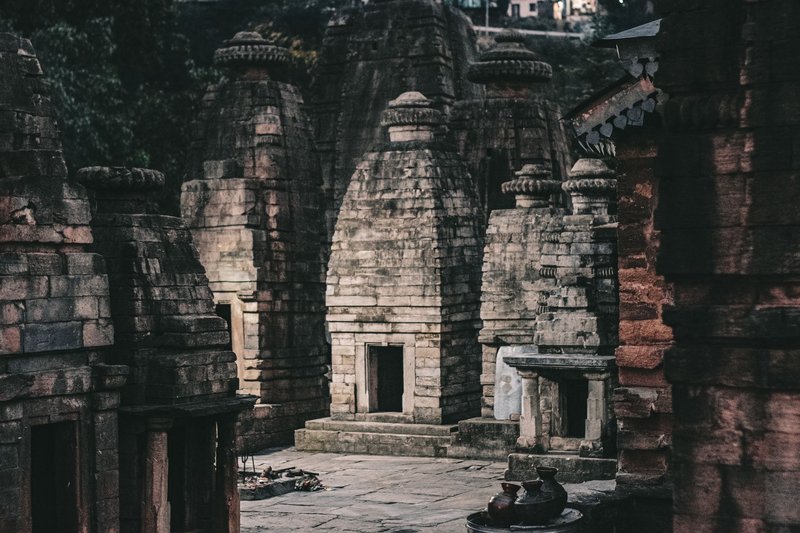
Down in the far south, Vat Phou (also spelled Wat Phu) is a Khmer Hindu temple complex older than Angkor Wat — construction on the surviving structures runs from the 11th to 13th centuries, but the site was sacred long before that. UNESCO inscribed it not just as a temple but as a planned landscape: a roughly 10-kilometer axis running from a mountaintop spring down through the temple terraces to the Mekong, laid out to express the Hindu relationship between nature and humanity. The mountain behind it, Phou Kao, has a natural rock formation shaped like a lingam, which is almost certainly why the site was chosen in the first place. It’s one of the standout entries in any survey of historical places in Laos, and an easy one to underrate if you’ve already filled your temple quota at Angkor.
What to see. Climb the steep stone stairway past the frangipani trees to the sanctuary at the top, where a spring still feeds the shrine. Look for the carved lintels — Shiva, Vishnu, and the Hindu trinity — and the crocodile stone that some believe marks an old sacrificial site. The view back down over the barays (reservoirs) and the plain is the payoff.
Getting there. Pakse is the regional hub, about 45 km north, with an airport and bus connections to Vientiane and across the border to Thailand. From Pakse it’s a day trip by car, scooter, or tour. Many travelers pair it with the nearby Four Thousand Islands (Si Phan Don) on the Mekong.
Entrance fee. Around 50,000 kip, which includes a shuttle from the gate to the lower terraces.
Best season. November to March for cooler weather. The Vat Phou Festival, tied to the lunar calendar, usually falls in late January or February and fills the site with pilgrims, music, and elephant processions — a different experience entirely, and worth timing for if you can.
The Plain of Jars (2019)
Thousands of stone jars — some over two meters tall, carved from sandstone and granite — scattered across the hills of Xieng Khouang. They date to the Iron Age, roughly 500 BCE to 500 CE, and nobody is certain what they were for. The leading theory is funerary: the jars held bodies during decomposition before secondary burial, supported by human remains found at the sites. Local legend prefers giants brewing rice wine. Both are more satisfying than “we don’t know,” which is the honest answer.
UNESCO’s inscription covers the megalithic jar sites as a serial property — multiple separate jar fields, not one location.
The UXO warning, because it’s real. This region was one of the most heavily bombed places on earth during the Secret War of the 1960s and 70s. Unexploded ordnance still litters the landscape. The jar sites that are open to visitors have been cleared and are marked with MAG (Mines Advisory Group) concrete markers: white means cleared, walk freely; red means do not step past. Stay on the marked paths. This isn’t a formality — it’s the rule that keeps you in one piece.
What to see. Sites 1, 2, and 3 near Phonsavan are the most accessible and the ones included in the World Heritage listing’s visitor circuit. Site 1 is the largest, with around 300 jars and a cave the bombing couldn’t collapse.
Getting there. Phonsavan is the base, reachable by a short flight from Vientiane or a long, winding bus ride from Luang Prabang (six to seven hours of mountain switchbacks — bring something for motion sickness). Hire a guide; they read the UXO markers fluently and know which sites are worth the drive.
Entrance fees. Roughly 15,000 to 25,000 kip per site.
Best season. October to April. The cleared paths turn to mud in the wet season, and the highland mornings can be genuinely cold from December to February.
Hin Nam No National Park (2025)
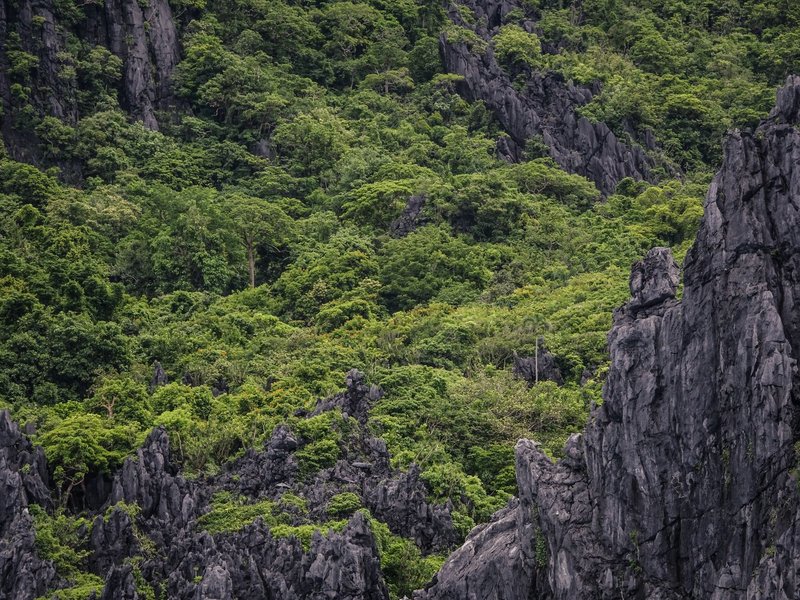
The newcomer, and the one that breaks Laos’s three-decade streak of cultural-only sites. Hin Nam No, in Khammouane Province, was inscribed in July 2025 as the country’s first natural World Heritage Site. It protects a vast tropical karst — limestone towers, sinkholes, and one of the longest river caves in the world, Xe Bang Fai, where you can boat for kilometers through a cathedral of stone underground.
The detail that makes this one matter beyond Laos: Hin Nam No shares its karst massif with Vietnam’s Phong Nha-Ke Bang National Park directly across the border. The two together form a transnational protected area covering one of Asia’s largest contiguous limestone landscapes, home to species like the rare red-shanked douc langur. It’s the same geological story told from two sides of a frontier.
What to see. Xe Bang Fai cave is the headline — a guided river journey through a passage tall enough to swallow a building. The surrounding forest holds caves, springs, and wildlife, with community-based ecotourism run out of the village of Nong Ping.
Getting there. This is the least developed of the four for tourism. Access is via Thakhek, the provincial capital, then onward to the park’s eastern villages — a trip best arranged through local operators or the community tourism office. Don’t expect Luang Prabang’s infrastructure; expect a frontier.
Entrance fees. Charged through community tourism arrangements and vary by tour. Confirm in advance through Thakhek-based operators rather than turning up cold.
Best season. November to March, the dry months. River cave access depends on water levels, and the wet season (June to October) can make Xe Bang Fai impassable or dangerous.
Laos on the tentative list
Four inscribed sites isn’t the end of the story. Laos maintains a UNESCO tentative list — the queue of sites it’s putting forward for future consideration — which includes proposals such as the Hintang archaeological landscape (standing stones in Houaphanh, a cousin to the jars) and that’s a fair signal of where the country thinks its next listings lie. Tentative-list status doesn’t guarantee inscription, but it’s why anyone telling you Laos is “done” at four is guessing.
A route that links them
The four sites don’t sit on a tidy loop, so the honest answer is you’ll fly at least once. Here’s a practical sequence for two-plus weeks that minimizes backtracking, running north to south:
- Luang Prabang (3–4 days). Fly or take the fast train in. Temples, the peninsula, day trips to Kuang Si waterfall.
- Plain of Jars (2 days). Short flight or the long bus to Phonsavan. Sites 1, 2, 3 with a guide.
- Vientiane transit. Fly back through the capital — it’s the hub that connects north and south.
- Hin Nam No (2–3 days). Fly or train to Thakhek, arrange the Xe Bang Fai cave through a community operator.
- Vat Phou (2 days). Continue south to Pakse, day-trip the temple, and finish on the Four Thousand Islands if you’ve got slack in the schedule.
Doing it the other direction works just as well. The non-negotiable is that Phonsavan and Thakhek both need their own dedicated legs — neither is “on the way” to anything.
FAQ
How many UNESCO World Heritage Sites does Laos have? Four, as of 2025: Luang Prabang (1995), Vat Phou (2001), the Plain of Jars (2019), and Hin Nam No National Park (2025). Older articles often list only three — they predate Hin Nam No.
Which is the only natural site? Hin Nam No National Park. The other three are cultural.
Can you visit all four in one trip? Yes, but plan two-plus weeks and expect at least one internal flight. They span the length of the country, from Luang Prabang in the north to Vat Phou in the deep south.
Is the Plain of Jars safe to visit? The cleared, marked visitor sites are safe — stay inside the MAG markers and on the paths. The wider region still has unexploded ordnance, so a local guide isn’t optional.
Which one is hardest to reach? Hin Nam No. It’s the newest listing and the least developed for tourism, accessed via Thakhek with community-run operators rather than a polished visitor circuit.